Plot Explained Spoilers guaranteed!
Plot Explained

Browse by genre

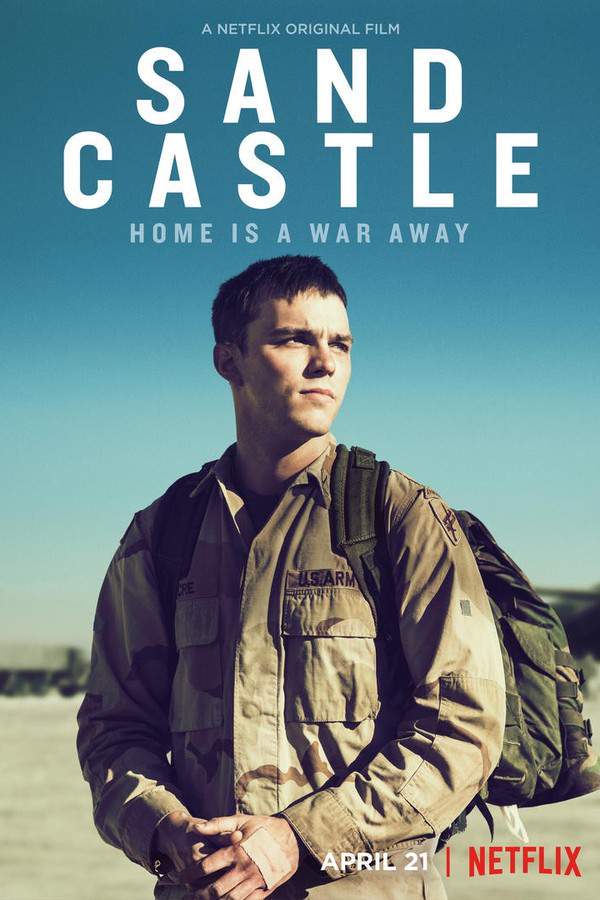
Sand Castle (2017) movie poster

Plot Summary

Sand Castle (2017) Plot Summary & Ending Explained

Release, runtime and language
2017 · 113 min · English
Echo score 53
JustWatch #17,458 12
Directed by
Fernando Coimbra
Starring
Henry Cavill, Nicholas Hoult, Glen Powell, Sam Spruell, Logan Marshall-Green, Beau Knapp

During the Iraq War in 2003, Private Matt Ocre, portrayed by Nicholas Hoult, is assigned to a repair team tasked with restoring a damaged water station. As he confronts the harsh realities of conflict, he witnesses the simmering resentment and anger among the local population. Navigating dangerous streets, schools, and public spaces, Ocre's idealism is challenged, and he experiences firsthand the devastating impact of war on both soldiers and civilians.

On this page (7)
  1. 1 Where to watch
  2. 2 What happens: full plot
  3. 3 Plot questions answered
  4. 4 How it ends
  5. 5 Movie threads
  6. 6 Movies like Sand Castle
  7. 7 Every angle

Where to watch

Where to Watch Sand Castle (2017)

Where can you watch Sand Castle? Stream, rent or buy it in the US, including on Netflix and Netflix Standard: current JustWatch availability with up-to-date prices.

Streaming availability powered by JustWatch

Full plot summary · contains spoilers

What Happens in Sand Castle: Full Plot Summary

The whole story of Sand Castle (2017) explained, from the opening scene to the final frame: every key event, every twist and what it all adds up to. Read it as a quick recap before the sequel, to check a scene you missed, or to finally understand what really happened.

At the outset of the 2003 Iraq War, Pvt. Matt Ocre, a young civil affairs soldier in the Army Reserves, desperately slams his hand in a Humvee door in hopes of being sent back home. Through narration, we learn that he enlisted in July 2001 for college funds. However, his scheme fails, leaving him with a cast on his arm until it is finally removed just in time for deployment to Baghdad. During combat, Ocre spots a sniper, leading to Sergeant Dylan Chutsky calling for a helicopter strike that obliterates the sniper’s location.

As the story progresses, we see that Ocre’s unit has the mission of fixing a malfunctioning water system in the perilous village of Baqubah. Upon arrival, they meet with a Special Forces team led by Cpt. Syverson, who introduces their interpreter and outlines the plan to transport water from a pump station daily. At the station, Army engineers indicate that repairs will take several weeks, but they can expedite progress if the locals pitch in. They inform the villagers that they will pay for labor, yet when the next morning rolls around, no locals show up to help. With no volunteers available, the soldiers are compelled to assist the engineers themselves.

On one of their return trips, they encounter a vehicle racing toward them. After stopping and questioning the driver, they discover he is rushing his young daughter to a nearby village for medicine. Later, during another journey, the squad comes under fire from several insurgents, which leads to chaos and tension as they scramble to protect themselves.

As events unfold, they finally obtain support from Kadeer, the local school administrator, played by Navid Negahban, who is in dire need of water to keep the school operational. This partnership results in improved progress at the pump station. Yet, one fateful morning, when none of the Iraqi workers appear, the team returns to the village to discover Kadeer’s body, gruesomely burned and tied to a stake in the schoolyard. Kadeer’s brother, Arif, informs Syverson of where the insurgents meet, prompting a swift plan to launch a night attack.

The operation proves successful, resulting in several enemy casualties and captures, but it comes at a cost: Cpl. Enzo and Sgt. Burton sustain injuries that necessitate helicopter evacuation. Work resumes on the pump station with Arif rallying a crew of local laborers. However, tragedy strikes again when an IED, planted by a worker in a suicide bombing, detonates at the station, resulting in the destruction of their efforts and multiple fatalities among both Americans and Iraqis.

Eventually, Ocre and Harper return to their base in Baghdad. Harper gets a three-week leave, while Ocre learns he is due to go home. Although he protests, his wishes are overridden. As the day unfolds, he is escorted to the airfield by Harper and Sgm. MacGregor (played by Tommy Flanagan). After a brief exchange about the day ahead, he boards the plane, leaving behind the chaos of war.
Last updated: November 03, 2024 at 12:08

Was this helpful?

Plot questions answered

Sand Castle Plot Explained: Your Questions Answered

The questions people ask most about Sand Castle (2017): what happens in the confusing scenes, why the characters do what they do, the twists, hidden details and what the ending means. Each answer contains spoilers.

Q1

Why did Matt Ocre slam his hand in the Humvee door?

Matt Ocre intentionally injured his hand because he wanted to be sent back home from deployment. As revealed through narration, he enlisted in the Army Reserves in July 2001 primarily to get money for college, not because of any patriotic motivation. When he realized he would be deployed to Iraq in 2003, he panicked and resorted to self-harm as a desperate attempt to avoid combat. The plan failed when his cast was removed just in time for deployment, leaving him with no way out of his obligations.

Foreshadowing: The film establishes early on that Ocre is in over his head and lacks genuine commitment to the mission, hinting at his later struggles.

  • matt ocre
  • self injury
  • deployment
  • humvee
  • college funds
Q2

Why didn't the villagers help repair the water system?

The villagers refused to help with the repairs despite being offered payment because they feared retaliation from insurgents. The summary indicates that when the soldiers arrived to fix the malfunctioning water system in Baqubah, no locals showed up the next morning to assist, even though the Army had promised to pay for labor. This reluctance stemmed from the dangerous political climate where collaborating with American forces could result in being targeted by insurgent groups, as later evidenced by the brutal murder of Kadeer.

Foreshadowing: The absence of volunteers foreshadows the dangerous consequences faced by those who do cooperate with American soldiers.

  • baqubah
  • water system
  • villagers
  • insurgents
  • labor
Q3

Why was Kadeer killed in the movie?

Kadeer was killed because he collaborated with the American soldiers on the water system project. As the local school administrator, Kadeer partnered with Ocre's unit to help restore water to the school, which made him a target for insurgents. His body was found burned and tied to a stake in the schoolyard, serving as a brutal warning to others who might cooperate with American forces. Kadeer's brother Arif later revealed where the insurgents met, leading to the night raid operation.

Foreshadowing: The film foreshadows this tragedy when no Iraqi workers appear one morning, signaling that something terrible has happened.

  • kadeer
  • killed
  • insurgents
  • baqubah
  • school administrator
  • collaboration
Q4

Why did the IED explode at the water pump station?

The IED was planted by one of the Iraqi workers who was secretly working with the insurgents. After the successful night raid and the return of Arif rallying local laborers, work resumed at the pump station. However, a worker among them planted an improvised explosive device that detonated, destroying the station and causing multiple fatalities among both American soldiers and Iraqi workers. This betrayal demonstrated the deep instability and danger of the mission.

Foreshadowing: The film hints at this betrayal through the persistent threat of insurgents and the earlier murder of Kadeer for collaborating.

  • ied
  • explosion
  • pump station
  • iraqi worker
  • betrayal
  • fatalities
Q5

Why was Matt Ocre sent home at the end despite protesting?

Matt Ocre was sent home because his deployment period was over, regardless of his personal wishes. After returning to Baghdad following the IED explosion that destroyed their work, Ocre learned he was scheduled to go home. Despite his protests, likely driven by guilt about leaving his fellow soldiers or a desire to see the mission through, his orders could not be changed. He was escorted to the airfield by Harper and Sergeant MacGregor, leaving the war behind while his comrades remained.

Foreshadowing: This ending reflects the arbitrary nature of military service and the futility Ocre feels about his entire deployment.

  • matt ocre
  • deployment ends
  • baghdad
  • home
  • protest
Q6

What was the importance of the water station mission in Baqubah?

The water station mission was critical because it represented a chance to help civilians in a war-torn region and potentially win hearts and minds. The malfunctioning water system left Baqubah without clean water, affecting thousands of residents, particularly children at the local school. By restoring water, Ocre's unit hoped to build trust with the local population and demonstrate a positive side of the American presence. The mission was also significant because it was one of the few constructive objectives in a landscape dominated by destruction.

Foreshadowing: The mission's ultimate failure through the IED explosion underscores the futility and tragic nature of their efforts.

  • water station
  • baqubah
  • civilians
  • mission
  • heart and minds
Q7

What happened with the sniper and helicopter strike early in the movie?

During a combat engagement, Matt Ocre spotted a sniper threatening his unit. Sergeant Dylan Chutsky immediately called for a helicopter airstrike, which obliterated the sniper's position and eliminated the immediate threat. This event demonstrated the lethal efficiency of American military power and served as one of Ocre's first experiences with actual combat violence, setting the tone for his psychological journey throughout the film.

Foreshadowing: This early encounter with violence foreshadows the escalating dangers and moral complexities Ocre will face.

  • sniper
  • helicopter
  • airstrike
  • dylan chutsky
  • combat
Q8

Why did no local workers show up after the soldiers promised payment?

No local workers appeared because the villagers were too afraid of insurgent retaliation to accept the American soldiers' job offer. While the Army promised payment for labor, the locals understood the dangerous implications of being seen working with occupying forces. The summary explicitly states that when the next morning rolled around after the promise of wages, no locals showed up to help, forcing the soldiers to assist the engineers themselves.

Foreshadowing: This fear among the villagers directly connects to the later murder of Kadeer, who faced the same deadly consequence for collaborating.

  • local workers
  • payment
  • fear
  • insurgents
  • villagers
  • baqubah

Ending explained

What Happens at the End of Sand Castle?

How Sand Castle (2017) ends, in short: the final scene, the last twist and what it means for the characters. The full ending explained, with every spoiler, lives on its own page.

Read the full ending explained

In the ending of Sand Castle, we see that the family’s struggle is intertwined with a powerful metaphor for trauma, loss, and the ongoing effects of war. The film is told through the perspective of young Jana, who is haunted by her memories of a tragic event—the death of her sister Yara during a bombing. This trauma is symbolized by the red shoe, which Jana keeps as a memento, representing innocence lost and the violence that shattered her family. Throughout the story, the island where Jana and her family are stranded acts as a symbol for their mental and emotional state—isolated, overwhelmed, and drowning in grief.

As the story unfolds, we witness the family attempting to survive on a lifeboat, which also serves as a metaphor for their fragile hope and their attempt to escape their past. We see Nabil, the father, trying to steer the boat and protect his family, but he is deeply affected by guilt and loss. His pain is more emotional than physical, as he laments that "no one can escape the past." His wife, Yasmine, sacrifices herself, succumbing to starvation after their tragic circumstances. Their children, Adam and Jana, are left to cope with the aftermath.

Continue reading the ending (2 more paragraphs)

The climax reveals Adam bravely swimming toward the horizon, believing he has found help, symbolizing his hope to rescue his sister and start anew. Meanwhile, Jana, alone on the boat or lighthouse, continues to cling to her imagination as a way to endure—her mind creating a safer world amid the chaos. Her visions become increasingly despairing, with the island seemingly sinking beneath the rising waters, signifying her fading hope and the overwhelming nature of her trauma.

Finally, the arrival of rescue workers wearing hazmat suits hints that some time had passed—possibly weeks—before Jana and Adam are saved, or it might represent her final fantasy where they perish together. The ending leaves room for interpretation: it is possible that Jana and Adam, along with other refugees, succumbed to their ordeal and weren’t saved at all, making their story one of eternal loss. Yet, if they are rescued, the film underlines that their journey was one marked by heartbreak, resilience, and the indelible imprint of war’s trauma. Ultimately, the ending emphasizes that the boundaries between reality and imagination blur when trauma takes hold, leaving viewers contemplating the enduring scars carried by those who experience such suffering.

Sand Castle ending explained in full

Movie threads

More Movies Like Sand Castle, by Mood & Story

Curated lists built around what makes Sand Castle tick: the same mood, the same kind of story or the same emotional payoff. Each list explains why these movies belong together.

Movies about war disillusionment like Sand Castle

Stories of soldiers whose ideals are shattered by the grim reality of conflict. If you liked Sand Castle, you'll appreciate these similar war stories that focus on the shattering of a soldier's idealism. These movies portray the grim, ground-level reality of conflict, emphasizing psychological trauma and moral ambiguity over heroic action.

  • grim
  • tense
  • bleak
  • devastating
  • oppressive
  • traumatic
  • Tone: dark, bleak, despairing
  • Pacing: steady, methodical
Why these movies?

The story pattern: These narratives typically follow a linear, straightforward path from a character's hopeful entry into a conflict to their gradual, often devastating, realization of its true cost. The central arc is internal—a battle for the protagonist's soul against the backdrop of a physical war.

Why they belong together: Movies are grouped here for their shared focus on the psychological toll of war, a dark and heavy tone, and a steady-paced narrative that builds a cumulative sense of despair and the loss of innocence.

Movies about futile missions like Sand Castle

Stories where a clear objective is rendered meaningless by overwhelming circumstances. For viewers who appreciated the somber message of Sand Castle, this list features films with similar plots about missions doomed to fail. These stories explore the heavy emotional impact of striving for a goal that circumstances destroy, leaving characters with trauma instead of triumph.

  • bleak
  • tense
  • anxious
  • devastating
  • hopeless
  • grim
  • Tone: dark, oppressive, despairing
  • Pacing: steady, relentless
Why these movies?

The story pattern: The plot structure is often simple: a group or individual is given a clear task. As they work towards it, external forces, systemic failures, or the inherent chaos of their environment conspire to nullify their efforts, resulting in an ending that emphasizes loss and the absence of meaning.

Why they belong together: These films are connected by a shared narrative pattern of futility, a consistently dark and oppressive mood, and a steady pacing that allows the weight of the inevitable failure to build profoundly.

If you liked this

Movies Like Sand Castle

Similar movies to Sand Castle: the same genre, themes or kind of story. Each one comes with its own plot summary, timeline and ending explained.

Browse all movie summaries

Every angle

Sand Castle (2017) Explained: Plot, Ending, Timeline & Characters

Everything about Sand Castle in one place: what happens in the plot summary, the timeline in chronological order, the characters and meaning, the ending explained and a spoiler-free summary. What's After the Movie adds the cast, box office and post-credit scenes.

Coming soon on iOS and Android

The Plot Explained Movie Summary App

Plot summaries, endings explained and timelines on your phone. Catch up on any movie in minutes, save your favorites and never miss a twist again.

Be the first to know when we launch. Your email stays private, always.

Learn more about the app