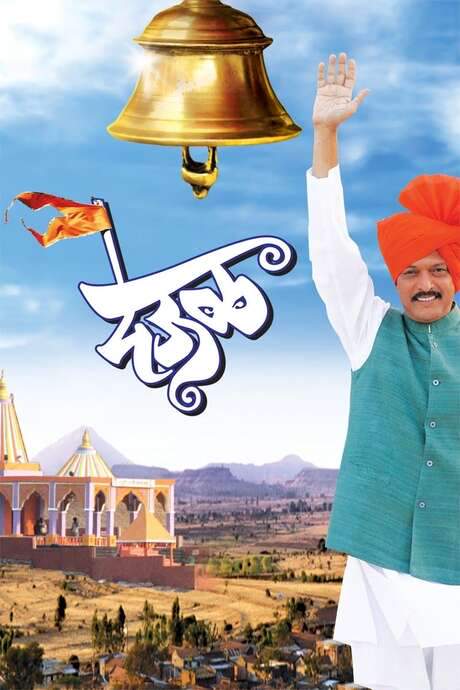
Deool

Deool

Year: 2011

Runtime: 139 mins

Language: Marathi

Director: Umesh Vinayak Kulkarni

Drama

Keshya, a simple villager believes that god has arrived in his village but everyone disbelieves him. Later when the politics plays its part things take a drastic change

Where to Watch Deool?

Find where to stream, rent, or buy Deool (2011) in the US with current JustWatch availability, up-to-date pricing, and platform listings for subscription, rental, and digital purchase options.

Warning: spoilers below!

Haven’t seen Deool yet? This summary contains major spoilers. Bookmark the page, watch the movie, and come back for the full breakdown. If you're ready, scroll on and relive the story!

Timeline – Deool (2011)

Trace every key event in Deool (2011) with our detailed, chronological timeline. Perfect for unpacking nonlinear stories, spotting hidden connections, and understanding how each scene builds toward the film’s climax. Whether you're revisiting or decoding for the first time, this timeline gives you the full picture.

1

Avatar of Dattatreya appears at Audumber tree

Keshya takes Bhau's cow Kard to a hill near Mangrul where an Audumber tree stands. There, Lord Dattatreya appears in a divine avatar and reveals himself to Keshya. The vision leaves him shaken and convinced that a miracle has occurred. The moment is intensely personal, but soon it becomes village news.

Mangrul hill near Audumber tree
2

Keshya proclaims divine appearance to Mangrul

Keshya loudly claims that Dattatreya has appeared for him, sparking awe and curiosity across Mangrul. The rumor spreads as neighbors gather to discuss the event. Some see it as a sacred sign, while others worry about turning faith into spectacle.

Mangrul
3

Anna counsels restraint and hospital vision

Anna cautions that faith is a personal matter and warns against sensationalizing the event. He reveals a vision of building a hospital for the villagers, reframing the miracle as a public service. This hints at a more measured approach to the village's future.

Mangrul
4

Journalist and youths sensationalize the event

A journalist, Kishor Kadam, and politically minded youths twist the news into a sensational saga. They amplify the appearance to attract attention and fuel demands for a temple. The village's mood shifts toward rapid, public discourse on faith and leadership.

Mangrul
5

Demands for a Dattatreya temple arise

With growing buzz, demands for a Dattatreya temple rise in Mangrul. People want a sacred site to honor the divine appearance, and leaders begin to debate logistics and funding. The idea gains legitimacy as more villagers back it.

Mangrul
6

Bhau opposes temple funding; hospital plan favored

Bhau refuses to approve the temple funding, arguing that resources could serve better purposes. He aligns with Anna's hospital plan, emphasizing pragmatic development over worship-led spending. The conflict sets up a clash between faith-driven and service-driven priorities.

Mangrul
7

Temple is built in Mangrul

Despite objections, the temple is eventually built in Mangrul. The structure becomes a new focal point for pilgrims and locals alike. Its construction marks a tangible shift from faith to visible community infrastructure.

Mangrul
8

Mangrul transforms into a holy place; commercialization begins

Mangrul is transformed as the temple draws pilgrims and commerce begins to flow. Businesses spring up around the site, and the village experiences a new wave of attention and money. The sacred site becomes a catalyst for a 360-degree change in daily life.

Mangrul
9

Divine faith forgotten amid progress

As progress accelerates, the religious sentiment partly fades for some residents. The divine spectacle seems eclipsed by commercialization, and devotion is tested. Anna remains wary, fearing that faith has been co-opted by profit.

Mangrul
10

Ethical questions surface about temple-led progress

Tensions rise about whether sacred symbols should drive economic development. Ethical questions emerge: is it right to trade faith for growth, or should spiritual concerns guide prosperity? The debate splits opinion within Mangrul.

Mangrul
11

Anna's ongoing critique and call for balance

Anna continues to voice concerns about the village's direction, insisting on keeping faith and public welfare in balance. He challenges the community to reflect on long-term goals beyond sermons and storefronts. His stance anchors the moral tension in Mangrul's story.

Mangrul
12

The story ends with an open ethical question

The summary closes with a pervasive question: is it ethical to use a temple and its goodwill to achieve progress? The timeline shows a village wrestling with faith, money, and modernization. The future remains uncertain as Mangrul navigates this complex legacy.

Mangrul

Last updated: February 24, 2026 at 14:06

Was this helpful?

Deool (2011) Timeline Questions Answered – Chronology FAQ

Find frequently asked questions about the Deool (2011) timeline, including chronological order, nonlinear jumps, cause-and-effect links, and scene sequence clarifications. This timeline FAQ helps explain when key events happen, how moments connect, and why the story unfolds in that specific order.

Q1

Why did Keshya see the vision of Dattatreya at the Audumber tree?

A.

Keshya was taking Bhau's cow named Kard to a hill near Mangrul where an Audumber tree (Ficus racemosa) stood. When the cow nudged the tree, Keshya experienced a divine vision of Lord Dattatreya appearing before him in a vivid avatar. The experience left him deeply shaken and convinced that a genuine miracle had occurred, which he then proclaimed to the entire village.

dattatreya visionkeshyaaudumber treemangrul
Q2

Why did Bhau refuse to fund the Dattatreya temple?

A.

Bhau argued that building a temple would not serve the village's practical needs. He believed that the money would be better spent on tangible improvements like a hospital that would directly benefit the residents of Mangrul. His opposition represented a conflict between faith-driven spending and pragmatic development.

bhaus oppositiontemple fundinghospital planmangrul development
Q3

What was Anna's vision for Mangrul instead of the temple?

A.

Anna, the village elder, cautioned against sensationalizing the divine appearance and revealed his vision of building a hospital for the villagers. He believed this would be a more meaningful public service than constructing a temple, emphasizing measured progress and practical welfare over religious monuments.

annahospital visionvillage developmentmangrul progress
Q4

How did Mangrul change after the temple was built?

A.

Once the temple was constructed, Mangrul transformed from a quiet rural village into a place of pilgrimage and commerce. Pilgrims began visiting, merchants set up businesses around the site, and media attention increased. The once peaceful community experienced a complete 360-degree turn toward commercialization, fundamentally altering daily life.

temple constructionmangrul transformationpilgrimagecommercialization
Q5

What role did the journalist play in the story?

A.

Journalist Kishore Kadam teamed up with politically minded young villagers to sensationalize the divine sighting. They amplified the news to attract attention and fuel demands for a temple, turning a personal spiritual experience into a hot news item that drove public discourse and accelerated the temple project.

kishore kadamjournalistsensationalismmedia
Q6

What ethical question does the movie raise about faith and development?

A.

The film poses a pointed question: is it acceptable for a sacred space like a temple to catalyze economic development, or does such use risk diluting the very faith it aims to honor? As progress accelerates, the religious sentiment becomes eclipsed by commercialization, testing the community's moral balance between prosperity and devotion.

ethicsfaithprogresscommercializationtemple economics
Q7

Why did Anna remain wary of the temple's impact on the village?

A.

Anna feared that sacred purpose would be eclipsed by profit as the temple drew pilgrims and commerce. He worried that faith was being co-opted for material gain rather than remaining a genuine spiritual pursuit, and he continuously critiqued the village's direction, insisting on keeping faith and public welfare in balance.

anna concernfaith vs profittemple impactvillage values
Q8

What happened to Keshya after he proclaimed the divine appearance?

A.

After experiencing the vision, Keshya loudly claimed that Dattatreya had appeared for him, spreading the news across Mangrul. The rumor sparked curiosity and debate throughout the village, with some seeing it as a sacred sign and others worrying about turning faith into spectacle. His personal experience quickly became village news.

keshyavillage reactiondivine proclamationfaith announcement
Q9

Why did the villagers demand a temple be built?

A.

The demand for a Dattatreya temple arose from the growing buzz around the divine vision. Villagers wanted a sacred site to honor what they believed was the genuine appearance of Lord Dattatreya. Pressured by public fervor and the sensationalized media coverage, the demand gained legitimacy and eventually led to temple construction despite opposition.

village demandtemple constructiondattatreyaworship
Q10

How did politics influence the temple construction in Mangrul?

A.

Political ambitions played a significant role as young villagers leaned toward politics and sensationalism, turning the sighting into a hot news item. The journalist and politically minded youths twisted the event to attract attention and fuel temple demands, showing how faith can become a tool for political mobilization and public pressure.

politicstemple demandpolitical mobilizationvillage pressure
Mobile App Preview

Coming soon on iOS and Android

The Plot Explained Mobile App

From blockbusters to hidden gems - dive into movie stories anytime, anywhere. Save your favorites, discover plots faster, and never miss a twist again.

Sign up to be the first to know when we launch. Your email stays private, always.

Explore Movie Threads

Discover curated groups of movies connected by mood, themes, and story style. Browse collections built around emotion, atmosphere, and narrative focus to easily find films that match what you feel like watching right now.

Movies about the corruption of innocence like Deool

Stories of pure ideals crushed by cynical social and political realities.For viewers who appreciated the cynical transformation in Deool, this section features movies like Deool that explore how pure faith or idealism is exploited by political and commercial forces, leading to a bittersweet loss of innocence.

disillusionedthoughtfulcynicalsocial commentaryethical conflicttransformativesatirical

Narrative Summary

These narratives typically begin with a character or community possessing a simple, sincere belief. This idealism is then confronted by external forces—often political opportunism or commercial greed—that twist the original理想 into something cynical. The story arc follows the gradual disillusionment and the ethical conflict that arises, culminating in an ending that is thoughtful rather than triumphant.

Why These Movies?

Movies are grouped here because they share a core narrative of innocence confronted by cynicism. They feature a steady pacing that allows the tension to build from a personal conviction to a broader social commentary, and they consistently deliver a bittersweet, contemplative mood.

Movies about rural transformation and social change like Deool

Observational dramas about tradition clashing with change in rural settings.If you liked the portrayal of a village's upheaval in Deool, explore these similar movies about rural communities facing drastic change. These films share a steady pace and a focus on the social and personal costs of progress.

rural lifesocial changecontemplativetransformativetraditionalconflictedobservational

Narrative Summary

The narrative pattern centers on a tight-knit, traditional community. An external catalyst—be it a miracle, a development project, or a new ideology—disrupts the established social order. The film then observes the ensuing conflicts, the clash between old values and new ambitions, and the lasting impact on the community's soul, often leaving a sense of loss amidst change.

Why These Movies?

These movies are grouped by their shared setting and central conflict: the erosion of rural simplicity. They possess a steady, observational pacing that lets the social commentary unfold naturally, and they carry a medium emotional weight rooted in the loss of a way of life.

Unlock the Full Story of Deool

Don't stop at just watching - explore Deool in full detail. From the complete plot summary and scene-by-scene timeline to character breakdowns, thematic analysis, and a deep dive into the ending - every page helps you truly understand what Deool is all about. Plus, discover what's next after the movie.

Deool Summary

Read a complete plot summary of Deool, including all key story points, character arcs, and turning points. This in-depth recap is ideal for understanding the narrative structure or reviewing what happened in the movie.

Deool Summary

Characters, Settings & Themes in Deool

Discover the characters, locations, and core themes that shape Deool. Get insights into symbolic elements, setting significance, and deeper narrative meaning - ideal for thematic analysis and movie breakdowns.

Characters, Settings & Themes in Deool

Deool Spoiler-Free Summary

Get a quick, spoiler-free overview of Deool that covers the main plot points and key details without revealing any major twists or spoilers. Perfect for those who want to know what to expect before diving in.

Deool Spoiler-Free Summary

More About Deool

Visit What's After the Movie to explore more about Deool: box office results, cast and crew info, production details, post-credit scenes, and external links - all in one place for movie fans and researchers.

More About Deool