Plot Explained Spoilers guaranteed!
Plot Explained

Browse by genre

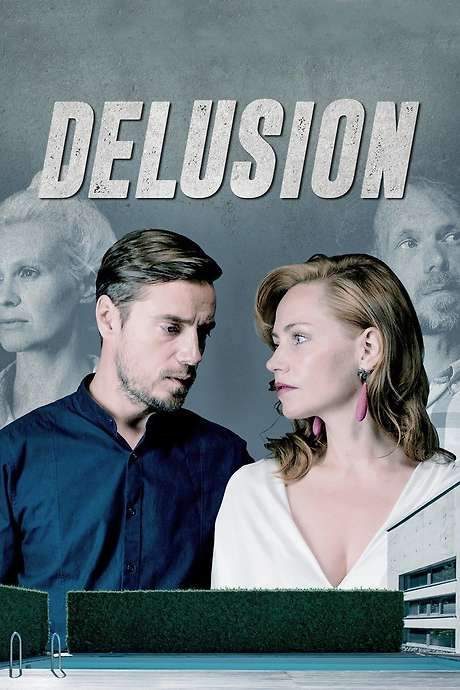
Delusion (2016) movie poster

Timeline

Delusion (2016) Timeline Explained – Every Event in Order

Release, runtime and language
2016 · 103 mins · Estonian
Loading streaming availability…
Directed by
Vallo Toomla
Starring
Meelis Rämmeld, Mari Abel, Mirtel Pohla, Priit Võigemast, Laine Mägi, Andres Lepik

Haunted by a difficult choice, Anna and Juhan seek refuge at a friend's summer house, hoping for respite. A storm arrives, forcing them to take in another couple who mistakenly believe the house is theirs. Rather than correcting the misunderstanding, Anna and Juhan allow the deception to continue, and their unresolved bitterness begins to surface as they subtly manipulate their unexpected guests.

On this page (6)
  1. 1 Where to watch
  2. 2 Events in order (12)
  3. 3 Timeline questions answered
  4. 4 Movie threads
  5. 5 Categories
  6. 6 Every angle
Loading streaming availability…

12 events in order · contains spoilers

Delusion Timeline: Events in Chronological Order

Every key event of Delusion (2016) in order, scene by scene, with when and where it takes place. Use it to untangle flashbacks, time jumps and parallel storylines, to refresh your memory before the sequel or to find the exact scene you are thinking of.

  1. Diary-driven loneliness

    The heroine's life centers on writing in her diary, cooking for no one, and long stretches of solitary days. Her days drift into odd amnesia-like episodes and sleepwalking moods that hint at a fragile grip on reality. A narrator voice-over frames the narrative around loneliness, anxiety, and the seeds of paranoia that can bloom into schizophrenia.

    When
    Opening
    Where
    Her apartment
  2. Meeting the diary's 'him' on the street

    On a street, she encounters Yu Wenle, who resembles the 'him' from her diary. She disregards his relationship status and brings him home, cooking for him and gradually falling in love. This encounter marks the escalation of her personal romance and potential slide into delusion.

    When
    Opening to early
    Where
    Street; home
  3. First third: normal yet uncanny atmosphere

    In the film's opening third, life seems normal but carries a disquieting air. Her demeanor shifts into moments of amnesia or sleepwalking as she longs for love but has no one to give it to. She stays largely alone, with brief exchanges with neighbor Leung Loh Sze and no family or colleagues visible.

    When
    Early to mid
    Where
    Home; nearby street
  4. Voice-over about paranoia

    A voice-over explains that modern people can fall prey to paranoia caused by loneliness and anxiety, sometimes leading to hallucinations or schizophrenia. The idea anchors the film's exploration of perception versus reality. The heroine's inner life is cast as a potential delusion rather than external threat.

    When
    Opening to mid
    Where
    Narrative voice-over, montage sequences
  5. Li Yulin tends a delusional patient

    Psychologist Li Yulin treats a patient who believes they are being followed by a mysterious organization. The case probes how belief can feel as real as any external danger. This clinical thread echoes the film's broader questions about reality and control.

    When
    Mid
    Where
    Clinic
  6. Lin Zichen writes about delusion

    Writer Lin Zichen works on a novel about delusion, and as he writes, the line between his fiction and reality begins to blur. The act of storytelling starts to pull him into the same psychic landscape the patient describes. His creative process becomes a lens to examine perception.

    When
    Mid to late
    Where
    Writer's study
  7. Li Wei investigates bizarre murders

    Police officer Li Wei investigates a series of bizarre murders that seem linked to delusional patients. Clues from the crime scenes mirror the patterns seen in Li Yulin's patient and Lin Zichen's writing. The investigation expands the narrative beyond a single character to a network of minds.

    When
    Mid to late
    Where
    Police precinct / crime scenes
  8. Convergence begins

    As the three stories progress, Li Yulin's case, Lin Zichen's novel, and Li Wei's murder cases begin to intersect. Shared themes and overlapping clues reveal a common mechanism behind the delusions, hinting at manipulation or a larger scheme. The borders between professional spheres and personal reality grow blurry.

    When
    Mid to late
    Where
    Various locations, converging
  9. Revelation: a psychological experiment

    The narrative culminates in the revelation that a massive psychological experiment underpins Lin Zichen's book and Li Wei's cases. The experiment's architecture explains the coincidences and the pervasive sense of being watched. The film reframes its own events as constructed phenomena rather than random occurrences.

    When
    Late
    Where
    Hidden facility / research lab
  10. Reality and delusion collapse into a vortex

    Boundaries between reality and delusion collapse, pulling the trio into a vortex where perception outruns fact. They confront how the experiment has shaped their thoughts, choices, and sense of self. The line between observer and subject dissolves.

    When
    Late
    Where
    Mental space / blurred reality
  11. Diary as a thread across the mystery

    The diary entries echo through the convergence, suggesting the heroine's inner life may be both influenced by and feeding the experiment's dynamics. Her isolation and longing become data points in the larger design. The film ties her personal longing to the overarching illusion being manipulated.

    When
    Late
    Where
    Her apartment
  12. Ambiguous ending

    The film leaves the fate of the lovers and investigators unsettled, with questions about genuineness, control, and the possibility of escape from the experiment. Viewers are invited to ponder what is real and what is manufactured in a world where minds can be engineered. The final image lingers in uncertainty.

    When
    Finale
    Where
    Unspecified

Last updated: October 09, 2025 at 15:49

Was this helpful?

Timeline questions answered

Delusion Timeline Explained: Your Questions Answered

When does it happen, and why in that order? The questions people ask about the chronology of Delusion (2016): time jumps, flashbacks, cause and effect between scenes and the correct order of events, each answered with spoilers.

Q1

Why does Anna immediately bring Yu Wenle home after meeting him?

Anna has been deeply lonely, filling her diary with entries about failed relationships and cooking for no one. When she sees Yu Wenle on the street who resembles the 'him' from her diary, she acts on impulse, seizing what feels like her chance at the companionship she's been longing for. The film presents this as both a genuine romantic moment and a potential sign of her fragile grip on reality, as she may be projecting her ideal onto a stranger.

Foreshadowing: The narrator's early voice-over about loneliness breeding paranoia hints that her desperate longing could blur with delusion.

  • Anna
  • Yu Wenle
  • loneliness
  • diary
  • infatuation
Q2

How are the psychologist, writer, and police officer storylines connected?

At first they appear separate, Li Yulin treats a delusional patient, Lin Zichen writes about delusion, and Li Wei investigates murders that seem linked to delusional thinking. As the film progresses, shared symbols and overlapping details reveal these three narratives are actually threads of one larger story, all pointing toward a vast psychological experiment that manipulates perception and reality.

Foreshadowing: Clues in the murder scenes mirror the patterns Li Yulin's patient describes, and Lin Zichen's writing begins to echo the exact events unfolding around him.

  • Li Yulin
  • Lin Zichen
  • Li Wei
  • connection
  • experiment
  • convergence
Q3

What is the psychological experiment revealed in the film?

The film reveals that a massive, hidden psychological experiment has been orchestrating events throughout the narrative. The experiment appears designed to test how easily fear, doubt, and imagination can be weaponized, essentially programming people to question their own reality. Lin Zichen's novel, Li Wei's murder cases, and even Anna's diary entries are all part of this experiment's data points.

Foreshadowing: The early voice-over about modern paranoia and the sense of being watched plant the seed that something larger operates behind individual experiences.

  • experiment
  • manipulation
  • reality
  • control
  • mind control
Q4

Why does Lin Zichen's novel start affecting his real life?

As Lin Zichen writes his novel about delusion, the boundary between his fiction and reality deliberately blurs, either because he is succumbing to the same psychological forces his character experiences, or because the experiment is deliberately collapsing these boundaries. The film suggests that the act of storytelling itself becomes a vehicle for manipulation, pulling the writer into the psychic landscape he is creating.

Foreshadowing: The convergence scene explicitly shows his written words manifesting as real events, indicating his creation has been co-opted by the experiment.

  • Lin Zichen
  • novel
  • fiction
  • reality
  • writer
  • delusion
Q5

What role does the diary play in the story?

The diary serves as both Anna's personal outlet and a narrative thread linking her to the larger experiment. Her entries about loneliness and longing become part of the experiment's data, suggesting her inner life has been influenced or manufactured by the same forces affecting the other characters. The diary entries echo through the convergence, making her private experience part of the collective manipulation.

Foreshadowing: The narrator frames her story within themes of paranoia and schizophrenia from the very first entry, indicating her diary may be documenting engineered experiences.

  • diary
  • Anna
  • loneliness
  • memory
  • manipulation
Q6

Why does the film end with an ambiguous conclusion?

The ambiguous ending reflects the film's core theme: in a world where minds can be engineered and perception manipulated, the distinction between what's real and what's manufactured becomes genuinely unknowable. The film refuses to resolve whether the characters escape the experiment, whether their experiences were authentic, or whether any of their choices were truly their own, leaving viewers to question their own susceptibility to manufactured reality.

Foreshadowing: The final unresolved questions echo the earlier voice-over about how paranoia can erode one's grip on reality.

  • ending
  • ambiguity
  • reality
  • escape
  • truth
Q7

What is the purpose of the narrator's voice-over about paranoia?

The voice-over serves as a thematic anchor, framing the entire narrative within the context of loneliness, anxiety, and how these conditions can breed paranoia. It positions Anna's story not as an isolated case but as an example of how modern isolation can fracture one's hold on reality. This voice-over also foreshadows that the film's events may be manufactured rather than organic, planting the idea that the characters themselves are subjects of psychological study.

Foreshadowing: The voice-over's warning about paranoia leading to schizophrenia becomes prophetic as the experiment's nature is revealed.

  • voice-over
  • paranoia
  • loneliness
  • anxiety
  • schizophrenia
  • narrator
Q8

How are the murder investigations connected to the delusions?

Li Wei's investigation of bizarre murders reveals crime scenes with patterns that mirror the exact delusions Li Yulin's patient describes. This connection is not coincidental, the murders are part of the psychological experiment, designed to create overlapping realities where fictional narratives, clinical cases, and criminal investigations all point toward the same manufactured truth.

Foreshadowing: Early scenes show Li Wei finding evidence that matches the patient's descriptions before he could possibly know them, signaling external orchestration.

  • Li Wei
  • murders
  • investigation
  • delusions
  • experiment
  • crime scenes
Q9

What is the significance of the neighbour woman and man in the story?

The Neighbour Woman (Laine Mägi) and Neighbour Man (Andres Lepik) provide brief moments of ordinary human connection amid the larger psychological mystery. Their presence grounds the film in everyday domesticity, serving as a counterpoint to the experimental manipulation, showing that even when minds are being probed by unseen forces, normal life with small dramas continues. They may also represent observers or test subjects within the experiment, though this remains deliberately ambiguous.

Foreshadowing: Their appearances are sparse but timed to interrupt key moments of the heroine's isolation, suggesting potential awareness or involvement in the larger design.

  • neighbour
  • Laine Mägi
  • Andres Lepik
  • domesticity
  • ordinary life
Q10

Is the 'him' from Anna's diary real or a delusion?

The film deliberately leaves this unclear, Yu Wenle's physical resemblance to the diary's 'him' could be coincidence, Anna's projection, or part of the experiment's design. The narrative frames her meeting him as potentially genuine romance twisted by her fragile mental state, or manufactured experience disguised as organic connection. This uncertainty embodies the film's central question about whether any perception can be trusted.

Foreshadowing: The early descriptions of her amnesia-like episodes and sleepwalking moods establish that her grasp on reality is already compromised before Yu Wenle appears.

  • Yu Wenle
  • diary
  • delusion
  • reality
  • him
  • projection

Movie threads

More Movies Like Delusion, by Mood & Story

Curated lists built around what makes Delusion tick: the same mood, the same kind of story or the same emotional payoff. Each list explains why these movies belong together.

Psychological deceptions like in Delusion

Stories where deception blurs reality and unravels fragile psyches. Explore movies like Delusion, where subtle manipulation and deception create an intricate web of psychological tension. These films often feature complex characters, ambiguous realities, and a slow-burn approach to unfolding their unsettling narratives, perfect for viewers who enjoy cerebral thrillers that challenge perception.

  • psychological
  • uncanny
  • manipulative
  • claustrophobic
  • cerebral
  • unsettling
  • Tone: tense, uncanny
  • Pacing: slow, methodical
Why these movies?

The story pattern: Narratives in this thread often begin with a seemingly simple deception that spirals out of control, exposing the hidden fears and motivations of the characters. The central conflict is internal and psychological, pitting characters against each other and their own unraveling sense of self in a battle for the truth.

Why they belong together: These movies are grouped by their shared focus on psychological manipulation as a central plot driver. They create a similar, unsettling viewing experience defined by a tense atmosphere, complex character dynamics, and an intellectually challenging exploration of reality and delusion.


Slow burn tension like in Delusion

Films where a patient pace builds a pervasive and lingering sense of dread. Find more movies like Delusion that master the art of slow-burn, atmospheric storytelling. These films use a deliberate pace, nuanced performances, and precise visuals to create a quietly unsettling and contemplative mood, ideal for fans of subtle psychological drama and nuanced tension.

  • slow burn
  • atmospheric
  • uneasy
  • contemplative
  • melancholic
  • lonely
  • Tone: tense, melancholic
  • Pacing: slow, observant
Why these movies?

The story pattern: Stories in this thread unfold patiently, focusing on the accumulation of small, significant details that contribute to an overarching feeling of disquiet. The narrative structure is often observant and character-driven, with tension rising from unspoken conflicts, unexpressed emotions, and the weight of the environment itself.

Why they belong together: These films are connected by their shared commitment to a specific mood and pacing. They prioritize atmosphere over plot speed, creating a cohesive and immersive experience for viewers who enjoy being slowly drawn into a world of subtle anxiety and contemplative dread.

Categories

Movie Lists Featuring Delusion

Delusion appears in these hand-built movie categories. Each one groups movies by a specific mood, theme or story type, with their plot summaries and endings explained.

View all movie categories

Every angle

Delusion (2016) Explained: Plot, Timeline & Characters

Everything about Delusion in one place: what happens in the plot summary, the timeline in chronological order, the characters and meaning and a spoiler-free summary. What's After the Movie adds the cast, box office and post-credit scenes.

Coming soon on iOS and Android

The Plot Explained Movie Summary App

Plot summaries, endings explained and timelines on your phone. Catch up on any movie in minutes, save your favorites and never miss a twist again.

Be the first to know when we launch. Your email stays private, always.

Learn more about the app