Plot Explained Spoilers guaranteed!
Plot Explained

Browse by genre

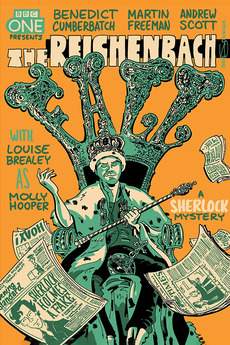
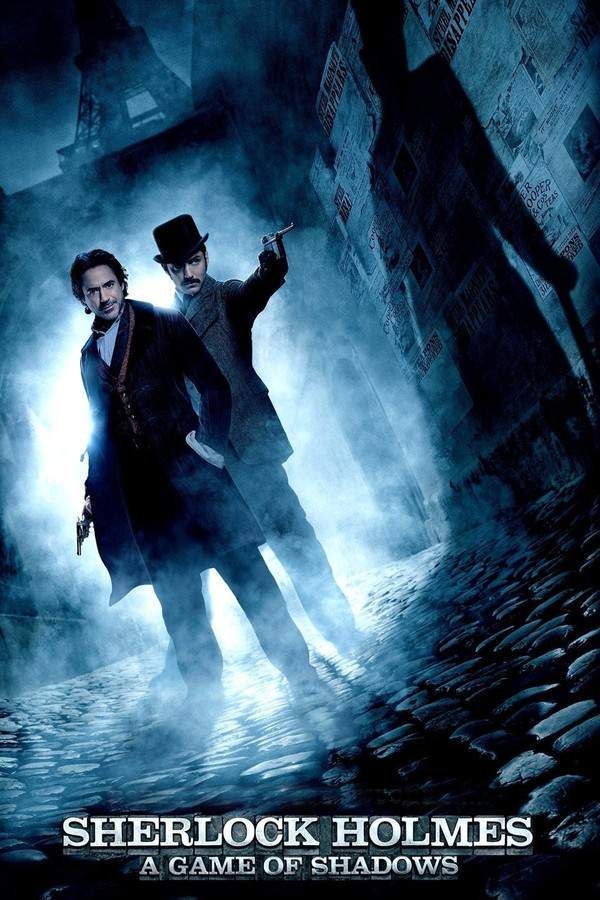
Sherlock: The Great Game (1000) movie poster

Plot Summary

Sherlock: The Great Game (1000) Plot Summary Explained

Release, runtime and language
1000 · 89 mins · English
Loading streaming availability…
Directed by
Paul McGuigan
Starring
Benedict Cumberbatch, Martin Freeman, Andrew Scott, Vinette Robinson, Rupert Graves, John Sessions

Mycroft summons Sherlock for assistance, but a ruthless criminal mastermind forces him into a frantic, distraction‑filled investigation. The villain unleashes a series of human‑hostage bombs that speak, compelling Sherlock to solve each perilous case before the next explosive threat erupts.

On this page (6)
  1. 1 Where to watch
  2. 2 What happens: full plot
  3. 3 Plot questions answered
  4. 4 Movie threads
  5. 5 Categories
  6. 6 Every angle
Loading streaming availability…

Full plot summary · contains spoilers

What Happens in Sherlock: The Great Game: Full Plot Summary

The whole story of Sherlock: The Great Game (1000) explained, from the opening scene to the final frame: every key event, every twist and what it all adds up to. Read it as a quick recap before the sequel, to check a scene you missed, or to finally understand what really happened.

Sherlock Holmes, Benedict Cumberbatch, does not waste time quarreling over grammar or turning away a case in this fresh chapter. Instead, he is drawn into a tangled, pulse‑pounding puzzle that tests wit, nerves, and the very nature of trust.

Dr. John Watson, Martin Freeman, receives word of an explosion on Baker Street while visiting his girlfriend, Sarah Zoe Telford at her apartment. When John and Sarah are safe, Sherlock and his brother Mycroft seem unfazed by the blast, and Mycroft pushes Sherlock to take on a different mission: investigate the murder of MI6 employee Andrew West, found dead on a railroad track. The case carries the mystery of a missing flash drive packed with defense missile secrets, a clue that West allegedly took. Despite Mycroft’s insistence, Sherlock initially declines the assignment, preferring to brood over puzzles that truly challenge him.

Soon enough, Sherlock is beckoned to Scotland Yard, where a chilling connection to a prior case, “A Study in Pink,” greets him. A phone that mirrors the one from that earlier crime rings with five Greenwich pips and projects a photograph of the basement flat in Sherlock and John’s building, complete with a pair of trainers. A frightened woman telephones, delivering a chilling warning: she is wearing an explosive vest that will detonate if Sherlock cannot solve a series of puzzles within 12 hours. The five pips point to five separate challenges, a brutal countdown that sharpens the tension in every moment.

As Sherlock and John pore over the trainers, Molly Hooper, Louise Brealey, the lab tech who has long harbored feelings for Sherlock, interrupts them. She introduces her new boyfriend, Jim Andrew Scott, who works in IT. Sherlock quickly deduces that Jim is gay, and he doesn’t hesitate to say so, a moment that adds a sharp edge to the room’s dynamics. The trainers belong to a schoolboy named Carl Powers, who drowned under mysterious circumstances when Sherlock was younger and involved in the case he failed to convince the police about. Drawing on clues etched into the sneakers, Sherlock concludes that Powers was poisoned via his eczema medication, though the identity of the actual poisoner remains a shadowy question. The trapped woman is eventually freed, but the layers of the mystery keep piling up.

A second message arrives in the form of a bloodstained sports car. Another hostage offers Sherlock eight hours to solve the next riddle. A rental agency card is found in the car’s glove box, and Sherlock notices the owner’s distinctive suntan and a recent trip to Colombia. There is frozen blood in the car, and Sherlock reasons that the missing man, Ian Monkford, paid the agency owner to help him vanish. Once again, Sherlock pulls off a daring rescue, and this time he becomes convinced that his elusive foe is Moriarty, the same acerbic mastermind alluded to by the killer in the earlier case.

Sherlock then turns to the death of Connie Prince, who supposedly fell to tetanus after injuring herself on a nail. Sherlock, however, uncovers evidence that the wound was inflicted after her death. A blind woman calls to challenge him once more, and Sherlock uncovers proof that points to the Prince household as the culprit, revealing that the housekeeper increased Connie’s Botox injections to kill her. Even after solving the puzzle in the allotted time, the bomber triggers the explosives when the hostage begins to describe the kidnapper’s voice. The blind woman’s communication, done through a headset rather than a pager, adds another layer of peril. The photograph of the River Thames serves as a fourth clue, leading Sherlock to a security guard’s body near the river—bruises matching the signature of an assassin known as the Golem, a figure the guard had feared. The guard had suspected a Vermeer painting to be a forgery, and an astronomy professor who had discussed the painting with the victim left him a message on his phone, making the professor a new target. Although Sherlock and John cannot save the professor, they nonetheless uncover a crucial clue that proves the painting is fake and helps avert another tragedy. The museum curator eventually reveals that Moriarty is the mastermind behind these machinations.

While pursuing the Andrew West investigation on his own, John discovers that blood on the tracks is scarce, and Sherlock agrees that West was killed elsewhere and then placed atop the train’s roof. They corner West’s prospective brother‑in‑law, who confesses to stealing the flash drive and accidentally killing West in the process.

With John slipping away, Sherlock arranges a meeting with Moriarty. But the confrontation twists into a dangerous trap: John appears to taunt him, only to reveal himself as another hostage wearing an explosive vest and having his words dictated. Moriarty arrives, and the moment darkens as multiple snipers zero in on Sherlock and John. Sherlock raises his gun toward Moriarty, but in a dramatic turn, he pivots and targets the explosive vest he had thrown across the pool deck. The episode ends on a breathless cliffhanger, leaving the fate of the two men uncertain and the shadow of Moriarty looming larger than ever.

- The narrative threads weave a dense tapestry of clues, misdirections, and psychological maneuvering that test loyalty, intellect, and nerve at every turn.

- Throughout the course of the puzzling countdown, the show leans into the characters’ relationships, offering moments of wit, tension, and vulnerability that deepen the lore of the Holmes universe, while staying faithful to the core cadence of danger, deduction, and daring that fans expect from this modern retelling.

Last updated: October 01, 2025 at 10:25

Was this helpful?

Plot questions answered

Sherlock: The Great Game Plot Explained: Your Questions Answered

The questions people ask most about Sherlock: The Great Game (1000): what happens in the confusing scenes, why the characters do what they do, the twists, hidden details and what the ending means. Each answer contains spoilers.

Q1

Why does Sherlock initially refuse to take the Andrew West case?

Sherlock initially declines the case because he considers it insufficiently challenging. Mycroft presents the murder of Andrew West, a MI6 employee, as a routine investigation involving a missing flash drive with defense missile secrets. Sherlock prefers puzzles that truly test his abilities, making him dismissive of what he sees as a straightforward case. His interest picks up only when the bomber's game begins, which raises the stakes and complexity to a level that actually engages him.

  • andrew west
  • mysterious murder
  • mi6
  • flash drive
  • missile secrets
  • mycroft
Q2

How does Moriarty orchestrate the bomb puzzle game?

Moriarty designs a deadly game where hostages wear explosive vests and Sherlock must solve puzzles within tight time limits. He sends five puzzles through various channels: the phone at Scotland Yard, a blood-stained sports car, the Connie Prince case, a photograph of the River Thames, and finally uses John as a hostage at the pool. Each puzzle connects to previous cases or leads to new victims, creating a complex web that only unravels when Sherlock recognizes Moriarty's signature pattern.

Foreshadowing: The earlier case "A Study in Pink" mentioned Moriarty as the killer's mastermind, foreshadowing his return in this game.

  • moriarty
  • bomb puzzle
  • hostage
  • explosive vest
  • countdown
  • puzzles
Q3

How does Sherlock deduce that Carl Powers was poisoned?

Sherlock analyzes the trainers found in the basement flat and traces them to Carl Powers, a schoolboy who drowned years earlier. The trainers contain hidden clues that Sherlock deciphers using his deductive reasoning. He concludes that Powers was poisoned through his eczema medication rather than drowning accidentally. The poison was administered before Powers entered the water, making the drowning appear natural. However, Sherlock never identifies who actually administered the poison, leaving that detail unresolved.

  • carl powers
  • poison
  • eczema medication
  • trainers
  • drowning
  • case
Q4

What is the connection between Molly's boyfriend Jim and Moriarty?

Molly Hooper brings her new boyfriend Jim, an IT worker, to meet Sherlock at Scotland Yard. Sherlock immediately deduces that Jim is gay from subtle behavioral cues and states it bluntly, causing discomfort. The audience later learns that this Jim is actually Moriarty in disguise, working in IT as a cover. Moriarty uses the relationship with Molly as a way to get close to Sherlock and gather intelligence, though his true identity remains hidden from Molly and most characters throughout the story.

Foreshadowing: Moriarty's comment about enjoying being underestimated hints at his true identity hidden in plain sight.

  • jim
  • moriarty
  • molly hooper
  • it worker
  • disguise
  • relationship
Q5

How does Sherlock uncover the truth behind Connie Prince's death?

Sherlock investigates Connie Prince, officially recorded as dying from tetanus after stepping on a nail. However, he discovers the wound was actually inflicted after her death, proving murder rather than accident. The investigation leads to the housekeeper, who had been administering Connie Prince's Botox treatments. Sherlock uncovers that the housekeeper deliberately increased the Botox剂量 to toxic levels, killing Connie Prince while making it appear as a routine medical complication.

  • connie prince
  • housekeeper
  • botox
  • tetanus
  • poison
  • murder
Q6

When does Sherlock realize Moriarty is behind the entire game?

Sherlock becomes convinced Moriarty is orchestrating the puzzle game after the second hostage situation with the blood-stained sports car. The pattern of interconnected cases and the level of sophistication in the criminal operations match Moriarty's known methods. This conviction grows as each subsequent puzzle connects to the previous one, forming a coherent chain. The museum curator eventually confirms that Moriarty is the mastermind behind all the crimes, tying together the seemingly separate cases into one unified game.

Foreshadowing: The earlier phone call with five Greenwich pips mirrors the earlier "A Study in Pink" case, which referenced Moriarty as the criminal mastermind.

  • moriarty
  • mastermind
  • revelation
  • museum curator
  • realization
  • game
Q7

How does the Andrew West murder case connect to Moriarty's game?

Mycroft assigns Sherlock to investigate Andrew West's murder as part of his initial pitch to engage Sherlock in a case. West, an MI6 employee, was found dead on a railway track with a missing flash drive containing defense missile secrets. The case initially seems separate from the bomber's puzzles. However, John discovers there is little blood at the scene, indicating West was killed elsewhere and placed on the train. They eventually discover West's prospective brother-in-law stole the flash drive and accidentally killed West during a struggle. While this case runs parallel to the bomber's game, both are part of Moriarty's broader scheme to distract and manipulate Sherlock.

  • andrew west
  • flash drive
  • railway
  • murder
  • brother-in-law
  • confession
Q8

What is the significance of the five Greenwich pips?

The five Greenwich pips serve as both a timer and a countdown mechanism for Moriarty's deadly game. When Sherlock receives the first phone call at Scotland Yard, the device emits five pips, each representing one of five separate puzzles he must solve. The pips function as a structural device for the entire narrative, with each pip corresponding to a distinct challenge: the Carl Powers case, the blood-stained car, Connie Prince, the River Thames clue, and the final pool confrontation. The time pressure created by the countdown drives the intense pacing of the episode.

  • greenwich pips
  • countdown
  • timer
  • five puzzles
  • phone call
  • deadline
Q9

What does the River Thames clue lead Sherlock to discover?

The photograph of the River Thames serves as the fourth puzzle in Moriarty's game. Sherlock and John investigate the riverside location and discover the body of a security guard with distinctive bruises matching the signature of an assassin known as the Golem. The guard had suspected a Vermeer painting to be a forgery and had been investigating this suspicion. An astronomy professor who discussed the painting with the guard becomes the next target. Although Sherlock and John cannot save the professor, they uncover proof that the painting is fake, which helps prevent another tragedy and provides crucial evidence tying the cases together.

  • river thames
  • vermeer painting
  • forgery
  • security guard
  • golem
  • astronomy professor
Q10

What happens during the final pool confrontation with Moriarty?

Sherlock arranges a meeting with Moriarty expecting to finally confront his nemesis. However, the encounter turns into a trap when John appears wearing an explosive vest, his words dictated by Moriarty through an earpiece. Moriarty reveals himself and orders snipers to target both Sherlock and John. In a dramatic moment, Sherlock raises his gun toward Moriarty but instead pivots and fires at the explosive vest he had thrown across the pool deck. The episode ends on a cliffhanger, leaving the outcome uncertain and establishing Moriarty as an immediate, deadly threat.

Foreshadowing: Moriarty's earlier statement that the game was never over foreshadows this direct confrontation.

  • pool
  • moriarty
  • john hostage
  • snipers
  • explosive vest
  • cliffhanger
Q11

How does Sherlock solve the mystery of Ian Monkford's disappearance?

The second puzzle arrives via a blood-stained sports car with an eight-hour deadline. Inside the glove box, Sherlock finds a rental agency card and notices the owner's distinctive suntan along with evidence of a recent trip to Colombia. The presence of frozen blood in the car leads Sherlock to deduce that Ian Monkford paid the rental agency owner to help him disappear. Using these clues, Sherlock pieces together that Monkford staged his own disappearance rather than being kidnapped or killed, allowing him to solve the puzzle and rescue the hostage in time.

  • ian monkford
  • blood stained car
  • rental agency
  • disappearance
  • colombia
  • frozen blood
Q12

Why does Sherlock shoot the explosive vest instead of Moriarty at the pool?

When Sherlock finds John strapped to an explosive vest at the pool, he faces an impossible situation. Moriarty has snipers positioned to kill both him and John regardless of what he does. Recognizing the vest John wears can be detonated remotely, Sherlock makes a split-second tactical decision. He raises his gun toward Moriarty to draw attention, then pivots and shoots the vest he had previously thrown across the pool deck. This action appears to be an attempt to destroy the vest or trigger it away from John, though the exact outcome remains ambiguous at the cliffhanger ending.

Foreshadowing: The bomber's earlier comment about playing the game properly suggests Moriarty expects Sherlock to find clever solutions, which Sherlock does by targeting the vest.

  • explosive vest
  • pool
  • shoot
  • moriarty
  • tactical decision
  • cliffhanger

Movie threads

More Movies Like Sherlock: The Great Game, by Mood & Story

Curated lists built around what makes Sherlock: The Great Game tick: the same mood, the same kind of story or the same emotional payoff. Each list explains why these movies belong together.

Movies with Criminal Mastermind Duels like Sherlock: The Great Game

Brilliant protagonists outwitted by an unseen, formidable adversary in a deadly game. If you enjoyed the intellectual cat-and-mouse game in Sherlock: The Great Game, this list features movies where brilliant heroes are pitted against equally cunning villains. Explore similar stories of high-stakes puzzles, psychological manipulation, and frantic investigations against the clock.

  • intellectual
  • urgent
  • mind-bending
  • psychological
  • tense
  • game-like
  • Tone: tense, dark, intellectually stimulating
  • Pacing: fast, relentless
Why these movies?

The story pattern: The narrative follows a pattern where a brilliant detective or protagonist is drawn into a personalized challenge by a criminal mastermind. The antagonist designs a series of tests or crimes specifically tailored to the hero's skills, creating a structured game where failure has dire consequences. The story arc is less about a single mystery and more about the evolving psychological duel between the two rivals.

Why they belong together: These movies are grouped by their core conflict: a personalized intellectual battle. They share a tense, urgent mood where the villain is often as compelling as the hero. The pacing is fast and driven by a sequence of escalating challenges, creating a consistently high-intensity experience focused on mind over brute force.

Ticking Clock Thrillers like Sherlock: The Great Game

Frantic investigations where solving a puzzle is the only way to prevent disaster. Fans of the relentless, countdown-driven tension in Sherlock: The Great Game will find similar adrenaline-pumping stories here. Discover movies built around a race against time, where heroes must solve complex problems under extreme pressure to prevent imminent disaster.

  • anxious
  • urgent
  • claustrophobic
  • frantic
  • high-stakes
  • suspenseful
  • Tone: anxious, urgent, dark
  • Pacing: fast, frantic
Why these movies?

The story pattern: Narratives in this thread are structured around a sequence of timed threats. The plot unfolds in distinct, high-pressure segments, each with its own mini-mystery and deadline. This structure creates a wave-like pattern of tension, with temporary resolutions only leading directly into the next, often more dangerous, challenge. The focus is on procedural urgency and the mental strain of constant crisis.

Why they belong together: These films are connected by their core narrative engine: the ticking clock. They share an anxious, claustrophobic mood where time is the ultimate antagonist. The experience is defined by fast pacing, high intensity, and a focus on the logistics and quick thinking required to beat a deadline, making the viewer feel the pressure alongside the characters.

Categories

Movie Lists Featuring Sherlock: The Great Game

Sherlock: The Great Game appears in these hand-built movie categories. Each one groups movies by a specific mood, theme or story type, with their plot summaries and endings explained.

View all movie categories

Every angle

Sherlock: The Great Game (1000) Explained: Plot, Timeline & Characters

Everything about Sherlock: The Great Game in one place: what happens in the plot summary, the timeline in chronological order, the characters and meaning and a spoiler-free summary. What's After the Movie adds the cast, box office and post-credit scenes.

Coming soon on iOS and Android

The Plot Explained Movie Summary App

Plot summaries, endings explained and timelines on your phone. Catch up on any movie in minutes, save your favorites and never miss a twist again.

Be the first to know when we launch. Your email stays private, always.

Learn more about the app