Plot Explained Spoilers guaranteed!
Plot Explained

Browse by genre

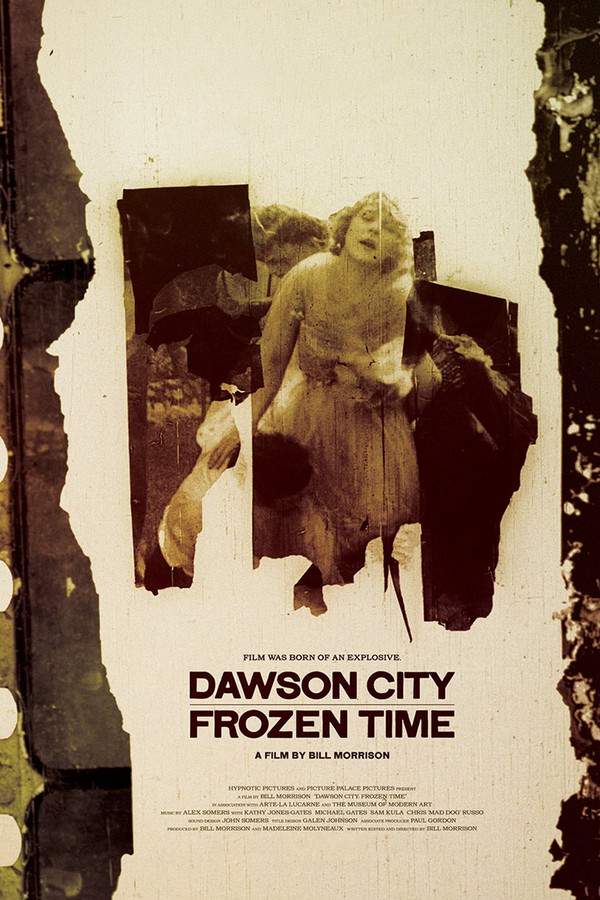
Dawson City: Frozen Time (2017) movie poster

Characters & Themes

Dawson City: Frozen Time (2017) Characters, Setting & Themes Explained

Release, runtime and language
2017 · 120 min · English
Echo score 78
Loading streaming availability…
Starring
Bill Morrison, Bill O'Farrell, Chris 'Mad Dog' Russo, Kathy Jones-Gates, Michael Gates, Sam Kula

In the Yukon's unforgiving past, a remarkable discovery was made: 533 forgotten film prints from the early 1900s, preserved in the permafrost of Dawson City, a town once bustling with the Canadian Gold Rush. Directed by Bill Morrison, this unique documentary explores the history of this lost film collection, using rare silent films, newsreels, and archival footage to tell the story of their exile, accidental burial, and eventual rediscovery and restoration. It’s a poignant reflection on the fragility of film and the power of preservation.

On this page (8)
  1. 1 Where to watch
  2. 2 Characters explained (2)
  3. 3 Where & when it takes place
  4. 4 Themes & meaning (2)
  5. 5 Character & meaning questions
  6. 6 Movie threads
  7. 7 Movies like Dawson City: Frozen Time
  8. 8 Every angle
Loading streaming availability…

2 main characters · contains spoilers

Dawson City: Frozen Time Characters Explained: Who Is Who

The main characters of Dawson City: Frozen Time (2017), heroes and villains: what drives them, how they change over the course of the story and what each of them reveals about the film's bigger ideas.

  • Bill Morrison

    Bill Morrison serves as the insightful narrator and custodian of the documentary, guiding the audience through the discoveries uncovered in Dawson City. His passion for film history and preservation shines through as he shares the significance of the unearthed reels. Morrison's dedication to uncovering forgotten stories of the silent film era lends a reflective tone to the documentary.

    • 🎤 Narrator
    • 🕵️‍♂️ Historian
  • Michael Gates

    Michael Gates appears in the documentary segments, offering personal anecdotes about the film discovery and the history of Dawson City. His connection to the town and its cinematic legacy renders the narrative more intimate as he reflects on the changes and challenges faced by the community. Gates embodies the voice of those invested in preserving Dawson's history.

    • 🧑‍🏫 Historian
    • 🎬 Documentarian

Last updated: October 18, 2026 at 16:58

Was this helpful?

Setting

Where and When Does Dawson City: Frozen Time Take Place?

The setting of Dawson City: Frozen Time (2017): the year and time period, the places and locations, and how they shape the characters, the mood and the tension of the story.

Time period

Late 19th century, Early 20th century

The movie takes place during the late 19th century, highlighting the Klondike Gold Rush era, and into the early 20th century, when silent films made their mark in Hollywood. This period was characterized by rapid growth, exploration, and transformation of communities, especially those that became boomtowns like Dawson City, which thrived on newfound wealth.

Location

Dawson City, Yukon, Canada

Dawson City, situated in the Yukon territory of Canada, was historically significant during the Klondike Gold Rush. Once a thriving boomtown, it transformed into an entertainment hub before facing industrial decline. The discovery of the nitrate films beneath its permafrost speaks to its rich cultural tapestry and the impact of the gold rush on its development.

  • 🏔️ Geography
  • 🎥 Film History

Last updated: October 18, 2026 at 16:58

Was this helpful?

2 major themes

Dawson City: Frozen Time Meaning: Themes & Message Explained

What is Dawson City: Frozen Time (2017) really about? The emotional, social and philosophical themes the film keeps returning to, its symbolism and the message beneath the surface.

  • Film Preservation

    The movie emphasizes the importance of preserving cinematic history, illustrated through the discovery of the lost nitrate reels. It showcases how these films provide invaluable insights into a bygone era and the cultural significance of the silent film era. The act of preservation connects past and present, ensuring that stories of earlier generations are not forgotten.

  • Gold Rush

    The theme of the gold rush serves as a backdrop to the narrative, as it influenced the population and economy of Dawson City. It led to rapid development and exploitation of resources while shaping the identities of those who settled there. This history reveals the duality of prosperity and the eventual decline of boomtowns.

Last updated: October 18, 2026 at 16:58

Was this helpful?

Character & theme questions

Dawson City: Frozen Time Characters & Meaning: Your Questions Answered

The questions people ask about Dawson City: Frozen Time (2017): who the characters really are, their relationships, what the symbols mean, where it takes place and what the movie is really about. Each answer contains spoilers.

Q1

What is Dawson City: Frozen Time about?

Dawson City: Frozen Time is a 2017 documentary directed by Bill Morrison that tells the story of 533 forgotten nitrate film prints discovered in the permafrost of Dawson City, Yukon. Using rare silent films, newsreels, and archival footage, the film traces how this lost collection was shipped north, buried, abandoned, and eventually rediscovered. It functions as both a historical detective story and a meditation on the fragility of film and the importance of cultural preservation.

  • dawson city frozen time
  • documentary
  • bill morrison
  • yukon
  • lost nitrate films
  • preservation
Q2

How were hundreds of film prints found buried in the Yukon permafrost?

During the silent era, Dawson City was the end of the distribution line for films shipped from the continental United States, and studios considered any print that reached the territory worthless. When reels broke, caught fire, or simply went out of circulation, residents and theater operators often buried, dumped, or burned them rather than ship them back. Decades later, construction projects and excavations repeatedly turned up frozen cans of nitrate film, eventually revealing all 533 reels, which the cold ground had preserved almost perfectly.

  • nitrate film prints
  • permafrost
  • buried films
  • silent era distribution
  • film preservation
Q3

Where is Dawson City and why is it important to film history?

Dawson City is a remote town in Canada's Yukon territory, just across the Klondike River from where the 1896 gold strike transformed the region. It is central to film history because its isolation and harsh climate turned it into a natural deep-freeze archive: every print that studios cared to send that far north was effectively abandoned there. That fate turned the town into the single largest accidental repository of silent-era nitrate film in the world, making Dawson City as significant to cinema as it once was to the Klondike Gold Rush.

  • dawson city
  • yukon
  • canada
  • klondike
  • film history
  • silent era
Q4

What time period does Dawson City: Frozen Time cover?

The documentary spans the late 19th century into the early 20th century, beginning with the Klondike Gold Rush that began in 1896 and turned Dawson City into a boomtown. It then follows the parallel rise of the American silent film industry, whose prints reached the Yukon between roughly 1903 and the late 1920s. The story essentially closes with the collapse of the gold rush and the dawn of sound cinema, the two forces that together sealed the films underground.

  • klondike gold rush
  • silent film era
  • 1890s
  • early 1900s
  • late 19th century
Q5

What is the central theme of Dawson City: Frozen Time?

At its core the documentary is about the precariousness of film as a medium and the moral importance of preserving cinema history. Using the Dawson City reels as evidence, it argues that entire eras of human experience can vanish without trace when nobody archives them, and that recovery is possible only when both luck and climate cooperate. A secondary theme is the boom-and-bust cycle of frontier towns like Dawson, in which cultural riches are routinely created and just as routinely forgotten.

  • film preservation
  • lost media
  • cultural memory
  • boom and bust
  • silent era legacy
Q6

Why does Dawson City: Frozen Time use silent film aesthetics?

Director Bill Morrison frames the documentary entirely through the visual vocabulary of the period it documents: intertitles replace traditional narration, the soundtrack blends archival sound design with a melancholic score, and the editing pace slows down to let decaying footage breathe. This stylistic choice immerses viewers in the early 20th century rather than merely describing it, reinforcing the elegiac mood that runs through the film. It also mirrors the medium of the buried reels themselves, which were almost all silent productions.

  • silent film aesthetics
  • intertitles
  • archival footage
  • bill morrison style
  • documentary form
Q7

Who is Bill Morrison and what is his role in the documentary?

Bill Morrison is an American filmmaker and the director of Dawson City: Frozen Time, widely known for works like Decasia that treat decayed and damaged film footage as a visual medium in its own right. In the documentary he serves as the principal narrator and editorial voice, guiding the audience through the history of the lost reels, the boomtown that buried them, and the modern restoration effort. His sensibility shapes everything from the choice of footage to the pacing, giving the film its contemplative, mournful register.

  • bill morrison
  • director
  • decasia
  • archival cinema
  • narrator
Q8

What happened to Dawson City after the Klondike Gold Rush ended?

Once the easily worked placer gold thinned out and richer strikes were discovered elsewhere, prospectors and entertainers abandoned Dawson City almost overnight in the early 1900s, and its population fell by roughly 90 percent within a couple of years. The grand theaters, opera houses, and recreation halls built to occupy the workforces were gradually dismantled or left to rot. That rapid emptying is precisely why abandoned film prints accumulated in the town for years without anyone bothering to ship them south.

  • dawson city decline
  • klondike gold rush collapse
  • boomtown
  • ghost town
  • abandoned theaters
Q9

What is the tone and pacing of Dawson City: Frozen Time?

The film is deliberately slow and meditative, prioritizing atmosphere, mood, and the texture of decaying footage over conventional exposition or dramatic pacing. Its emotional register is melancholic rather than tragic, balancing pervasive loss with the redemptive arc of rediscovery and restoration. There is almost no tension in the thriller sense; instead the documentary registers as an elegy for forgotten stories, communities, and an entire era of cinema.

  • slow cinema
  • melancholic tone
  • meditative pacing
  • elegy
  • archival mood
Q10

Who is Michael Gates and what role does he play?

Michael Gates is a Dawson City-based historian who appears on camera in Dawson City: Frozen Time to provide local context about the town, the gold rush, and the discovery of the film cache. He functions as a community voice, connecting the sweeping archival narrative to the lived history of the people who actually live in the Yukon today. His presence reinforces the documentary's argument that the buried reels are not just artifacts but a living part of the town's identity.

  • michael gates
  • historian
  • dawson city
  • local history
  • documentary contributor

Movie threads

More Movies Like Dawson City: Frozen Time, by Mood & Story

Curated lists built around what makes Dawson City: Frozen Time tick: the same mood, the same kind of story or the same emotional payoff. Each list explains why these movies belong together.

Lost media archaeology like Dawson City: Frozen Time

Documents that dig up forgotten reels and let silent history speak again. If you liked Dawson City: Frozen Time, explore movies like this that treat film itself as a fragile artifact worth recovering. These slow, melancholic documentaries rediscover forgotten reels, newsreels, and archival footage to reconstruct histories that time tried to bury. Perfect for fans of archival documentaries and reflective cinema about media preservation, memory, and the redemptive power of restoration.

  • archival
  • meditative
  • haunting
  • wistful
  • rediscovering
  • reflective
  • Tone: melancholic, wistful
  • Pacing: slow, meditative
Why these movies?

The story pattern: Stories in this thread often move through a cycle of disappearance and salvage. A lost or buried cache of material sets the stage, and the film becomes a guided excavation, layering recovered images with contextual history. There are rarely traditional protagonists; historians, archivists, or the footage itself take the lead. The emotional arc drifts from elegy and loss toward a bittersweet sense that something, at least, has been saved.

Why they belong together: They share a reverence for fragile media and a willingness to let images, music, and silence do most of the storytelling. Pacing tends to be slow and meditative, intensity low, but sadness sits medium to high. Themes of cultural erasure, indigenous displacement, and the precariousness of collective memory recur, and the visual vocabulary is almost always dominated by archival material shown on its own terms.
Contemplative elegies for forgotten places like Dawson City: Frozen Time

Slow-burn documentaries that mourn vanished communities and lost centuries. If you liked Dawson City: Frozen Time and its melancholy meditation on a vanished gold rush town, try these similar contemplative historical documentaries. Movies in this thread mourn forgotten communities, lost eras, and the fragility of cultural memory through archival footage and poetic pacing. Expect bittersweet endings, low intensity but medium emotional weight, and storytelling that lingers long after the credits roll.

  • contemplative
  • haunting
  • bittersweet
  • wistful
  • reflective
  • poetic
  • Tone: melancholic, bittersweet
  • Pacing: slow, drifting
Why these movies?

The story pattern: Films in this thread often frame a place or community as a kind of ghost, using present-day stillness or absence to summon what once was. The narrative drifts across decades, layering fragments of archival footage with quiet contemporary observation. Conflict is interior rather than dramatic, and the emotional arc tends toward a bittersweet reconciliation with time's passage, where loss and rediscovery coexist in the same frame.

Why they belong together: They're grouped for their shared emphasis on slow pacing, reflective tone, and elegiac treatment of historical subjects. These documentaries tend to share low intensity but medium-to-heavy emotional weight, often revisiting themes of cultural erasure, indigenous displacement, abandoned places, and the labor of memory. The aesthetic vocabulary of archival images, evocative scores, and unhurried editing creates a contemplative space for viewers to remember alongside the film.

If you liked this

Movies Like Dawson City: Frozen Time

Similar movies to Dawson City: Frozen Time: the same genre, themes or kind of story. Each one comes with its own plot summary, timeline and ending explained.

Browse all movie summaries

Every angle

Dawson City: Frozen Time (2017) Explained: Plot, Timeline & Characters

Everything about Dawson City: Frozen Time in one place: what happens in the plot summary, the timeline in chronological order, the characters and meaning and a spoiler-free summary. What's After the Movie adds the cast, box office and post-credit scenes.

Coming soon on iOS and Android

The Plot Explained Movie Summary App

Plot summaries, endings explained and timelines on your phone. Catch up on any movie in minutes, save your favorites and never miss a twist again.

Be the first to know when we launch. Your email stays private, always.

Learn more about the app