Plot Explained Spoilers guaranteed!
Plot Explained

Browse by genre

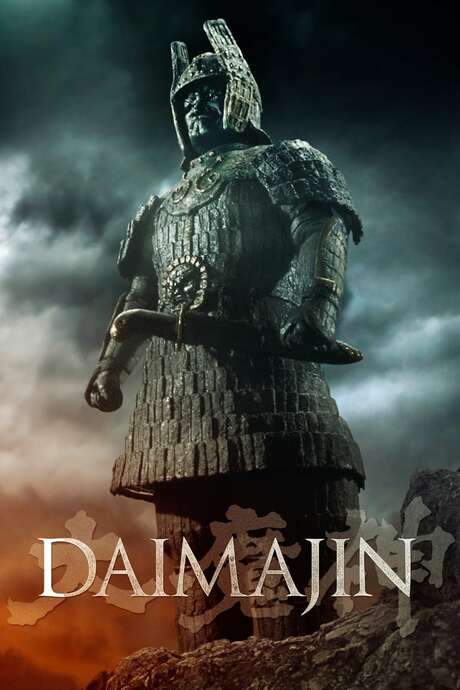
Daimajin (1966) movie poster

Timeline

Daimajin (1966) Timeline Explained – Every Event in Order

Release, runtime and language
1966 · 84 mins · Japanese
Loading streaming availability…
Directed by
Kimiyoshi Yasuda
Starring
Chikara Hashimoto, Jun Katsumura, Akira Amemiya, Saburo Date, Miwa Takada, Gen Kimura

A giant stone statue comes to life to protect the residents of a small town against the depradations of an evil warlord.

On this page (6)
  1. 1 Where to watch
  2. 2 Events in order (13)
  3. 3 Timeline questions answered
  4. 4 Movie threads
  5. 5 Movies like Daimajin
  6. 6 Every angle
Loading streaming availability…

13 events in order · contains spoilers

Daimajin Timeline: Events in Chronological Order

Every key event of Daimajin (1966) in order, scene by scene, with when and where it takes place. Use it to untangle flashbacks, time jumps and parallel storylines, to refresh your memory before the sequel or to find the exact scene you are thinking of.

  1. Samanosuke's coup and massacre

    In Hanabusa Tadakiyo's domain, Ōdate Samanosuke stages a coup and seizes control. He and his henchmen slaughter Hanabusa and his wife, leaving the village terrified and leaderless. The act begins a brutal reign that reshapes life in the hills.

    Where
    Hanabusa's residence, lord's stronghold
  2. Escape of the children with Kogenta

    The son and daughter escape the massacre with the help of the loyal samurai Kogenta. They flee toward safety, aided by Kogenta’s intervention and the protection of his aunt Shinobu.

    Where
    village outskirts / Shinobu's house
  3. Shrine ceremony interrupted

    At the village shrine, the ancient ritual to pacify Daimajin is interrupted by Samanosuke's men. Elderly priestess Shinobu warns of a terrible curse if the idol is harmed. Her warning goes unheeded as fear and hunger drive people to despair.

    Where
    village shrine
  4. The journey to the mountain temple

    Kogenta escorts the children to Shinobu's house, and she leads them up the mountain toward the forbidden temple. They reach the half-buried stone idol of the mountain god near a waterfall, behind an ancient sanctuary known only to Shinobu. The trek marks the crossing from safety into sacred danger.

    Where
    mountain shrine / forbidden territory
  5. Endurance of years under tyranny

    The children grow to adulthood while the village endures Samanosuke's brutal rule. He uses the villagers as slaves and starves them into submission. Retainers begin to return, hinting at a looming rebellion.

    When
    years later
    Where
    Tanba village
  6. Kogenta's capture

    Kogenta travels back to gather the old retainers but is captured by Samanosuke's forces. The village's resistance falters as fear tightens its grip.

    Where
    village fortress
  7. Rescue plan and trap

    Take-bō informs Tadafumi and Kozasa of Kogenta's capture, prompting a rescue attempt that turns into a trap. Tadafumi and Kozasa are captured and scheduled for execution.

    Where
    fortress
  8. Shinobu's death and curse

    Shinobu confronts the tyrant and is slain by Samanosuke. With her final breath, she curses him to die a merciless death and warns that destroying the idol will unleash Daimajin's wrath. Her sacrifice deepens the myth surrounding the mountain guardian.

    Where
    village shrine / temple
  9. Hammering the idol and the fall

    The crew traveling up the mountain to smash the idol accidentally discovers Kozasa and Take-bō and is forced to take them to the statue. They hammer the idol's head with a colossal chisel, and blood begins to drip as the earth cracks open. The workers are swallowed by the riven ground.

    Where
    mountain idol site
  10. Kozasa's plea and the awakening of Daimajin

    Kozasa begs the god of the mountain to save her brother and Kogenta and punish the wicked Samanosuke. With her pleas, the idol's bloodstained stone begins to glow as Daimajin Arakatsuma awakens. The statue strides into the clearing, alive at last.

    Where
    mountain idol
  11. Daimajin frees the prisoners and attacks the fortress

    Daimajin rescues Kogenta and Tadafumi from their crosses and destroys Samanosuke's fortress with its immense power. It impales Samanosuke on the chisel driven into its forehead. The tyrant's downfall signals the guardian's dramatic turning of the tide.

    Where
    Samanosuke's fortress
  12. Take-bō's plea and Kozasa's mercy

    Take-bō begs Daimajin to stop as the rampage nears its end, and Kozasa steps forward to plead for mercy. Her tears fall on the statue's stone feet, and Daimajin's rage begins to fade. The guardian's presence seems to soften, if only briefly.

    Where
    fortress clearing
  13. Daimajin's calm and the statue's collapse

    Daimajin's anger subsides as its spirit leaves the idol, restoring it to its former shape. It collapses into rubble, sealing the guardian back within the mountain and ending the village's nightmare. The mountain falls quiet again as the villagers reckon with the guardian's return to stone.

    Where
    idol site

Last updated: October 09, 2025 at 09:25

Was this helpful?

Timeline questions answered

Daimajin Timeline Explained: Your Questions Answered

When does it happen, and why in that order? The questions people ask about the chronology of Daimajin (1966): time jumps, flashbacks, cause and effect between scenes and the correct order of events, each answered with spoilers.

Q1

Why does the stone idol start bleeding when Samanosuke's men hammer it?

The bleeding is a supernatural sign that the mountain god's spirit is still present within the idol. When the soldiers strike the stone with the chisel, they are disturbing a sacred vessel. The blood dripping from the rock signals that Arakatsuma has been awakened by their sacrilege and is responding to the violence committed against both the idol and the innocent villagers. This moment marks the turning point where the god transitions from dormant to active.

Foreshadowing: Earlier, the priestess Shinobu warns that harming the idol will unleash the wrath of Arakatsuma, foreshadowing this violent awakening.

  • daimajin idol bleeding
  • arakatuma awakening
  • stone god blood
  • mountain spirit
Q2

How does Kozasa awaken the giant stone god?

Kozasa awakens Daimajin through her desperate plea and tears. As she kneels before the bleeding idol, she begs the mountain god to save her brother Tadafumi and Kogenta who are strapped to crosses awaiting execution, while simultaneously begging for punishment against the wicked Samanosuke. Her sincere prayer, combined with the tears she sheds in desperation, triggers the dormant spirit within the stone to awaken. The bloodstained statue begins to glow as the divine power responds to her pure heart and urgent call for justice.

Foreshadowing: The film establishes that only those with a pure heart can invoke the mountain god's power, as shown through the children's connection to the forbidden sanctuary.

  • kozasa prayer
  • daimajin awakening
  • prayer to mountain god
  • pure heart
Q3

What causes Samanosuke's defeat and death?

Samanosuke's downfall comes from his own hubris and violence. After ordering the destruction of the sacred idol and murdering the priestess Shinobu, he seals his fate. When the awakened Daimajin arrives at his fortress, it impales Samanosuke on the very chisel that was used to strike the idol, turning the weapon of sacrilege into his execution device. His tyrannical rule is completely destroyed in moments, as the mountain god annihilates the fortress and everyone within it who served the cruel lord.

Foreshadowing: Shinobu's dying curse explicitly warns Samanosuke that he will die a merciless death for destroying the idol, which directly manifests when Daimajin arrives.

  • samanosuke death
  • daimajin destroys fortress
  • tyrant punishment
  • chisel impalement
Q4

Why do Kozasa's tears stop Daimajin's destruction?

Kozasa's tears stop Daimajin because they represent mercy and compassion, emotions that contrast with the pure rage driving the god's destruction. When she steps forward to shield Take-bō and begs the deity to end the carnage, her tears fall onto the stone feet of the statue. This act of mercy fulfills the condition for the god's anger to subside: while justice demanded punishment for the wicked, unlimited destruction was not the mountain god's purpose. The tears symbolize that the villagers have learned from their suffering and are worthy of salvation rather than annihilation.

Foreshadowing: The film establishes Kozasa as the character with the deepest connection to the mountain god through her years of devotion at the forbidden sanctuary.

  • kozasa tears mercy
  • daimajin stops destruction
  • compassion calms god
  • mountain god mercy
Q5

What happens to Shinobu after she curses Samanosuke?

Shinobu is executed by Samanosuke immediately after delivering her curse. When she confronts the warlord to warn him that destroying the idol will unleash divine wrath, he murders her on the spot. However, her death serves as the catalyst for everything that follows, her final words curse Samanosuke to a merciless death and confirm that the idol's destruction will awaken Arakatsuma. Her sacrifice transforms her from a disregarded priestess into the symbolic trigger for the god's eventual vengeance.

Foreshadowing: Her death directly precedes the expedition to destroy the idol, and her curse becomes the narrative justification for the god's subsequent actions.

  • shinobu death
  • priestess murder
  • samanosuke curse
  • daimajin awakening trigger
Q6

How do Tadafumi and Kozasa survive years under Samanosuke's rule?

Tadafumi and Kozasa survive by remaining hidden in the village while living under assumed identities, likely as common laborers or slaves. They endure years of hardship as Samanosuke uses the villagers as slaves and starves them into submission. The film shows that Tadafumi reaches adulthood and becomes a target only when he attempts to rally resistance. Their survival is attributed to staying quiet and low-profile while waiting for an opportunity, as evidenced by the returning Hanabusa retainers who begin to support the cause when the time is right.

Foreshadowing: The children's escape to Shinobu's protected sanctuary in their youth establishes their deep roots in the village and explains their knowledge of the forbidden mountain location.

  • tadafumi kozasa survival
  • hanabusa children
  • samanosuke tyranny years
  • village slavery
Q7

Why does the mountain god only awaken at the end of the story?

Daimajin awakens only at the end because specific conditions must be met for the dormant spirit to stir. The god requires both the completion of sufficient evil (the murder of the priestess, the attempted destruction of its physical vessel, and the imminent execution of innocents) and a pure-hearted plea from someone with a legitimate claim to invoke its power. Kozasa's desperate prayer at the moment when her brother faces death fulfills these conditions. Additionally, Shinobu's death and the physical damage to the idol break the seal that kept the spirit bound, making awakening possible.

Foreshadowing: The constant tremors at the film's beginning represent the god's restlessness but inability to act without proper invocation, while Shinobu's warnings establish that the idol must be harmed for true awakening to occur.

  • daimajin awakening timing
  • mountain god dormant
  • when does daimajin wake
  • seal broken
Q8

What is the connection between Shinobu's death and the idol's destruction?

Shinobu's death and the idol's destruction are directly linked because her murder emboldens Samanosuke to order the idol's demolition as a final act of defiance against the gods. After killing Shinobu, he specifically commands his men to destroy the statue, believing this will silence the spiritual warnings forever. However, this act of sacrilege is precisely what triggers the awakening, her curse predicts that harming the idol will unleash the wrath she spoke of. The sequence is linear: Shinobu dies for defending the idol, Samanosuke destroys the idol in retaliation, and this destruction awakens the very force he sought to eliminate.

Foreshadowing: Shinobu explicitly warns that her death will not be the end, that destroying the idol will bring about the divine retribution she prophesies.

  • shinobu death idol destruction
  • curse fulfillment
  • divine retribution
  • wrath unleashed
Q9

What happens to Take-bō during the final confrontation?

Take-bō survives the destruction of Samanosuke's fortress. During the climax, he witnesses the rampage and begs for mercy as the carnage continues. While many of Samanosuke's soldiers are killed, Take-bō is spared through Kozasa's intervention. He represents the future of the village and the innocent survivors who will rebuild after the tyrannical rule ends. His survival underscores the film's message that mercy and justice can coexist, the god's wrath was directed specifically at the oppressor, not at those who seek peace.

Foreshadowing: Take-bō's earlier role as the messenger who alerts Tadafumi and Kozasa to Kogenta's capture establishes his importance as a helper figure who bridges the resistance network.

  • takebo survival
  • innocent survives
  • daimajin mercy
  • rebuilding village
Q10

Why does Daimajin spare the villagers and only destroy the fortress?

Daimajin spares the villagers because they are the innocent victims of Samanosuke's tyranny, not its perpetrators. The mountain god's purpose, established through the film's mythology, is to protect those who revere the mountain and punish those who commit evil, particularly those who harm sacred places. The villagers have been suffering under forced labor and starvation, making them worthy of salvation rather than punishment. When Kozasa begs for mercy, she explicitly asks for the villagers to be spared, and the god's response confirms it recognizes the difference between the oppressed and the oppressor.

Foreshadowing: The children's connection to the mountain god through Shinobu and their reverence at the forbidden sanctuary establishes their special relationship with the divine force.

  • daimajin spares villagers
  • protects innocent
  • villagers saved
  • mountain god justice
Q11

Does Kogenta survive the execution and destruction?

Kogenta survives the story. He is rescued by Daimajin when the awakened god frees him and Tadafumi from the crosses where theyawait execution. Unlike Samanosuke and his soldiers, Kogenta is saved because he is a loyal retainer of the Hanabusa line and an ally of the innocent. His survival alongside Tadafumi signals the restoration of the rightful order, those who remained faithful to the old lord are rewarded while the tyrant and his followers are destroyed.

Foreshadowing: Kogenta's steadfast loyalty to the Hanabusa family throughout the years, from helping the children escape to rallying retainers, establishes him as a character worthy of divine protection.

  • kogenta survival
  • rescued by daimajin
  • loyal retainer saved
  • execution escaped

Movie threads

More Movies Like Daimajin, by Mood & Story

Curated lists built around what makes Daimajin tick: the same mood, the same kind of story or the same emotional payoff. Each list explains why these movies belong together.

Catastrophic Divine Retribution Movies Like Daimajin

Stories where oppressed people awaken a terrifying, world-altering divine power. If you enjoyed the mythic scale and destructive power of Daimajin, explore movies like this where desperate people summon an ancient god for vengeance. These films feature epic stories of feudal oppression, divine wrath, and bittersweet victories achieved through catastrophic means.

  • mythic
  • vengeful
  • catastrophic
  • reverent
  • desperate
  • oppressive
  • Tone: dark, mythic, somber
  • Pacing: steady, building to chaos
Why these movies?

The story pattern: The narrative follows a clear arc: a community endures extreme oppression, leading them to a desperate act of faith or ritual that awakens a slumbering deity or colossal force. The ensuing retribution is apocalyptic, destroying the oppressors but also threatening the protagonists and their world, culminating in a victory that feels costly and morally complex.

Why they belong together: These movies are grouped by their shared focus on mythic-scale conflict, the theme of uncontrollable power, and a tone that balances solemn reverence with intense, destructive climaxes. They explore the heavy price of salvation when it comes from a force beyond human morality.

Somber Feudal Rebellion Epics Like Daimajin

Grim historical fantasies where commoners rise against a cruel regime. Fans of Daimajin's oppressive setting and themes of tyranny will find similar stories here. Discover movies like Daimajin that explore peasant uprisings, the brutality of warlords, and the heavy drama of survival in a dark, mythic past.

  • oppressive
  • somber
  • desperate
  • feudal
  • tyranny
  • rebellion
  • Tone: dark, somber, desperate
  • Pacing: steady, methodical
Why these movies?

The story pattern: The narrative centers on a community suffering under a despotic ruler, following key characters—often a displaced noble, a steadfast priest, or resilient villagers—as they endure slavery, torture, and loss. The plot builds methodically from despair to a pivotal moment of rebellion, whether through human resolve or supernatural intervention, leading to a decisive but costly showdown.

Why they belong together: These films share a specific mood and setting: a dark, historical-fantasy world defined by feudal power structures. The similarity comes from the oppressive tone, the focus on survival and sacrifice, and the serious treatment of themes like justice and retribution within an epic framework.

If you liked this

Movies Like Daimajin

Similar movies to Daimajin: the same genre, themes or kind of story. Each one comes with its own plot summary, timeline and ending explained.

Browse all movie summaries

Every angle

Daimajin (1966) Explained: Plot, Timeline & Characters

Everything about Daimajin in one place: what happens in the plot summary, the timeline in chronological order, the characters and meaning and a spoiler-free summary. What's After the Movie adds the cast, box office and post-credit scenes.

Coming soon on iOS and Android

The Plot Explained Movie Summary App

Plot summaries, endings explained and timelines on your phone. Catch up on any movie in minutes, save your favorites and never miss a twist again.

Be the first to know when we launch. Your email stays private, always.

Learn more about the app