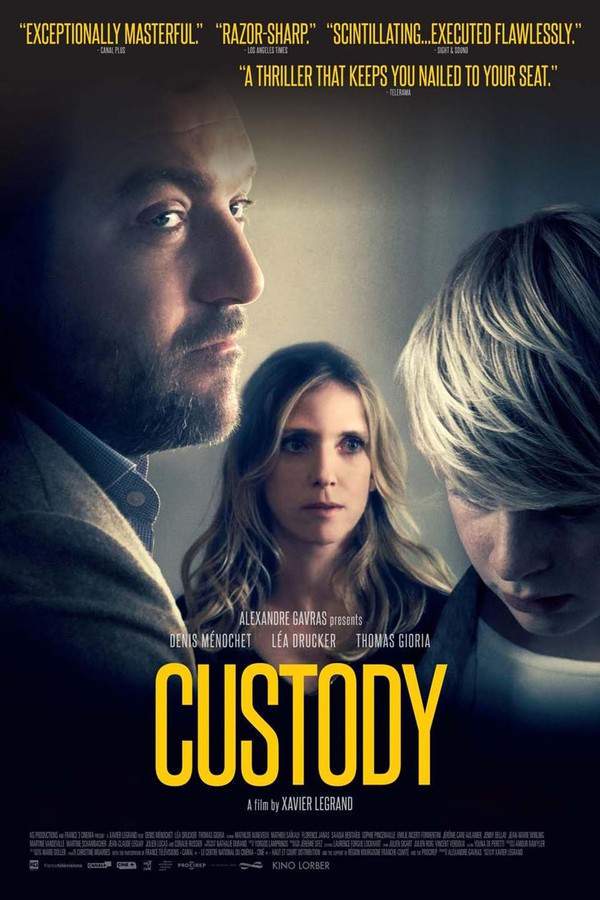
Miriam Besson, Léa Drucker and Antoine Besson are a recently divorced couple navigating a tense custody dispute that reaches the courtroom with mounting emotional weight. They share two children: Joséphine Besson, Mathilde Auneveux, who is nearly eighteen, and Julien Besson, Thomas Gioria, who is eleven. In the custody hearing, Miriam seeks sole custody to shield Julien from what she describes as violent behavior by Antoine, presenting a letter from Julien that expresses his wish not to see his father. The scene is charged with fear, care, and the complexities of a family divided.
The courtroom outcome and its ripple effects. Despite Miriam’s pleas, the judge, Saadia Bentaïeb, and the accompanying court staff, including the clerk, Coralie Russier, grant shared custody and order Julien to spend alternate weekends with his father. The decision acknowledges the children’s needs while leaving space for ongoing tension, and it immediately reshapes the day-to-day dynamics for Miriam, Julien, and Joséphine. Julien’s fear of Antoine is underscored by his desire to protect his mother from both physical and psychological harm, a fear that becomes a throughline in the family’s story.
Antoine’s response to the ruling is not one of acceptance. He seeks to reassert control through pressure and subtle threats directed at the children, a pattern that strains his relationship with his own parents, who eventually tell him to leave the family home where he has been staying. The power struggle intensifies as Antoine pressures Julien to reveal the family’s new address, a coercive move that blurs the lines between privacy and intimidation and weighs heavily on the siblings.
Escalation, proximity, and a family on edge. The tension peaks when Antoine arrives outside Joséphine’s 18th birthday party, triggering a volatile exchange in which he grabs Miriam by the throat. Sylvia, Miriam’s sister, steps in to intervene, signaling that she will call the police if Antoine returns to threaten the family again. The moment crystallizes the precarious balance the family must maintain between safety and proximity, and it tests the siblings’ sense of security during a milestone that should feel celebratory rather than perilous.
A night of danger and a crisis averted. That same night, as Miriam and Julien sleep in their home, Antoine forcibly approaches the apartment armed with a shotgun and fires at the door. A neighbor immediately calls the police, and the family follows safety instructions provided by a police call center, taking shelter in the bathroom while they wait. The arrival of officers marks a crucial turning point: they disarm and arrest Antoine, ending the immediate threat but leaving behind a lasting imprint of fear and resilience on Miriam and Julien.
Throughout these events, the story maintains a careful, restrained tone that centers the experiences and concerns of the children while exposing the ongoing pattern of control and intimidation that underpins the couple’s fractured relationship. The narrative draws a clear, sobering portrait of how a custody dispute can spiral into direct danger, and how the people around Miriam—particularly Julien and Sylvia—navigate loyalty, protection, and the search for safety amid escalating volatility. The film’s balance of intimate detail and procedural realism invites viewers to consider the vulnerability of those caught in violent dynamics and the vital importance of safeguarding those who are most at risk.