

Plot Explained Spoilers guaranteed!
Plot Explained

Browse by genre

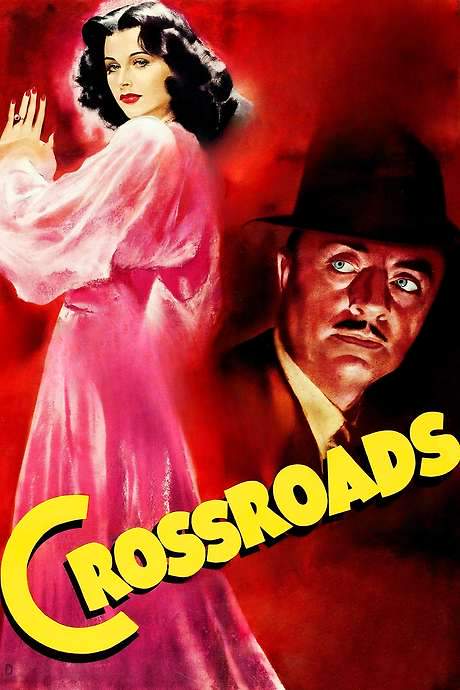
Crossroads (1942) movie poster

Characters & Themes

Crossroads (1942) Characters, Setting & Themes Explained

Release, runtime and language
1942 · 83 mins · English
Directed by
Jack Conway
Starring
Claire Trevor, Basil Rathbone, William Powell, Sig Ruman, Philip Merivale, Torben Meyer

Where women wait to seal your fate! A French diplomat who’s recovered from amnesia is blackmailed over crimes he can’t remember.

On this page (9)
  1. 1 Where to watch
  2. 2 Characters explained (9)
  3. 3 Where & when it takes place
  4. 4 Themes & meaning (3)
  5. 5 Character & meaning questions
  6. 6 Movie threads
  7. 7 Movies like Crossroads
  8. 8 Categories
  9. 9 Every angle

Where to watch

Where to Watch Crossroads (1942)

Where can you watch Crossroads? Stream, rent or buy it in the US, including on YouTube TV: current JustWatch availability with up-to-date prices.

Streaming availability powered by JustWatch

9 main characters · contains spoilers

Crossroads Characters Explained: Who Is Who

The main characters of Crossroads (1942), heroes and villains: what drives them, how they change over the course of the story and what each of them reveals about the film's bigger ideas.

  • David Talbot (William Powell)

    A rising French diplomat and ambassador who struggles with a claimed amnesia about a past life as Jean Pelletier. He must prove his identity while navigating love for his wife and pressure from those who would exploit his past. His character sits at the intersection of personal loyalty, public duty, and a dangerous game of memory and deception.

    • 🧭 Diplomacy
    • 🧠 Amnesia
    • 🏛️ Courtroom
    • 💔 Loyalty
  • Lucienne Talbot (Hedy Lamarr)

    A glamorous nightclub chanteuse and wife who recognizes Talbot as Pelletier. She becomes a key witness to truth and a confidante who wrestles with love, loyalty, and the danger of exposure. Her presence complicates the legal and romantic dynamics surrounding Talbot.

    • 🎤 Nightlife
    • ❤️ Love
    • 🕵️‍♀️ Deception
    • 💎 Presence
  • Henri Sarrou (Basil Rathbone)

    A calculating figure who claims knowledge of Pelletier’s past and masterminds part of the fraud. He extorts money and manipulates testimony to secure a payoff, becoming a pivotal antagonist whose actions threaten Talbot’s life and marriage.

    • 💰 Blackmail
    • 🧭 Hidden past
    • 🗝️ Secrets
    • 🕵️‍♂️ Conspiracy
  • Dr. Alex Dubroc (Sig Ruman)

    A cunning defense psychologist who challenges the amnesia narrative by discrediting Tessier’s diagnosis. He uses psychological tactics to keep Talbot’s past ambiguous, shaping the defense strategy and courtroom dynamics.

    • 🧪 Psychology
    • 🧩 Deception
    • 🧠 Expertise
  • Dr. Andre Tessier (Felix Bressart)

    Talbot’s treating psychologist whose diagnosis of amnesia is questioned. Tessier’s testimony becomes a battleground for reliability, highlighting the fragility of medical truth in legal and personal crises.

    • 🧠 Memory
    • 🧪 Medicine
    • 🧭 Diagnosis
  • Mlle. Michelle Allaine (Claire Trevor)

    A glamorous nightclub performer who is used as a witness and a pawn in the complex scheme. Her actions and loyalties influence the outcome and reveal the blurred line between performance and truth.

    • 🎤 Performer
    • 💔 Love
    • 🗝️ Evidence
    • 🕵️ Witness
  • Madame Pelletier (Margaret Wycherly)

    Pelletier’s mother, living in penury and a potential link to the past. Her demeanor suggests a possible truth about identity, adding emotional weight to the courtroom revelations.

    • 👵 Mother
    • 🏥 Past
    • 🗝️ Family history
  • Carlos Le Duc (Vladimir Sokoloff)

    A mysterious figure who demands a million francs and plays a crucial role in the extortion plot. His presence anchors the criminal underworld element of the case and heightens the stakes for Talbot.

    • 🕵️‍♂️ Crime
    • 💵 Extortion
    • 🗂️ Blackmail
  • Commissaire (Philip Merivale)

    The official overseeing the proceedings, whose authority and judgment shape the trial’s course. He is a steady force amid shifting loyalties and hidden agendas.

    • 🏛️ Law
    • ⚖️ Authority
    • 🗳️ Public proceedings

Last updated: October 04, 2025 at 15:50

Was this helpful?

Setting

Where and When Does Crossroads Take Place?

The setting of Crossroads (1942): the year and time period, the places and locations, and how they shape the characters, the mood and the tension of the story.

Time period

1935

Set in 1935, the film situates its drama in the interwar period when diplomacy and intrigue shaped high-stakes politics. Amnesia, memory doubt, and class tensions color the social sphere of Paris and its corridors of power. The courtroom becomes a battleground where past secrets determine present fortunes, just before the looming shadow of broader global conflict.

Location

Paris, France, African hospital, Nightclub, Foreign ministry, Courtroom

The action is centered in Paris, focusing on government ministries and a courtroom. Key scenes occur at a glamorous nightclub where a chanteuse performs, and at a government office where a safe contains important funds. The backstory unfolds in an African hospital, adding a distant but pivotal thread to the characters' past.

  • 🗺️ Paris
  • 🏛️ Government
  • 🌃 Nightlife

Last updated: October 04, 2025 at 15:50

Was this helpful?

3 major themes

Crossroads Meaning: Themes & Message Explained

What is Crossroads (1942) really about? The emotional, social and philosophical themes the film keeps returning to, its symbolism and the message beneath the surface.

  • Identity & Memory

    Memory is a fragile foundation for identity in Crossroads. Talbot’s claimed amnesia drives the plot, while doctors dispute its reliability and motive. The narrative questions whether who we are is defined by memory, or by the narratives others impose on us. The tension between remembered pasts and forged present truths fuels the emotional core of the film.

  • Truth & Deception

    Truth is continually constructed and deconstructed through testimonies, misdirection, and blackmail. Defendants and conspirators manipulate facts to steer outcomes, while clever witnesses reveal both revealable and concealed motives. The film shows how appearances can mislead and how a single clue can unravel a web of lies. Ultimate revelations hinge on who is willing to tell the truth when it matters most.

  • Justice & Complexity

    The courtroom becomes a theater where justice is negotiated as much as decided. Legal outcomes are influenced by memory doubt, personal loyalties, and financial pressure. The plot critiques how power and manipulation can shape 'justice' when evidence is contested and motives are murky. The resolution ties together confession, evidence, and moral choice.

Last updated: October 04, 2025 at 15:50

Was this helpful?

Character & theme questions

Crossroads Characters & Meaning: Your Questions Answered

The questions people ask about Crossroads (1942): who the characters really are, their relationships, what the symbols mean, where it takes place and what the movie is really about. Each answer contains spoilers.

Q1

Where is the movie Crossroads set?

Crossroads is set primarily in Paris, France, in 1935. The story unfolds across government ministries, a courtroom, and a glamorous nightclub where a chanteuse performs. Key scenes also take place in an African hospital, which provides crucial backstory to the characters' past.

  • paris
  • france
  • location
  • setting
  • nightclub
  • government
  • courtroom
Q2

When does the story take place?

The film is set in 1935, during the interwar period. This era of diplomacy and intrigue provides the backdrop for high-stakes political drama, with the courtroom serving as a battleground where past secrets determine present fortunes, just before the looming shadow of World War II.

  • 1935
  • interwar
  • time period
  • era
  • historical context
Q3

What are the main themes in Crossroads?

Crossroads explores three interconnected themes: Identity and Memory, Truth and Deception, and Justice and Complexity. The film questions whether who we are is defined by memory or by narratives others impose on us. It shows how appearances can mislead and how courtroom testimony becomes a theater where justice is negotiated rather than simply decided.

  • themes
  • identity
  • memory
  • truth
  • deception
  • justice
  • meaning
Q4

Who is David Talbot in the film?

David Talbot is a rising French diplomat who struggles with claimed amnesia about a past life as Jean Pelletier. He must prove his identity while navigating love for his wife and pressure from those who would exploit his uncertain past. His character sits at the intersection of personal loyalty, public duty, and a dangerous game of memory and deception.

  • david talbot
  • protagonist
  • ambassador
  • amnesia
  • identity
Q5

Who is Lucienne Talbot?

Lucienne Talbot is a glamorous nightclub chanteuse and wife of David Talbot. She recognizes Talbot as Pelletier and becomes a key witness to truth, wrestling with love, loyalty, and the danger of exposing her husband's mysterious past. Her presence complicates both the legal and romantic dynamics of the story.

  • lucienne talbot
  • chanteuse
  • nightclub
  • witness
  • wife
Q6

Who is Henri Sarrou in Crossroads?

Henri Sarrou is a calculating antagonist who claims knowledge of Pelletier's past and masterminds part of the fraud. He extorts money and manipulates testimony to secure a payoff, becoming a pivotal threat whose actions endanger Talbot's life and marriage.

  • henri sarrou
  • antagonist
  • extortion
  • fraud
  • villain
Q7

How does amnesia factor into the story?

Memory is the fragile foundation driving Crossroads' entire plot. David Talbot's claimed amnesia creates the central mystery, doctors dispute its reliability and motive, and the narrative questions whether identity is defined by memory or by the narratives others impose. The tension between remembered pasts and forged present truths fuels the film's emotional core.

  • amnesia
  • memory
  • mystery
  • identity
  • psychology
  • diagnosis
Q8

What is the significance of the courtroom in Crossroads?

The courtroom serves as both a theater and battleground where justice is negotiated rather than simply decided. Legal outcomes are influenced by memory doubt, personal loyalties, and financial pressure. The film critiques how power and manipulation can shape justice when evidence is contested and motives are murky.

  • courtroom
  • trial
  • justice
  • legal
  • testimony
  • defense
Q9

What is the nightclub's role in the story?

The glamorous nightclub serves as a key setting where Lucienne Talbot performs as a chanteuse. This venue becomes crucial to the plot as it houses both the romantic relationship between Talbot and his wife and serves as a location for important witness encounters and revelations that impact the courtroom outcome.

  • nightclub
  • paris
  • music
  • performance
  • setting
  • venue
Q10

How does Crossroads handle truth and deception?

Truth is continually constructed and deconstructed through testimonies, misdirection, and blackmail throughout the film. Defendants and conspirators manipulate facts to steer outcomes, while clever witnesses reveal both revealable and concealed motives. The film demonstrates how appearances can mislead and how a single clue can unravel a web of lies.

  • truth
  • deception
  • lying
  • manipulation
  • testimony
  • misdirection
Q11

Who are the key witnesses in the trial?

Key witnesses include Lucienne Talbot, who recognizes her husband as Pelletier, and Mlle. Michelle Allaine, a nightclub performer used as a witness and pawn in the scheme. Doctors Andre Tessier and Alex Dubroc clash over the validity of Talbot's amnesia diagnosis, with their competing psychological testimonies becoming crucial to the case.

  • witness
  • trial
  • testimony
  • court
  • medical
  • psychologist
Q12

What is the tone and style of Crossroads?

Crossroads blends the tension of a thriller with the intellectual puzzle of a courtroom drama. The film features high intensity and a tense tone driven by the central mystery of identity, creating constant psychological pressure and uncertainty. Its steady pacing reflects the methodical unfolding of the legal case, while the complex narrative requires audiences to actively question what is true.

  • tone
  • style
  • thriller
  • courtroom drama
  • mystery
  • tension

Movie threads

More Movies Like Crossroads, by Mood & Story

Curated lists built around what makes Crossroads tick: the same mood, the same kind of story or the same emotional payoff. Each list explains why these movies belong together.

Mystery thrillers with amnesia like Crossroads

Stories where lost memories unravel into thrilling puzzles of identity and deception. If you enjoyed the suspense of Crossroads unraveling a forgotten past, you'll like these movies. This collection features similar mystery thrillers and dramas where characters must uncover the truth about their own identity, often amid blackmail and psychological tension.

  • suspenseful
  • paranoid
  • uncertain
  • psychological
  • mysterious
  • anxious
  • Tone: tense, mysterious, paranoid
  • Pacing: steady, deliberate
Why these movies?

The story pattern: The narrative follows a protagonist who has lost their memory, thrusting them into a world where they cannot trust their own history. As clues emerge, they must discern friend from foe and piece together a timeline of events they cannot recall, leading to a climactic revelation about their true self.

Why they belong together: Movies are grouped here because they share the central plot device of amnesia, creating a unique blend of mystery, personal crisis, and suspense. They explore themes of trust, deception, and the fundamental question of identity under psychological pressure.
Psychological tension with legal stakes like Crossroads

Psychological dramas where the threat of justice creates a web of personal anxiety. For viewers who liked the legal pressure and blackmail in Crossroads, this thread features movies with similar high-stakes psychological tension. These stories often involve characters facing courtroom drama or criminal accusations, creating a steady build of anxiety and moral uncertainty.

  • anxious
  • suspenseful
  • atmospheric
  • uncertain
  • tense
  • methodical
  • Tone: tense, anxious, uncertain
  • Pacing: steady, methodical
Why these movies?

The story pattern: The story often begins with a character accused of, or vulnerable to, a crime they may or may not have committed. The narrative unfolds as they navigate a web of evidence, testimonies, and personal relationships under intense scrutiny, with the truth—and their fate—hanging in the balance.

Why they belong together: These films are connected by their use of a legal framework to amplify psychological tension. They share a mood of sustained anxiety, a steady pacing that builds paranoia, and a complex narrative where truth is subjective and allegiances shift.

If you liked this

Movies Like Crossroads

Similar movies to Crossroads: the same genre, themes or kind of story. Each one comes with its own plot summary, timeline and ending explained.

Browse all movie summaries

Categories

Movie Lists Featuring Crossroads

Crossroads appears in these hand-built movie categories. Each one groups movies by a specific mood, theme or story type, with their plot summaries and endings explained.

View all movie categories

Every angle

Crossroads (1942) Explained: Plot, Timeline & Characters

Everything about Crossroads in one place: what happens in the plot summary, the timeline in chronological order, the characters and meaning and a spoiler-free summary. What's After the Movie adds the cast, box office and post-credit scenes.

Coming soon on iOS and Android

The Plot Explained Movie Summary App

Plot summaries, endings explained and timelines on your phone. Catch up on any movie in minutes, save your favorites and never miss a twist again.

Be the first to know when we launch. Your email stays private, always.

Learn more about the app