Plot Explained Spoilers guaranteed!
Plot Explained

Browse by genre

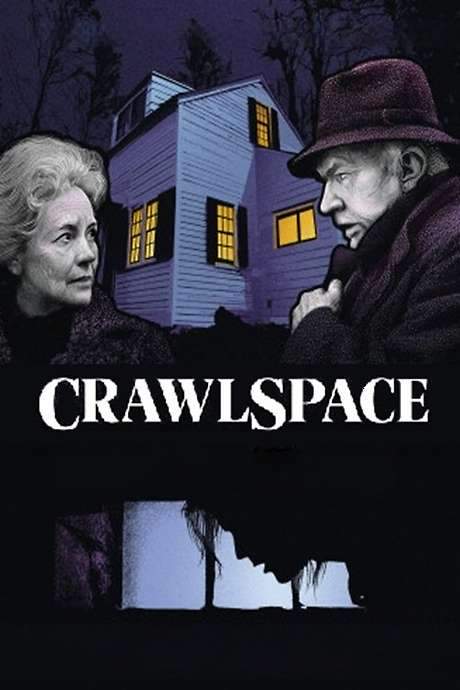
Crawlspace (1972) movie poster

Timeline

Crawlspace (1972) Timeline Explained – Every Event in Order

Release, runtime and language
1972 · 74 mins · English
Loading streaming availability…
Directed by
Buzz Kulik, John Newland
Starring
Teresa Wright, Eugene Roche, Arthur Kennedy, Dan Morgan, Matthew Cowles, Roger Serbagi

Desperate for a child, a childless middle‑aged couple discovers a troubled teen living in the crawlspace beneath their house. They adopt him, believing they can guide him back to normal life. Their well‑meaning intentions, however, unleash a nightmarish series of violent and tragic consequences.

On this page (6)
  1. 1 Where to watch
  2. 2 Events in order (11)
  3. 3 Timeline questions answered
  4. 4 Movie threads
  5. 5 Movies like Crawlspace
  6. 6 Every angle
Loading streaming availability…

11 events in order · contains spoilers

Crawlspace Timeline: Events in Chronological Order

Every key event of Crawlspace (1972) in order, scene by scene, with when and where it takes place. Use it to untangle flashbacks, time jumps and parallel storylines, to refresh your memory before the sequel or to find the exact scene you are thinking of.

  1. Move to country town for recovery

    The elderly couple Albert and Alice Graves relocate from the city to a small country town so Albert can recover from a heart attack. They hope the quiet life will help them heal and start anew in their new home.

    Where
    Country town
  2. Furnace problem discovered

    Soon after moving in, they discover a problem with their furnace in the basement. They contact a repair company hoping to fix the issue and restore comfort to their home.

    Where
    Graves' house basement
  3. Richard Atlee arrives

    The repair company sends a boy named Richard Atlee to service the furnace. The couple are intrigued by him and invite him to stay for dinner, beginning an odd bond.

    Where
    Graves' house
  4. Richard moves into the crawlspace

    A few days after Richard's arrival, Albert wakes to strange noises and discovers Richard has taken up residence in the crawlspace beneath the house. This shocking discovery unsettles the Graves.

    Where
    Under the house / crawlspace
  5. The couple takes him in

    Because they have longed for a child, Albert and Alice decide to take Richard in and raise him as part of the family. They grow attached to him despite his odd living arrangements.

    Where
    Graves' house
  6. Richard refuses to sleep indoors

    Richard refuses to sleep in the main part of the house, insisting on staying in the crawlspace rather than joining the family upstairs. This unusual arrangement continues.

    Where
    Crawlspace
  7. Sheriff warns about Richard

    Sheriff Birge grows suspicious of Richard and warns the couple about his instability, but they choose to maintain their bond with him. The warning marks a turning point in how the town views him.

    Where
    Sheriff's office / town
  8. Richard's violence begins

    Richard's conduct grows increasingly violent toward the Graves and the town, signaling a dangerous turn in his behavior. The atmosphere in the community becomes tense as fear spreads.

    Where
    Graves' home and town
  9. Richard commits a crime

    The young man escalates his actions by committing a crime, demonstrating his power over others and the danger he poses to those around him. The specific act mentioned in the summary is smashing up a section of the town's general store.

    Where
    Town – general store
  10. Escalation leads to tragedy

    The escalating violence culminates in a violent confrontation that ends in tragedy for the Graves and others in the town. The resolution is marked by loss and despair.

    Where
    Town / Graves' home
  11. Aftermath and end

    The film resolves in violence and tragedy, leaving the town reeling from the events. The Graves must confront the consequences and the broken relationships that Richard's presence has wrought.

    Where
    Town

Last updated: February 24, 2026 at 13:55

Was this helpful?

Timeline questions answered

Crawlspace Timeline Explained: Your Questions Answered

When does it happen, and why in that order? The questions people ask about the chronology of Crawlspace (1972): time jumps, flashbacks, cause and effect between scenes and the correct order of events, each answered with spoilers.

Q1

Why did the Graves couple decide to adopt Richard despite his unsettling behavior?

Albert and Alice Graves had longed for a child throughout their marriage but were never able to have one. When they discovered Richard living in their crawlspace, they saw an opportunity to fulfill their parental aspirations. Their desire to nurture and guide a troubled young man into a normal life overriding their judgment about his dangerous nature. This deep-seated longing blinded them to the warning signs, even after Sheriff Birge explicitly warned them about Richard's instability.

Foreshadowing: The warm dinner scene early on hints at the couple's emotional vulnerability and their desperate need for connection.

  • adoption
  • childless couple
  • richard
  • graves
  • motivation
  • parental instinct
Q2

Why did Richard insist on living in the crawlspace instead of inside the house?

Richard's insistence on staying in the crawlspace beneath the house revealed his deeply unsettled psychological state and inability to integrate into normal family life. Despite the Graves' invitations to sleep upstairs, he refused, preferring the cramped, hidden space that reflected his fractured sense of identity. This unusual arrangement became a symbol of his refusal to fully commit to healthy human connection, choosing isolation over vulnerability.

Foreshadowing: Richard's initial demeanor during dinner, quiet and unassuming, masked his underlying discomfort with normal social interactions.

  • crawlspace
  • richard
  • isolation
  • psychological
  • behavior
Q3

Why did Sheriff Birge warn the Graves about Richard, and what was his concern?

Sheriff Emil Birge recognized signs of psychological instability in Richard that the Graves couple chose to overlook. His warning stemmed from observations of Richard's mood swings and increasingly sharp impulses within the town. The sheriff understood that Richard posed a genuine threat to community safety, but his cautions were dismissed by the hopeful couple who interpreted them as mere suspicion rather than legitimate concern.

Foreshadowing: Richard's moods begin to swing during his early days in town, hinting at the instability the sheriff would later identify.

  • sheriff
  • birge
  • warning
  • richard
  • instability
  • town
Q4

What crime did Richard commit that escalated the violence in the story?

Richard's criminal act involved smashing up a section of the town's general store, a focal point of small-town life. This destructive act marked a turning point from abstract threats to concrete violence, demonstrating his growing capacity to harm the community. The attack on the general store shattered whatever remaining sense of normalcy the Graves had hoped to maintain and signaled that Richard's violence would no longer be contained within the household.

Foreshadowing: Richard's earlier mood swings and impulses had been building toward this type of destructive release.

  • general store
  • crime
  • vandalism
  • richard
  • escalation
  • town
Q5

Why did the Graves ignore the warning signs about Richard's dangerous behavior?

The Graves ignored the warnings because their emotional longing for a child overcame rational judgment. They rationalized Richard's troubling behavior as symptoms of insecurity and fear, believing that kindness and shelter could steer him toward normalcy. This self-deception allowed them to maintain hope that their love could transform him, even as objective evidence of his instability mounted.

Foreshadowing: Their decision to invite Richard to dinner after only a brief meeting revealed their vulnerability to forming quick emotional attachments.

  • rationalization
  • denial
  • parental hope
  • warnings
  • psychology
Q6

How did the situation escalate from a hopeful adoption to violent tragedy?

The escalation unfolded gradually through a series of warning signs that the Graves chose to interpret charitably. Richard's refusal to sleep indoors, his mood swings, and Sheriff Birge's explicit warnings were all dismissed or rationalized away. His attack on the general store represented the point of no return, after which his violence became unstoppable. The couple's well-meaning but naive attempts at rehabilitation ultimately unleashed the tragic events they had sought to avoid.

Foreshadowing: Each refusal of Richard to accept normal family life built upon previous warnings, creating a pattern of ignored red flags.

  • escalation
  • tragedy
  • violence
  • pattern
  • consequences
Q7

What motivated Richard's increasingly violent behavior toward the family and town?

Richard's violence stemmed from deep-seated psychological issues that predated his arrival at the Graves home. His unstable mental state manifested in unpredictable mood swings and impulses he could not control. The Graves' attempts to provide structure and care were insufficient to address his underlying psychological problems, which eventually expressed themselves through aggression toward the very people trying to help him and the broader community.

Foreshadowing: Richard's initial quiet and unassuming manner during the furnace repair hints at a mask hiding deeper emotional disturbances.

  • motivation
  • psychology
  • violence
  • mental instability
  • richard
Q8

Why did the Graves' attempt to help Richard end in failure?

The adoption failed because the Graves fundamentally misunderstood the nature of Richard's problems. They believed that a stable home environment and parental guidance could rehabilitate him, but his psychological issues required professional intervention beyond their capabilities. Their well-intentioned but naive approach to parenthood, driven by desperate longing rather than practical understanding, created a dangerous situation that spiraled beyond their control.

Foreshadowing: The couple's move from the city was meant to escape their problems, yet they invited a new, uncontrollable problem into their home.

  • adoption failure
  • rehabilitation
  • parental guidance
  • naivety
  • consequences
Q9

What is the main theme of Crawlspace regarding the Graves' decision to help Richard?

The film serves as a stark meditation on the costs of mistaken benevolence and the fragility of forgiveness in a community seeking stability. The Graves' well-meaning intentions unleashed a nightmarish series of violent and tragic consequences, demonstrating that love and good intentions alone cannot heal deep psychological wounds. Their story illustrates how desperate longings can blind otherwise rational people to obvious dangers, with devastating results.

Foreshadowing: The quiet start of the film, with the hopeful move to the country, creates false expectations that make the tragic conclusion more devastating.

  • theme
  • benevolence
  • consequences
  • trap
  • good intentions
  • psychological
Q10

Why did Richard turn violent against the town after the Graves took him in?

Richard's violence toward the town emerged from his inability to integrate into normal community life and his growing resentment toward the world around him. The attack on the general store represented his rejection of the small-town society the Graves had hoped to join. His actions demonstrated that his psychological issues were not simply a matter of needing a home, but stemmed from deeper emotional disturbances that made violent outbursts inevitable.

Foreshadowing: Richard's refusal to participate in normal family life foreshadowed his broader rejection of normal social structures.

  • town attack
  • rejection
  • community
  • resentment
  • general store

Movie threads

More Movies Like Crawlspace, by Mood & Story

Curated lists built around what makes Crawlspace tick: the same mood, the same kind of story or the same emotional payoff. Each list explains why these movies belong together.

Domestic horror movies like Crawlspace

Stories where families inviting danger into their homes leads to tragedy. If you liked the tragic home invasion theme of Crawlspace, explore more movies where families are destroyed by the very people they try to help. These films share a similar focus on psychological horror and the collapse of domestic safety.

  • claustrophobic
  • unsettling
  • tragic
  • tense
  • ominous
  • psychological
  • Tone: dark, tense, tragic
  • Pacing: steady, methodical
Why these movies?

The story pattern: The narrative pattern typically involves a family unit, often with a void or a desire to help, who bring an outsider into their home. The outsider's hidden psychological instability slowly surfaces, turning the safe haven into a claustrophobic prison and leading to a violent, tragic conclusion for the well-meaning hosts.

Why they belong together: These movies are grouped together because they share a potent mix of family drama and psychological horror, focusing on the terrifying consequences of blurred boundaries and the vulnerability of the domestic sphere. They create a specific kind of dread that is both intimate and inescapable.

Slow-burn psychological tragedies like Crawlspace

Methodical stories where psychological instability leads to inevitable doom. For viewers who appreciated the methodical pacing and heavy emotional weight of Crawlspace, this section collects similar slow-burn thrillers and dramas where a character's mental unraveling leads to a foregone, tragic conclusion.

  • grim
  • foreboding
  • tragic
  • tense
  • melancholic
  • inevitable
  • Tone: dark, grim, foreboding
  • Pacing: steady, slow-burn
Why these movies?

The story pattern: These narratives follow a linear, straightforward path where early signs of trouble escalate methodically without reprieve. Warnings are ignored or prove futile, creating a powerful sense of foreboding as the characters move relentlessly toward a violent and sad ending, emphasizing the tragedy of the situation.

Why they belong together: They are grouped by their shared commitment to a steady, grim pacing that amplifies tension and a narrative structure that makes the tragic ending feel both shocking and inevitable. The emotional experience is defined by heavy dread and a melancholic acceptance of fate.

If you liked this

Movies Like Crawlspace

Similar movies to Crawlspace: the same genre, themes or kind of story. Each one comes with its own plot summary, timeline and ending explained.

Browse all movie summaries

Every angle

Crawlspace (1972) Explained: Plot, Timeline & Characters

Everything about Crawlspace in one place: what happens in the plot summary, the timeline in chronological order, the characters and meaning and a spoiler-free summary. What's After the Movie adds the cast, box office and post-credit scenes.

Coming soon on iOS and Android

The Plot Explained Movie Summary App

Plot summaries, endings explained and timelines on your phone. Catch up on any movie in minutes, save your favorites and never miss a twist again.

Be the first to know when we launch. Your email stays private, always.

Learn more about the app