Plot Explained Spoilers guaranteed!
Plot Explained

Browse by genre

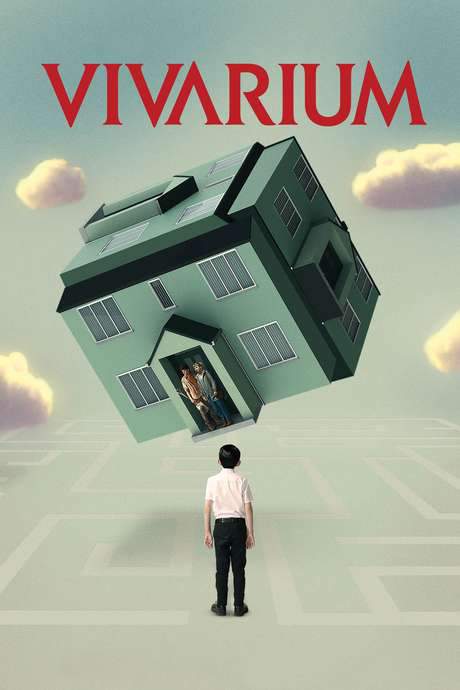
Vivarium (2019) movie poster

Plot Summary

Vivarium (2019) Plot Summary & Ending Explained

Release, runtime and language
2019 · 97 mins · English
Echo score 68
JustWatch #918 57
Directed by
Lorcan Finnegan
Starring
Jesse Eisenberg, Imogen Poots, Mark Quigley, Jonathan Aris, Molly McCann, Danielle Ryan
Budget
$4M

A young couple searching for their first home are led by a peculiar real estate agent to a strange, suburban development. They soon discover they can’t leave, and find themselves unexpectedly tasked with caring for a mysterious child. As they struggle to understand their situation and find a way out, the couple’s relationship is tested in this unsettling and surreal experience.

On this page (7)
  1. 1 Where to watch
  2. 2 What happens: full plot
  3. 3 Plot questions answered
  4. 4 How it ends
  5. 5 Movie threads
  6. 6 Movies like Vivarium
  7. 7 Every angle

Where to watch

Where to Watch Vivarium (2019)

Where can you watch Vivarium? Stream, rent or buy it in the US, including on Kanopy, Tubi TV and Amazon Video: current JustWatch availability with up-to-date prices.

Streaming availability powered by JustWatch

Full plot summary · contains spoilers

What Happens in Vivarium: Full Plot Summary

The whole story of Vivarium (2019) explained, from the opening scene to the final frame: every key event, every twist and what it all adds up to. Read it as a quick recap before the sequel, to check a scene you missed, or to finally understand what really happened.

Tom [Jesse Eisenberg] and Gemma [Imogen Poots], a couple with very different lives—him a landscaper, her a primary school teacher—begin with a quiet, unsettling omen from the natural world: a cuckoo’s brood parasitism that ends with them burying a hatchling. Their mundane moment soon shifts to something stranger as they visit a housing development called Yonder, where every house looks the same and the streets loop on forever. They are guided to house number 9 by an unusually polite but unnervingly observant real estate agent named Martin [Jonathan Aris], who even parrots Gemma’s own answer about whether they have children. The moment feels oddly personal, as if he’s probing their private lives with a calm, almost clinical efficiency. After the tour, Martin vanishes without explanation, leaving the couple rattled and unsure of what they saw.

When they try to leave Yonder, they inexplicably find themselves back at the same, identically arranged row of homes, trapped in an endless loop of identical streets that gnaws at their sense of direction. Their attempts to escape escalate into a trap that seems designed to consume time itself. With each failed exit, the world becomes more mechanical and uncanny, until their car’s fuel gauge hits zero and the landscape refuses to relent. They retreat into the house, hoping for a moment of safety, only to be pulled into an even stranger cycle: they sleep, wake, and discover that nothing has changed.

A strange box appears outside the house—this time filled with vacuum-sealed, flavorless food. Tom burns the house in a desperate bid for control, and the couple sleep again, this time on the pavement outside. When morning arrives, the fire has left no damage and a second box appears, this one containing an infant and a single instruction: raise the child to be released. The twist lands with the weight of a fable, turning their lives into a test they never volunteered for and forcing them to confront a future neither wanted nor understood.

Ninety-eight days pass in a rush of rapid, unsettling change. The child grows to the size of a ten-year-old, mimicking Tom and Gemma with eerie precision and shrieking when hungry. The infant is named or treated as a kind of possession by the parents: the child calls Gemma “Mother,” a term she rejects, while Tom refers to the child as “it.” They safeguard themselves in the garden, waiting for a visitor who never appears, while Tom digs a growing hole in the earth and becomes increasingly withdrawn. The Boy—an observer in the background, watching fractal, almost hypnotic patterns on television—begins to emerge into focus as a separate entity, a figure both present and alien in equal measure.

A moment of impulse and fear reshapes their tactics: Tom locks the Boy inside their car in an attempt to lure whoever is delivering the daily food, but Gemma’s empathy wins over fear and she releases him. Tom’s fixation on digging deepens, and he even drifts into sleep in the growing trench. The Boy vanishes for a time and returns with a strange book, full of symbols and drawings of humanoid figures with throat sacs. When Gemma asks the Boy to imitate the person who gave him the book, he answers with rasping sounds and inflates his own throat sacs, a stark image of the world’s strange rules.

As time passes, the Boy matures into a young adult form, while Tom’s health deteriorates. The Boy leaves each day, and Gemma follows in vain, always returning to number 9. The digging continues, and a disturbing discovery—a corpse sealed in a vacuum bag—deepens the sense of doom. The Boy eventually locks Gemma and Tom out of the house, and they sleep in the car, while Gemma pleads for medicine for Tom. The Boy cryptically suggests that perhaps “it’s time he was released.” Tom dies, and the Boy zips him into a vacuum bag and throws it into the hole they have dug.

Recognition dawns that release means death inside this grim loop. Gemma wounds the Boy with the pickaxe, and the Boy hisses before slipping into a labyrinth beneath the sidewalk. She follows him into a corridor of doors that open into multiple rooms in other houses, where more Boys and several strangers populate the eerie tableau, including one person who has taken their own life. Gemma is dragged back to number 9, weak and broken, while the Boy cleans the house and explains, in his own unsettling way, that mothers die after raising their sons. Gemma dies as she is zipped into a vacuum bag, and the Boy buries her alongside Tom, with the grass healing over the grave itself.

The Boy drives back to the real estate office, where an aged Martin lies on his deathbed. He offers the Boy his name tag before dying, and the final act is the Boy zipping Martin into a vacuum bag and dispatching him down a garbage chute disguised as a file drawer. When a new couple walks in the door, the Boy greets them just as Martin did, signaling that the cycle continues, unbroken and inexorable.
Last updated: February 17, 2026 at 19:55

Was this helpful?

Plot questions answered

Vivarium Plot Explained: Your Questions Answered

The questions people ask most about Vivarium (2019): what happens in the confusing scenes, why the characters do what they do, the twists, hidden details and what the ending means. Each answer contains spoilers.

Q1

Why can't Tom and Gemma leave Yonder?

Tom and Gemma become trapped in Yonder because the housing development is designed as an inescapable loop. Every attempt to drive away leads them back to house number 9, regardless of which direction they take. The streets are identical and infinitely repeating, creating a spatial prison. Their car eventually runs out of fuel, leaving them completely stranded with no means of escape.

  • yonder housing development
  • trapped
  • loop
  • escape
  • stuck
Q2

What does "release" mean in the movie?

"Release" means death. When the Boy suggests it's time for Tom to be "released," he means the couple will be killed so their bodies can be disposed of in vacuum bags, just like the previous inhabitants. The cycle requires the parents to raise the child until they are no longer useful, at which point they are killed and buried in the garden. The grass then heals over the grave, erasing all trace of them.

Foreshadowing: The earlier discovery of a corpse sealed in a vacuum bag foreshadows the couple's own fate.

  • release
  • death
  • vacuum bag
  • killed
  • cycle
Q3

Why are Tom and Gemma given a baby to raise?

They are given the infant as part of the system's mechanism for perpetuating its cycle. The mysterious entity controlling Yonder uses couples to raise the child until it matures, at which point the parents are killed and the now-adult Boy takes over the role of host to lure in new victims. The entire process is designed to create an endless chain of captives who become caretakers for the next generation of Boys.
Foreshadowing: The opening scene of cuckoo brood parasitism, where one creature is forced to raise another species' offspring, foreshadows this forced parental role.

  • baby
  • raise child
  • captivity
  • trap
  • parental role
Q4

Why does the child grow so rapidly?

The child ages unnaturally fast, reaching the size of a ten-year-old within 98 days. This accelerated growth is part of the creature's biology, allowing it to mature quickly enough to perpetuate the cycle. The rapid aging ensures that each generation of parents is killed before they can find any way to escape or resist.
  • child growth
  • rapid aging
  • boy
  • supernatural
Q5

Why does Tom become sick and die?

Tom's illness and eventual death appear to be a consequence of the harsh conditions in Yonder rather than natural disease. The couple has no access to proper medicine or healthcare while trapped. Additionally, Tom's physical deterioration may be accelerated by his obsessive digging of the hole in the garden, his declining mental state, and the general toll of imprisonment and starvation conditions.

  • tom sick
  • death
  • illness
  • health deterioration
Q6

What is the labyrinth beneath the sidewalk?

The labyrinth is a network of corridors connecting the different houses in Yonder, accessible through doors that open into rooms in other identical homes. It serves as the infrastructure of the trap, allowing the Boy to move between houses unseen. When Gemma follows the Boy into the labyrinth, she discovers other rooms with more Boys and trapped individuals, one of whom has committed suicide, revealing she is not the first to be imprisoned.

  • labyrinth
  • underground
  • maze
  • other houses
  • escape attempt
Q7

Why does the Boy take Martin's place at the end?

The Boy assumes Martin's role as the real estate agent who lures new couples into Yonder. When Martin dies of old age, he passes his name tag to the Boy, symbolizing the transfer of authority. The cycle continues as the now-adult Boy欺骗new victims into entering the housing development, ensuring the endless repetition of the trap for future couples.

  • martin
  • boy
  • cycle
  • new couple
  • real estate agent
Q8

What is the significance of the vacuum bags?

The vacuum bags are the method used to dispose of dead inhabitants in Yonder. Bodies are sealed in these clear plastic bags and either thrown into the garden hole or discarded through a garbage chute disguised as a file drawer. The bags represent the systematic erasure of the victims, making them disappear cleanly so the cycle can continue with new prisoners who find no evidence of those who came before.

  • vacuum bag
  • body disposal
  • corpse
  • garbage chute
Q9

Why doesn't the house burn when Tom sets it on fire?

The house cannot be permanently damaged because Yonder exists in a space that defies normal physical laws. When Tom burns the house in a desperate attempt to force an escape, the fire leaves no damage by morning, the house and everything in it reset as part of the system's rules. This impossibility reinforces that Yonder is not a real place but a constructed trap designed to break the captives' will.

  • house fire
  • no damage
  • supernatural
  • reset
  • escape attempt
Q10

Why does Gemma die at the end?

Gemma dies because she has fulfilled her role in the cycle, raising the Boy to adulthood. The Boy tells her that "mothers die after raising their sons," explaining that the parents are always killed once their usefulness ends. She is sealed in a vacuum bag and buried in the garden alongside Tom, with the grass growing over their grave to complete the cycle of erasure.

  • gemma death
  • mother
  • killed
  • buried
  • cycle completion
Q11

Why does Martin disappear after showing them the house?

Martin vanishes because his role in the cycle is complete for that particular iteration. He has successfully lured Tom and Gemma into Yonder, and his job is done. He later returns as an elderly man dying in the real estate office, where the now-adult Boy takes over his position. Martin serves only as the initial entrapper, not as a permanent figure within the development itself.

  • martin disappears
  • real estate agent
  • trap
  • lure
Q12

What is the significance of the cuckoo at the beginning of the movie?

The opening scene shows Gemma and Tom burying a cuckoo chick that was raised by another bird, this is brood parasitism, where one species forces another to raise its offspring. This eventsets the thematic groundwork for the entire film, as Tom and Gemma will later be forced to raise a child that is not theirs, just like the surrogate bird. The cuckoo metaphor explains the entire trap they fall into.

  • cuckoo
  • brood parasitism
  • opening scene
  • metaphor
  • forced parenthood

Ending explained

What Happens at the End of Vivarium?

How Vivarium (2019) ends, in short: the final scene, the last twist and what it means for the characters. The full ending explained, with every spoiler, lives on its own page.

Read the full ending explained

The ending of Vivarium reveals the terrifying, cyclical nature of the trap that Tom and Gemma have fallen into, confirming that there is no escape from the artificial suburban hellscape of Yonder. After being imprisoned and forced to raise a strange, rapidly aging child, the couple succumbs to the inevitable drain of their captivity. Tom, who has spent his time obsessively digging a hole in the front yard, eventually uncovers a corpse in a body bag—foreshadowing his own fate—before his health fails and he dies. When the fully grown "boy" returns to collect Tom's body, Gemma attempts to fight back, only to discover the true scale of their prison. In a surreal, Escher-like sequence, she tears through the pavement and falls into a dimension showing endless rows of identical houses, each containing a trapped couple in varying states of despair. This revelation confirms that Yonder is a vast, predatory experiment where humans are used as specimens.

With Gemma's death, the boy disposes of her body in the same hole Tom dug, completing his maturation process. He then leaves Yonder to return to the real estate office where the story began. There, he finds Martin, the original real estate agent, now aged and on the verge of death. In a chilling passing of the torch, Martin hands his name badge to the boy before dying, revealing that Martin was once a "boy" raised by a previous set of victims. The new adult alien takes Martin's place, ready to greet a fresh couple and restart the cycle of entrapment and death.

Continue reading the ending (1 more paragraphs)

The conclusion serves as a dark metaphor for brood parasitism, a concept visualized in the opening scene where a cuckoo bird pushes other hatchlings from a nest. Just as the cuckoo tricks other birds into raising its young, the entities in Vivarium trap human couples to nurture their parasitic offspring. The film posits that the suburban dream—symbolized by the identical houses and the unwanted child—is a suffocating social contract that drains the life out of individuals. The promise that the couple would be "released" once the child was raised was a literal interpretation of death; they were never meant to leave alive. By ending with the cycle restarting, the movie emphasizes the inescapable repetition of societal expectations, suggesting that the pressures of conformity and parenting can feel like an alien invasion that consumes one's identity and autonomy.

Vivarium ending explained in full

Movie threads

More Movies Like Vivarium, by Mood & Story

Curated lists built around what makes Vivarium tick: the same mood, the same kind of story or the same emotional payoff. Each list explains why these movies belong together.

Allegorical Horror Trap movies like Vivarium

Characters trapped in surreal scenarios that serve as chilling metaphors. Explore movies like Vivarium where characters are imprisoned in surreal, metaphorical worlds. If you enjoyed the allegorical critique of suburban life and forced conformity, you'll find similar unsettling horror and sci-fi stories here.

  • allegorical
  • surreal
  • claustrophobic
  • metaphorical
  • unsettling
  • dystopian
  • Tone: dark, unsettling, surreal
  • Pacing: slow, methodical
Why these movies?

The story pattern: The narrative follows characters who are lured or forced into an unnatural environment that operates on a strange, often sinister logic. Their struggle to escape is paralleled by the audience's slow understanding of the situation's deeper, allegorical meaning, culminating in a bleak realization of their powerlessness.

Why they belong together: These movies are grouped together because they prioritize metaphorical storytelling over literal plot, using a high-concept premise to explore psychological and societal horrors. The shared experience is one of intellectual unease mixed with visceral dread.

Slow burn psychological torment movies like Vivarium

A gradual, suffocating descent into psychological breakdown under relentless pressure. Discover films similar to Vivarium that master the art of slow-burn psychological horror. If you liked watching the couple's sanity unravel under sustained dread, these movies deliver a similarly heavy and oppressive viewing experience.

  • slow burn
  • psychological horror
  • oppressive
  • dread
  • desperate
  • claustrophobic
  • Tone: dreadful, oppressive, bleak
  • Pacing: slow burn
Why these movies?

The story pattern: The story unfolds at a deliberate pace, establishing a normalcy that is slowly poisoned by an inescapable, often unexplained threat. The primary conflict is internal, as the protagonists' mental states fracture over time, leading to despair, desperation, and often a devastatingly bleak conclusion.

Why they belong together: These films are connected by their commitment to a slow, atmospheric build-up that prioritizes psychological suffering over physical danger. They share a heavy, oppressive mood and a focus on the corrosion of the human spirit, making the experience feel intensely draining and claustrophobic.

If you liked this

Movies Like Vivarium

Similar movies to Vivarium: the same genre, themes or kind of story. Each one comes with its own plot summary, timeline and ending explained.

Browse all movie summaries

Every angle

Vivarium (2019) Explained: Plot, Ending, Timeline & Characters

Everything about Vivarium in one place: what happens in the plot summary, the timeline in chronological order, the characters and meaning, the ending explained and a spoiler-free summary. What's After the Movie adds the cast, box office and post-credit scenes.

Coming soon on iOS and Android

The Plot Explained Movie Summary App

Plot summaries, endings explained and timelines on your phone. Catch up on any movie in minutes, save your favorites and never miss a twist again.

Be the first to know when we launch. Your email stays private, always.

Learn more about the app