Plot Explained Spoilers guaranteed!
Plot Explained

Browse by genre

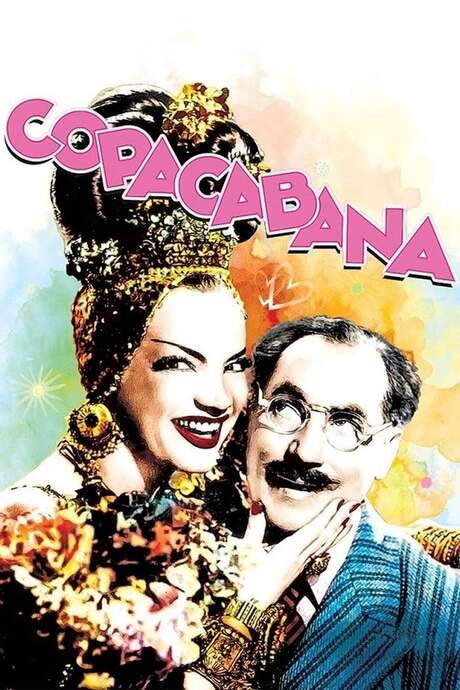
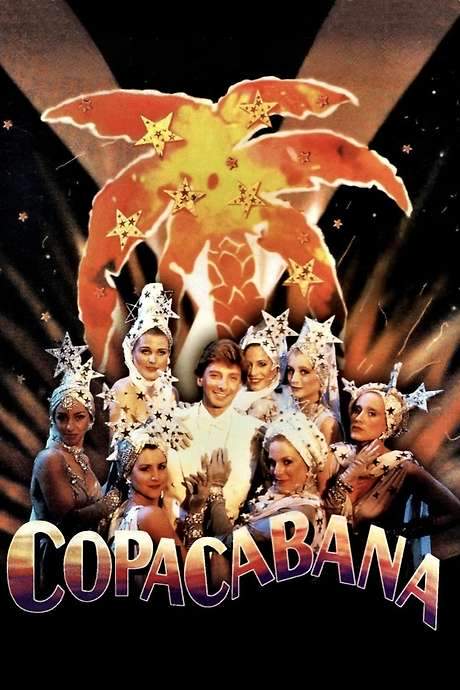
Copacabana (1985) movie poster

Timeline

Copacabana (1985) Timeline Explained – Every Event in Order

Release, runtime and language
1985 · 95 mins · English
Loading streaming availability…
Directed by
Waris Hussein
Starring
Dwier Brown, Annette O'Toole, James T. Callahan, Cliff Osmond, Joseph Bologna, Estelle Getty

Set in 1948, piano‑playing aspiring songwriter Tony meets hopeful star Lola at Manhattan’s Copacabana. Both chase fame, but Lola is whisked to Havana for a glittering nightclub act, only to become entangled with Rico, the club’s charismatic gangster owner, while Tony watches her dreams unravel.

On this page (6)
  1. 1 Where to watch
  2. 2 Events in order (12)
  3. 3 Timeline questions answered
  4. 4 Movie threads
  5. 5 Movies like Copacabana
  6. 6 Every angle
Loading streaming availability…

12 events in order · contains spoilers

Copacabana Timeline: Events in Chronological Order

Every key event of Copacabana (1985) in order, scene by scene, with when and where it takes place. Use it to untangle flashbacks, time jumps and parallel storylines, to refresh your memory before the sequel or to find the exact scene you are thinking of.

  1. Lola and Tony meet on a 1948 radio show at the Copacabana

    In 1948, Lola Lamar and Tony Starr meet as contestants on a radio show broadcast from the Copacabana in Manhattan. Tony is instantly smitten and pledges to help Lola break into show business. Their encounter sparks a rapid, intertwining ascent in New York's nightlife.

    When
    1948
    Where
    Copacabana, Manhattan
  2. They begin to rise to fame together at the Copa

    After meeting, Lola and Tony quickly begin to find fame at the Copacabana, with Tony supporting Lola's breakout efforts. Their onstage chemistry and growing success deepen their partnership, both professionally and personally. The Copa becomes the launchpad for their ambitions.

    When
    1948
    Where
    Copacabana, Manhattan
  3. Lola is sent to Havana to work in a sultry night club act

    Lola is swept away from New York to Havana to perform in a flashy night club act, chasing bigger stardom. The move exposes her to a new milieu and a demanding mentor dynamic that will complicate her career. The glamorous but dangerous environment tests her resilience.

    When
    late 1940s
    Where
    Havana, Cuba
  4. Rico Castelli's price for Lola's rise introduces danger

    Lola's boss and mentor, Rico Castelli, makes it clear that advancing Lola's career will come at a heavy price. The power play foreshadows a corrosive influence over her choices and the men around her. The dynamic sets the stage for later conflicts and heartbreak.

    When
    late 1940s
    Where
    Havana
  5. Tony's star rises at the Copa as Lola climbs too

    Tony Starr's own career accelerates at the Copa as he anchors Lola's ascent, drawing attention and fans. The rising fame tightens their bond while raising the stakes of every decision they make. The couple becomes a central draw in the club's nightly spectacle.

    When
    late 1940s
    Where
    Copacabana, Manhattan
  6. Tensions boil over and a gun battle erupts

    Tensions between Lola, Rico, and the ambition-driven entourage erupt into a dangerous confrontation involving a gun. The high-pressure moment exposes loyalties and tests their boundaries as careers and love hang in the balance. The atmosphere is charged, dangerous, and inescapable.

    When
    late 1940s
    Where
    Copacabana, backstage
  7. Tony Starr dies in Lola's hands during the confrontation

    During the gun battle, Tony Starr is accidentally murdered by Lola's actions, a devastating moment that ends their careers and Lola's life. The event she never intended becomes the defining tragedy of the couple's story. The consequences reverberate through Lola's remaining years.

    When
    late 1940s
    Where
    Copacabana, backstage
  8. The story jumps to 1978 – Lola is now old and intoxicated

    The film returns to 1978, revealing Lola as an aging, heavily intoxicated woman lingering in the Copacabana lounge. Her present is haunted by memories of what might have been. The nightclub's familiar glow contrasts with her tarnished nostalgia.

    When
    1978
    Where
    Copacabana, Manhattan
  9. Lola's memory swallows the present with happier days

    As the night unfolds, Lola drinks and drifts into memory, recalling the joy and romance of the 1940s era when she and Tony chased stardom. The boundary between memory and reality blurs in the neon glow of the club. The scene underscores the hold of the past on her life.

    When
    1978
    Where
    Copacabana, Manhattan
  10. A vision of youth: Lola and Tony dancing again

    Lola envisions a younger version of herself and Tony dancing on the dance floor, a vivid flashback that resurrects their romance and the dream of stardom. The vision is both bittersweet and exhilarating, reminding her of what was lost. The memory intensifies as the present wavers.

    When
    1978
    Where
    Copacabana dance floor
  11. The memory cycle frames the ascent and downfall

    The narrative juxtaposes Lola's 1940s ascent with the lonely, alcohol-soaked present, showing how fame can demand personal costs. The flashbacks illuminate choices that shaped her career and the price of memory. The club setting remains a constant anchor across decades.

    When
    1948; 1978
    Where
    New York
  12. The closing image: memory lingers after the vision

    The final frame lingers on Lola's face as the dance-floor vision dissolves, leaving her immersed in reverie. The cyclical memory ends where it began, hinting that the past and present will keep looping in her mind. The Copacabana site remains the perpetual stage for her memories.

    When
    1978
    Where
    Copacabana, Manhattan

Last updated: February 18, 2026 at 23:44

Was this helpful?

Timeline questions answered

Copacabana Timeline Explained: Your Questions Answered

When does it happen, and why in that order? The questions people ask about the chronology of Copacabana (1985): time jumps, flashbacks, cause and effect between scenes and the correct order of events, each answered with spoilers.

Q1

Why does Lola leave New York for Havana?

Lola is sent to Havana to perform in a flashy nightclub act, convinced that this opportunity will catapult her toward stardom. The move is presented as a career opportunity orchestrated by her mentor Rico Castelli, who promises to elevate her career but makes it clear there will be a heavy price to pay for her advancement.

Foreshadowing: Earlier scenes show Lola's intense ambition to become a star, making her susceptible to any offer that promises fame.

  • lola
  • havana
  • nightclub
  • career
  • ricto
  • ambition
Q2

What does Rico want from Lola in exchange for advancing her career?

Rico Castelli, Lola's boss and mentor, makes it clear that advancing her career will come at a heavy price, though the exact nature of this demand is not explicitly detailed in the summary. The vague but ominous 'price' foreshadows the corrupting influence Rico will have over Lola's choices and sets the stage for the tragic conflict that follows.

Foreshadowing: Rico's power dynamic with Lola is established early as he controls her access to stardom.

  • rico castelli
  • price
  • mentor
  • power
  • lola
Q3

How does Tony Starr die at the Copacabana?

During a gun battle that erupts between Lola, Rico, and their entourage, Tony Starr is accidentally murdered by Lola's actions. The confrontation occurs backstage at the Copacabana when tensions between the characters boil over into violence. Tony dies in Lola's hands during a desperate fight over a gun, a tragic accident that ends both their careers and haunts Lola for decades.

Foreshadowing: Tensions have been building throughout the story as Rico's demands escalate and the power dynamics become increasingly volatile.

  • tony starr
  • death
  • gun
  • lola
  • copacabana
Q4

Why is Lola so haunted by Tony's death in 1978?

Lola is haunted by Tony's death because she accidentally killed him during the gun confrontation, a tragedy she never intended. The guilt of murdering the man who loved her and supported her career clearly weighs heavily on her, manifesting in her intoxicated state and the way memories consume her present in 1978. The film uses her alcoholism and flashbacks to show how this irreversible mistake defines her remaining years.

Foreshadowing: The tragic nature of their relationship is established from the start, with Tony being Lola's biggest supporter.

  • lola
  • tony
  • death
  • guilt
  • haunted
  • 1978
Q5

What causes the gun battle at the Copacabana?

The gun battle erupts when tensions between Lola, Rico, and their ambition-driven entourage reach a breaking point. The conflict centers on Rico's increasing demands and the power play surrounding Lola's career. The high-pressure moment exposes shifting loyalties and tests the boundaries of their relationships as careers and love hang in the balance, culminating in the violent confrontation.

Foreshadowing: Rico's ominous 'price' for Lola's advancement and the growing tension between the characters foreshadow the explosive confrontation.

  • gun battle
  • copacabana
  • rico
  • tension
  • violence
Q6

Why does the film use flashbacks between 1978 and 1948?

The film uses flashbacks between 1978 and 1948 to contrast Lola's present state, aging, intoxicated, and haunted by memory, with the vibrant, ambitious young woman she once was. This structure allows the story to unfold as a meditation on fame, memory, and the costs of ambition. The 1978 scenes show how the past continues to consume Lola, while the 1948 timeline reveals how her choices led to tragedy.

Foreshadowing: The opening 1978 sequence establishes Lola's melancholic, intoxicated state immediately, signaling that something tragic lies in her past.

  • flashback
  • 1948
  • 1978
  • structure
  • memories
Q7

What happens to Lola's career after Tony's death?

After Tony's death, Lola's career ends abruptly. The tragic event occurs during the gun battle and effectively destroys both their professional aspirations. The consequences reverberate through Lola's remaining years, leaving her a broken figure by the time the story jumps to 1978.

Foreshadowing: The rapid ascent of both Lola and Tony at the Copa raises the stakes for everything that follows.

  • lola
  • career
  • ending
  • tony
  • death
Q8

What does the final vision of Lola and Tony dancing represent?

The vision of a younger Lola and Tony dancing on the crowded dance floor represents her bittersweet memory of what was lost. It is both exhilarating and heartbreaking, resurrecting their romance and shared dream of stardom, only to remind her (and the audience) of the tragic cost. This closing image reinforces how the past traps Lola in an endless cycle of nostalgia and regret.

Foreshadowing: Earlier scenes establish their strong connection and shared dreams, making this vision a powerful emotional payoff.

  • vision
  • dancing
  • tony
  • lola
  • memory
  • ending
Q9

Why is Lola drinking so much in 1978?

Lola drinks heavily in 1978 as a way to cope with the guilt and trauma of accidentally killing Tony. Her alcoholism is a direct result of being haunted by her past mistakes. The alcohol allows her to drift into memories of happier times, but it also keeps her trapped in a cycle of intoxication and regret.

Foreshadowing: The opening scenes establish her heavy drinking as the primary way she engages with the present.

  • lola
  • alcohol
  • drinking
  • 1978
  • guilt
  • trauma
Q10

What is the nature of Lola's relationship with Rico Castelli?

Rico Castelli is Lola's boss, mentor, and the man who controls her path to stardom. Their relationship is defined by power dynamics, he offers her career advancement but demands a heavy price in return. This corrupting influence ultimately contributes to the tragic events that unfold, as Rico's demands create conflict and tension that explode into violence.

Foreshadowing: Rico's control over Lola's career is established early, with his 'price' foreshadowing the story's tragic outcome.

  • rico castelli
  • lola
  • relationship
  • boss
  • mentor
  • power
Q11

Why can't Lola move on from her past in 1978?

Lola cannot move on because she is trapped by the guilt of accidentally killing Tony, the man who believed in her and helped her chase her dreams. The Copacabana itself serves as the perpetual stage for her memories, as it is where she met Tony, rose to fame, and witnessed his death. The cyclical structure of the film suggests her memories will keep looping indefinitely, leaving her forever stuck in 1948.

Foreshadowing: The narrative structure itself, looping between past and present, demonstrates how Lola cannot escape her memories.

  • lola
  • past
  • move on
  • guilt
  • memories
  • copacabana

Movie threads

More Movies Like Copacabana, by Mood & Story

Curated lists built around what makes Copacabana tick: the same mood, the same kind of story or the same emotional payoff. Each list explains why these movies belong together.

Ambition-fueled tragicomedies like Copacabana

Artistic dreams collide with fatal consequences. Movies like Copacabana that explore the dark side of fame and glamour. These bittersweet tales follow artists and performers whose ambitions lead to tragic accidents and lasting regret. If you enjoyed the tragic romance in Copacabana, you'll find similar stories here.

  • regretful
  • nostalgic
  • dramatic
  • tragic
  • romantic
  • melancholic
  • Tone: bittersweet, dramatic, nostalgic
  • Pacing: steady, character-driven
Why these movies?

The story pattern: These stories often follow artists or performers chasing success, who find their ambitions entangled with dangerous figures or volatile situations. A key moment of fatal error—an accident, a misjudgment—creates a permanent fracture in their lives, framing the rest of the story through the lens of regret.

Why they belong together: They share a core structure of a glamorous rise followed by a pivotal, tragic mistake, often involving an accidental death. The mood is consistently bittersweet, blending nostalgia for lost potential with the weight of irreversible consequences.
Films framed by memory and regret like Copacabana

A single tragic mistake haunting a lifetime. Find movies similar to Copacabana that use flashbacks to tell a tragic story. These narratives are defined by a character reflecting on a past mistake that changed their life forever. If you liked the reflective structure of Copacabana, you'll appreciate these films.

  • melancholic
  • nostalgic
  • yearning
  • dramatic
  • tragic
  • regretful
  • Tone: melancholic, nostalgic, dramatic
  • Pacing: steady, reflective
Why these movies?

The story pattern: These films use a dual timeline structure, typically starting with an older, haunted protagonist reflecting on a key event from their youth. Through extensive flashbacks, the film dramatizes the lead-up and aftermath of a tragic incident—often an accidental death—which serves as the emotional core and structural anchor of the story.

Why they belong together: They are grouped by their shared narrative device: a melancholic framing story that contextualizes the main plot as a memory steeped in regret. This structure emphasizes themes of fate, nostalgia, and the inescapable nature of past mistakes.

If you liked this

Movies Like Copacabana

Similar movies to Copacabana: the same genre, themes or kind of story. Each one comes with its own plot summary, timeline and ending explained.

Browse all movie summaries

Every angle

Copacabana (1985) Explained: Plot, Timeline & Characters

Everything about Copacabana in one place: what happens in the plot summary, the timeline in chronological order, the characters and meaning and a spoiler-free summary. What's After the Movie adds the cast, box office and post-credit scenes.

Coming soon on iOS and Android

The Plot Explained Movie Summary App

Plot summaries, endings explained and timelines on your phone. Catch up on any movie in minutes, save your favorites and never miss a twist again.

Be the first to know when we launch. Your email stays private, always.

Learn more about the app