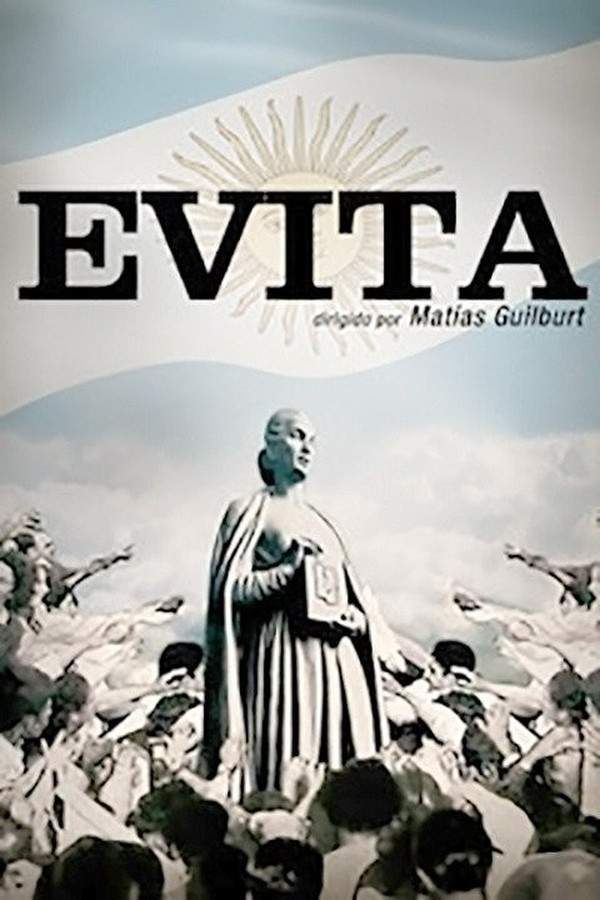
This powerful biopic chronicles the life of Eva Perón, who rose from humble beginnings to become a beloved and influential figure in Argentina. As she gains prominence, she champions women's empowerment and social reform, becoming a formidable force and eclipsing even the presidency of her husband, Domingo Perón. Her passionate advocacy and dedication to the working class solidify her iconic status.
Find where to stream, rent, or buy Evita (1996) in the US with current JustWatch availability, up-to-date pricing, and platform listings for subscription, rental, and digital purchase options.
Warning: spoilers below!
Haven’t seen Evita yet? This summary contains major spoilers. Bookmark the page, watch the movie, and come back for the full breakdown. If you're ready, scroll on and relive the story!
Read the complete plot breakdown of Evita (1996), including all key story events, major twists, and the ending explained in detail. Discover what really happened, and what it all means.
A cinematic adaptation of the immensely popular musical by Andrew Lloyd Webber and Tim Rice, "Evita" chronicles the tumultuous life of Argentina’s most polarizing First Lady, Eva Perón (1919 - 1952). The film opens with her magnificent funeral, drawing an astonishing seven million mourners, before the narrative transports us back over a decade, revealing how a struggling B-movie actress transformed into the figure of contentious adoration.
In the late 1930s, seeking escape from her mundane rural life, Eva Duarte (Madonna) persuades a charming yet unreliable musician, Jimmy Nail, to whisk her away to the vibrant capital, Buenos Aires, where she sets her sights on stardom. After facing abandonment and enduring dire straits, Eva cleverly navigates the entertainment industry, ultimately establishing herself as a sought-after radio and film star.
At a charity event aimed at aiding those affected by a devastating earthquake, she encounters Colonel Juan Perón (Jonathan Pryce), a rising politician with presidential aspirations. Their romance ignites, and Eva becomes an unwavering supporter of his ambition, even leveraging her influence to secure his release from prison when political adversaries conspire against him. By February 24, 1946, with a resounding majority, Perón ascends to the presidency, but it becomes evident that it is his captivating wife who captivates the masses.
Endearingly referred to as 'Evita' by her legions of followers, Eva establishes a vast charitable organization to alleviate the plight of the impoverished. Draped in high fashion, she faces accusations from a bitter and cynical narrator, Che (Antonio Banderas), who claims she distracts the populace rather than genuinely helping them. Despite a secret battle with terminal cancer, Eva continues to enchant her supporters, making public appearances that infuriate her detractors.
As the musical reaches its climax, Evita's life tragically ends at the age of 33, plunging Argentina into a profound period of mourning. Renowned for its iconic songs, including the biting "Oh What a Circus!", "Buenos Aires," "Rainbow High," "The Money Kept Rolling In," and the hallmark solo "Don't Cry for Me, Argentina," the film introduces an original piece, "You Must Love Me," further enriching its emotional tapestry.
Last updated: October 27, 2024 at 20:55
Explore frequently asked questions about Evita (1996) with spoiler-rich answers covering the full plot summary, major story beats, character motivations, hidden details, and ending meaning. This movie summary FAQ helps explain confusing scenes, plot twists, and narrative decisions in clear, searchable detail.
Che serves as the cynical narrator and Greek chorus throughout the musical. He represents the skeptical, anti-Peronist perspective that questions Eva's sincerity. Though the film presents her as a beloved figure, Che consistently argues that her charitable work was primarily political theater designed to distract the Argentine people from real systemic issues. His role adds critical tension to the narrative, preventing the story from becoming pure hagiography.
Che first appears during Eva's funeral, observing the massive public mourning with讽刺的态度
Eva met Colonel Juan Perón at a charity event in Buenos Aires aimed at helping victims of a devastating earthquake. She was already an established radio and film star at this point. The encounter sparked a romance, and Eva became captivated by Perón's political ambitions, marking the beginning of their powerful partnership that would shape Argentina's future.
Earlier scenes establish Eva's hunger for significance beyond her humble origins
Eva saw in Juan Perón the opportunity to escape her humble origins and achieve the power and influence she had always sought. Her support was both romantic and strategic, she leveraged her celebrity status and radio audience to build his political profile. When Perón was imprisoned by political adversaries, Eva used her influence to secure his release, demonstrating that her commitment extended beyond personal affection to a calculated political partnership.
Her early scenes show her desperation to leave rural Argentina and become someone important
Despite being secretly terminally ill with cancer, Eva refused to retreat from public life. Her determination stemmed from her understanding that her relevance was directly tied to visibility. She believed her influence over the Argentine people depended on her physical presence, and disappearing due to illness would diminish the political power she had built. Her public appearances, even while severely ill, were calculated to maintain her grip on the nation's attention.
The film establishes early that Eva's identity is inseparable from her public persona and influence
After Perón became president, Eva established a vast charitable organization called the Eva Perón Foundation. It was designed to aid Argentina's impoverished citizens, providing assistance to the working class and poor. The foundation made her incredibly popular among the lower classes, who viewed her as a champion of their interests. However, Che (the narrator) accuses her of using philanthropy as a distraction from genuine political reform, arguing it was political theater rather than systemic change.
Eva Perón generated intense controversy for several reasons. Her rapid rise from humble origins to immense power made her a target of aristocratic and military elites who viewed her as an upstart. Her extensive charitable work, while beloved by the poor, was criticized by political opponents like Che as merely distracting the populace from Argentina's deeper socio-political problems. Additionally, her growing influence reportedly eclipsed even her husband's presidential authority, creating tension within the power structure.
The film opens with Che already criticizing her legacy during her funeral
Eva Perón died of cancer at the age of 33. The film reveals she battled the disease in secret while continuing her public duties. Her death on July 26, 1952, plunged Argentina into profound mourning, with an estimated seven million people attending her funeral. Her passing marked the end of a remarkable transformation from a poor rural girl to one of Argentina's most influential and iconic figures.
While Juan Perón won the 1946 presidential election, it quickly became evident that Eva was the true object of the people's adoration. Her charisma, charitable work, and relentless public engagement made her far more relatable and beloved than her husband. Her radio performances and public speeches had already built her a massive following before Perón's election, and she leveraged that influence to champion his cause while ultimately becoming the more powerful figure in the eyes of the public.
The timeline shows Eva was already a star before meeting Perón, giving her independent popularity
The charity event was organized to aid victims of a devastating earthquake in Argentina. These relief efforts were significant social occasions where Buenos Aires' elite gathered. It was at this event that Eva, as an established radio star, encountered Colonel Juan Perón, who was then a rising military officer with presidential ambitions. The earthquake relief context is significant because it establishes Eva's pattern of using charitable work as both genuine aid and political platform-building.
Eva Perón became iconic due to her extraordinary transformation from poverty to power, her passionate advocacy for women's rights and the poor, and her relentless work ethic despite her failing health. She championed women's empowerment and social reform, using her position to address issues affecting Argentina's working class. Her tragic death at just 33 cemented her legacy, turning her into a symbol of both ambition and sacrifice. The massive funeral attendance (seven million mourners) demonstrates the profound emotional connection she forged with the Argentine people.
The opening funeral sequence immediately establishes her iconic status
Discover curated groups of movies connected by mood, themes, and story style. Browse collections built around emotion, atmosphere, and narrative focus to easily find films that match what you feel like watching right now.
Passionate stories of iconic figures whose triumphs are shadowed by personal tragedy.Explore movies like Evita that share the epic, tragic biopic format. If you enjoyed the passionate rise and melancholic fall of an iconic figure, you'll find similar stories of ambition, public adoration, and poignant endings in these films.
These narratives typically follow a chronological rise-to-power structure, charting a figure's journey from obscurity to immense fame. The central arc is defined by the interplay between grand public success and a looming private tragedy, often an illness or downfall, creating a powerful bittersweet emotional journey.
Movies are grouped here based on their shared focus on a real-life figure's epic, emotionally heavy life story, told with a blend of celebratory and tragic tones, a steady biographical pace, and a profound sense of melancholy surrounding their legacy.
Stories of charismatic figures climbing to power, with a critical eye on their legacy.Find movies similar to Evita that explore complex political rises. If you were fascinated by the story of a charismatic leader's climb to power, intertwined with themes of media influence, public adoration, and a bittersweet evaluation of their impact, this thread is for you.
The pattern follows a protagonist's strategic and often dramatic rise within a political landscape, fueled by a connection with the masses. The narrative structure incorporates a dual perspective—showing the glamour of success while also deconstructing it, leading to an ending that is impactful and emotionally complex rather than purely triumphant.
These films are connected by their central theme of a nuanced political ascent, a tone that mixes celebration with critique, a steady pacing that builds the rise, and a focus on the heavy emotional and moral weight of power and legacy.
Don't stop at just watching - explore Evita in full detail. From the complete plot summary and scene-by-scene timeline to character breakdowns, thematic analysis, and a deep dive into the ending - every page helps you truly understand what Evita is all about. Plus, discover what's next after the movie.
Track the full timeline of Evita with every major event arranged chronologically. Perfect for decoding non-linear storytelling, flashbacks, or parallel narratives with a clear scene-by-scene breakdown.
Discover the characters, locations, and core themes that shape Evita. Get insights into symbolic elements, setting significance, and deeper narrative meaning - ideal for thematic analysis and movie breakdowns.
Discover movies like Evita that share similar genres, themes, and storytelling elements. Whether you’re drawn to the atmosphere, character arcs, or plot structure, these curated recommendations will help you explore more films you’ll love.
Evita (1996) Scene-by-Scene Movie Timeline
Evita (1996) Movie Characters, Themes & Settings
Evita (1996) Spoiler-Free Summary & Key Flow
Movies Like Evita – Similar Titles You’ll Enjoy
Argentina, 1985 (2022) Story Summary & Characters
Violeta Went to Heaven (2013) Plot Summary & Ending Explained
Imagining Argentina (2004) Ending Explained & Film Insights
Winnie Mandela (2013) Full Summary & Key Details
Adios Buenos Aires (2024) Story Summary & Characters
Cautiva (2004) Plot Summary & Ending Explained
Evita Peron (1981) Ending Explained & Film Insights
The Official Story (1985) Plot Summary & Ending Explained
The Girlfriend (1988) Film Overview & Timeline
Down Argentine Way (1940) Complete Plot Breakdown
Perón: Political Update and Doctrine for the Seizure of Power (1971) Detailed Story Recap
Perón, Symphony of Feeling (1999) Story Summary & Characters
Perón: The Justicialist Revolution (1971) Story Summary & Characters
Santa Evita (1000) Full Movie Breakdown
Eva Perón (1996) Ending Explained & Film Insights