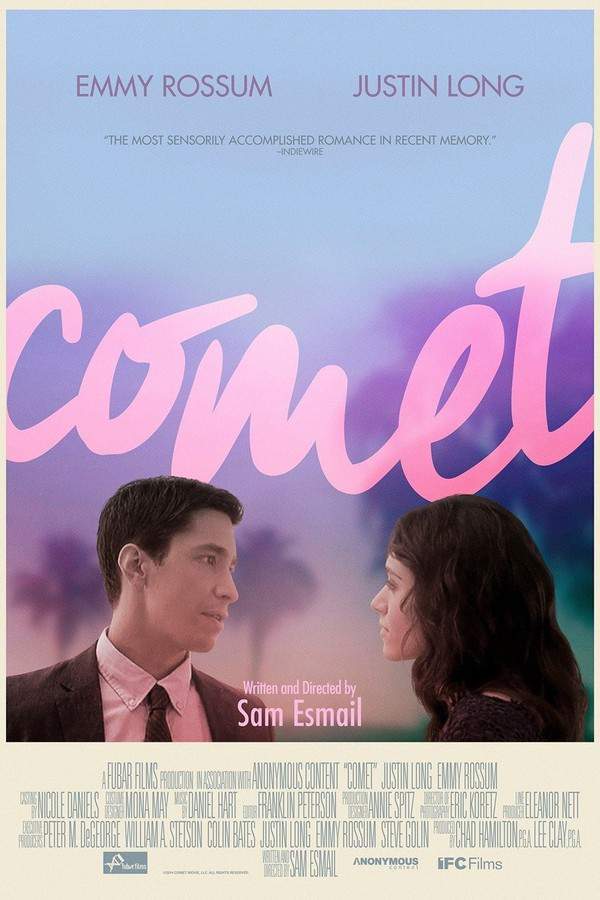
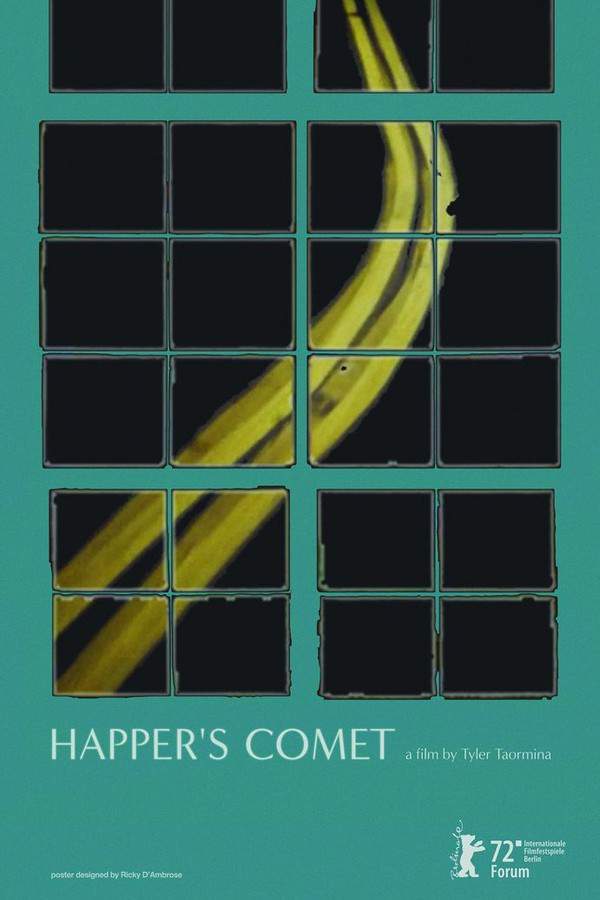
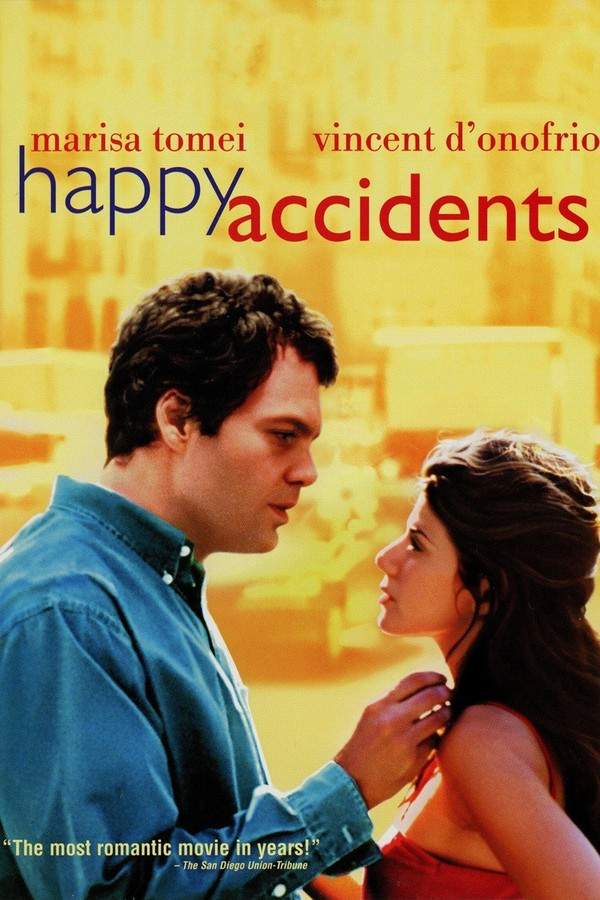
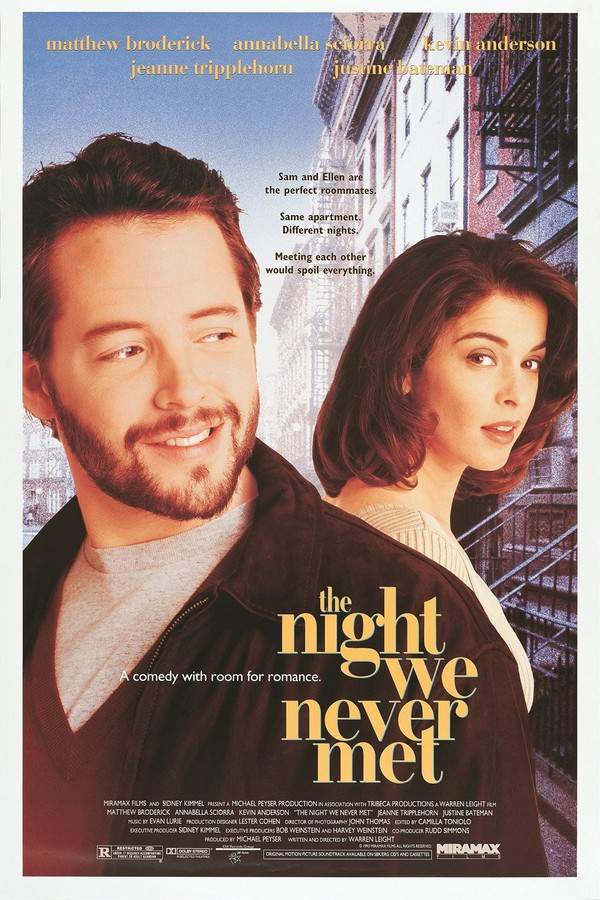
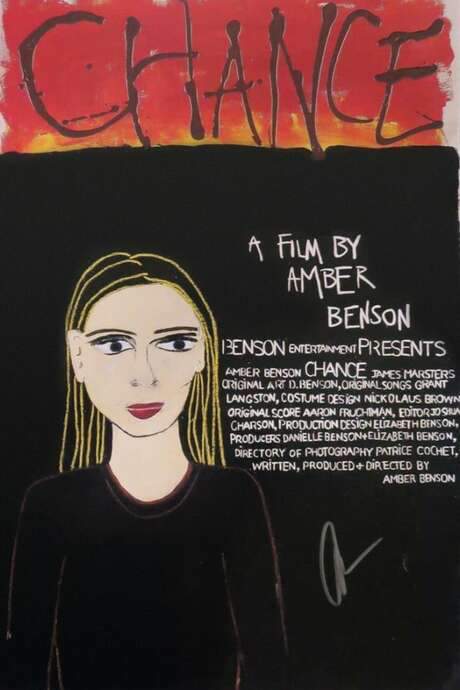
Dell stands in a doorway in a tailored suit, nervously clutching a bouquet of flowers as he eagerly awaits an answer to his knock. The moment quickly unfolds into a non-linear, memory-filled journey that threads through years of longing, missteps, and fragile hope.
A six-year flashback drops us into a sunlit LA line where he hopes to secure a spot in the cemetery for a meteor shower viewing. In this crowded moment, he encounters a young person ahead of him and learns surprising details about his own life: his mother has been diagnosed with liver cancer, he works for a pharmaceutical company, and he carries a stubborn, self-centered streak. The encounter shifts when a woman catches his eye. Kimberly warns him to step out of the path of a speeding car, and though her date’s constant chatter irks Dell, he immediately feels a flicker of interest. He pokes fun, asks for her number, and though the moment is brief, it plants the seed of something greater to come.
Fast-forward two years, and we find the couple in a Paris hotel room, gearing up for a friend’s wedding. Kimberly is anxious about where the relationship is headed, wanting it to evolve enough to even consider a future with kids. Yet the mood in Paris is taut with questions about commitment, and Dell’s dual nature—sharp-witted, often self-absorbed—begins to conflict with Kimberly’s longing for certainty.
Back at the meteor shower, the night grows intimate but unstable. Dell wanders in the dark, marveling at the beauty of the moment and at Kimberly’s qualities—she’s “beyond beautiful, real, perfect, funny and crazy.” When she collides with him again, Dell clings to the moment and agrees to keep talking, even as he admits he had been telling himself, aloud, “Don’t miss her.” The sentiment is mirrored by Kimberly’s desire to live in the present, to savor the outdoors and the air, rather than to overthink the future. In a pivotal exchange, she agrees to pursue a relationship with him, even as their paths remain uncertain.
A year after their first breakup, we watch Dell—still hooked, still calculating—stalk Kimberly as he buys train tickets for the same northbound route. The Paris relationship swings hot and cold, with the ring reappearing and vanishing as if used to measure how close they are to a real commitment. In between, fragments of a phone conversation drift across the screen: Dell in NYC, Kimberly in LA, hinting at truth bends and unspoken hurts. Dell discovers she’s been texting with Jack, a man she briefly dated after the earlier split, and his reaction is to pull away, to end the relationship with a cold, cutting claim of never having loved her—an attempt to wound.
A nurse then calls with news no one wants to hear: Dell’s mother, whom he had saved from a near-fatal liver cancer years earlier, has died of a heart attack. The weight of loss intersects with the fragility of love, intensifying the emotional pressure on both sides.
In a Paris hotel room, Dell sits with Kimberly, trying to articulate the things he has come to love about her. He enumerates the small traits that have kept him tethered to her—the way her hair falls into her eyes, her distinctive rhythms, the way she makes him feel seen. Yet his narcissistic lens keeps peeking through, as he confesses that his feelings are, in large part, tied to her liking him. When he reaches for the engagement ring, Kimberly quietly acknowledges that he almost pulled it off, but the moment remains unsettled.
The final stretch of the six-year timeline weaves together the earlier snippets into a single pattern of longing and miscommunication. Dell finally responds after months of distance, recognizing that Kimberly may be engaged to Jack, a realization symbolized by the boxes of worn kitchen items, a photo, and the ring finger that now bears a ring. He shares a stream of recent dreams—an unsteady, non-chronological cascade of past events—that leaves him sure of one truth: he cannot imagine existing in the world without her love. The film closes on this uncertain hoped-for reunion, as the screen fades to black and the future remains, for the moment, unwritten.