Plot Explained Spoilers guaranteed!
Plot Explained

Browse by genre

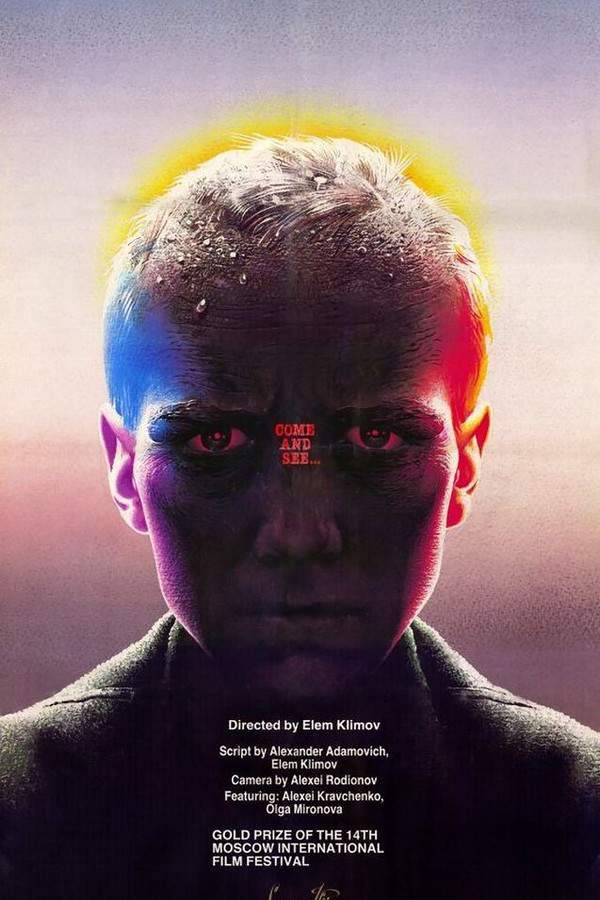
Come and See (1987) movie poster

Timeline

Come and See (1987) Timeline Explained – Every Event in Order

Release, runtime and language
1987 · 142 min · Belarusian
Directed by
Elem Klimov
Starring
Aleksandr Berda, Aleksey Kravchenko, Evgeniy Tilicheev, G. Velts, Jüri Lumiste, Kazimir Rabetsky

In present-day Belarus, a young and idealistic teenager named Flyora joins the Soviet resistance movement as Nazi forces advance on his village. He envisions heroic acts and victory, but quickly confronts the horrific reality of war. Flyora experiences unrelenting brutality and witnesses unimaginable suffering, shattering his innocence and leaving him profoundly scarred by the devastation he encounters.

On this page (4)
  1. 1 Events in order (14)
  2. 2 Timeline questions answered
  3. 3 Movie threads
  4. 4 Every angle

14 events in order · contains spoilers

Come and See Timeline: Events in Chronological Order

Every key event of Come and See (1987) in order, scene by scene, with when and where it takes place. Use it to untangle flashbacks, time jumps and parallel storylines, to refresh your memory before the sequel or to find the exact scene you are thinking of.

  1. Discovery of the Rifle

    In 1943, Flyora and a fellow Belarusian boy find an abandoned SVT-40 rifle buried in a trench. This discovery ignites their desire to join the Soviet partisans, despite warnings from the village elder about the dangers of such actions.

    When
    1943
  2. Drafted into Partisan Forces

    The following day, partisans arrive at Flyora's home to draft him into their ranks. His mother is distressed by this turn of events, yet Flyora eagerly accepts the call to arms.

    Where
    Flyora's home
  3. Initial Duties as Junior Militiaman

    Upon joining the partisans, Flyora is assigned menial tasks, feeling sidelined compared to the other fighters. He experiences disappointment when the commander, Kosach, instructs him to stay back at the camp.

    Where
    Partisan camp
  4. Meeting Glasha

    In the forest, Flyora meets Glasha, a young partisan nurse who mocks his aspirations of maturity. Their interaction reveals Glasha's emotional struggles and her longing for love and stability amidst the chaos of war.

    Where
    Forest
  5. Camp Ambush

    While attempting to connect, the camp is suddenly ambushed by German dive bombers and paratroopers. The attack leaves Flyora partially deaf and drives him and Glasha into the depths of the forest, causing psychological turmoil.

    Where
    Partisan camp
  6. Finding an Abandoned Village

    Desperate to find his family, Flyora leads Glasha to his village, only to find it abandoned and covered in flies. In denial about his family's fate, he believes they are hiding nearby and frantically searches the area.

    Where
    Flyora's village
  7. Confronting the Truth

    In a tragic turn of events, Glasha stumbles upon the scene of executed villagers behind Flyora's home. This revelation leads them to a moment of hysteria as Glasha implores Flyora to accept the sorrowful truth about his family.

    Where
    Flyora's village
  8. Guilt and Attempted Suicide

    Overwhelmed by guilt after learning of his family's fate, Flyora attempts to take his own life by submerging his head in the bog. However, he is rescued by Glasha and the remaining villagers, who console him in his darkest hour.

    Where
    Bog
  9. Raid for Supplies

    Partisan fighter Rubezh takes Flyora and two others on a raid to retrieve supplies from an unsecured warehouse. The mission fails when they encounter German troops, leading to the loss of two companions in a landmine explosion.

    Where
    Warehouse
  10. Another Tragedy

    Following the failed raid, Flyora and Rubezh embark on another mission to steal a cow, but tragedy strikes again when Rubezh is shot by machine gunners. This incident deepens Flyora's despair amidst the ongoing conflict.

  11. Escape to Perekhody

    In a desperate move, Flyora is advised to conceal his weapon as he is led to the village of Perekhody. As he is briefed on a fabricated identity, tensions rise with the arrival of German troops.

    Where
    Perekhody
  12. Village Siege

    An SS Einsatzkommando surrounds the village, forcing Flyora and the other villagers into a barn church. Despite his attempts to warn the villagers of the impending danger, they are herded inside with chilling consequences.

    Where
    Perekhody
  13. Chaos in the Church

    As the Germans begin their attack, chaos erupts when a mother attempts to retrieve her child from the barn. The brutality and violence unfold as the soldiers inflict terror upon the helpless villagers.

    Where
    Barn church
  14. A Chilling Encounter

    In a haunting moment, a German officer holds a loaded pistol to Flyora's head for a photograph, a grim reminder of the life-threatening situation. He is ultimately abandoned amidst the smoke and flames, left to confront the destruction around him.

    Where
    Perekhody

Last updated: November 16, 2024 at 12:28

Was this helpful?

Timeline questions answered

Come and See Timeline Explained: Your Questions Answered

When does it happen, and why in that order? The questions people ask about the chronology of Come and See (1987): time jumps, flashbacks, cause and effect between scenes and the correct order of events, each answered with spoilers.

Q1

Why does Flyora want to join the Soviet partisans so badly?

Flyora is driven by youthful idealism and a desire for heroic action against the Nazi occupation. After discovering the abandoned SVT-40 rifle with a friend, he becomes convinced that fighting for the partisans is his path to glory and purpose. This romantic view of war stems from his age and inexperience, as he has not yet witnessed the actual brutality that awaits him.

Foreshadowing: The village elder warns the boys that retrieving the rifles will draw German attention, foreshadowing the devastating consequences of Flyora's decision.

  • flyora
  • partisans
  • joining
  • motivation
  • idealism
  • youth
Q2

Why is Flyora relegated to menial tasks instead of fighting?

Upon joining the partisans, Flyora is treated as a junior militiaman and assigned menial duties rather than combat roles. Commander Kosach further disappoints him by instructing him to stay behind at the camp while the others move out. This reflects how new, inexperienced recruits are viewed by seasoned fighters, too untrained and unreliable for real combat operations.

  • flyora
  • kosach
  • partisan camp
  • duties
  • junior militiaman
Q3

What happens during the partisan camp ambush?

German dive bombers and paratroopers suddenly assault the partisan camp while Flyora and Glasha are in the forest attempting to connect emotionally. The attack leaves Flyora partially deaf and forces both him and Glasha to flee deep into the forest. The traumatic experience triggers psychological breakdowns in both characters, causing them to alternate between catatonia and manic episodes.

  • ambush
  • dive bombers
  • paratroopers
  • flyora
  • glasha
  • forest
  • partial deafness
Q4

Why does Glasha mock Flyora during their encounter in the forest?

Glasha, a young partisan nurse who is emotionally fragile, mocks Flyora's attempts at maturity because she is overwhelmed by the harsh realities of war and desperately craves love and family that seems impossible in their circumstances. Her taunting that Flyora 'isn't truly alive' reflects her own despair and serves as a bitter reminder that surviving the war has stripped them both of normal human experiences.

  • glasha
  • flyora
  • emotional breakdown
  • mockery
  • partisan nurse
Q5

Why is Flyora's village abandoned and filled with flies?

When Flyora returns home with Glasha, he finds the village abandoned and infested with flies, a clear sign of death and destruction. In denial about what happened, he insists his family is simply hiding nearby and runs frantically across the bog searching for them. This visual horror establishes that a massacre has occurred while Flyora was away.

Foreshadowing: The village elder had warned that the boys' activities would provoke German retaliation, which the audience knows now has come to pass.

  • village
  • abandoned
  • flies
  • family
  • death
  • execution
Q6

What does Flyora discover about his family's fate?

Glasha turns her head at the wrong moment and stumbles upon the scene of executed villagers behind Flyora's former home, confirming that his entire family has been killed. This devastating revelation drives both characters into hysteria as they trudge through the bog. Glasha desperately tries to make Flyora accept the truth about his family's death, though he initially refuses to believe it.

  • family
  • execution
  • discovery
  • glasha
  • death
  • hysteria
  • bog
Q7

Why does Flyora attempt to take his own life?

After learning from the village elder that his family has been executed, Flyora is consumed by guilt. He blames himself for provoking the German retaliation by retrieving the rifle, believing his actions directly led to his family's death. Overwhelmed by this realization, he immerses his head in the bog in a suicide attempt, but is rescued and consoled by Glasha and the remaining villagers.

Foreshadowing: The village elder had earlier warned that retrieving the rifles would bring trouble, making Flyora's guilt over his family's fate even more devastating.

  • suicide
  • bog
  • guilt
  • family death
  • flyora
  • villagers
Q8

Why does the raid on the warehouse fail?

Partisan fighter Rubezh leads Flyora and two other men to raid an unsecured warehouse for supplies. The mission fails catastrophically when they encounter German troops guarding the facility. The partisans are forced to retreat, and two of Flyora's companions are killed by a landmine explosion during their escape, demonstrating the constant danger and high cost of partisan operations.

  • raid
  • warehouse
  • landmine
  • german troops
  • rubezh
  • failure
Q9

What happens to Rubezh after the failed warehouse raid?

After the warehouse disaster, Rubezh and Flyora attempt another mission to steal a cow from a local farm. The operation ends in tragedy when German machine gunners shoot both Rubezh and the cow. This loss deepens Flyora's despair and removes the one experienced partisan who had been guiding and protecting him.

  • rubezh
  • cow
  • machine gunners
  • death
  • shooting
  • partisan
Q10

Why is Flyora given a fabricated identity in Perekhody?

After Rubezh's death, Flyora is taken to the village of Perekhody and given a fake identity to hide his partisan affiliation from the Germans. A local man instructs him to conceal his gun and jacket, effectively making him appear as a civilian to avoid detection. This desperate measure reflects the constant need for cover in occupied territory.

  • fake identity
  • perekhody
  • disguise
  • civilian
  • flyora
  • concealment
Q11

What happens during the barn church massacre in Perekhody?

An SS Einsatzkommando, supported by Russian Liberation Army collaborators and Belarusian Auxiliary Police, surrounds Perekhody. Flyora is herded into a barn church with other villagers despite his warnings. The Germans barricade the exits and order villagers to exit through a window while leaving their children behind. Chaos erupts when a mother attempts to save her child, her child is thrown back into the barn as she is dragged away, and the soldiers proceed with brutal violence against the helpless villagers.

  • barn church
  • massacre
  • ss
  • einsatzkommando
  • children
  • violence
  • perekhody
Q12

Why does a German officer point a loaded pistol at Flyora's head?

During the massacre, a German officer approaches Flyora and deliberately places a loaded pistol against his head, not to kill him, but for a photograph. This chilling moment demonstrates the random, arbitrary nature of violence and the psychological terror inflicted on victims. The officer then abandons Flyora amidst the smoke and flames, leaving him as a living witness to the horror, fundamentally altering his understanding of human cruelty.

  • german officer
  • pistol
  • photograph
  • mindless violence
  • psychological terror
  • flyora

Movie threads

More Movies Like Come and See, by Mood & Story

Curated lists built around what makes Come and See tick: the same mood, the same kind of story or the same emotional payoff. Each list explains why these movies belong together.

Movies about war shattering innocence like in Come and See

Stories of young protagonists whose idealism is destroyed by the absolute horror of war. If you were impacted by the raw depiction of lost idealism in Come and See, explore these similar stories. This thread gathers powerful war dramas and historical films where young protagonists confront unimaginable brutality, leading to profound psychological trauma and a permanent loss of innocence.

  • harrowing
  • traumatic
  • despairing
  • brutal
  • psychological
  • loss of innocence
  • Tone: bleak, despairing
  • Pacing: variable, deliberate
Why these movies?

The story pattern: These narratives typically follow a linear descent, beginning with a character's hopeful or naive perspective. The central conflict is not just physical survival but the psychological struggle to reconcile their former beliefs with the horrific reality they are forced to witness, often culminating in a state of profound despair.

Why they belong together: Movies are grouped here based on their shared focus on the 'coming-of-age' arc within extreme circumstances. They possess a consistently bleak tone, heavy emotional weight, and an unflinching gaze at how violence permanently scars the human spirit, making the experience emotionally cohesive.

Harrowing psychological journeys like the one in Come and See

A harrowing journey into the heart of human darkness, with no reprieve from trauma. For those who appreciated the unrelenting intensity and psychological horror of Come and See, this thread collects films with a similar visceral impact. Discover other movies known for their bleak, oppressive atmosphere, traumatic narratives, and powerful, disturbing depictions of human suffering that leave a lasting impression.

  • oppressive
  • nightmarish
  • harrowing
  • despairing
  • traumatic
  • brutal
  • Tone: bleak, oppressive, nightmarish
  • Pacing: variable, dread-inducing
Why these movies?

The story pattern: The narrative pattern is a downward spiral, stripping away comfort and sanity layer by layer. There is no traditional hero's journey; instead, it's a journey of degradation and psychological collapse. The structure often uses variable pacing, juxtaposing sudden violence with lingering scenes of aftermath to maximize a sense of inescapable dread.

Why they belong together: These films are connected by their overwhelming vibe of despair and their commitment to depicting horror without sensationalism. They share a high intensity level, a bleak tone, and a focus on the psychological aftermath of trauma, creating a cohesive category for challenging, artistically serious cinema.

Every angle

Come and See (1987) Explained: Plot, Timeline & Characters

Everything about Come and See in one place: what happens in the plot summary, the timeline in chronological order, the characters and meaning and a spoiler-free summary. What's After the Movie adds the cast, box office and post-credit scenes.

Coming soon on iOS and Android

The Plot Explained Movie Summary App

Plot summaries, endings explained and timelines on your phone. Catch up on any movie in minutes, save your favorites and never miss a twist again.

Be the first to know when we launch. Your email stays private, always.

Learn more about the app