Plot Explained Spoilers guaranteed!
Plot Explained

Browse by genre

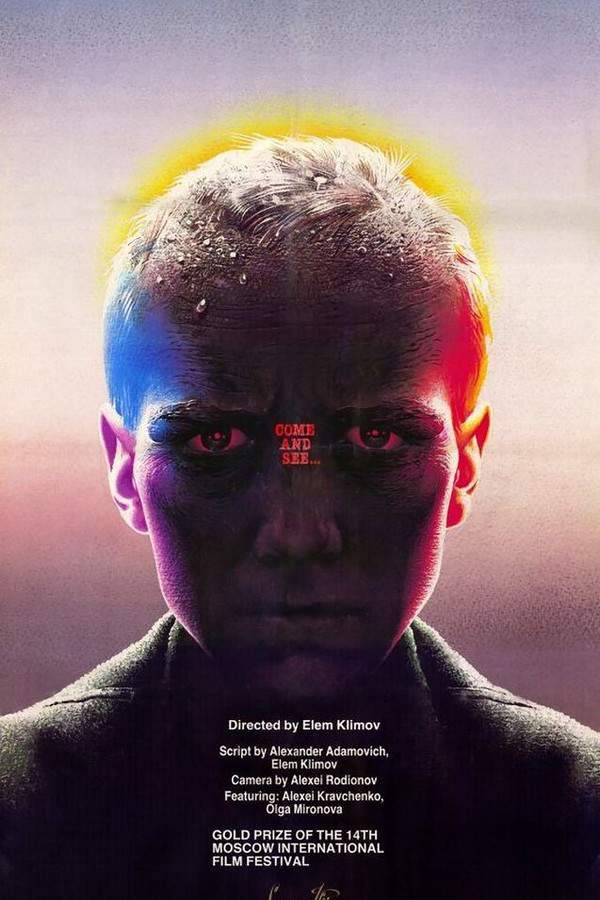
Come and See (1987) movie poster

Characters & Themes

Come and See (1987) Characters, Setting & Themes Explained

Release, runtime and language
1987 · 142 min · Belarusian
Directed by
Elem Klimov
Starring
Aleksandr Berda, Aleksey Kravchenko, Evgeniy Tilicheev, G. Velts, Jüri Lumiste, Kazimir Rabetsky

In present-day Belarus, a young and idealistic teenager named Flyora joins the Soviet resistance movement as Nazi forces advance on his village. He envisions heroic acts and victory, but quickly confronts the horrific reality of war. Flyora experiences unrelenting brutality and witnesses unimaginable suffering, shattering his innocence and leaving him profoundly scarred by the devastation he encounters.

On this page (6)
  1. 1 Characters explained (3)
  2. 2 Where & when it takes place
  3. 3 Themes & meaning (2)
  4. 4 Character & meaning questions
  5. 5 Movie threads
  6. 6 Every angle

3 main characters · contains spoilers

Come and See Characters Explained: Who Is Who

The main characters of Come and See (1987), heroes and villains: what drives them, how they change over the course of the story and what each of them reveals about the film's bigger ideas.

  • Flyora

    played by Aleksandr Berda

    Flyora is a young Belarusian boy whose innocence is shattered by the violence of war as he becomes embroiled in the partisan struggle. He experiences profound emotional turmoil, oscillating between hope and despair, as he desperately searches for his family amidst widespread devastation. His character embodies both vulnerability and resilience in the face of terrifying challenges.

    • 👦 Young
    • 😔 Innocent
    • ⚔️ Partisan
  • Glasha

    played by Olga Mironova

    Glasha is a partisan nurse who displays a mix of fragility and strength, reflecting the emotional struggles of youth in war. Her character serves as both a companion and a counterpoint to Flyora's journey, challenging his notions of maturity and love. Throughout the film, she navigates her own psychological trauma while attempting to cope with the devastating realities around her.

    • 👩 Young
    • 💔 Troubled
    • ❤️ Caregiver
  • Rubezh

    played by Liubomiras Laucevicius

    Rubezh is a seasoned partisan fighter who represents the experienced support system for Flyora. His character is marked by resilience and a sense of duty, guiding the younger characters through the dangers of war. While he carries the weight of loss and hardship, Rubezh also embodies the hope and camaraderie found amongst fighters in desperate times.

    • 💪 Strong
    • 🚀 Leader
    • ⚔️ Fighter

Last updated: October 22, 2024 at 21:36

Was this helpful?

Setting

Where and When Does Come and See Take Place?

The setting of Come and See (1987): the year and time period, the places and locations, and how they shape the characters, the mood and the tension of the story.

Time period

1943

The movie is set during 1943, a pivotal year in World War II marked by significant military operations on the Eastern Front. This period reflects the desperation and chaos of wartime, where innocence is lost amidst violence and brutality. The struggles of civilians such as Flyora highlight the personal impacts of global conflict during this harrowing time.

Location

Belarus, Perekhody

Belarus serves as the backdrop for the tumultuous events of the film, depicting the harsh realities of World War II. The village of Perekhody becomes a focal point of atmospheric tension and tragic events, portrayed as a microcosm of the war's impact on civilian life. The contrast of serene forests and the chaos of invading troops illustrates the duality of nature's beauty and the horrors of conflict.

  • 🏡 Village
  • 🌳 Forest
  • ⚔️ War Zone

Last updated: October 22, 2024 at 21:36

Was this helpful?

2 major themes

Come and See Meaning: Themes & Message Explained

What is Come and See (1987) really about? The emotional, social and philosophical themes the film keeps returning to, its symbolism and the message beneath the surface.

  • Loss

    The theme of loss is prevalent throughout the film, depicted through Flyora's journey as he grapples with the disappearance of his family. This inescapable grief shapes his every action and emotional state, driving him into terrifying circumstances. The destructive consequences of war on personal relationships and family ties are profoundly explored.

  • Survival

    Survival becomes a central theme as Flyora and Glasha navigate the treacherous landscape of war-torn Belarus. Their struggle to find food, shelter, and safety highlights the instinctual drive to endure amidst chaos. This theme is underscored by the harrowing choices they are forced to make in their fight for survival.

Last updated: October 22, 2024 at 21:36

Was this helpful?

Character & theme questions

Come and See Characters & Meaning: Your Questions Answered

The questions people ask about Come and See (1987): who the characters really are, their relationships, what the symbols mean, where it takes place and what the movie is really about. Each answer contains spoilers.

Q1

Where is Come and See set?

The film is set in Belarus, primarily in a small village called Perekhody. This rural Belarusian setting serves as a microcosm for the devastating impact of World War II on civilian life, contrasting serene forests with the chaos of invading troops.

  • belarus
  • perekhody
  • village
  • setting
  • world war ii
Q2

What year does Come and See take place in?

The movie is set in 1943, a pivotal year on the Eastern Front during World War II. This period was marked by intense military operations, desperate civilian struggles, and the brutal reality of Nazi occupation in Belarus.

  • 1943
  • world war ii
  • eastern front
  • time period
  • historical
Q3

What are the main themes of Come and See?

Come and See explores two dominant themes: loss and survival. The film depicts how war destroys personal relationships and family ties through Flyora's devastating search for his missing family. Simultaneously, it shows the instinctual drive to endure amid chaos, as characters struggle to find food, shelter, and safety in war-torn Belarus.

  • themes
  • loss
  • survival
  • war
  • destruction
Q4

Who is Flyora in Come and See?

Flyora (real name Aleksandr Berda) is the young protagonist, a Belarusian teenager who joins the Soviet partisan resistance. Initially idealistic and hopeful for heroic action, his innocence is systematically shattered by the violence he witnesses. His character embodies both vulnerability and resilience as he searches for his family amidst widespread devastation.

  • flyora
  • aleksandr berda
  • protagonist
  • partisan
  • teenager
Q5

Who is Glasha in Come and See?

Glasha (real name Olga Mironova) is a partisan nurse who serves as Flyora's companion throughout the film. She represents the emotional struggles of youth in war, displaying both fragility and strength. Her character challenges Flyora's notions of maturity and love while coping with her own psychological trauma from the devastating realities around her.

  • glasha
  • olga mironova
  • nurse
  • partisan
  • companion
Q6

Who is Rubezh in Come and See?

Rubezh (real name Liubomiras Laucevicius) is a seasoned partisan fighter who serves as a mentor to Flyora. He represents the experienced resistance fighters who guide younger members through the dangers of war. Despite carrying the weight of loss and hardship, Rubezh embodies the hope and camaraderie found among fighters in desperate times.

  • rubezh
  • liubomiras laucevicius
  • partisan
  • mentor
  • fighter
Q7

What role does the village of Perekhody play in the film?

Perekhody serves as the focal point of atmospheric tension and tragic events in the film. As a small Belarusian village, it represents the microcosm of war's impact on civilian life. The village's transformation from a seemingly peaceful rural community to a war zone illustrates the duality of nature's beauty and the horrors of conflict.

  • perekhody
  • village
  • civilian life
  • war zone
  • belarus
Q8

How does the 1943 Eastern Front context shape the film?

The 1943 setting places the film during a critical and brutal phase of World War II. This was a year of intense fighting between Nazi Germany and the Soviet Union, particularly fierce in Belarus. The historical context infuses the film with desperation, chaos, and the personal toll of global conflict on ordinary civilians caught in the occupation.

  • eastern front
  • 1943
  • occupation
  • soviet
  • nazi
  • military operations
Q9

What does Come and See say about loss?

The film presents loss as an inescapable force that shapes every action and emotional state of its protagonist. Flyora's journey is defined by grappling with the disappearance of his family, driving him into terrifying circumstances. The film profoundly explores how war destroys personal relationships and family ties, making grief a constant companion to survival.

  • loss
  • family
  • grief
  • death
  • destruction
Q10

What does Come and See say about survival?

Survival in Come and See is portrayed as a primal, instinctual drive amid treachery and chaos. Both Flyora and Glasha must constantly struggle for food, shelter, and safety. The film underscores this theme through the harrowing choices the characters are forced to make, presenting survival not as heroic but as a desperate, morally complex struggle.

  • survival
  • instinct
  • struggle
  • endurance
  • war
Q11

What is the emotional tone of Come and See?

The film has an overwhelmingly bleak and unrelenting tone with no reprieve from the horrors depicted. The narrative follows a linear journey into trauma, making the emotional impact direct and visceral. The primary emotional arc is the systematic destruction of a boy's innocence, replaced by profound psychological scarring and survivor's guilt.

  • tone
  • trauma
  • bleak
  • psychological
  • emotional
  • darkness

Movie threads

More Movies Like Come and See, by Mood & Story

Curated lists built around what makes Come and See tick: the same mood, the same kind of story or the same emotional payoff. Each list explains why these movies belong together.

Movies about war shattering innocence like in Come and See

Stories of young protagonists whose idealism is destroyed by the absolute horror of war. If you were impacted by the raw depiction of lost idealism in Come and See, explore these similar stories. This thread gathers powerful war dramas and historical films where young protagonists confront unimaginable brutality, leading to profound psychological trauma and a permanent loss of innocence.

  • harrowing
  • traumatic
  • despairing
  • brutal
  • psychological
  • loss of innocence
  • Tone: bleak, despairing
  • Pacing: variable, deliberate
Why these movies?

The story pattern: These narratives typically follow a linear descent, beginning with a character's hopeful or naive perspective. The central conflict is not just physical survival but the psychological struggle to reconcile their former beliefs with the horrific reality they are forced to witness, often culminating in a state of profound despair.

Why they belong together: Movies are grouped here based on their shared focus on the 'coming-of-age' arc within extreme circumstances. They possess a consistently bleak tone, heavy emotional weight, and an unflinching gaze at how violence permanently scars the human spirit, making the experience emotionally cohesive.

Harrowing psychological journeys like the one in Come and See

A harrowing journey into the heart of human darkness, with no reprieve from trauma. For those who appreciated the unrelenting intensity and psychological horror of Come and See, this thread collects films with a similar visceral impact. Discover other movies known for their bleak, oppressive atmosphere, traumatic narratives, and powerful, disturbing depictions of human suffering that leave a lasting impression.

  • oppressive
  • nightmarish
  • harrowing
  • despairing
  • traumatic
  • brutal
  • Tone: bleak, oppressive, nightmarish
  • Pacing: variable, dread-inducing
Why these movies?

The story pattern: The narrative pattern is a downward spiral, stripping away comfort and sanity layer by layer. There is no traditional hero's journey; instead, it's a journey of degradation and psychological collapse. The structure often uses variable pacing, juxtaposing sudden violence with lingering scenes of aftermath to maximize a sense of inescapable dread.

Why they belong together: These films are connected by their overwhelming vibe of despair and their commitment to depicting horror without sensationalism. They share a high intensity level, a bleak tone, and a focus on the psychological aftermath of trauma, creating a cohesive category for challenging, artistically serious cinema.

Every angle

Come and See (1987) Explained: Plot, Timeline & Characters

Everything about Come and See in one place: what happens in the plot summary, the timeline in chronological order, the characters and meaning and a spoiler-free summary. What's After the Movie adds the cast, box office and post-credit scenes.

Coming soon on iOS and Android

The Plot Explained Movie Summary App

Plot summaries, endings explained and timelines on your phone. Catch up on any movie in minutes, save your favorites and never miss a twist again.

Be the first to know when we launch. Your email stays private, always.

Learn more about the app