















Plot Explained Spoilers guaranteed!
Plot Explained

Browse by genre

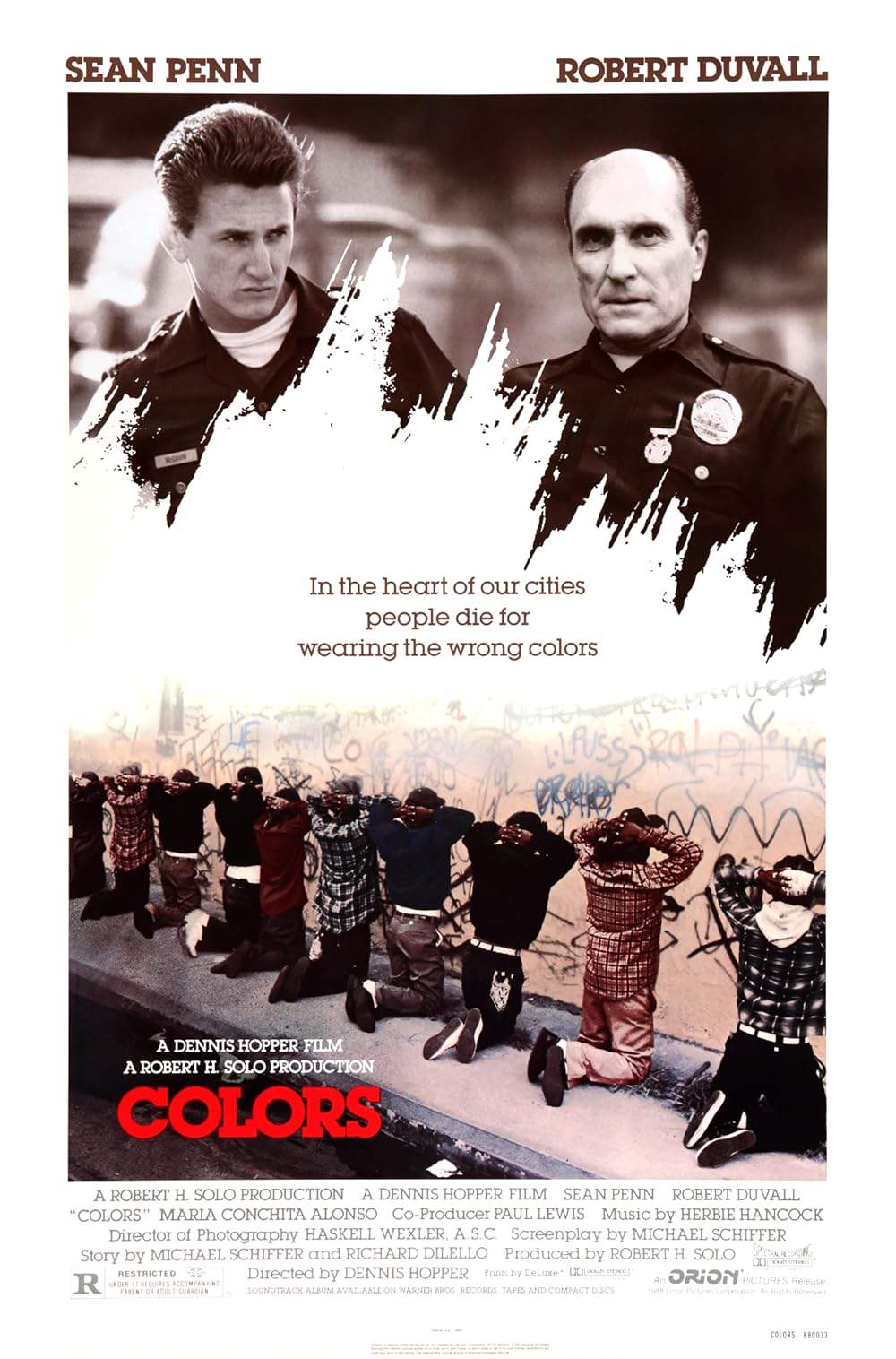
Colors (1988) movie poster

Timeline

Colors (1988) Timeline Explained – Every Event in Order

Release, runtime and language
1988 · 120 min · Malayalam
JustWatch #3,645 23
Starring
Robert Duvall, Sean Penn

Roma, a spirited young woman, inadvertently triggers a dangerous series of events after causing disruption at a local military base. Her actions draw her and those close to her into a shadowy criminal network, exposing them to significant danger as they navigate a world of deceit and violence.

On this page (6)
  1. 1 Where to watch
  2. 2 Events in order (14)
  3. 3 Timeline questions answered
  4. 4 Movie threads
  5. 5 Movies like Colors
  6. 6 Every angle

Where to watch

Where to Watch Colors (1988)

Where can you watch Colors? Stream, rent or buy it in the US, including on fuboTV, MGM Plus and Philo: current JustWatch availability with up-to-date prices.

Streaming availability powered by JustWatch

14 events in order · contains spoilers

Colors Timeline: Events in Chronological Order

Every key event of Colors (1988) in order, scene by scene, with when and where it takes place. Use it to untangle flashbacks, time jumps and parallel storylines, to refresh your memory before the sequel or to find the exact scene you are thinking of.

  1. CRASH unit formed and Hodges partners with McGavin

    Two veteran officers are paired in the Community Resources Against Street Hoodlums (CRASH) unit to patrol troubled parts of Los Angeles. Hodges preaches a 'rapport' approach and explains policing with humor, setting the tone for their partnership. They head into the field aiming to reduce violence in their neighborhoods.

    When
    Opening sequence
    Where
    NW Los Angeles and surrounding areas
  2. 21st Street Gang targets Hodges’ car

    The gang throws a rock at Hodges’ car and flees, while Hodges catches a young member named Felipe. The incident tests their resolve and hints at how quickly ordinary street life can escalate into danger. The men begin to understand the risk of taking a tough stand in the community.

    When
    Early
    Where
    21st Street Gang hangout / Northwest LA streets
  3. Crips attack Bloods at a funeral

    During a Bloods funeral for Robert Craig, the Crips open fire on the church, shattering the service and igniting a wider cycle of violence. Hodges and McGavin chase the Crips through the streets, culminating in a high-speed pursuit. The crash ends with their car flipping and exploding, killing several gang members.

    When
    Funeral service
    Where
    Church, Los Angeles
  4. Community leaders urge restraint

    Ron Delaney counsels the 21st Street Gang to walk away from gang life, but the members dismiss his advice and decide to stay in the gang. The scene underscores how stubborn loyalty and fear of leaving the gang can be beyond the reach of outreach efforts. The cycle of violence continues to draw the officers deeper into the conflict.

    When
    Shortly after the funeral incident
    Where
    21st Street Gang hangout
  5. McGavin’s recklessness tested; Louisa connection

    McGavin shows off risky street instincts, including an assault on a graffiti artist with a spray can. He bonds quickly with Louisa, a waitress connected to the community, but Hodges disciplines him at the police station for unlawful actions. The tension grows when Louisa reveals the graffiti artist is her cousin, complicating McGavin’s personal ties.

    When
    Early to mid-film
    Where
    Street encounters; police station
  6. Gangs’ feud intensifies

    The murder of a Bloods member escalates tensions and provokes retaliation from rival Crips. The violence spills from the gangs into the broader community, pulling Hodges and McGavin deeper into a street war they try to manage. The increase in violence tests their ability to restore order.

    When
    Early to mid-film
  7. PAC-Man car arrives

    During a pursuit, McGavin wrecks their unmarked car, and the team replaces it with a bright yellow vehicle, instantly earning him the nickname ‘Pac-Man’ among officers and gang members. The moniker reflects his central role in the escalating chase and danger. It foreshadows the persistent attention their actions draw.

    When
    Mid-film
    Where
    On patrol in LA
  8. Oso raid and Hi Top’s capture

    CRASH raids the house of gang member Oso and arrests him, and Oso’s information points to Hi Top as a dealer. Hi Top steals a motorcycle during the chase, leading them on a dangerous pursuit through a restaurant window. He is eventually subdued and arrested, tightening the net around the gang leadership.

    When
    Mid-film
    Where
    Oso’s house; streets and restaurant
  9. Hi Top beaten in jail; Rocket blamed

    In jail, Hi Top is badly beaten by other inmates while the sheriff presses him about the Robert Craig murder. Under coercion, Hi Top claims Rocket, the Crips’ leader, is responsible. The interrogation adds another layer of mystery about who orchestrates violence from within the gangs.

    When
    Mid to late film
    Where
    Jail
  10. Van linked to murder; suspects questioned

    Hodges, McGavin and the LAPD spot a dark blue van linked to the murder, leading to interrogations of two black males. The chase narrows the suspects but does not resolve the case, keeping Rocket as the target and heightening tension in the community. The investigation shows how informants and street loyalties influence the pursuit.

    When
    Investigation phase
  11. Frog’s peace bid collapses; informant exposed

    Frog, leader of the 21st Street Gang, attempts to broker peace, but Hodges inadvertently exposes Frog as a police informant to the Crips. The Crips retaliate by planning an attack on the 21st Street Gang, intensifying the volatile dynamic. The move increases friction and pushes both sides toward open conflict.

    When
    Before the party
    Where
    21st Street Gang territory
  12. Drive-by, violence peaks, Hodges’ death

    The Crips carry out a drive-by during Louisa’s party, and the 21st Street Gang retaliates with heavy weaponry, leading to a brutal street battle. McGavin discovers Louisa having sex with a 21st Street gangster and leaves in frustration, deepening personal tragedy amid the violence. The confrontation culminates with Hodges’s final stand and his death.

    When
    Late film
    Where
    Louisa’s party and surrounding streets
  13. Final arrest and Hodges’ death

    CRASH moves in on the 21st Street Gang and arrests Frog; in the exchange Hodges is fatally shot by a 21st Street Gang member named Bird. CRASH returns fire, killing Bird in retaliation. McGavin consoles the dying Hodges, who speaks with regrets as he dies, leaving the squad to carry on without him.

    When
    Climax
    Where
    Arrest scene; city streets
  14. Epilogue: cycle of violence continues

    With Hodges dead, McGavin takes on a new rookie partner who grew up in the neighborhood and shares the Pac-Man nickname. He repeats Hodges’ bulls-and-cows joke, signaling a cautious acceptance that the cycle of violence may continue. The film ends with them patrolling together, facing an uncertain future.

    When
    After the climax

Last updated: October 09, 2025 at 15:40

Was this helpful?

Timeline questions answered

Colors Timeline Explained: Your Questions Answered

When does it happen, and why in that order? The questions people ask about the chronology of Colors (1988): time jumps, flashbacks, cause and effect between scenes and the correct order of events, each answered with spoilers.

Q1

Why does Hodges reveal Frog as an informant to the Crips?

Hodges unknowingly exposes Frog as a police informant when he shares information with the Crips during negotiations. This revelation occurs as Frog attempts to broker peace between gangs. The Crips use this intelligence to plan an ambush, directly leading to the deadly attack on the 21st Street Gang and ultimately triggering the final wave of violence that results in Hodges' death.

Foreshadowing: Earlier scenes establish Frog's attempts to mediate peace, making his subsequent betrayal by Hodges a critical turning point.

  • frog informant
  • hodges mistake
  • crips ambush
  • 21st street gang
Q2

Why does McGavin spray paint in the graffiti artist's eyes?

During a confrontation with a graffiti artist, McGavin acts impulsively and sprays paint directly into the artist's eyes. This reckless act demonstrates his poor judgment and willingness to use excessive force. The incident strains his relationship with Louisa, who reveals the graffiti artist is her cousin, deepening the personal consequences of his actions.

Foreshadowing: This moment establishes McGavin's pattern of reckless behavior that contrasts with Hodges' measured approach.

  • mcgavin assault
  • graffiti artist
  • louisa cousin
  • excessive force
Q3

What triggers the deadly drive-by at Louisa's party?

The drive-by occurs as retaliation for Hodges inadvertently exposing Frog as an informant to the Crips. The Crips target the party at Louisa's residence, knowing members of the 21st Street Gang would be there. This attack sparks the 21st Street Gang's brutal retaliation, leading to the film's climactic violence.

Foreshadowing: Frog's peace negotiation and subsequent betrayal set the direct cause for this attack.

  • drive-by shooting
  • louisa party
  • crips revenge
  • 21st street retaliation
Q4

Why is Killa Bee killed during the raid on Rocket's girlfriend's house?

During the raid, Officer Baines shoots Killa Bee, a Crips member, when he reaches for his belt. The officers mistakenly believe Killa Bee is reaching for a weapon. However, he was actually reaching for his waistband for another reason. This fatal mistake creates further tension between the police and the Crips, with rumors spreading that McGavin was responsible for the killing.

Foreshadowing: The raid on Rocket's girlfriend's house was meant to capture Rocket, but the mistaken shooting diverts the investigation.

  • killa bee
  • officer baines
  • mistaken shooting
  • crips retaliation
Q5

What does McGavin discover when he returns to Louisa's party?

When McGavin returns to Louisa's party after the drive-by shooting, he discovers Louisa having sex with a 21st Street Gang member. This personal betrayal, combined with the violence unfolding around him, leads McGavin to leave in frustration. This moment represents the collapse of his personal relationships amid the broader conflict.

Foreshadowing: Louisa's connection to the neighborhood and her earlier revelation about her cousin hint at her deeper ties to gang life.

  • mcgavin discovers louisa
  • affair
  • betrayal
  • 21st street gang member
Q6

Why does the violence between the Bloods and Crips escalate so quickly?

The violence escalates after the Crips attack a Bloods funeral, shooting into the church during the service for Robert Craig. This desecration of a sacred event triggers retaliatory cycles between the rival gangs. The police pursuit that follows ends with their car flipping and exploding, killing several gang members, which further fuels the vengeance.

Foreshadowing: The film establishes the fragile peace between gangs that the funeral attack destroys.

  • bloods crips war
  • funeral shooting
  • robert craig
  • gang violence escalation
Q7

What is the "rapport" approach that Officer Hodges teaches?

Hodges preaches a "rapport" approach to policing, which involves building trust with gang members so they will cooperate when help is truly needed. He uses the metaphor of bulls and cows to explain the delicate balance between force and trust. This philosophy guides his work in the CRASH unit, contrasting sharply with McGavin's more aggressive tactics.

Foreshadowing: The bulls-and-cows joke becomes a recurring element that McGavin eventually passes to his new partner.

  • hodges rapport approach
  • policing philosophy
  • community policing
  • bulls and cows
Q8

How does McGavin earn the nickname Pac-Man in the film?

During a high-speed pursuit, McGavin wrecks their unmarked police car. The CRASH team replaces it with a bright yellow vehicle, which instantly earns McGavin the nickname "Pac-Man" among both officers and gang members. The moniker reflects his central role in the escalating chase and danger surrounding the unit.

Foreshadowing: The arrival of the yellow car marks a turning point where McGavin's reckless driving becomes his defining characteristic.

  • pac-man nickname
  • mcgavin car
  • crash unit
  • yellow police car
Q9

What leads to Hodges being fatally shot at the end?

After Hodges unknowingly exposes Frog as an informant, the Crips plan an ambush targeting McGavin. During the subsequent chaos, the 21st Street Gang retaliates against the Crips' attack. In the final confrontation, CRASH moves in to arrest Frog, but during the exchange, a 21st Street Gang member nicknamed "Bird" shoots Hodges fatally. CRASH returns fire, killing Bird, but the victory feels hollow as Hodges dies from his wounds.

Foreshadowing: Hodges' mistake with Frog directly leads to the deadly confrontation that claims his life.

  • hodges death
  • bird shooter
  • crash arrest
  • 21st street gang member
Q10

Why does McGavin take on a new rookie partner at the end?

After Hodges dies, McGavin is promoted to take on a new rookie partner. The new partner is a young Black cop who grew up in the neighborhood and carries the same swagger that McGavin once had. The closing scene shows McGavin repeating the bulls-and-cows joke to his new partner, indicating the cycle of violence and mentorship continues, though now tempered by his loss and hard-won experience.

Foreshadowing: The film opens with McGavin as the rookie partnered with Hodges, establishing the cyclical nature of the mentorship.

  • mcgavin new partner
  • rookie cop
  • cycle of violence
  • mentorship continues

Movie threads

More Movies Like Colors, by Mood & Story

Curated lists built around what makes Colors tick: the same mood, the same kind of story or the same emotional payoff. Each list explains why these movies belong together.

Gritty police partnership movies like Colors

Polar opposite officers clash while facing an unforgiving urban warzone. Find more movies like Colors that explore tense, high-stakes police partnerships. These similar crime dramas feature volatile duos navigating urban decay, gang violence, and moral conflicts, offering a steady, intense, and heavy viewing experience.

  • gritty
  • tense
  • oppressive
  • urgent
  • anxious
  • bleak
  • Tone: dark, tense, bleak
  • Pacing: steady, methodical
Why these movies?

The story pattern: The narrative follows two officers, usually with conflicting methods and philosophies, who are thrown into a chaotic and dangerous environment. Their journey is less about solving a clean case and more about surviving a war of attrition, where the line between justice and vengeance blurs, and personal sacrifices are inevitable.

Why they belong together: Movies are grouped here for their central focus on the tense, character-driven relationship between law enforcement partners operating in high-pressure, morally ambiguous settings. They share a dark tone, high intensity, and a heavy emotional weight derived from the psychological toll of the job.
Movies about the cycle of violence like Colors

Stories where crime begets crime in an inescapable spiral of tragedy. Discover films similar to Colors that delve into the bleak cycle of urban violence. If you liked the themes of futility and moral decay in Colors, these movies explore how crime spirals endlessly, featuring gritty settings, heavy drama, and bittersweet or bleak endings.

  • bleak
  • oppressive
  • melancholic
  • gritty
  • futile
  • tragic
  • Tone: dark, bleak, melancholic
  • Pacing: steady, inevitable
Why these movies?

The story pattern: The plot structure often feels less like a traditional arc and more like a downward spiral or a closed loop. Actions intended to stop violence only incite more, characters are consumed by the environment they operate in, and the ending reinforces that the underlying conflict continues unabated, making any resolution feel hollow.

Why they belong together: This thread groups movies that share a central thematic focus on the inescapable nature of systemic violence. They are united by a dark, oppressive mood, a steady pacing that builds a sense of doom, and a bittersweet or bleak ending feel that underscores the theme of futility.

If you liked this

Movies Like Colors

Similar movies to Colors: the same genre, themes or kind of story. Each one comes with its own plot summary, timeline and ending explained.

Browse all movie summaries

Every angle

Colors (1988) Explained: Plot, Timeline & Characters

Everything about Colors in one place: what happens in the plot summary, the timeline in chronological order, the characters and meaning and a spoiler-free summary. What's After the Movie adds the cast, box office and post-credit scenes.

Coming soon on iOS and Android

The Plot Explained Movie Summary App

Plot summaries, endings explained and timelines on your phone. Catch up on any movie in minutes, save your favorites and never miss a twist again.

Be the first to know when we launch. Your email stays private, always.

Learn more about the app