Plot Explained Spoilers guaranteed!
Plot Explained

Browse by genre

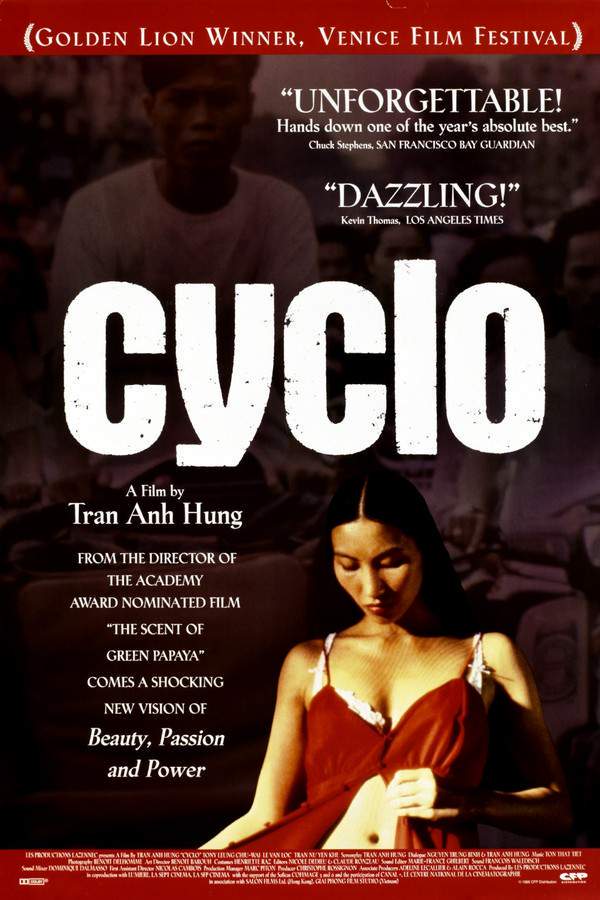
Cyclo (1996) movie poster

Plot Summary

Cyclo (1996) Plot Summary Explained

Release, runtime and language
1996 · 123 min · Vietnamese
Directed by
Tran Anh Hung
Starring
Tony Leung Chiu Wai, Tran Nu Yên-Khê, Bjuhoang Huy, Doan Viet Ha, Hoang Phuc Nguyen, Le Van Loc

Amidst the vibrant chaos of Ho Chi Minh City, an 18-year-old cyclo driver finds his life upended when his vehicle is stolen, plunging him into debt to a dangerous crime boss. Desperate to survive, he becomes increasingly involved in the city's criminal underworld. His journey leads him to uncover a disturbing secret about his sister's life, forcing him to confront a difficult and painful chapter of their shared history.

On this page (5)
  1. 1 What happens: full plot
  2. 2 Plot questions answered
  3. 3 Movie threads
  4. 4 Movies like Cyclo
  5. 5 Every angle

Full plot summary · contains spoilers

What Happens in Cyclo: Full Plot Summary

The whole story of Cyclo (1996) explained, from the opening scene to the final frame: every key event, every twist and what it all adds up to. Read it as a quick recap before the sequel, to check a scene you missed, or to finally understand what really happened.

The film centers on an 18-year-old cyclo driver, Tony Leung Chiu Wai, who becomes an orphan after his father—himself a cyclo taxi driver—dies in a collision with a truck. His father had hoped for a better life for him, but harsh odds and family hardship force the boy to take over the family business, pedaling a cyclo through the teeming streets of Ho Chi Minh City.

He shares a small, weathered home with his aging grandfather, who still repairs tires despite his frail health; his younger sister, who shines shoes for customers at local restaurants; and his older sister, who carries water at the market. Their quiet, precarious existence is a fragile balance of work, care, and small joys that keeps them clinging to hope.

That fragile balance is shattered when a gang steals the cyclo, leaving the boy unable to pay the debt to his employer, the Lady. With no other option, he is drawn into a criminal underworld ruled by a brooding gang leader known as the Poet. The Poet’s influence stretches far, and it isn’t long before the older sister also falls under his sway, becoming a prostitute as part of the power play surrounding the gang. The two develop complicated feelings, and she even visits the Poet’s home where the poet is beaten by his father, furious about the life he has chosen.

As the driver tries to make a place for himself within the gang, the Poet introduces him to a ruthless figure named Mr. Lullaby, who slits a victim’s throat while singing a lullaby. Ho Chi Minh City slides into a violent gang war, and the cyclo driver seeks revenge by blinding one eye of the gang leader who stole his bike. He goes to the Lady to repay part of his debt, but she refuses and remains focused on her mentally disabled son, who is covered in yellow paint.

The Poet tasks the cyclo driver with carrying out a murder. Two accomplices hand him a gun and teach him how to pull the trigger, also giving him a bottle of pills to ease anxiety—though they warn him not to overdo it. The Poet and the driver’s sister visit his childhood hideaway, and she ends up in a nightclub with a client who abuses her. When the client offers compensation, the Poet kills him and later takes his own life by setting his room on fire on New Year’s Eve.

Tragedy compounds the driver’s trials when the Lady’s son is fatally struck by a fire truck rushing to fight a blaze. In a moment of despair, the driver drinks, ingests two pills, and begins to hallucinate in his flat. He cannot complete the assigned hit and, in a desperate act, coats himself in blue paint and shoots himself twice. The next morning, on Vietnamese New Year’s Day, two gang members find him badly wounded. The Lady, moved by the driver’s resemblance to her deceased son—who also used to paint himself blue—spares his life, releasing him from the gang.

The film closes with a somber, memory-soaked image: the cyclo driver, reflecting on his father, drives his bike once more, accompanied by his grandfather and sisters as they steer through the crowded urban streets, carrying the weight of loss, loyalty, and the stubborn endurance of family.
Last updated: November 22, 2025 at 15:57

Was this helpful?

Plot questions answered

Cyclo Plot Explained: Your Questions Answered

The questions people ask most about Cyclo (1996): what happens in the confusing scenes, why the characters do what they do, the twists, hidden details and what the ending means. Each answer contains spoilers.

Q1

Why does the boy become a cyclo driver after his father's death?

After his father dies in a truck collision, the 18-year-old is left to support his family. With his father gone and the family struggling financially, he takes over the family business, pedaling a cyclo taxi through Ho Chi Minh City. This is his only option to earn money for his aging grandfather, younger sister, and older sister.

  • father death
  • family support
  • cyclo driver
  • Ho Chi Minh City
  • poverty
Q2

Why does losing the cyclo change everything for the boy?

The cyclo is his only means of earning money. When a gang steals it, he cannot pay his debt to the Lady, the woman who employs cyclo drivers. With no money and no way to work, he has no choice but to join the Poet's criminal organization to survive and repay what he owes.

  • cyclo stolen
  • debt
  • Lady
  • gang
  • survival
Q3

Who is the Poet and why does he have power over the boy and his sister?

The Poet is the brooding leader of a powerful crime gang in Ho Chi Minh City. After the boy joins his organization, the Poet also pulls the older sister into prostitution as part of his operations. His influence over both siblings gives him control over their lives, and his violent reputation keeps them trapped in his world.

  • Poet
  • gang leader
  • power
  • sister
  • prostitution
Q4

Why does the older sister become a prostitute?

The older sister falls under the Poet's sway and is forced into prostitution as part of the gang's activities. The Poet's criminal network uses her as part of its power play, and she becomes trapped in the same underworld that now controls her brother. This compounds the family's suffering as they are pulled deeper into crime.

  • sister
  • prostitution
  • Poet
  • gang
  • exploitation
Q5

Who is Mr. Lullaby and what does he represent in the story?

Mr. Lullaby is a ruthless killer introduced to the boy by the Poet. He is known for slitting victims' throats while singing lullabies, creating a chilling contrast between his gentle-sounding name and his brutal violence. He represents the extreme brutality of the gang world and shows the boy just how far the criminal organization will go.

  • Mr. Lullaby
  • killer
  • violence
  • gang
  • lullaby
Q6

Why does the cyclo driver blind one of the gang leader's eyes?

During the gang war that erupts in Ho Chi Minh City, the boy seeks revenge against the gang leader who stole his cyclo. He attacks the leader and blinds one of his eyes, this act demonstrates his growing willingness to use violence and marks his full entry into the criminal underworld.

  • revenge
  • gang war
  • blinding
  • cyclo
  • violence
Q7

Why does the Poet assign the boy to carry out a murder?

The Poet gives the boy a murder assignment as a test of loyalty and a way to further entrap him in the gang. By making him complicit in a serious crime, the Poet ensures the boy cannot leave or betray the organization. The boy is given a gun, trained on how to use it, and provided with pills to calm his nerves.

  • murder
  • assignment
  • Poet
  • gang
  • loyalty
Q8

What happens to the boy's sister at the nightclub?

The sister is left at a nightclub with a client who abuses her. When the client offers compensation to the Poet for the abuse, the Poet kills him in retaliation. This event shows the depth of degradation the sister experiences and triggers the Poet's later violent actions.

  • sister
  • nightclub
  • abuse
  • client
  • Poet
Q9

Why does the Poet kill the abusive client and then commit suicide?

The Poet kills the client who abused the boy's sister, showing his complicated feelings for her. Later, on New Year's Eve, the Poet sets fire to his room and kills himself. His suicide represents a final act of despair, ending his life in the same destructive path he has led his followers down.

  • Poet
  • client murder
  • suicide
  • New Year
  • fire
Q10

Why does the Lady's son die in the story?

The Lady's mentally disabled son, who is often seen covered in yellow paint, is fatally struck by a fire truck that is rushing to respond to a blaze. His death is a tragic accident that underscores the random violence surrounding all the characters and sets up the Lady's later decision to spare the boy.

  • Lady
  • son
  • death
  • fire truck
  • accident
Q11

Why does the cyclo driver shoot himself at the end?

After the Lady's son dies, the boy gets drunk, takes two pills to steady his nerves, and experiences hallucinations. Unable to carry out the assigned murder and overwhelmed by despair, he covers himself in blue paint (recalling the Lady's son) and shoots himself twice. He survives but is badly wounded.

  • blue paint
  • suicide
  • hallucination
  • pills
  • despair
Q12

Why does the Lady spare the boy's life after he shoots himself?

On Vietnamese New Year's Day, gang members find the badly wounded boy. The Lady spares his life because he reminds her of her deceased son, who also used to paint himself blue. This connection moves her to release him from the gang, giving him a chance at a new life despite his involvement in her criminal organization.

  • Lady
  • spare life
  • blue paint
  • son
  • forgiveness
Q13

What does the ending of the film signify?

The film ends with the cyclo driver remembering his father and continuing to drive his bike through the crowded streets, now accompanied by his grandfather and sisters. This somber image shows the family sticking together despite their losses, carrying the weight of memory while enduring together, a bittersweet conclusion that offers hope without triumph.

  • ending
  • family
  • father
  • memory
  • endurance

Movie threads

More Movies Like Cyclo, by Mood & Story

Curated lists built around what makes Cyclo tick: the same mood, the same kind of story or the same emotional payoff. Each list explains why these movies belong together.

Movies with an urban crime spiral like Cyclo

Bleak stories of desperate characters pulled into systemic urban crime. For viewers who appreciated the gritty urban decay and criminal descent in Cyclo, this collection features movies like it. These similar crime dramas focus on survival, exploitation, and the brutal logic of the underworld in densely populated, harsh city environments.

  • gritty
  • desperate
  • oppressive
  • urban decay
  • anxious
  • harsh
  • Tone: dark, bleak, oppressive
  • Pacing: steady, methodical
Why these movies?

The story pattern: The narrative pattern follows a protagonist, often young and vulnerable, who is forced by economic desperation or a single catastrophic event into a life of crime. Their journey is one of moral compromise and escalating violence, revealing the brutal mechanics of an exploitative system they cannot easily leave.

Why they belong together: These movies are grouped together because they share a focus on the city as a corrupting influence, a high-intensity atmosphere of danger and survival, and a dark, heavy tone. They are united by their depiction of a bleak, inescapable urban reality and the psychological toll of criminal immersion.

Movies with a bittersweet survival ending like Cyclo

Stories where survival comes at the cost of profound personal loss. If you were moved by the complex, sorrowful ending of Cyclo, this list features similar films. These movies like Cyclo follow characters through dark ordeals, leading to a conclusion that is neither triumphant nor utterly hopeless, but profoundly shaped by loss and endurance.

  • melancholic
  • heavy
  • somber
  • tragic
  • endurance
  • loss
  • Tone: dark, bittersweet, melancholic
  • Pacing: steady, character-driven
Why these movies?

The story pattern: The narrative builds towards an ending where the central conflict is resolved, but not through a clean victory. The protagonist's survival or freedom is often secured by a tragic external event or a deep personal sacrifice, leaving them to grapple with the psychological and emotional scars of their experiences in a state of somber reflection.

Why they belong together: These films are connected by their emotional journey's conclusion: a bittersweet ending that avoids pure nihilism but rejects simple hope. They share a heavy emotional weight, a dark tone, and a focus on the complex, often painful, cost of simply making it to the other side of a traumatic experience.

If you liked this

Movies Like Cyclo

Similar movies to Cyclo: the same genre, themes or kind of story. Each one comes with its own plot summary, timeline and ending explained.

Browse all movie summaries

Every angle

Cyclo (1996) Explained: Plot, Timeline & Characters

Everything about Cyclo in one place: what happens in the plot summary, the timeline in chronological order, the characters and meaning and a spoiler-free summary. What's After the Movie adds the cast, box office and post-credit scenes.

Coming soon on iOS and Android

The Plot Explained Movie Summary App

Plot summaries, endings explained and timelines on your phone. Catch up on any movie in minutes, save your favorites and never miss a twist again.

Be the first to know when we launch. Your email stays private, always.

Learn more about the app