Year: 1988
Runtime: 120 min
Language: Malayalam
Roma, a spirited young woman, inadvertently triggers a dangerous series of events after causing disruption at a local military base. Her actions draw her and those close to her into a shadowy criminal network, exposing them to significant danger as they navigate a world of deceit and violence.
Warning: spoilers below!
Haven’t seen Colors yet? This summary contains major spoilers. Bookmark the page, watch the movie, and come back for the full breakdown. If you're ready, scroll on and relive the story!
Read the complete plot breakdown of Colors (1988), including all key story events, major twists, and the ending explained in detail. Discover what really happened—and what it all means.
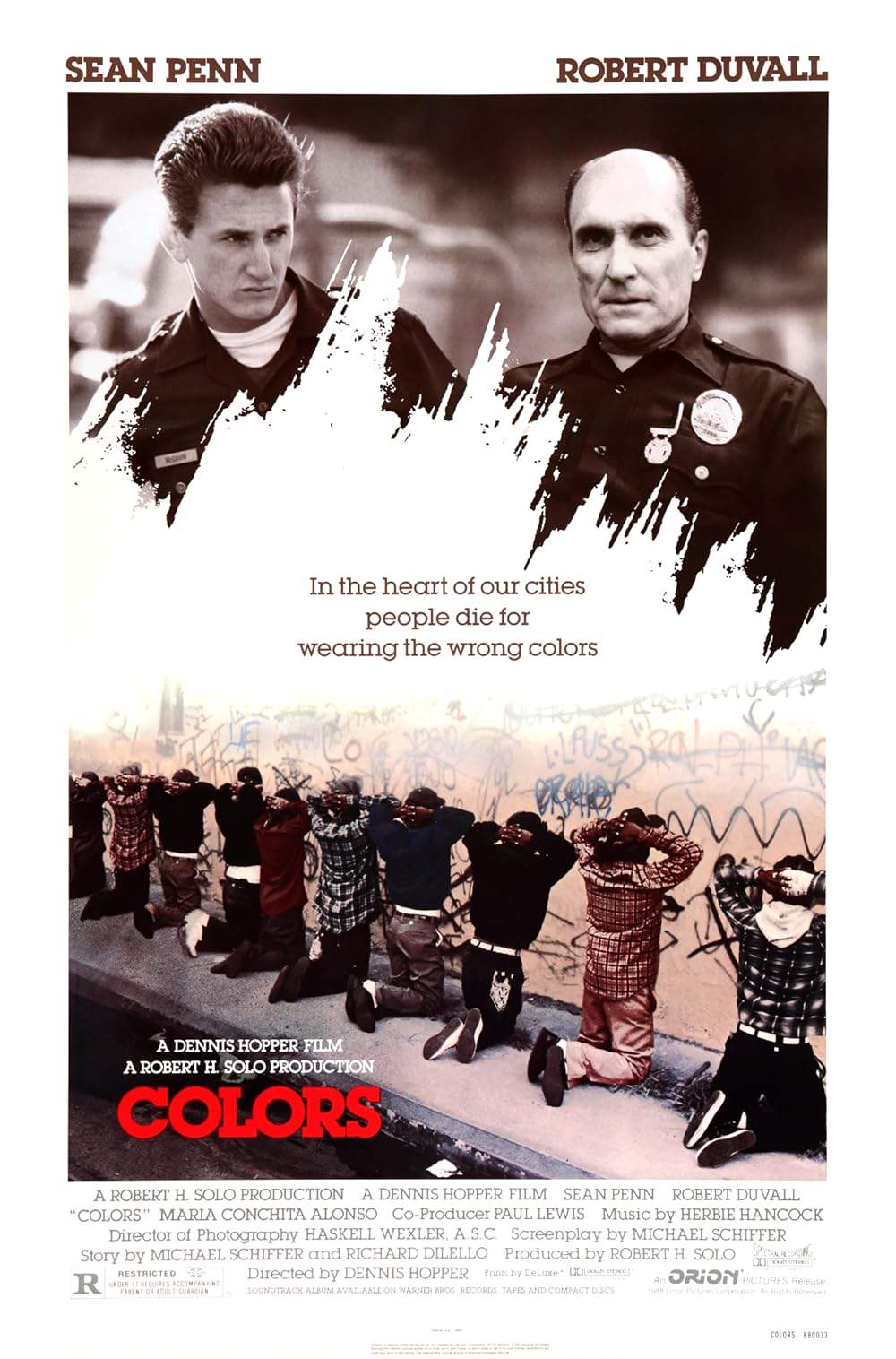
Uncle Bob Hodges Robert Duvall and rookie officer Danny McGavin Sean Penn are paired in the LAPD’s Community Resources Against Street Hoodlums (CRASH) unit, a squad sent to calm the most volatile corners of Northwest, East, and South Los Angeles. The film follows their uneasy partnership as they navigate a landscape where gang alliances shift like smoke and every move is scrutinized by the communities they vow to protect.
Hodges is a steadying presence on the streets, patient and diplomatic, preaching a notion of “rapport” to gang members so they’ll offer help when it’s truly needed. He explains policing to his younger partner with a light, almost rueful joke about bulls and cows, a hint at the delicate balance between force and trust. The two respond to a rock thrown at Hodges’s car by the 21st Street Gang, and when a young member named Felipe is caught, Hodges acts with restraint that earns him respect from locals—even as the streets grow tenser around them.
In the shadows of the city’s gang culture, McGavin’s bravado often gets ahead of his judgment. He becomes entangled with a waitress named Louisa, a brief romance that juxtaposes his reckless stunts and the more measured approach of Hodges. McGavin’s impulsive actions—like spraying paint in a graffiti artist’s eyes in a public confrontation—draw sharp rebukes, first from Hodges at the station and then from Louisa herself, who reveals a personal stake in the neighborhood’s tensions. The couple’s bond frays as the violence between the Bloods and Crips intensifies, with a Bloods funeral interrupted by Crip gunfire that sets off a chain reaction of pursuit and retaliation.
A brutal clash around drugs intensifies the stakes. A dealer named T peddles to young kids, and when McGavin and Hodges confront him, McGavin punches T in front of onlookers, straining their relationship and drawing anger from bystanders. Hodges’s disciplinary response underscores the difference between danger bravado and disciplined service, a difference that Louisa helps illuminate when she sees the collateral pain caused by the conflict—her cousin was the graffiti artist McGavin harmed. The violence expands as a murder within the Bloods and a growing feud between rival crews pull both officers deeper into a war neither can fully control.
The investigation intensifies when the detectives connect a dark blue van to the crime, leading to arrests and interrogations that bring Rocket—the Crips’ elusive leader—into sharper focus. A raid on Rocket’s girlfriend’s house produces a deadly mistake: Officer Baines shoots a Crips member named Killa Bee while he’s reaching for his belt, mistaken for a weapon. The aftermath feeds rumor and fear, with the Crips believing McGavin killed Killa Bee, and the police forced to answer questions about the deadly misfire.
Tensions peak as Frog, leader within the 21st Street Gang, tries to broker a fragile peace to stop the bloodshed. Hodges, unaware of the full danger, reveals Frog as a key informant to the Crips, tipping off a plan to ambush McGavin. The Crips strike during a party at Louisa’s residence, and McGavin returns to find Louisa in the aftermath of a dangerous encounter with a gang member. He leaves, and the violence explodes outward: the 21st Street Gang retaliates with brutal force, and a devastating wave of gunfire devastates both sides, making it painfully clear that the city’s cycles of vengeance will not be easily broken.
CRASH closes in on the gang leadership, and in a final confrontation, Hodges is fatally shot by a 21st Street Gang member nicknamed “Bird.” CRASH responds in kind, killing Bird, but the win feels hollow as Hodges lies dying. McGavin stays by his mentor’s side, offering comfort as Hodges drifts into delirium and death, a stark reminder of the price exacted by years of policing a city at war with itself.
In the aftermath, a more restrained McGavin takes on a new rookie partner, a young Black cop raised in the neighborhood who carries the same swagger as the departed Pac-Man—so nicknamed for his own flashy driving. As the two patrol together, McGavin repeats the same joke that Hodges taught him about the bulls and cows, and the younger officer replies in kind, signaling a bitter, enduring cycle. The closing images linger on the road ahead, with McGavin contemplating the violence that persists around him as they drive back into the streets, their resolve tempered by loss and the hard-won lessons of a city that never fully quiets itself.
Last Updated: October 09, 2025 at 15:40
Discover curated groups of movies connected by mood, themes, and story style. Browse collections built around emotion, atmosphere, and narrative focus to easily find films that match what you feel like watching right now.
Polar opposite officers clash while facing an unforgiving urban warzone.Find more movies like Colors that explore tense, high-stakes police partnerships. These similar crime dramas feature volatile duos navigating urban decay, gang violence, and moral conflicts, offering a steady, intense, and heavy viewing experience.
The narrative follows two officers, usually with conflicting methods and philosophies, who are thrown into a chaotic and dangerous environment. Their journey is less about solving a clean case and more about surviving a war of attrition, where the line between justice and vengeance blurs, and personal sacrifices are inevitable.
Movies are grouped here for their central focus on the tense, character-driven relationship between law enforcement partners operating in high-pressure, morally ambiguous settings. They share a dark tone, high intensity, and a heavy emotional weight derived from the psychological toll of the job.
Stories where crime begets crime in an inescapable spiral of tragedy.Discover films similar to Colors that delve into the bleak cycle of urban violence. If you liked the themes of futility and moral decay in Colors, these movies explore how crime spirals endlessly, featuring gritty settings, heavy drama, and bittersweet or bleak endings.
The plot structure often feels less like a traditional arc and more like a downward spiral or a closed loop. Actions intended to stop violence only incite more, characters are consumed by the environment they operate in, and the ending reinforces that the underlying conflict continues unabated, making any resolution feel hollow.
This thread groups movies that share a central thematic focus on the inescapable nature of systemic violence. They are united by a dark, oppressive mood, a steady pacing that builds a sense of doom, and a bittersweet or bleak ending feel that underscores the theme of futility.
Don't stop at just watching — explore Colors in full detail. From the complete plot summary and scene-by-scene timeline to character breakdowns, thematic analysis, and a deep dive into the ending — every page helps you truly understand what Colors is all about. Plus, discover what's next after the movie.
Track the full timeline of Colors with every major event arranged chronologically. Perfect for decoding non-linear storytelling, flashbacks, or parallel narratives with a clear scene-by-scene breakdown.
Discover the characters, locations, and core themes that shape Colors. Get insights into symbolic elements, setting significance, and deeper narrative meaning — ideal for thematic analysis and movie breakdowns.
Get a quick, spoiler-free overview of Colors that covers the main plot points and key details without revealing any major twists or spoilers. Perfect for those who want to know what to expect before diving in.
Visit What's After the Movie to explore more about Colors: box office results, cast and crew info, production details, post-credit scenes, and external links — all in one place for movie fans and researchers.
Discover movies like Colors that share similar genres, themes, and storytelling elements. Whether you’re drawn to the atmosphere, character arcs, or plot structure, these curated recommendations will help you explore more films you’ll love.
Colors (1988) Scene-by-Scene Movie Timeline
Colors (1988) Movie Characters, Themes & Settings
Colors (1988) Spoiler-Free Summary & Key Flow
Movies Like Colors – Similar Titles You’ll Enjoy
Rogue City (2020) Movie Recap & Themes
Roma (2018) Plot Summary & Ending Explained
Rojo (2019) Full Movie Breakdown
Gomorrah (2009) Story Summary & Characters
Colombiana (2011) Spoiler-Packed Plot Recap
Blue City (1986) Film Overview & Timeline
Gang Related (1997) Full Movie Breakdown
Colors of Evil: Red (2024) Detailed Story Recap
Roma (2004) Full Movie Breakdown
Romanzo Criminale (2005) Ending Explained & Film Insights
Desperate Crimes (1993) Spoiler-Packed Plot Recap
Rome, Armed to the Teeth (1976) Full Summary & Key Details
Violent City (1970) Ending Explained & Film Insights
Rome, the Other Face of Violence (1976) Full Movie Breakdown
Assassination in Rome (1965) Ending Explained & Film Insights