







Plot Explained Spoilers guaranteed!
Plot Explained

Browse by genre

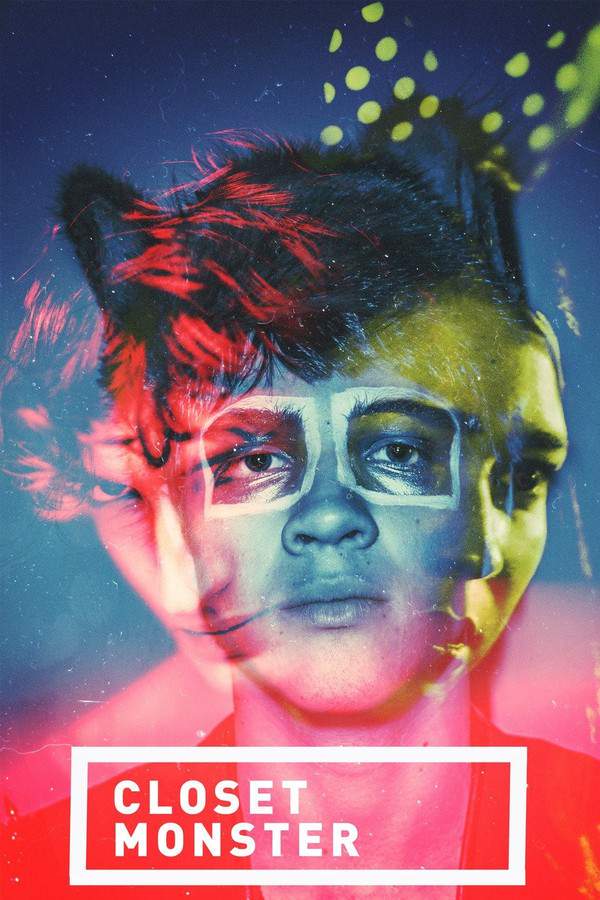
Closet Monster (2016) movie poster

Timeline

Closet Monster (2016) Timeline Explained – Every Event in Order

Release, runtime and language
2016 · 90 min · English
JustWatch #23,085 2
Directed by
Stephen Dunn

Oscar, nearing adulthood, embarks on a surreal and poignant journey of self-discovery. Burdened by troubling memories and fueled by artistic aspirations, he seeks release from the confines of his hometown. Guided by a mysterious coworker and comforted by his hamster Buffy, Oscar confronts his inner struggles and the challenges of growing up, ultimately striving to find meaning and hope for his future.

On this page (6)
  1. 1 Where to watch
  2. 2 Events in order (15)
  3. 3 Timeline questions answered
  4. 4 Movie threads
  5. 5 Movies like Closet Monster
  6. 6 Every angle

Where to watch

Where to Watch Closet Monster (2016)

Where can you watch Closet Monster? Stream, rent or buy it in the US, including on Kanopy, Amazon Video and Apple TV Store: current JustWatch availability with up-to-date prices.

Streaming availability powered by JustWatch

15 events in order · contains spoilers

Closet Monster Timeline: Events in Chronological Order

Every key event of Closet Monster (2016) in order, scene by scene, with when and where it takes place. Use it to untangle flashbacks, time jumps and parallel storylines, to refresh your memory before the sequel or to find the exact scene you are thinking of.

  1. Oscar's Parents' Divorce

    Eight-year-old Oscar Madly learns that his parents are getting divorced, which shatters his childhood innocence. In response, he retreats into a vivid fantasy world filled with joyful memories and conversations with his talking hamster, Buffy.

  2. Witnessing a Hate Crime

    One night, Oscar witnesses a brutal homophobic assault on a teenage boy, which leaves a lasting impact on him. The attackers commit a horrific act by driving a metal rod through the victim, deepening Oscar's fears and confusion.

  3. Oscar's High School Graduation

    Fast forward ten years, Oscar is now eighteen and preparing to graduate. He dreams of attending a special effects make-up school in New York City, indicating his aspirations and desire for escapism.

    Where
    New York City
  4. Job at the Hardware Store

    To distance himself from his immature and homophobic father, Oscar takes a job at a local hardware store. Here, he meets Wilder, a charming coworker, but struggles with a distressing pain in his stomach whenever he thinks about him.

  5. Developing Feelings for Wilder

    As Oscar and Wilder's friendship grows, Oscar experiences moments of joy mixed with confusion about his feelings. His talking hamster, Buffy, hints at Oscar's budding love, although he quickly dismisses the thought.

  6. Rejection from School

    Oscar receives heartbreaking news about being rejected from the only school he applied to. This setback deepens his emotional struggles just as he prepares to attend Wilder's farewell costume party after Wilder is let go from the hardware store.

  7. Confrontation with His Father

    In a moment of vulnerability, Oscar tries on his mother's old clothes at home, leading to a fierce confrontation with his father. This explosive argument escalates to the point where Oscar locks his dad in a closet, signaling a breaking point in their relationship.

  8. Assault at the Party

    At the farewell party, uncertainty about Wilder's sexuality weighs heavily on Oscar. The night takes a dark turn when he is assaulted by another guest, Andrew, plunging him into terrifying hallucinatory visions.

  9. Revival by Wilder

    After losing consciousness, Oscar is revived by Wilder, who brings him to his treehouse. In a moment of intimacy, they discuss Oscar's awareness of his sexuality, leading to an important confession and their first kiss.

    Where
    Treehouse
  10. Waking Up Alone

    Upon waking up alone the next day, Oscar realizes that Wilder has disappeared. To escape his issues at home, he visits his mother and confronts her about her absence during the divorce.

  11. Return to Father's House

    Oscar anxiously returns to his father's house, desperately searching for his beloved hamster, Buffy. He discovers that his belongings have been wrecked and, amidst a heated argument, finds Buffy's lifeless body.

  12. Hallucinations of Fury

    Devastated by the loss of Buffy, Oscar experiences a hallucination where he perceives a metal rod emerging from his body. This spirals into a fit of rage as he threatens his father, reflecting his inner turmoil and despair.

  13. Moving to Fogo Island

    While at his mother's house, Oscar shares the news of his college rejection. She encourages him to channel his creativity by exploring an artist's colony on Fogo Island, suggesting a hopeful new direction for his life.

    Where
    Fogo Island
  14. Final Talk with Buffy

    Upon arriving at Fogo Island, Oscar has a poignant conversation with Buffy, where she reveals a shocking truth about her identity. He learns that she is not the original hamster, and after their emotional farewell, he releases her into the sea.

    Where
    Fogo Island
  15. Reflection on Memories

    After saying goodbye to Buffy, Oscar returns to his room to reflect on his childhood memories. He grapples with the complex feelings surrounding his relationship with his father and the blissful times they once shared.

Last updated: November 16, 2024 at 15:54

Was this helpful?

Timeline questions answered

Closet Monster Timeline Explained: Your Questions Answered

When does it happen, and why in that order? The questions people ask about the chronology of Closet Monster (2016): time jumps, flashbacks, cause and effect between scenes and the correct order of events, each answered with spoilers.

Q1

Why does Oscar get stomach pain whenever he thinks about Wilder?

Oscar's stomach pain is a physical manifestation of his suppressed emotional turmoil and internal conflict about his sexuality. Throughout the film, the pain intensifies whenever he experiences feelings of attraction or romantic confusion toward Wilder, representing how his repressed identity causes him physical distress.

  • oscar
  • wilder
  • stomach pain
  • sexuality
  • attraction
Q2

What does the metal rod in Oscar's hallucinations represent?

The metal rod directly connects to Oscar's childhood trauma. At age 8, he witnessed a brutal homophobic assault where attackers drove a metal rod through a teenage victim. The rod reappears in Oscar's hallucinations as a symbol of the violence, fear, and homophobia that has haunted him since childhood, emerging from his own body when he's at his most enraged.

Foreshadowing: Oscar witnessed a hate crime at age 8 where a metal rod was driven through a victim.

  • metal rod
  • hallucination
  • trauma
  • childhood memory
  • symbolism
Q3

Why does Oscar learn that Buffy is not his original hamster?

On Fogo Island, Buffy reveals she is not the original hamster from Oscar's childhood but one of several replacements his parents orchestrated. This devastating truth represents the final loss of Oscar's childhood innocence and the realization that even his most cherished memories were filtered through parental deception.

  • buffy
  • hamster
  • replacement
  • childhood
  • parents
  • revelation
Q4

What happens to Oscar at Wilder's farewell party?

At the costume party, Oscar is assaulted by another guest named Andrew, which triggers a series of terrifying hallucinations. After losing consciousness, he is revived by Wilder, who takes him to his treehouse where they share an intimate conversation about Oscar's sexuality and their first kiss.

  • oscar
  • andrew
  • assault
  • party
  • hallucination
  • wilder
Q5

Why does Wilder leave after the night in the treehouse?

Wilder disappears the next morning without explanation. While the film doesn't explicitly state his reasons, his departure reflects the transient nature of the relationship and Oscar's ongoing struggle to hold onto connections, leaving Oscar to face his problems alone.

  • wilder
  • disappearance
  • treehouse
  • leaving
Q6

Why does Oscar lock his father in a closet?

After Oscar is rejected from school and his father catches him trying on his mother's old clothes, a violent argument erupts. In a moment of desperation and rage, Oscar locks his father in the closet before rushing off to the party, representing a symbolic breaking point in their toxic relationship and Oscar's attempt to escape his oppressive home environment.

  • oscar
  • father
  • closet
  • argument
  • escape
Q7

Why does Oscar's father destroy his belongings and refuse to reveal Buffy's location?

When Oscar returns to his father's house searching for Buffy, he finds his belongings wrecked. His father's refusal to reveal Buffy's whereabouts and the destruction of Oscar's possessions represents the final rupture in their relationship, driven by the father's homophobia and refusal to accept Oscar's identity.

  • oscar
  • father
  • buffy
  • belongings
  • destruction
Q8

Why does Oscar confront his mother about leaving during the divorce?

Oscar visits his mother after Wilder disappears and confronts her about her absence during the divorce. This confrontation reflects Oscar's broader anger at being abandoned by both parents in different ways, though his mother eventually offers him a place to stay and encourages his artistic aspirations.

  • oscar
  • mother
  • divorce
  • confrontation
  • abandonment
Q9

Why does Oscar go to Fogo Island after being rejected from school?

After Oscar is rejected from the only film school he applied to and loses Buffy, his mother suggests he go to an artist's colony on Fogo Island to channel his creativity. The island represents a fresh start and space for Oscar to process his identity and trauma away from his fractured family.

  • fogo island
  • artist colony
  • rejection
  • new beginning
Q10

Why is Oscar's father portrayed as homophobic throughout the film?

Oscar's father exhibits immature and homophobic behavior throughout the film, which drives Oscar to work extra hours at the hardware store to avoid him. This homophobia contributes significantly to Oscar's repression of his own sexuality and the tension that defines their relationship.

  • father
  • homophobia
  • relationship
  • tension
  • repression
Q11

Why does Oscar try on his mother's old clothes?

Oscar trying on his mother's old clothes represents his exploration of identity and gender expression. This moment of vulnerability triggers his father's violent reaction, escalating the conflict and forcing Oscar further into isolation.

  • oscar
  • mothers clothes
  • identity
  • expression
  • conflict
Q12

What happens when Oscar sees the metal rod emerge from his body?

After discovering Buffy's dead body and in a fit of rage, Oscar hallucinates a metal rod appearing from his own body, mirroring the childhood trauma he witnessed. He extracts it and threatens his father, representing how the repressed trauma of that hate crime has now physically manifested and exploded outward.

Foreshadowing: The rod connects to the childhood assault Oscar witnessed at age 8.

  • metal rod
  • hallucination
  • father
  • rage
  • trauma
Q13

Why does Buffy hint that Oscar might be in love?

Buffy, Oscar's talking hamster who represents his childhood imagination, hints that Oscar might be in love when he starts spending time with Wilder. Oscar quickly dismisses this observation, showing his denial about his romantic feelings and sexuality.

  • buffy
  • love
  • wilder
  • oscar
  • denial
Q14

How does Oscar's childhood trauma affect him as a teenager?

Oscar's witnessing of a homophobic hate crime at age 8 profoundly shapes his teenage years. The trauma manifests as stomach pain, symbolic hallucinations, and his deep fear of his own sexuality. The event planted seeds of confusion and repression that he struggles with throughout the film.

  • childhood trauma
  • hate crime
  • impact
  • repression
  • sexuality

Movie threads

More Movies Like Closet Monster, by Mood & Story

Curated lists built around what makes Closet Monster tick: the same mood, the same kind of story or the same emotional payoff. Each list explains why these movies belong together.

Surreal Coming-of-Age Movies like Closet Monster

Where the tumultuous path to adulthood is expressed through symbolic and surreal visions. Discover movies like Closet Monster that blend a realistic coming-of-age story with surreal and symbolic elements. If you were captivated by Oscar's talking hamster and visceral hallucinations as metaphors for his anxiety, you'll find similar films where inner turmoil manifests in visually imaginative ways.

  • surreal
  • reflective
  • yearning
  • melancholic
  • anxious
  • symbolic
  • Tone: melancholic, reflective, surreal
  • Pacing: steady, character-driven
Why these movies?

The story pattern: Stories in this thread follow protagonists navigating pivotal life transitions, often into young adulthood. Their emotional and psychological conflicts—such as grappling with sexuality, trauma, or artistic sensibility—are made tangible through surreal sequences, metaphorical characters, or magical realist touches that deepen the emotional truth beyond strict realism.

Why they belong together: These films are grouped by their unique narrative approach to self-discovery. They share a melancholic and reflective tone, a steady pacing that allows for internal exploration, and a common thread of using the surreal to articulate complex feelings that are difficult to express through conventional storytelling.


Emotional Queer Dramas Similar to Closet Monster

Emotionally weighty stories of LGBTQ+ self-acceptance, marked by pain and hard-won hope. Find movies similar to Closet Monster that deliver a heavy, bittersweet exploration of queer identity. If you appreciated the film's honest portrayal of Oscar's struggle with homophobic bullying and a dysfunctional family, you'll connect with other dramas that balance the pain of growing up gay with a poignant sense of self-discovery.

  • melancholic
  • anxious
  • heavy
  • bittersweet
  • yearning
  • claustrophobic
  • Tone: melancholic, anxious, bittersweet
  • Pacing: steady, deliberate
Why these movies?

The story pattern: The narrative pattern involves a protagonist grappling with their queer identity in a hostile or unaccepting environment. Central conflicts include external oppression (bullying, familial rejection) and internal turmoil (self-doubt, fear). The arc is toward self-acceptance, but the conclusion is tempered by loss and the scars of the journey, resulting in a deeply felt bittersweet ending.

Why they belong together: Movies in this thread share a cohesive mood of melancholy and anxiety, a heavy emotional weight, and a focus on the specific challenges of queer awakening. They are united by a steady, character-focused pacing and a consistent tone that balances the darkness of trauma with the light of personal truth.

If you liked this

Movies Like Closet Monster

Similar movies to Closet Monster: the same genre, themes or kind of story. Each one comes with its own plot summary, timeline and ending explained.

Browse all movie summaries

Every angle

Closet Monster (2016) Explained: Plot, Timeline & Characters

Everything about Closet Monster in one place: what happens in the plot summary, the timeline in chronological order, the characters and meaning and a spoiler-free summary. What's After the Movie adds the cast, box office and post-credit scenes.

Coming soon on iOS and Android

The Plot Explained Movie Summary App

Plot summaries, endings explained and timelines on your phone. Catch up on any movie in minutes, save your favorites and never miss a twist again.

Be the first to know when we launch. Your email stays private, always.

Learn more about the app