Plot Explained Spoilers guaranteed!
Plot Explained

Browse by genre

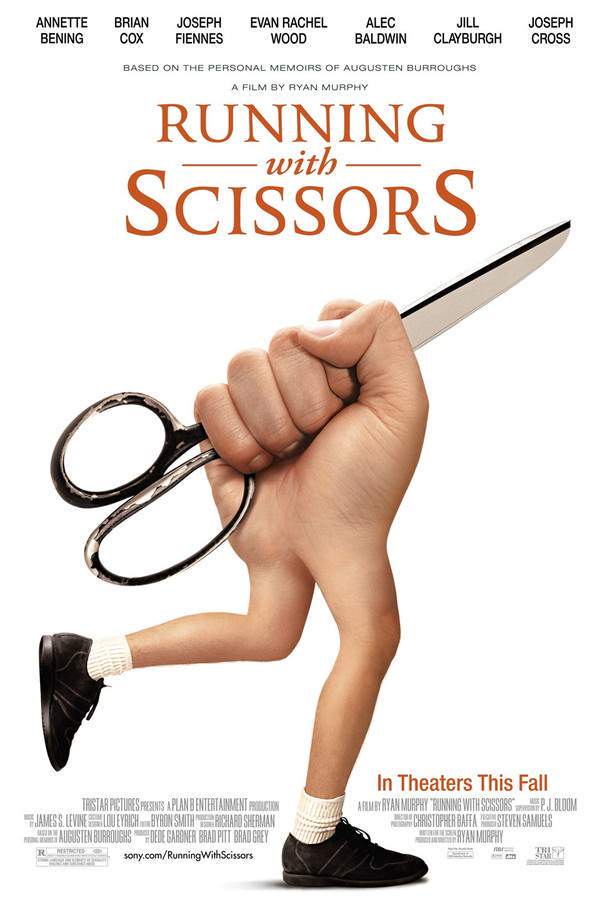
Running with Scissors (2006) movie poster

Plot Summary

Running with Scissors (2006) Plot Summary Explained

Release, runtime and language
2006 · 116 min · English
Loading streaming availability…
Directed by
Ryan Murphy
Starring
Brian Cox, Gwyneth Paltrow, Alec Baldwin, Annette Bening, Joseph Cross

A young boy's life takes an unexpected turn when his mother, struggling with her own issues, places him in the care of a peculiar psychiatrist. He’s thrust into the therapist’s chaotic and unconventional household, filled with eccentric personalities and unusual behavior. Augusten Burroughs must navigate this bizarre new world, confronting the challenges of family, identity, and growing up in a deeply unconventional environment.

On this page (8)
  1. 1 Where to watch
  2. 2 What happens: full plot
  3. 3 Plot questions answered
  4. 4 The book behind the movie
  5. 5 Movie threads
  6. 6 Movies like Running with Scissors
  7. 7 Categories
  8. 8 Every angle
Loading streaming availability…

Full plot summary · contains spoilers

What Happens in Running with Scissors: Full Plot Summary

The whole story of Running with Scissors (2006) explained, from the opening scene to the final frame: every key event, every twist and what it all adds up to. Read it as a quick recap before the sequel, to check a scene you missed, or to finally understand what really happened.

As the chaotic journey of Augusten Burroughs unfolds, his mother, Deirdre, a frustrated poet, navigates through life with unpredictable mood swings that turn their home into a tumultuous environment. Her volatile behavior and explosive temper create an atmosphere thick with anxiety, leaving young Augusten feeling perpetually unsafe. Meanwhile, his father, Norman, whom the narrative portrays as an enabler grappling with his own inner demons, is rendered impotent against Deirdre's erratic outbursts. Caught in a web of constant turmoil, Augusten feels the impact of their toxic dynamics as a teenager, where each interaction brims with tension.

Deirdre's alarming assertions that Norman intends to harm her further intensify the fragile family fabric, pushing her to make a desperate decision: sending Augusten to live with Dr. Finch, a captivating yet unconventional psychiatrist who manages an equally eccentric household. The Finches embody a peculiar mix of oddities and heart, an adjustment that proves challenging for Augusten as he learns to embrace their warmth.

As Augusten confronts this new chapter, he faces irregular weekend visits from his increasingly unstable mother. During one such encounter, he opens up to Natalie, Dr. Finch's daughter, about his emerging sexuality. This revelation paves the way for an unexpected connection with Neil Bookman, the doctor's adopted son, who, at 33 years old, grapples with his own vulnerabilities. Their relationship, fraught with passion and complexity, struggles under the weight of an age gap, particularly as Augusten nears his fifteenth birthday.

Amidst all this, Dr. Finch cleverly manipulates Deirdre, coercing her into transferring her assets to him, revealing the exploitative nature of their interaction rooted in her fragile mental state. As time elapses, Augusten's sense of abandonment deepens, compounded by Neil's battles with schizophrenia and the mounting resentment from Dorothy.

Ultimately, seeking liberation and a renewed sense of purpose, Augusten decides to sever ties with the Finches and head to New York City, intent on fulfilling his dream of becoming a writer. His departure is marked by an emotionally charged moment with Agnes, who gifts him a token from her personal savings, encapsulating the weight of their farewell.

In a bittersweet post-credits scene, the conclusions for each character unveil themselves: Dr. Finch loses his medical license due to insurance fraud, passing away in 2000; Agnes finds herself working in a nursing home, Natalie pursues a psychology degree, and Hope supports her father until his death in 2005. In an unexpected twist, Norman rekindles contact with Augusten before his own passing in the same year, while Deirdre remains distanced from her son and Neil disappears without a trace. Ultimately, Augusten emerges as a writer, chronicling the profound experiences that shaped his life.

Last updated: November 22, 2024 at 18:50

Was this helpful?

Plot questions answered

Running with Scissors Plot Explained: Your Questions Answered

The questions people ask most about Running with Scissors (2006): what happens in the confusing scenes, why the characters do what they do, the twists, hidden details and what the ending means. Each answer contains spoilers.

Q1

Why does Deirdre send Augusten to live with Dr. Finch?

Deirdre sends Augusten to live with Dr. Finch after her paranoia escalates and she becomes convinced that Norman intends to harm her. Feeling desperate and unable to protect her son in their volatile household, she makes the drastic decision to place Augusten with the unconventional psychiatrist, believing he can provide a more stable environment than she currently can.

Foreshadowing: Earlier in the film, Deirdre's escalating mood swings and paranoid assertions about Norman foreshadow her desperate decision to remove Augusten from the household.

  • deirdre
  • dr finch
  • augusten
  • child placement
  • family dysfunction
Q2

How does Dr. Finch manipulate Deirdre into giving him her assets?

Dr. Finch exploits Deirdre's fragile mental state by cleverly manipulating her during therapy sessions. He coerces her into transferring her assets to him, taking advantage of her vulnerability and unstable condition. This revelation highlights the exploitative nature of their professional relationship and shows how Dr. Finch preys on vulnerable patients.

Foreshadowing: The power imbalance in Dr. Finch's therapy sessions, where he exerts significant influence over Deirdre's decisions, sets the stage for his later financial exploitation.

  • dr finch
  • deirdre
  • manipulation
  • assets
  • fraud
  • exploitation
Q3

Why does Augusten form a relationship with Neil Bookman?

Augusten develops a connection with Neil Bookman after opening up to Natalie, Dr. Finch's daughter, about his emerging sexuality. Neil, who is 33 years old and struggles with his own vulnerabilities including schizophrenia, becomes the first person Augusten feels he can truly confide in. Their relationship is characterized by passion and complexity, born from shared emotional struggles and a sense of understanding each other's brokenness.

Foreshadowing: Augusten's conversation with Natalie about his sexuality directly precedes and facilitates his connection with Neil, marking a pivotal moment in his emotional development.

  • augusten
  • neil bookman
  • relationship
  • sexuality
  • vulnerability
Q4

Why does Augusten decide to leave the Finch household and go to New York?

Augusten decides to leave the Finches because he feels a growing sense of abandonment and isolation. Neil's battles with schizophrenia, mounting resentment from Dorothy, and the overall toxic dynamics of the household all contribute to his decision. Seeking liberation and a renewed sense of purpose, Augusten chooses to pursue his dream of becoming a writer in New York City, viewing it as an escape from the chaos that has defined his childhood.

Foreshadowing: The deepening resentment from Dorothy and Neil's declining mental health signal the breaking point that makes Augusten's departure inevitable.

  • augusten
  • new york
  • departure
  • writer
  • dream
  • escape
Q5

What happens to Neil Bookman by the end of the movie?

Neil Bookman disappears without a trace by the end of the movie. His relationship with Augusten, which was already complicated by their significant age gap and Neil's struggles with schizophrenia, ends with Neil vanishing completely. The film does not provide closure on his fate, leaving his disappearance as one of the unresolved mysteries of the story.

Foreshadowing: Neil's ongoing battle with schizophrenia and the increasing strain on his relationship with Augusten hint at his inability to maintain stability.

  • neil bookman
  • disappearance
  • schizophrenia
  • fate
Q6

Why does Norman reconcile with Augusten before his death?

Norman Burroughs reaches out to Augusten and reconciles with him before passing away in 2005. This reconciliation represents a brief moment of closure for Augusten, who experienced neglect and abandonment throughout his childhood. Norman, who was portrayed as an impotent enabler unable to protect his son from Deirdre's volatile behavior, seeks to make amends despite their troubled history.

Foreshadowing: Norman's history of failing to protect Augusten makes his late attempt at reconciliation both meaningful and tinged with regret.

  • norman
  • reconciliation
  • death
  • father
  • closure
Q7

Why is Augusten's relationship with Neil considered problematic?

Augusten's relationship with Neil is problematic primarily due to their significant age gap. Neil is 33 years old while Augusten is approaching his fifteenth birthday when their relationship becomes intimate. This represents a sexual relationship between an adult and a minor, which is inherently exploitative regardless of the emotional connection between them. The power imbalance and Neil's position as an adopted member of the household Augusten lives in further complicates the dynamic.

Foreshadowing: The age difference is established early in their relationship, with Neil being a grown adult in a household where Augusten is a teenager.

  • age gap
  • minor
  • exploitation
  • neil
  • problematic relationship
Q8

What happens to Dr. Finch after he loses his medical license?

Dr. Finch loses his medical license due to insurance fraud. According to the post-credits epilogue, he passes away in 2000 after losing his practice. His daughter Hope supports him until his death, while other family members pursue different paths. His downfall represents the consequences of his unethical behavior and exploitation of vulnerable patients like Deirdre.

Foreshadowing: Dr. Finch's manipulation of Deirdre into transferring her assets hints at his dishonest character and sets up his eventual legal troubles.

  • dr finch
  • license
  • fraud
  • death
  • consequences
Q9

Why does Deirdre remain distanced from Augusten even after he becomes successful?

Deirdre remains distanced from Augusten throughout his adult life, even after he becomes a successful writer. Her own mental instability and the traumatic way she abandoned him by sending him to live with Dr. Finch create an insurmountable barrier. The film suggests she never overcomes her own issues enough to reconnect with her son, leaving their relationship permanently fractured.

Foreshadowing: Deirdre's unstable behavior and her decision to place Augusten with Dr. Finch establish the pattern of absence that defines their relationship.

  • deirdre
  • mother
  • distanced
  • abandonment
  • estrangement
Q10

What role does Agnes play in Augusten's departure?

Agnes, a member of the Finch household, plays a significant emotional role in Augusten's departure. Before he leaves for New York City, she shares a heartfelt farewell moment with him and gifts him a meaningful token from her personal savings. This gesture underscores the genuine bond Augusten formed with certain members of the eccentric Finch family, contrasting with the exploitation he experienced from Dr. Finch.

Foreshadowing: Agnes's warmth and acceptance throughout Augusten's time in the household make her farewell particularly emotionally significant.

  • agnes
  • farewell
  • gift
  • support
  • finch family
Q11

How does Augusten end up becoming a writer?

After leaving the Finch household and moving to New York City, Augusten Burroughs pursues his dream of becoming a writer. His tumultuous childhood, marked by parental neglect, exploitation, and unconventional family dynamics, provides rich material for his future work. He ultimately emerges as a writer who chronicles the profound experiences that shaped his life, transforming his painful past into creative expression.

Foreshadowing: Augusten's decision to leave for New York specifically to become a writer establishes the trajectory that leads to his eventual success.

  • augusten
  • writer
  • new york
  • dream
  • success
  • transformation

Movie threads

More Movies Like Running with Scissors, by Mood & Story

Curated lists built around what makes Running with Scissors tick: the same mood, the same kind of story or the same emotional payoff. Each list explains why these movies belong together.

Movies about chaotic found families like Running with Scissors

Stories where eccentric characters form a bizarre, chaotic, but defining household. If you liked the eccentric household in Running with Scissors, you'll appreciate these movies about quirky found families. This list features similar stories of characters navigating bizarre, unconventional living situations that blend dark humor with heartfelt, if chaotic, connections.

  • quirky
  • chaotic
  • bittersweet
  • unsettling
  • melancholic
  • eccentric
  • Tone: bittersweet, quirky, melancholic
  • Pacing: steady, character-driven
Why these movies?

The story pattern: The protagonist, often a young person, is placed into or discovers a household that operates by its own strange rules. The narrative follows their journey of adapting to this chaotic environment, forming complex bonds with its inhabitants, and ultimately redefining their understanding of family, belonging, and identity through a series of unsettling yet formative experiences.

Why they belong together: Movies are grouped here for their shared focus on non-traditional family units characterized by eccentricity and chaos. They share a specific bittersweet tone where humor arises from the absurdity of the situation, but the emotional core deals with themes of acceptance, survival, and the scars and strengths gained from an unconventional upbringing.

Bittersweet coming-of-age stories like Running with Scissors

Young protagonists navigate adulthood against a backdrop of instability and dark humor. Fans of Running with Scissors looking for similar movies will find them in this collection of bittersweet coming-of-age tales. These films feature young protagonists grappling with identity and survival within unstable, often disturbing family dynamics, blending dark comedy with poignant drama.

  • bittersweet
  • anxious
  • melancholic
  • unsettling
  • resilient
  • darkly comic
  • Tone: bittersweet, melancholic, anxious
  • Pacing: steady, episodic
Why these movies?

The story pattern: The narrative follows a sensitive or observant protagonist through their adolescence, which is marked by a lack of stable guidance. Key adults are sources of conflict rather than support, forcing the young person to mature quickly. The story arc involves navigating exploitation, discovering personal strength and sexuality, and ultimately achieving a fragile independence that is tinged with the melancholy of a lost childhood.

Why they belong together: These films are united by their specific take on the coming-of-age genre, focusing on the psychological impact of growing up in a turbulent environment. They share a mix of dark comedy and genuine sorrow, a medium emotional weight, and a bittersweet conclusion that reflects the complex reality of healing from a troubled youth.

If you liked this

Movies Like Running with Scissors

Similar movies to Running with Scissors: the same genre, themes or kind of story. Each one comes with its own plot summary, timeline and ending explained.

Browse all movie summaries

Categories

Movie Lists Featuring Running with Scissors

Running with Scissors appears in these hand-built movie categories. Each one groups movies by a specific mood, theme or story type, with their plot summaries and endings explained.

View all movie categories

Every angle

Running with Scissors (2006) Explained: Plot, Timeline & Characters

Everything about Running with Scissors in one place: what happens in the plot summary, the timeline in chronological order, the characters and meaning and a spoiler-free summary. What's After the Movie adds the cast, box office and post-credit scenes.

Coming soon on iOS and Android

The Plot Explained Movie Summary App

Plot summaries, endings explained and timelines on your phone. Catch up on any movie in minutes, save your favorites and never miss a twist again.

Be the first to know when we launch. Your email stays private, always.

Learn more about the app