

Plot Explained Spoilers guaranteed!
Plot Explained

Browse by genre

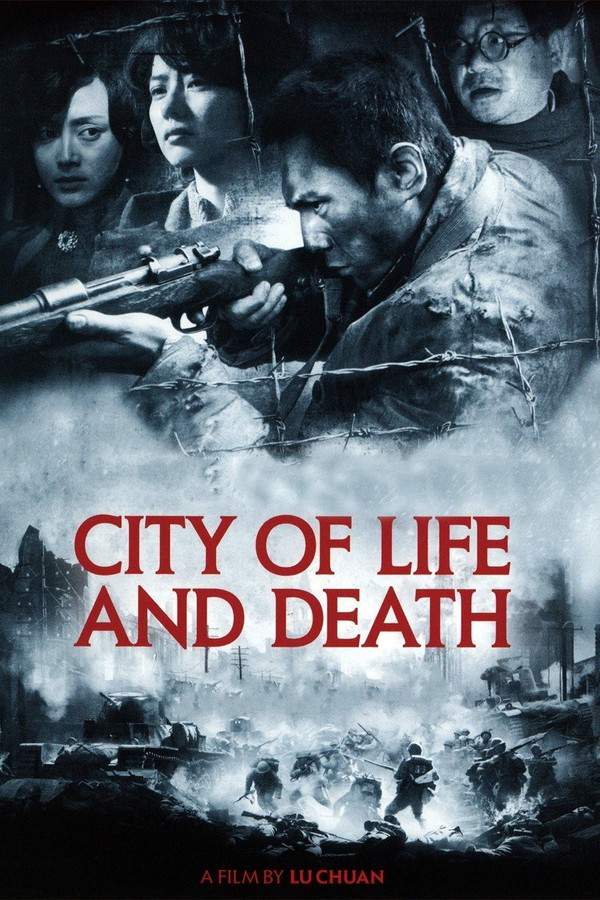
City of Life and Death (2011) movie poster

Timeline

City of Life and Death (2011) Timeline Explained – Every Event in Order

Release, runtime and language
2011 · 132 min · Chinese
Directed by
Chuan Lu

During the Japanese Imperial Army's siege of Nanking in December 1937, unimaginable terror unfolded, resulting in the tragic loss of up to 300,000 lives within a span of six weeks. This film powerfully reimagines this dark period in modern Asian history, presenting a stark and unflinching portrayal of the events. Shot in striking black-and-white Cinemascope, it offers a cinematic exploration of the siege and its devastating consequences.

On this page (6)
  1. 1 Where to watch
  2. 2 Events in order (15)
  3. 3 Timeline questions answered
  4. 4 Movie threads
  5. 5 Movies like City of Life and Death
  6. 6 Every angle

Where to watch

Where to Watch City of Life and Death (2011)

Where can you watch City of Life and Death? Stream, rent or buy it in the US, including on Kanopy: current JustWatch availability with up-to-date prices.

Streaming availability powered by JustWatch

15 events in order · contains spoilers

City of Life and Death Timeline: Events in Chronological Order

Every key event of City of Life and Death (2011) in order, scene by scene, with when and where it takes place. Use it to untangle flashbacks, time jumps and parallel storylines, to refresh your memory before the sequel or to find the exact scene you are thinking of.

  1. The Start of the Second Sino-Japanese War

    In 1937, the Second Sino-Japanese War begins, marking a significant turning point in Sino-Japanese relations. This conflict would become a backdrop for the tragic events that unfold in Nanjing.

    When
    1937
    Where
    Nanjing
  2. Capture of Nanjing

    The Imperial Japanese Army captures Nanjing, the capital of the Republic of China. This annexation opens the door to a series of horrific acts against Chinese prisoners and civilians, known as the Nanking Massacre.

    Where
    Nanjing
  3. Lu Jianxiong and Shunzi's Mission

    Brave Chinese soldier Lieutenant Lu Jianxiong and his comrade Shunzi attempt to thwart deserting troops planning to abandon Nanjing. However, their mission is abruptly interrupted when they are captured by Japanese forces surrounding the city.

    Where
    Nanjing
  4. Confrontation with Kadokawa

    Superior Private Kadokawa Masao confronts Lu Jianxiong's group in a tense showdown. Initially, Lu and his comrades ambush Kadokawa and his men, but as more Japanese troops arrive, they are ultimately forced to surrender.

    Where
    Nanjing
  5. Nanjing Safety Zone Established

    As chaos ensues, the Nanking Safety Zone is established, overseen by John Rabe and other Westerners. They strive to protect thousands of civilians seeking refuge from the atrocities occurring outside its walls.

    Where
    Nanjing Safety Zone
  6. Desperate Measures in the Safety Zone

    The Safety Zone becomes a target for Japanese soldiers, prompting women to disguise themselves as men to evade assault. This desperate strategy highlights the extreme lengths they go to in order to survive.

    Where
    Nanjing Safety Zone
  7. Kadokawa's Emotional Conflict

    Kadokawa grapples with conflicting emotions as he develops feelings for Yuriko, a Japanese prostitute. His internal struggle grows as he navigates his compassion for her amidst the brutality surrounding them.

    Where
    Nanjing
  8. Rabe's Secretary Tang's Losses

    Tang Tianxiang, Rabe's secretary, and teacher Jiang Shuyun experience profound personal losses amid the war's horrors. Tang’s helplessness grows as he learns of his daughter’s ensnarement in the violence.

    Where
    Nanjing
  9. The Demand for Comfort Women

    Japanese officer Second Lieutenant Ida Osamu issues a horrifying demand for one hundred women to be handed over as 'comfort women'. This tragic moment underscores the atrocities faced by women during the conflict.

    Where
    Nanjing Safety Zone
  10. Kadokawa Witnesses Horror

    Kadokawa is left powerless as he witnesses the horrors inflicted upon women like Xiaojiang. The trauma and despair surrounding him lead to a moment of bitter introspection as he grapples with his inaction.

    Where
    Nanjing Safety Zone
  11. Rabe's Summons Back to Germany

    John Rabe is called back to Germany due to escalating diplomatic tensions stemming from his efforts to assist refugees. His departure leaves a vacuum of leadership and intensifies the urgency for those remaining.

    Where
    Nanjing
  12. Tang's Sacrificial Choice

    In a selfless act, Tang chooses to stay behind and trade places with a Chinese soldier to protect his family. This poignant decision illustrates the depth of personal sacrifice in a time of crisis.

    Where
    Nanjing
  13. Jiang's Bold Rescue Plan

    Jiang orchestrates a risky plan to rescue Shunzi, convincing the guards that she is his wife. This act of defiance brings about severe repercussions, highlighting her determination to save him despite the dangers.

    Where
    Nanjing
  14. Kadokawa's Despair

    As the situation grows increasingly dire, Kadokawa is consumed by guilt and hopelessness. His choices lead him to release Shunzi and Xiaodouzi, ultimately culminating in his tragic decision to end his own suffering.

    Where
    Nanjing
  15. The Aftermath and Legacy

    In the closing moments, we learn that Mrs. Tang and Ida Osamu survived the war, emphasizing the stark contrast between survival and the deep scars left by their experiences. The credits roll, reminding us of the heavy toll of history.

    Where
    Nanjing

Last updated: November 16, 2024 at 11:54

Was this helpful?

Timeline questions answered

City of Life and Death Timeline Explained: Your Questions Answered

When does it happen, and why in that order? The questions people ask about the chronology of City of Life and Death (2011): time jumps, flashbacks, cause and effect between scenes and the correct order of events, each answered with spoilers.

Q1

Why did Kadokawa surrender after ambushing the Japanese soldiers?

Kadokawa and his group initially ambushed the Japanese troops from buildings in the city, successfully catching them off guard. However, when additional Japanese forces arrived and surrounded them, continuing to fight would have meant certain death for everyone. Surrendering was not a strategic choice but rather the only option left when they were outnumbered and trapped, leading to their eventual execution.

Foreshadowing: Earlier scenes establish the overwhelming strength of Japanese forces surrounding Nanjing, making resistance increasingly futile.

  • kadokawa surrender
  • nanjing battle
  • chinese soldiers captured
  • ambush
Q2

Why did Kadokawa feel guilty throughout the film?

Kadokawa struggled with intense guilt because he was both a participant in the Japanese military and a witness to its atrocities. He developed feelings for Yuriko, a Japanese prostitute, which conflicted with his role as a soldier. Most devastatingly, he was powerless to stop the horrors inflicted upon women like Xiaojiang in the Safety Zone, and he witnessed Tang's sister-in-law succumb to madness after being victimized. His inability to act or prevent these tragedies haunted him.

Foreshadowing: His early interactions with Yuriko show his capacity for compassion, which makes his later helplessness more tragic.

  • kadokawa guilt
  • yuriko
  • japanese soldier trauma
  • witnessing atrocities
Q3

Why did Tang sacrifice himself by trading places with a Chinese soldier?

When John Rabe was summoned back to Germany, the Safety Zone lost its primary protector. Japanese forces were actively hunting former Chinese soldiers. Tang chose to stay behind and swap places with a Chinese soldier who had been hiding in the Zone, allowing the soldier to escape while taking upon himself the soldier's fate. This act was meant to protect his family by ensuring the soldier could return to them safely.

Foreshadowing: Tang's earlier helplessness when his daughter and sister-in-law were victimized sets up his desperate choice to save someone else.

  • tang sacrifice
  • trading places
  • safety zone rescue
  • family protection
Q4

Why did Kadokawa release Shunzi and Xiaodouzi at the end?

By the film's climax, Kadokawa was consumed by guilt and hopelessness after witnessing countless atrocities and being unable to prevent them. When he encountered Shunzi and Xiaodouzi facing execution, he made a final moral choice to free them as an act of mercy. However, this act of compassion left him feeling utterly empty, leading him to take his own life in despair.

Foreshadowing: His earlier inability to save Xiaojiang and other women plants the seeds of his eventual breakdown.

  • kadokawa releases shunzi
  • mercy killing
  • suicide
  • final act
Q5

What happened to Xiaodouzi in the Safety Zone?

Xiaodouzi was a young boy who, along with Shunzi, narrowly escaped execution and found refuge in the Nanking Safety Zone. Throughout the film, he survives the horrors of the siege by staying hidden within the Zone's walls. At the end, he is among those freed by Kadokawa, though his ultimate fate remains uncertain.

Foreshadowing: Xiaodouzi's presence with Shunzi in the Safety Zone establishes his survival as tied to Shunzi's.

  • xiaodouzi
  • safe zone nanking
  • child survivor
  • boy escape
Q6

Why did Jiang risk herself to rescue Shunzi?

Jiang Shuyun, a teacher working in the Safety Zone, orchestrated a daring rescue when Shunzi was recognized and captured by Japanese forces hunting former soldiers. She posed as Shunzi's wife, with Xiaodouzi playing their son, convincing the guards of their family relationship. This act of defiance led to her being brutally assaulted, after which she desperately begged Kadokawa to end her suffering before she faced even worse fates.

Foreshadowing: Jiang's role as a teacher and protector of civilians in the Zone establishes her willingness to sacrifice herself for others.

  • jiang rescue shunzi
  • disguise safety zone
  • teacher sacrifice
  • jiang shuyun
Q7

Why did the Japanese demand comfort women from the Safety Zone?

Japanese officer Second Lieutenant Ida Osamu issued a command demanding one hundred women be handed over from the Nanking Safety Zone to serve as 'comfort women' for the troops. This was a systematic practice of sexual slavery used by the Japanese military. The demand was announced with tearful resignation by John Rabe and Jiang Shuyun to the gathered refugees, representing one of the most horrific atrocities committed during the siege.

Foreshadowing: Earlier violations of the Safety Zone by Japanese soldiers establish their persistent targeting of women.

  • comfort women demand
  • ida osamu
  • safety zone violation
  • sexual violence nanking
Q8

Why couldn't Kadokawa save Xiaojiang?

Kadokawa was present when Japanese soldiers brutalized Xiaojiang and other women in the Safety Zone, but he was completely powerless to intervene. As a single Japanese soldier among many committing atrocities, he had no authority to stop them and feared for his own life if he resisted. His witness of this horror, combined with his inability to prevent it, intensified his guilt and psychological deterioration.

Foreshadowing: His earlier expressions of compassion for Yuriko highlight the contrast between his feelings and his inability to act.

  • xiaojiang death
  • kadokawa witness
  • powerlessness
  • sexual assault scene
Q9

How did Shunzi survive the initial execution?

Shunzi and Xiaodouzi escaped the systematic execution of Chinese prisoners when they were captured alongside Lu Jianxiong's group. They managed to flee during the chaos surrounding the Japanese attack on Nanjing, finding their way to the Nanking Safety Zone established by John Rabe and other Westerners. Their survival was a matter of being in the right place at the right moment during the breakdown of order.

Foreshadowing: The timeline shows Shunzi's capture and subsequent escape before the Safety Zone is fully established.

  • shunzi escape
  • execution survival
  • safe zone entry
  • prisoner survival
Q10

Why did women disguise themselves as men in the Safety Zone?

Japanese soldiers repeatedly invaded the Nanking Safety Zone with the intent to assault women. In desperate response, female refugees cut their hair and disguised themselves as men to avoid detection and sexual violence. This extreme measure highlights the terrifying reality that even the Safety Zone could not guarantee their safety from the Japanese military.

Foreshadowing: The establishment of the Safety Zone as a supposed sanctuary contrasts with the repeated violations that follow.

  • women disguise
  • safety zone nanking
  • hair cutting survival
  • evasion tactics
Q11

Why was John Rabe forced to leave Nanjing?

John Rabe, the German businessman and Nazi Party member who led the Nanking Safety Zone, was summoned back to Germany due to the diplomatic strain his humanitarian efforts were causing with Japan. His vocal advocacy for refugees and documentation of Japanese atrocities had created political tensions. His departure left a critical leadership vacuum in the Safety Zone, accelerating the deterioration of protection for civilians.

Foreshadowing: Rabe's early role as the primary protector establishes his importance to the Zone's functioning.

  • john rabe departure
  • diplomatic pressure
  • german businessman nanking
  • safety zone leadership
Q12

Did Ida Osamu face consequences for his actions?

According to the film's ending, Ida Osamu survived the war and lived to an old age. This contrasts with many Chinese civilians and soldiers who perished during the massacre. The film presents this survival as an unsettling reminder that some perpetrators of the atrocities escaped justice, leaving a sense of unresolved injustice.

Foreshadowing: The film's bleak tone, noted in the meta notes, aligns with this unresolved ending.

  • ida osamu survival
  • war criminals
  • nanking massacre perpetrators
  • no justice

Movie threads

More Movies Like City of Life and Death, by Mood & Story

Curated lists built around what makes City of Life and Death tick: the same mood, the same kind of story or the same emotional payoff. Each list explains why these movies belong together.

Unflinching historical dramas like City of Life and Death

Powerful films that confront the darkest chapters of human history with stark realism. Explore movies like City of Life and Death that confront real-world atrocities with unflinching realism. These powerful historical dramas are emotionally heavy and bleak, often focusing on survival and moral conflict during dark chapters of human history.

  • harrowing
  • somber
  • brutal
  • unflinching
  • oppressive
  • desperate
  • Tone: bleak, somber, unflinching
  • Pacing: steady, deliberate
Why these movies?

The story pattern: Narratives in this thread are typically set during well-documented historical tragedies. They often follow multiple perspectives—victims, perpetrators, and bystanders—to create a comprehensive and harrowing portrait of an event. The plot is driven by the relentless progression of the atrocity itself, focusing on survival, dehumanization, and the collapse of moral order.

Why they belong together: These movies are grouped by their shared commitment to historical gravity, a bleak and oppressive tone, and a heavy emotional weight derived from depicting true human suffering. They are united by a solemn, almost documentary-like approach to storytelling that is both devastating and essential.

Multi-perspective war tragedies similar to City of Life and Death

Epic war stories told from multiple angles, revealing the human cost on all sides. If you liked the multi-faceted view of war in City of Life and Death, discover similar movies that depict wartime tragedies from various perspectives. These films often have a steady pace, heavy emotional weight, and explore moral conflict and survival with a bleak, somber tone.

  • tragic
  • somber
  • gritty
  • morally complex
  • desperate
  • harrowing
  • Tone: tragic, somber, morally complex
  • Pacing: steady, episodic
Why these movies?

The story pattern: The narrative structure is defined by shifting viewpoints, weaving together the stories of individuals caught in the machinery of war. This approach avoids simplistic good-versus-evil dichotomies, instead highlighting the moral complexity and psychological toll on everyone involved. The journey is collectively tragic, often culminating in a sense of profound, unresolved loss.

Why they belong together: Movies in this thread share a specific narrative technique and thematic focus. They are connected by their use of multiple perspectives to deepen the tragedy of war, a steady pacing that allows for character immersion, and a consistently heavy, somber mood that reflects the grim reality of conflict.

If you liked this

Movies Like City of Life and Death

Similar movies to City of Life and Death: the same genre, themes or kind of story. Each one comes with its own plot summary, timeline and ending explained.

Browse all movie summaries

Every angle

City of Life and Death (2011) Explained: Plot, Timeline & Characters

Everything about City of Life and Death in one place: what happens in the plot summary, the timeline in chronological order, the characters and meaning and a spoiler-free summary. What's After the Movie adds the cast, box office and post-credit scenes.

Coming soon on iOS and Android

The Plot Explained Movie Summary App

Plot summaries, endings explained and timelines on your phone. Catch up on any movie in minutes, save your favorites and never miss a twist again.

Be the first to know when we launch. Your email stays private, always.

Learn more about the app