Plot Explained Spoilers guaranteed!
Plot Explained

Browse by genre

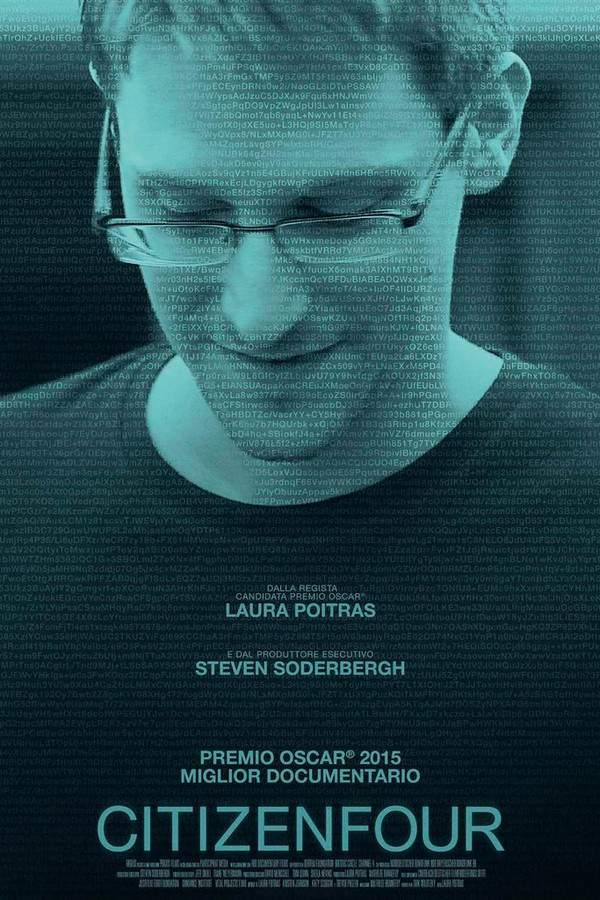
Citizenfour (2014) movie poster

Timeline

Citizenfour (2014) Timeline Explained – Every Event in Order

Release, runtime and language
2014 · 114 min · English
Loading streaming availability…
Directed by
Laura Poitras
Starring
Edward Snowden, Glenn Greenwald

Filmmaker Laura Poitras received an urgent message from a mysterious source, "Citizenfour," leading her to Hong Kong to investigate unsettling claims about national security. There, she joined journalist Glenn Greenwald to meet Edward Snowden, who possessed classified documents exposing the extent of NSA surveillance. The encounter ignited a tense and revealing series of events as they worked to understand and release Snowden's explosive whistleblowing revelations to the world.

On this page (6)
  1. 1 Where to watch
  2. 2 Events in order (15)
  3. 3 Timeline questions answered
  4. 4 Movie threads
  5. 5 Movies like Citizenfour
  6. 6 Every angle
Loading streaming availability…

15 events in order · contains spoilers

Citizenfour Timeline: Events in Chronological Order

Every key event of Citizenfour (2014) in order, scene by scene, with when and where it takes place. Use it to untangle flashbacks, time jumps and parallel storylines, to refresh your memory before the sequel or to find the exact scene you are thinking of.

  1. Laura Poitras Receives Encrypted Email

    In January 2013, Laura Poitras, a documentary filmmaker, receives an encrypted email from a mysterious figure known as Citizenfour. This email ignites her journey into the dark world of surveillance programs linked to the September 11 attacks and sets the stage for a major revelation about government activities.

    When
    January 2013
  2. Citizenfour Reveals NSA Programs

    The email from Citizenfour contains insider information about illegal wiretapping conducted by the NSA and other intelligence entities. Poitras is captivated and compelled to meet this person to uncover the truth behind these alarming surveillance practices.

  3. Meeting in Hong Kong

    By June 2013, Laura Poitras travels to Hong Kong with journalist Glenn Greenwald and *The Guardian* reporter Ewen MacAskill. They meet Citizenfour in a hotel room, where he reveals himself to be Edward Snowden, an iconic moment marked by secrecy and tension as the group embarks on a crucial dialogue.

    When
    June 2013
    Where
    Hong Kong
  4. Intensive Interviews with Snowden

    Over the next four days, Poitras conducts intense interviews with Snowden, capturing deep insights into his rationale for exposing the NSA's surveillance. These encounters take place in a charged atmosphere, with Snowden appearing increasingly fraught under the weight of his revelations.

    When
    June 2013
    Where
    Mira Hotel, Hong Kong
  5. Snowden's Desire to Go Public

    On June 9, after thorough discussions, Snowden shares his intent to go public with the sensitive information he possesses. This decision triggers a media frenzy that begins to uncover his location at the Mira Hotel, putting him at greater risk of exposure.

    When
    June 9, 2013
    Where
    Mira Hotel, Hong Kong
  6. Relocation to Poitras' Room

    To avoid unwanted attention and intense media scrutiny, Snowden relocates to Laura Poitras' hotel room. Here, he navigates the precarious balance of staying hidden while preparing to expose profound truths about government surveillance.

    Where
    Hong Kong
  7. Applying for Asylum

    Facing the prospect of extradition, Snowden organizes a meeting with the United Nations High Commissioner for Refugees to seek asylum. Meanwhile, Poitras senses that she is being watched, which prompts her to leave Hong Kong for safety.

    Where
    Hong Kong
  8. US Request for Extradition

    On June 21, 2013, the United States government issues an extradition request for Edward Snowden, heightening the tension of his situation. This request forces Snowden into a precarious game of cat and mouse with authorities seeking to silence him.

    When
    June 21, 2013
    Where
    Hong Kong
  9. Stranded in Moscow

    After managing to escape from Hong Kong, Snowden finds himself stranded at Sheremetyevo International Airport in Moscow. This unexpected turn of events unfolds over 40 days while his US passport is revoked, preventing him from reaching his intended destination.

    Where
    Sheremetyevo International Airport, Moscow
  10. Granting of Temporary Asylum

    On August 1, 2013, Russian authorities grant Edward Snowden temporary asylum for one year. This reprieve allows him a moment of safety amidst the international uproar surrounding his leaked revelations about NSA surveillance practices.

    When
    August 1, 2013
    Where
    Moscow
  11. Greenwald Addresses NSA Misuse

    Following his return to Rio de Janeiro, Glenn Greenwald publicly addresses the extensive misuse of NSA surveillance capabilities. His revelations amplify the ongoing discussions about privacy and governmental overreach, aimed at informing the public about these serious issues.

    Where
    Rio de Janeiro
  12. Ongoing Correspondence

    As the fallout from Snowden’s leaks continues, both Greenwald and Poitras maintain correspondence, sharing their mutual fears about returning to the United States. Their communications reflect a broader concern regarding the implications of their work in exposing classified information.

  13. William Binney’s Insights

    Throughout the documentary, NSA whistleblower William Binney provides critical insights into the agency's operations, speaking to the depth of surveillance procedures. His testimony extends to the German Parliament, where he discusses NSA espionage activities in Germany.

    Where
    German Parliament
  14. Reunion in Russia

    The film culminates in a significant reunion in Russia between Poitras, Snowden, and Greenwald. Gathered together, they engage in a cautious discussion about their findings, taking care to jot down sensitive information rather than speaking it aloud, showcasing their awareness of the risks involved.

    Where
    Russia
  15. Destruction of Sensitive Documents

    In a moment of deliberation, Greenwald tears apart sensitive documents during their reunion. This act symbolizes the precarious nature of the information they possess, as they meticulously destroy evidence of their discussions while still holding on to the truths they've uncovered.

    Where
    Russia

Last updated: November 07, 2024 at 23:27

Was this helpful?

Timeline questions answered

Citizenfour Timeline Explained: Your Questions Answered

When does it happen, and why in that order? The questions people ask about the chronology of Citizenfour (2014): time jumps, flashbacks, cause and effect between scenes and the correct order of events, each answered with spoilers.

Q1

Why did Edward Snowden decide to expose the NSA surveillance programs?

Snowden decided to become a whistleblower because he believed the NSA's mass surveillance programs were unconstitutional and violated basic privacy rights. As an NSA contractor with access to classified information, he witnessed firsthand the extent of illegal wiretapping and data collection on ordinary citizens. His decision was driven by a desire to inform the public about government overreach rather than allowing the programs to continue undetected.

  • snowden motivation
  • nsa surveillance
  • whistleblower
  • privacy violations
  • constitutional concerns
Q2

Why did Snowden choose to contact Laura Poitras instead of other journalists?

Snowden specifically contacted Laura Poitras because she was already known for her documentary work on surveillance and the aftermath of September 11. He had been following her previous films and trusted her ability to handle sensitive material responsibly. Poitras had also been experiencing her own surveillance-related difficulties, making her a sympathetic and logical choice for such a revelation.

  • laura poitras
  • secure communication
  • journalist selection
  • trust
Q3

Why did Snowden choose to reveal the documents in Hong Kong rather than the United States?

Snowden chose Hong Kong because it offered certain legal protections and was outside immediate US jurisdiction, giving him time to explain his actions before potential arrest. The city also had a strong press presence with journalists like Glenn Greenwald who could internationalize the story quickly. Additionally, Hong Kong's technical infrastructure and internet freedom allowed for more secure document transfers.

  • hong kong
  • document reveal
  • international jurisdiction
  • press freedom
Q4

Why did Snowden decide to reveal his identity publicly?

Snowden initially wanted to remain anonymous but ultimately decided to go public on June 9, 2013, because staying hidden would limit the impact of the revelations. He believed that attaching his name to the disclosures would force a more direct public debate about NSA surveillance and hold officials accountable. The decision also demonstrated his willingness to accept personal consequences for exposing what he considered government wrongdoing.

  • public identity
  • accountability
  • personal sacrifice
  • media strategy
Q5

Why was Snowden stranded at Moscow's Sheremetyevo Airport for 40 days?

Snowden became stranded at Moscow's Sheremetyevo Airport because the US government revoked his passport while he was in transit, preventing him from boarding a flight to Havana. This left him trapped in the international transit zone of the airport for 40 days while his legal options were explored. The situation arose after his escape from Hong Kong following the extradition request.

  • moscow airport
  • passport revocation
  • 40 days
  • havana
  • cuba travel
Q6

Why did Snowden end up in Russia and was it planned?

Snowden's presence in Russia was not planned, it was an unintended consequence of the US revoking his passport while he was en route to Latin America. He had intended to fly from Hong Kong to Cuba, but the passport revocation stranded him in Moscow. Russia ultimately granted him temporary asylum on August 1, 2013, allowing him to leave the airport after his 40-day limbo.

  • russia asylum
  • temporary asylum
  • unintended
  • latin america escape
Q7

Why did Laura Poitras leave Hong Kong for Berlin during the revelations?

Laura Poitras left Hong Kong for Berlin because she suspected she was being surveilled or followed by authorities. The increasing tension after Snowden's identity was revealed and the US extradition request created a dangerous environment for her. Berlin offered better security and became a hub for ongoing work on the documentary and communications with Snowden.

  • laura poitras
  • berlin
  • surveillance fear
  • personal safety
  • hong kong departure
Q8

Why did Glenn Greenwald tear up the sensitive documents during the reunion in Russia?

Glenn Greenwald shredded sensitive documents during the reunion in Russia as a precaution against surveillance. Instead of verbally discussing new revelations, they opted to write down information and then destroy it to prevent any audio interception. This cautious approach reflected their ongoing awareness of being monitored by intelligence agencies despite being in a relatively secure location.

Foreshadowing: Earlier scenes show the paranoid atmosphere of the hotel room meetings where Snowden constantly checks for hidden surveillance devices.

  • document destruction
  • security measures
  • russia reunion
  • precaution
  • surveillance paranoia
Q9

What was the purpose of Snowden's meeting with the United Nations High Commissioner for Refugees?

Snowden met with the United Nations High Commissioner for Refugees to apply for asylum protection, as he faced potential extradition to the United States. The meeting was part of his effort to establish legal refugee status given the political nature of his case. The US government issued an extradition request on June 21, 2013, making international protection crucial for his safety.

  • asylum application
  • united nations
  • refugee status
  • extradition request
Q10

What is the significance of the scene showing Snowden lying in bed and looking in the mirror?

The scene of Snowden lying in bed and glancing into the mirror visually conveys his psychological state as a man living under immense pressure and paranoia. It captures the isolation and mental weight of his decision to expose government secrets. The mirror reflection also symbolizes self-examination, questioning who he has become as he risks everything for his beliefs.

  • mirror scene
  • psychological state
  • isolation
  • paranoia
  • self-reflection
Q11

Why did Snowden relocate from his hotel room to Laura Poitras' room?

Snowden moved to Poitras' room to escape relentless phone calls and media attention after his location at the Mira Hotel was uncovered. Once he decided to go public on June 9, journalists began trying to contact him constantly, making his original room untenable. Sharing Poitras' room provided better security and a more controlled environment for continuing their work.

  • hotel room relocation
  • media scrutiny
  • privacy
  • security
  • mir a hotel
Q12

Why were Greenwald and Poitras afraid to return to the United States?

Greenwald and Poitras feared returning to the United States because they faced potential legal repercussions for their roles in publishing classified NSA documents. Both were aware that the US government had shown willingness to pursue whistleblowers and journalists involved in disclosures. Their apprehension reflected the broader climate of government retaliation against those associated with Snowden's revelations.

  • legal fear
  • us return
  • retaliation
  • press freedom
  • government pursuit
Q13

What was William Binney's role in the documentary and why was he included?

William Binney, a former NSA crypto-mathematician turned whistleblower, provided expert context about the agency's surveillance operations. His testimony before the German Parliament about NSA espionage in Germany validated the scope of what Snowden was exposing. Including Binney reinforced that Snowden's revelations were part of a larger pattern of government overreach and added credibility to the documentary's claims.

  • william binney
  • nsa whistleblower
  • german parliament
  • expert testimony
  • surveillance validation
Q14

Why did the US government revoke Snowden's passport?

The US government revoked Snowden's passport as a tactical measure to prevent him from reaching a country that might grant him asylum. By invalidating his travel documents while he was in transit, the US hoped to force him to return or remain stranded where he could be apprehended. This action effectively trapped him in Moscow's international transit zone.

  • passport revocation
  • travel documents
  • tactical measure
  • us government
  • transit trap
Q15

What was the outcome of Snowden's temporary asylum in Russia?

Snowden was granted temporary asylum in Russia on August 1, 2013, allowing him to legally enter the country after 40 days in the airport transit zone. This temporary asylum was for one year and provided him protection from US extradition attempts. However, he remained in exile, with the long-term resolution of his legal status remaining uncertain and controversial.

  • temporary asylum
  • russia
  • exile
  • 2013
  • legal status resolution

Movie threads

More Movies Like Citizenfour, by Mood & Story

Curated lists built around what makes Citizenfour tick: the same mood, the same kind of story or the same emotional payoff. Each list explains why these movies belong together.

Urgent real-time thrillers like Citizenfour

White-knuckle stories where high-stakes events unfold in a confined space. If you liked the claustrophobic tension and real-time unfolding of events in Citizenfour, explore these movies. They capture the same high-stakes anxiety and sense of being trapped in a moment of historic consequence, often using a confined setting to amplify the drama.

  • urgent
  • claustrophobic
  • anxious
  • tense
  • real-time
  • high-stakes
  • Tone: tense, urgent
  • Pacing: fast, relentless
Why these movies?

The story pattern: Narratives in this thread are defined by their immediacy and confinement. The plot often unfolds in a compressed timeline within a limited space, forcing characters to make critical decisions under extreme duress. The story structure is typically linear and driven by a singular, escalating crisis.

Why they belong together: These films are grouped together for their shared ability to generate intense, sustained tension through a real-time narrative structure and a constrained setting. They prioritize a palpable feeling of anxiety and immediacy over complex plotting.

Whistleblower exposé documentaries like Citizenfour

Gripping accounts of individuals risking everything to expose powerful secrets. For viewers who enjoyed the journalistic investigation and high-stakes revelations of Citizenfour, this thread collects movies about real-life whistleblowers. Discover similar stories of courageous individuals exposing secrets, facing persecution, and sparking public debates on ethics and power.

  • cerebral
  • somber
  • urgent
  • paranoid
  • investigative
  • morally complex
  • Tone: tense, somber, cerebral
  • Pacing: steady, investigative
Why these movies?

The story pattern: The narrative follows a predictable but powerful arc: discovery of a hidden truth, moral conflict over whether to act, the perilous process of exposing the information, and the profound personal and political consequences that follow. The journey is often solitary and fraught with paranoia.

Why they belong together: These movies are united by their focus on the whistleblower archetype and the thematic exploration of truth versus power. They share a heavy emotional weight, a tense and cerebral tone, and an ending that is often ambiguous or bittersweet, reflecting the complex fallout of such acts.

If you liked this

Movies Like Citizenfour

Similar movies to Citizenfour: the same genre, themes or kind of story. Each one comes with its own plot summary, timeline and ending explained.

Browse all movie summaries

Every angle

Citizenfour (2014) Explained: Plot, Timeline & Characters

Everything about Citizenfour in one place: what happens in the plot summary, the timeline in chronological order, the characters and meaning and a spoiler-free summary. What's After the Movie adds the cast, box office and post-credit scenes.

Coming soon on iOS and Android

The Plot Explained Movie Summary App

Plot summaries, endings explained and timelines on your phone. Catch up on any movie in minutes, save your favorites and never miss a twist again.

Be the first to know when we launch. Your email stays private, always.

Learn more about the app