Plot Explained Spoilers guaranteed!
Plot Explained

Browse by genre

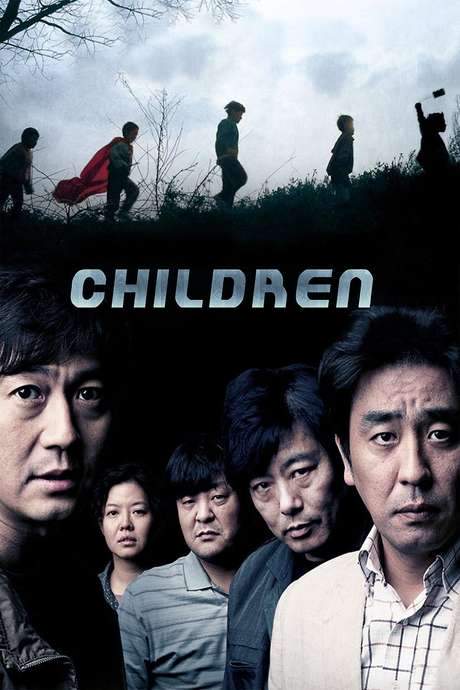
Children… (2011) movie poster

Characters & Themes

Children… (2011) Characters, Setting & Themes Explained

Release, runtime and language
2011 · 132 mins · Korean
Loading streaming availability…
Directed by
Lee Kyu-man
Starring
Kim Yeo-jin, Jeon Kuk-hwan, Park Byung-eun, Ryu Seung-ryong, Sung Dong-il, Park Seo-yeon

On March 26, 1991, five boys disappear while frog‑hunting on a mountain, sparking a lingering mystery. A documentary filmmaker, a police detective, and a university professor each pursue clues, but their investigation is clouded when one of the missing children's parents emerges as a key suspect.

On this page (7)
  1. 1 Where to watch
  2. 2 Characters explained (6)
  3. 3 Where & when it takes place
  4. 4 Themes & meaning (3)
  5. 5 Character & meaning questions
  6. 6 Movie threads
  7. 7 Every angle
Loading streaming availability…

6 main characters · contains spoilers

Children… Characters Explained: Who Is Who

The main characters of Children… (2011), heroes and villains: what drives them, how they change over the course of the story and what each of them reveals about the film's bigger ideas.

  • Kang Ji-seung (Park Yong-woo)

    A career-driven documentary maker who is transferred to a small town after a disgraceful past incident. He aims to revive his career by re-opening the missing boys case and is willing to press beyond official resistance. His pursuit blends relentless investigation with a growing fixation on the truth, even at personal cost.

    • 🔎 Investigation
    • 🎬 Media
  • Professor Cha (Jeon Kuk-hwan)

    An ambitious professor who believes he can crack the case with a theory that outpaces police work. He provides seemingly compelling evidence and pushes the investigation in new directions. His assertions threaten reputations and challenge established conclusions, fueling tension with authorities and Ji-seung.

    • 🧠 Intellectual
    • 🧪 Forensic
  • Jung-ho's Mother (Kim Yeo-jin)

    The mother of one of the missing boys, whose calm response to receiving a call claimed to be from her son fuels suspicion about what she knows. Her family becomes a focal point for rumors and media scrutiny as the case drags on. She bears the pressure of public attention while seeking truth for her son's return.

    • 👪 Family
    • 🗝️ Secrets
    • 🧩 Rumor
  • Jung-ho's Father (Sung Ji-ru)

    The father who bears the weight of accusations during the investigation and is ultimately unable to clear his name before his death. His tragedy illustrates how rumor and doubt can destroy a family. His story highlights the human cost of public forensic controversy.

    • 👪 Family
    • ⚖️ Justice
  • Remains Finding Reporter (Woo Young-taek)

    A reporter who covers the discovery of the children's remains and the unfolding investigation. His coverage helps shape public perception and keeps the case in the national spotlight. He follows the twists of the story as new clues emerge years later.

    • 📰 Media
    • ⏳ Timeline
  • PD Kim (Oh Dong-ju)

    A film crew PD who documents the investigation, capturing the atmosphere of a case that blends mystery with media production. His presence underscores the documentary nature of the pursuit and the way journalism intersects with policing.

    • 🎥 Documentary
    • 🧭 Pursuit

Last updated: November 22, 2025 at 15:38

Was this helpful?

Setting

Where and When Does Children… Take Place?

The setting of Children… (2011): the year and time period, the places and locations, and how they shape the characters, the mood and the tension of the story.

Time period

1991-2006

The narrative spans the 1990s into the mid-2000s: it begins with the 1991 local elections, follows a 1996 transfer of the investigator, notes a 2002 discovery of remains, and references a 2006 statute of limitations that colors the pursuit of justice.

Location

Seoul, South Korea, Mountainside

The story moves between Seoul and a remote mountainside in Korea, where a disappearance and its aftermath unfold. The mountainside is depicted as a rugged, wooded landscape that becomes the central stage for searches, discoveries, and rumors. The urban setting of Seoul contrasts with rural, atmospheric woods, highlighting how public attention travels from city to countryside.

  • 🏙️ Urban
  • 🌄 Mountainous

Last updated: November 22, 2025 at 15:38

Was this helpful?

3 major themes

Children… Meaning: Themes & Message Explained

What is Children… (2011) really about? The emotional, social and philosophical themes the film keeps returning to, its symbolism and the message beneath the surface.

  • Investigation

    A disgraced documentary maker teams with a determined professor to reopen a cold case. They pursue leads, phone recordings, and shifting testimonies, challenging official conclusions. The pursuit raises questions about methods, ethics, and whether truth justifies personal and professional risk.

  • Grief

    The families endure a painful, public ordeal as rumors and media attention swirl around the disappearances. The investigation damages reputations and strains relationships, culminating in tragedy for the father who dies under the weight of suspicion. The film shows how private sorrow can become a public spectacle.

  • Time & Memory

    Events unfold across years, with remains discovered long after the disappearance. Memory and rumor intertwine with forensic clues, shaping public perception and questionably solving the case. The looming statute of limitations adds a sense of urgency and murkiness to justice.

Last updated: November 22, 2025 at 15:38

Was this helpful?

Character & theme questions

Children… Characters & Meaning: Your Questions Answered

The questions people ask about Children… (2011): who the characters really are, their relationships, what the symbols mean, where it takes place and what the movie is really about. Each answer contains spoilers.

Q1

Where is the story set?

The movie takes place in two main locations: Seoul, the urban capital of South Korea, and a remote mountainous area in the countryside where five boys disappeared while frog-hunting. The contrast between the bustling city and the rugged, wooded mountainside highlights how public attention shifts between urban and rural spaces as the investigation unfolds.

  • seoul
  • mountainside
  • korea
  • setting
  • rural
  • urban
Q2

What time period does the movie cover?

The narrative spans fifteen years, beginning in 1991 when the five boys disappear during local elections. It follows the 1996 transfer of the lead investigator, the 2002 discovery of remains, and ends around 2006 as the statute of limitations looms, adding urgency to the pursuit of justice.

  • 1991
  • 1996
  • 2002
  • 2006
  • time period
  • timeline
  • 1990s
Q3

What is the main investigation about?

A disgraced documentary maker partners with a determined professor to reopen the cold case of five missing boys. They pursue new leads, phone recordings, and witness testimonies that challenge the official police conclusions, raising questions about investigative methods and whether the truth justifies the personal and professional risks they take.

  • investigation
  • cold case
  • documentary
  • professor
  • truth
  • evidence
Q4

How does the film portray the families' grief?

The families of the missing boys endure a painful public ordeal as rumors and media attention swirl around the disappearances. The investigation damages reputations and strains relationships, culminating in tragedy for one father who dies under the weight of suspicion. The film shows how private sorrow becomes a public spectacle, with the families bearing the pressure of national attention while seeking answers.

  • grief
  • families
  • parents
  • public scrutiny
  • media
  • suspicion
Q5

What role does time play in the story?

Events unfold across decades, with remains discovered long after the disappearance. Memory and rumor intertwine with forensic clues, shaping public perception and the uncertain resolution of the case. The looming 2006 statute of limitations adds a sense of urgency and moral murkiness to the pursuit of justice, highlighting how delayed answers affect everyone involved.

  • time
  • memory
  • statute of limitations
  • justice
  • delayed
  • years
Q6

Who is Kang Ji-seung?

Kang Ji-seung is a career-driven documentary maker who was transferred to a small town after a disgraceful past incident. He aims to revive his declining career by reopening the missing boys case, pressing beyond official resistance. His pursuit blends relentless investigation with a growing personal fixation on the truth, even as it takes a personal toll.

  • kang ji-seung
  • documentary maker
  • investigator
  • career
  • disgrace
Q7

Who is Professor Cha?

Professor Cha is an ambitious academic who believes he can solve the case with a theory that outpaces police work. He provides seemingly compelling evidence and pushes the investigation in new directions, threatening established reputations and fueling tension with both authorities and Ji-seung. His assertions challenge the official conclusions while raising questions about the ethics of pursuing truth at any cost.

  • professor cha
  • academic
  • theory
  • evidence
  • investigator
Q8

What happens to Jung-ho's parents?

Jung-ho's mother becomes the focal of suspicion when her calm response to a call claimed to be from her son fuels rumors about what she knows. Her husband, Jung-ho's father, bears the weight of accusations during the investigation and is ultimately unable to clear his name before his death. Their tragedy illustrates how rumor and doubt can destroy a family already devastated by loss.

  • jung-ho
  • parents
  • mother
  • father
  • suspicion
  • accusation
  • death
Q9

What role does the media play?

A reporter covers the discovery of the children's remains and the unfolding investigation, helping shape public perception and keeping the case in the national spotlight. A PD also documents the investigation, capturing the atmosphere of a case that blends mystery with media production. This underscores the documentary nature of the pursuit and how journalism intersects with policing.

  • reporter
  • media
  • journalism
  • pd
  • documentary
  • coverage
  • public attention
Q10

Why does the statute of limitations matter?

The approaching 2006 statute of limitations creates a critical deadline for the investigation, adding urgency and moral complexity to the pursuit of justice. As the deadline looms, investigators and the families face the painful possibility that even if the truth is uncovered, legal consequences may no longer be possible, making every lead more pressing.

  • statute of limitations
  • deadline
  • urgency
  • justice
  • legal
  • 2006
Q11

What is the tone and atmosphere of the film?

The film has a consistently dark and grim atmosphere, grounded in the reality of unsolved child murders and the psychological toll on investigators and families. The pacing is steady as the story methodically moves through different time periods and investigative breakthroughs. There is no room for humor or romance, the pervasive sadness stems from the tragic core event and its lingering aftermath.

  • tone
  • atmosphere
  • dark
  • grim
  • thriller
  • crime
  • emotional

Movie threads

More Movies Like Children…, by Mood & Story

Curated lists built around what makes Children… tick: the same mood, the same kind of story or the same emotional payoff. Each list explains why these movies belong together.

Movies with obsessive investigators like in Children…

Stories about characters consumed by the desperate need to solve a haunting mystery. If you were captivated by the relentless pursuit of truth in Children…, these movies feature similar narratives. They focus on characters whose lives are overtaken by an unsolved mystery, often at great personal cost. This section includes other tense thrillers and crime dramas where the investigation becomes a dark, personal obsession.

  • obsessive
  • gripping
  • frustrating
  • haunting
  • suspenseful
  • anxious
  • Tone: dark, tense, melancholic
  • Pacing: steady, methodical
Why these movies?

The story pattern: These stories usually revolve around a central, often cold, case that refuses to be solved. The protagonist's initial professional interest gradually morphs into a personal fixation, driving them to ignore boundaries and sacrifice their well-being. The plot unfolds methodically, focusing on the pursuit's emotional and psychological decay rather than a swift resolution.

Why they belong together: Movies are grouped here because they share a core focus on the character arc of the investigator. The primary similarity is the theme of obsession, a dark tone, a steady pacing that builds tension, and an emotionally heavy journey that often ends without full closure, leaving a sense of haunting unease.

Movies about unsolved crimes and lasting grief like Children…

Narratives where a devastating crime's mystery endures, leaving a community in permanent sorrow. For viewers who appreciated the exploration of enduring grief in Children…, this collection features similar stories. These films delve into the emotional aftermath of an unsolved crime, capturing the frustration and sorrow of families and investigators left with unanswered questions. They are slow-burn, heavy dramas that prioritize emotional truth over neat resolutions.

  • melancholic
  • haunting
  • gripping
  • sad
  • frustrating
  • anxious
  • Tone: bleak, melancholic, haunting
  • Pacing: steady, reflective
Why these movies?

The story pattern: The narrative pattern often begins with a pivotal, unresolved tragedy. The story then unfolds across years or decades, examining how the absence of answers shapes the lives of those left behind. The plot is driven by emotional stakes rather than action, focusing on the weight of memory and the painful acceptance of ambiguity.

Why they belong together: These films are connected by their shared thematic focus on the consequences of an unsolved mystery. They feature a consistently dark and melancholic tone, a steady, reflective pace, and a heavy emotional weight centered on grief and frustration. The ending is typically bleak or ambiguous, reinforcing the theme of irresolvable loss.

Every angle

Children… (2011) Explained: Plot, Timeline & Characters

Everything about Children… in one place: what happens in the plot summary, the timeline in chronological order, the characters and meaning and a spoiler-free summary. What's After the Movie adds the cast, box office and post-credit scenes.

Coming soon on iOS and Android

The Plot Explained Movie Summary App

Plot summaries, endings explained and timelines on your phone. Catch up on any movie in minutes, save your favorites and never miss a twist again.

Be the first to know when we launch. Your email stays private, always.

Learn more about the app