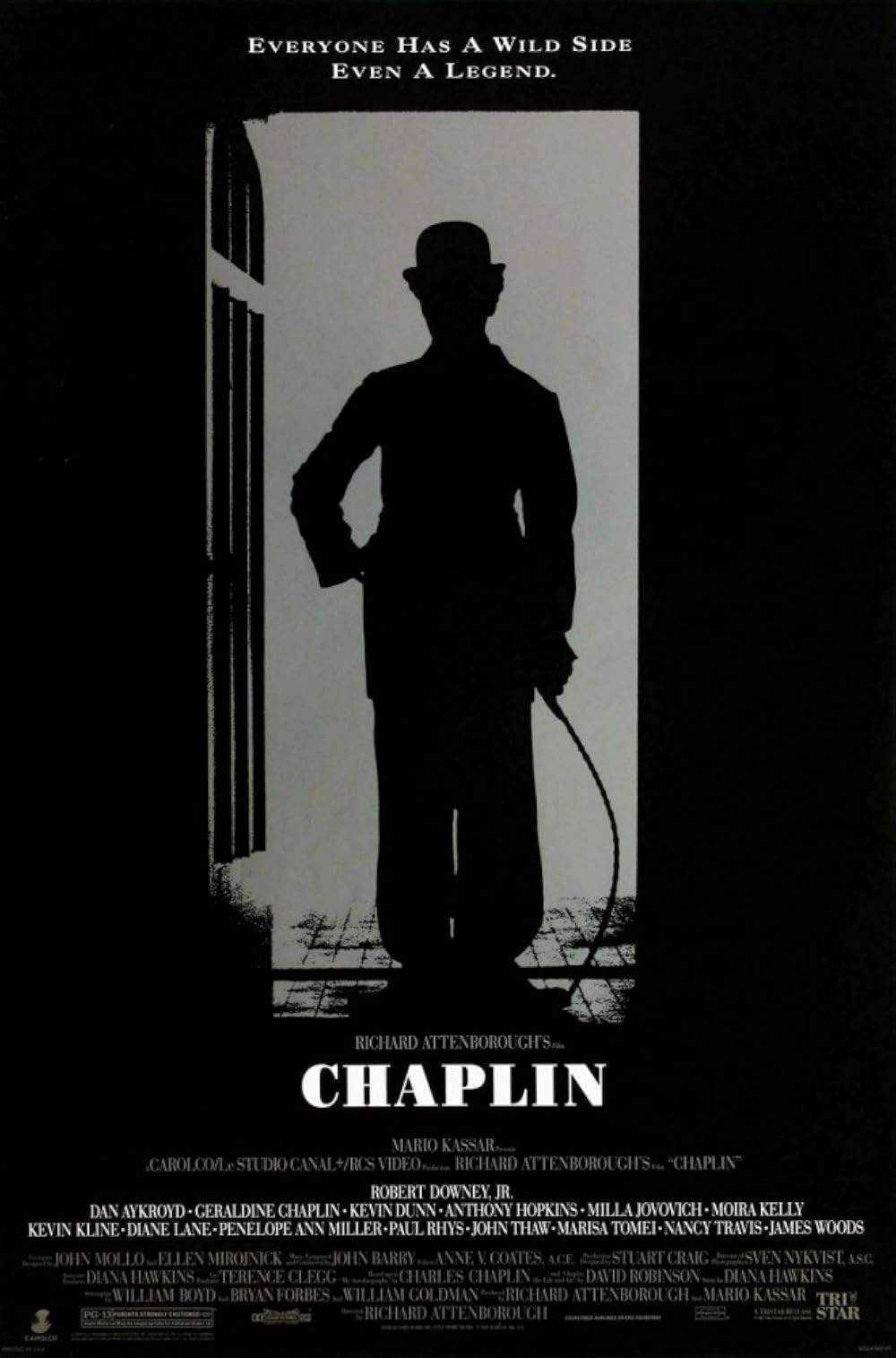
This poignant biopic explores the early life of Charlie Chaplin, focusing on his experiences as a struggling entertainer and a devoted father. Known as "Banshee," he finds comfort and joy in his young son’s presence. Their close bond is tragically tested when a devastating event occurs during a televised performance, profoundly changing their lives and the trajectory of their future.
Find where to stream, rent, or buy Chaplin (1993) in the US with current JustWatch availability, up-to-date pricing, and platform listings for subscription, rental, and digital purchase options.
Warning: spoilers below!
Haven’t seen Chaplin yet? This summary contains major spoilers. Bookmark the page, watch the movie, and come back for the full breakdown. If you're ready, scroll on and relive the story!
Trace every key event in Chaplin (1993) with our detailed, chronological timeline. Perfect for unpacking nonlinear stories, spotting hidden connections, and understanding how each scene builds toward the film’s climax. Whether you're revisiting or decoding for the first time, this timeline gives you the full picture.
Last updated: May 26, 2025 at 06:39
Find frequently asked questions about the Chaplin (1993) timeline, including chronological order, nonlinear jumps, cause-and-effect links, and scene sequence clarifications. This timeline FAQ helps explain when key events happen, how moments connect, and why the story unfolds in that specific order.
Hannah Chaplin's mental decline was triggered by the traumatic separation from her sons. After the British authorities took Charlie and his brother Sydney to a labor house, Hannah was left alone and unable to cope with the loss. The separation profoundly affected her sanity, and she spent the rest of her life in and out of mental institutions, though she spent her final years comfortably.
Earlier scenes show Hannah struggling to perform while visibly unwell, hinting at her fragility.
Edna Purviance rejected Chaplin's marriage proposal because she was not in love with him. Despite Chaplin's deep feelings for her, Edna chose not to marry him, which devastated Chaplin and was a significant factor in his decision to leave for America to seek new opportunities.
Their early interactions show Edna maintaining a professional distance despite Chaplin's obvious affection.
Chaplin married Mildred Harris seemingly out of necessity rather than love because she became pregnant. Their marriage was rushed and quickly deteriorated, ending in divorce. This pattern of marriage driven by circumstance rather than genuine affection would repeat throughout Chaplin's life.
The film hints at Chaplin's reluctance and the transactional nature of the marriage from the start.
Chaplin left Mack Sennett due to creative differences. After becoming a rising star, Chaplin wanted more artistic control over his work and was dissatisfied with the purely comedic direction Sennett demanded. This split allowed Chaplin to pursue his own vision, eventually leading to his own production company.
Earlier scenes show Chaplin perfecting his craft and wanting to inject more emotional depth into his performances.
Chaplin was forced to leave America by J. Edgar Hoover due to scandals surrounding underage relationships. The FBI director targeted Chaplin for his political views and personal life, using these scandals as justification to bar him from returning to the country where he had built his career.
The dinner party scene where Chaplin offends Hoover establishes the political enmity that would later culminate in exile.
J. Edgar Hoover targeted Chaplin because of Chaplin's political views and influence. At a dinner party, Chaplin publicly embarrassed Hoover by making a joke at his expense about his infamous surveillance files. Hoover subsequently used his power to investigate Chaplin's personal life and eventually orchestrate his exile from America.
The dinner scene directly shows Chaplin mocking Hoover's controversial surveillance practices.
Paulette Goddard left Chaplin because of his obsessive dedication to filmmaking. Chaplin's relentless work ethic and constant focus on his craft left little room for their relationship, causing strain that eventually led to her departure. This marriage, like his others, was affected by his conflict between love and career.
Earlier scenes show Chaplin prioritizing his work over personal relationships, foreshadowing the pattern.
Chaplin developed the Little Tramp character while working for Mack Sennett in America. In the dressing room, he carefully selected each element of the costume, the bowler hat, moustache, cane, and baggy pants, to create a character that would be instantly memorable. The Little Tramp became his signature persona and catapulted him to international fame.
The moment is portrayed as a deliberate creative choice, showing Chaplin's intentional approach to character development.
The 1972 Academy Award was profoundly meaningful because it marked Chaplin's return to America after years of political exile. After being forced out by Hoover and facing public disgrace, receiving this honor, accompanied by the longest standing ovation in Academy history, represented his vindication and allowed him to feel the audience's love once again.
The earlier exile and political persecution set up this emotional return as a form of redemption.
Chaplin settled in Switzerland after his exile from America because he felt he belonged nowhere. After being rejected by both America and London, Switzerland offered him privacy and freedom. He lived there with his final wife Oona Chaplin until his death in 1977, eventually receiving knighthood from Queen Elizabeth II in 1975.
The exile scene directly shows Chaplin's sense of not belonging anywhere, establishing Switzerland as his refuge.
The film uses older Chaplin as the narrator as he prepares his autobiography, allowing him to reflect on his life from a distance. This narrative device creates a frame story that structures the film around his memories and gives the audience insight into how he viewed his own legacy and the events that shaped him.
The opening scene establishes this reflective frame that runs throughout the film.
Discover curated groups of movies connected by mood, themes, and story style. Browse collections built around emotion, atmosphere, and narrative focus to easily find films that match what you feel like watching right now.
Biographies exploring the heavy personal cost behind great artistic achievement.If you liked the bittersweet story of Chaplin, explore similar biopics and dramas about famous artists. These movies, like 'Amadeus' or 'Frida', showcase creative passion intertwined with personal struggles, offering a melancholic yet inspiring look at the lives of icons.
Stories in this thread typically follow a chronological or reflective structure, tracing the subject's rise to prominence while simultaneously highlighting key personal failures, losses, or internal demons. The central conflict is often between the demands of their art and the needs of their humanity.
Movies are grouped here for their shared focus on the complex interplay between monumental talent and profound personal hardship. They share a reflective, often melancholic tone, a steady pacing suited to life stories, and a thematic preoccupation with the price of greatness.

Epic life journeys that mix profound joy with deep sorrow.Find more movies with a bittersweet ending and emotional depth similar to Chaplin. These films often follow a character's entire life, blending moments of triumph with tragedy, and are perfect for viewers who appreciate complex, emotionally rich storytelling.
The narrative pattern involves a linear or semi-linear progression through a long timeline, punctuated by both pivotal achievements and catastrophic personal events. The emotional journey is a rollercoaster, but the overall arc tends toward a conclusion that is neither purely happy nor sad, but a meaningful blend of both.
These films are connected by their specific emotional recipe: a steady pacing that allows for life to unfold, a medium-to-high emotional weight, and crucially, a bittersweet ending feel. They balance sadness and hope, creating a profoundly human and memorable viewing experience.
Don't stop at just watching - explore Chaplin in full detail. From the complete plot summary and scene-by-scene timeline to character breakdowns, thematic analysis, and a deep dive into the ending - every page helps you truly understand what Chaplin is all about. Plus, discover what's next after the movie.
Read a complete plot summary of Chaplin, including all key story points, character arcs, and turning points. This in-depth recap is ideal for understanding the narrative structure or reviewing what happened in the movie.
Discover the characters, locations, and core themes that shape Chaplin. Get insights into symbolic elements, setting significance, and deeper narrative meaning - ideal for thematic analysis and movie breakdowns.
Discover movies like Chaplin that share similar genres, themes, and storytelling elements. Whether you’re drawn to the atmosphere, character arcs, or plot structure, these curated recommendations will help you explore more films you’ll love.
Chaplin (1993) Plot Summary & Movie Recap
Chaplin (1993) Scene-by-Scene Movie Timeline
Chaplin (1993) Spoiler-Free Summary & Key Flow
Movies Like Chaplin – Similar Titles You’ll Enjoy
The Circus (1929) Ending Explained & Film Insights
Stan & Ollie (2018) Story Summary & Characters
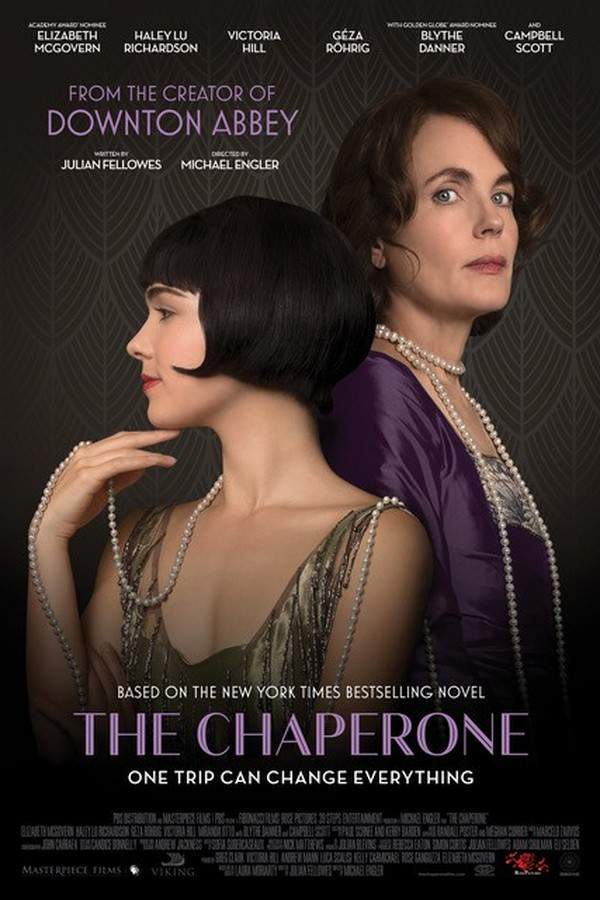
The Chaperone (2019) Movie Recap & Themes
Somewhere (2010) Movie Recap & Themes
Frances (1982) Story Summary & Characters
Chase Me Charlie (1918) Story Summary & Characters
The Bond (1918) Full Summary & Key Details
Sunnyside (1919) Film Overview & Timeline
Champagne (1928) Ending Explained & Film Insights
The Caretaker’s Daughter (1925) Full Movie Breakdown
Pay Day (1922) Full Summary & Key Details
Harlow (1965) Story Summary & Characters
Champagne Charlie (1944) Ending Explained & Film Insights
The Charlie Chaplin Festival (1941) Complete Plot Breakdown
Modern Times (1936) Plot Summary & Ending Explained