In this intimate, measured biographical tapestry, the film follows Maurice Ravel through a sequence of moments that illuminate how a modern composer found his voice amid collaboration, doubt, and dazzling breakthroughs. Opening with a striking scene, the dancer Ida Rubinstein enters a factory with Ravel as he insists that the clank and clang of machinery can carry a music of their own, a provocative idea that foreshadows the film’s recurring meditation on what counts as modern sound. Ida Rubinstein, Muriel Laborde-Jourdàa, becomes a catalyst for his work and a mirror for his evolving sensibility as the story shifts between the personal and the public.
A flashback sweeps us to 1903, when Ravel’s hunger for a scholarship is unmet and a storm of misfortune collides with inspiration. He experiences a jolting near-fall from a window after being drawn to an oriental melody outside, a moment that underscores how outside forces and private tremors can redirect a life devoted to music. The film uses these bookend sequences not as mere biographical ticks but as a way to map the volatile path from initial promise to later mastery.
The narrative then moves to Paris in 1927, where a chance meeting at a reception reopens a channel to collaborative possibility. Ida Rubinstein announces that she will soon be working with him on ballet music, and the connection deepens as Ravel negotiates both practical logistics and artistic ambitions. He forges a working circle that includes Marguerite Long, the piano teacher and performer who stands as a practical ally, and Misia Sert, the artist-muse in an unhappy marriage who nevertheless takes a keen interest in his unfolding work. Misia Sert, Mellie Laborde-Jourdàa, emerges not only as a muse but also as a voice that helps set the tone for Ravel’s balancing act between personal compromise and artistic risk.
Before an American tour, a provocative idea takes shape: the orchestration of Iberia by Isaac Albéniz, a project that would blur the boundaries between concert music and dance. In the United States, Ravel encounters jazz and begins to imagine new textures and rhythms that might inform his evolving language. He speaks in interviews during the tour about how an idea can mature over years, a reminder that inspiration is rarely instantaneous but rather a patient, stubborn cultivation.
Returning to Paris, Ida presses for the ballet’s realization despite Ravel’s stubborn blocks as a writer. He retreats to the seaside to escape the pressure, spending time with Lisia as he wrestles with creativity and doubt. A setback arrives when he discovers that he cannot orchestrate Iberia because the copyright rests with the conductor Arbós, forcing him to rethink his plans and consider other possibilities. In the creative push-and-pull that follows, Ida and Ravel discuss the future of the project; together they settle on a 17-minute ballet length that could accommodate a new kind of momentum and drama. The film marks a turning point when Ravel finally locks onto a central idea that becomes Boléro, choosing a one-minute theme to be repeated 17 times, building a hypnotic architecture out of repetition and subtle orchestral color.
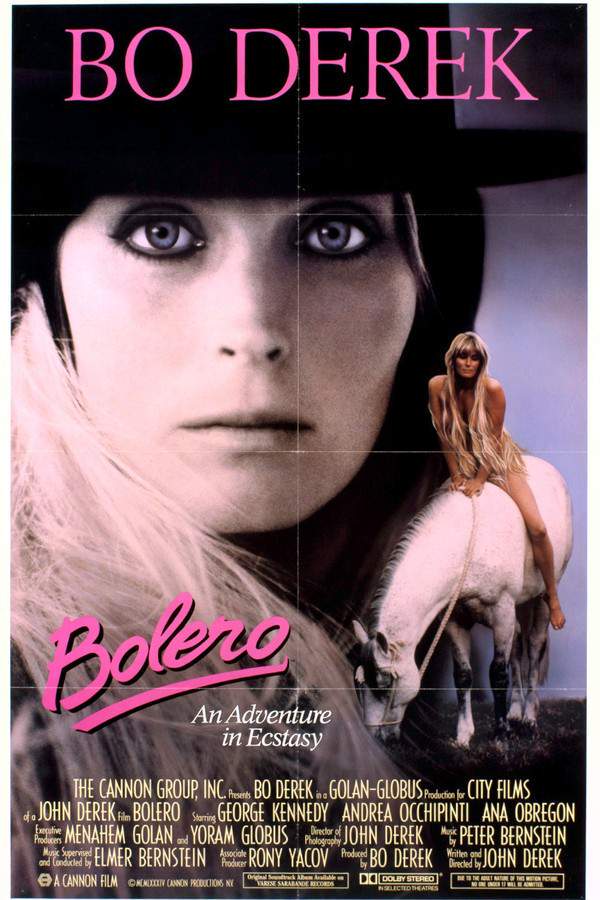
Ravel presents Boléro to Ida in the factory, framing it as an “ode to modernity” and a “metaphor for the modern world.” Ida embraces the concept, but during rehearsals she reshapes the performance by infusing it with erotic energy, a development that unsettles the composer and sharpens the tension between original intention and interpretive expression. The film suggests that artistic meaning can evolve in performance, sometimes diverging from the creator’s initial impulse.
The personal layer of the story returns as Ravel recalls a long leave from wartime medical service to visit his ailing mother, whose death weighs heavily on him. He revisits childhood memories and counts his defeats—five failures at the Prix de Rome—moments that add depth to his perseverance and his capacity to endure and transform hardship into art.
Boléro’s premiere proves a resounding success, and the film captures a pivotal, revealing moment when Ravel confesses to Ida that Boléro may carry something erotic—an insight about his own creation that he had not fully recognized before. The piece’s triumph acts as both reward and reminder of the risks he took in pursuing a sound that could feel both primal and modern.
Complicating his momentum, the pianist Paul Wittgenstein, who lost his right arm in the war, commissions a Piano Concerto for the Left Hand as part of a broader arc of orchestration and virtuosity. Concurrently, Ravel begins work on a Piano Concerto in G major, yet the process is interrupted by difficulties concentrating and a physical collapse during rehearsal. In a telling moment, a neurologist warns that he cannot simply “write down” music he hears in his head, a diagnosis that presses him toward restraint or adaptation rather than expansive invention. Marguerite, listening to Boléro on a recording, guides him to the hospital, and in a dreamlike sequence he re-encounters his own music, the Boléro, as if hearing it anew.
The film leaves us with a portrait of a composer who negotiates invention, memory, and the demands of an ever-changing world. It is a study of how art can emerge from tension—between collaboration and independence, between public acclaim and private struggle, between a factory-floor rhythm and a battlefield of the mind. It is a celebration of Boléro not merely as a hit record or a salon triumph, but as a crystallization of a modern impulse to find order within repetition and to translate the tempo of a century into music.
> Boléro might have something erotic about it, something he himself hadn't noticed until then.