Plot Explained Spoilers guaranteed!
Plot Explained

Browse by genre

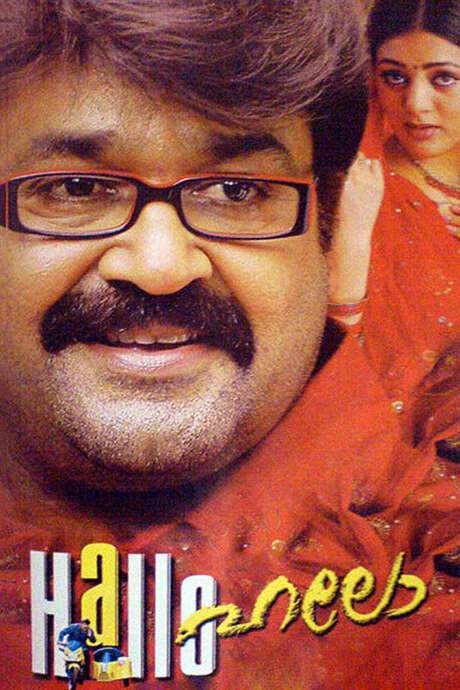
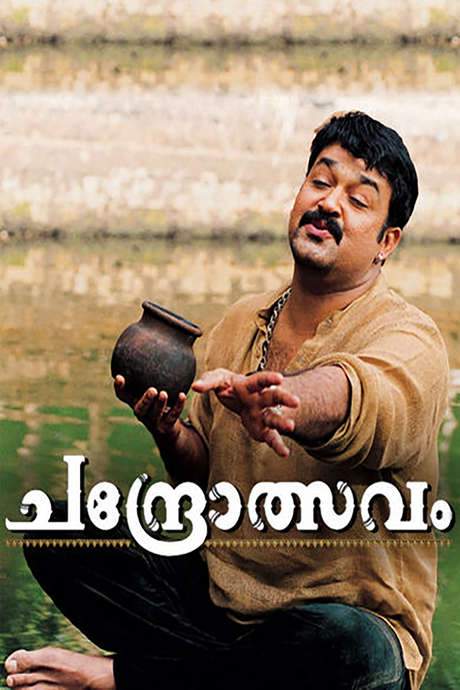
Chandrolsavam (2005) movie poster

Plot Summary

Chandrolsavam (2005) Plot Summary Explained

Release, runtime and language
2005 · 153 mins · Malayalam
Starring
Mohanlal, Abu Salim, Samvrutha Sunil, Maniyanpilla Raju, Saikumar, Jagadish

Circumstances compel Sreehari (Mohanlal) to leave his native village and pursue a music career abroad. Years later he returns as a successful Paris‑based musician, hoping to reclaim the time he missed. He finds the village transformed, and his former sweetheart is now married to someone else.

On this page (5)
  1. 1 What happens: full plot
  2. 2 Plot questions answered
  3. 3 Movie threads
  4. 4 Movies like Chandrolsavam
  5. 5 Every angle

Full plot summary · contains spoilers

What Happens in Chandrolsavam: Full Plot Summary

The whole story of Chandrolsavam (2005) explained, from the opening scene to the final frame: every key event, every twist and what it all adds up to. Read it as a quick recap before the sequel, to check a scene you missed, or to finally understand what really happened.

Sreehari, Mohanlal, the central figure of the story, is forced to leave his village after being convicted of plotting a murder. He spends a year in jail and then many years in Paris, a chapter that leaves him with choices to make and a sense of time running short. He returns home to confront a life tempered by illness—cancer—that makes every moment feel precious and fragile. Once, he shared a deep, hopeful romance with Indu, a bond that Devaki, Indu's mother, Nilambur Ayisha despises because of the long shadow cast by a painful family history, including her husband’s desertion with a Tamil lady. Against that backdrop, Hari is pulled between memories and a present that tests his integrity, as he tries to navigate a village world that has not stood still in his absence.

Balachandran, a close friend of Hari and Indu, embarks on a perilous path when Devaki arranges a marriage between Balachandran and Indu. On the wedding day, Hari witnesses the procession with a mix of sorrow and resolve, and he intervenes to rescue Balachandran, who is fatally attacked by Peethambaran. The violence shakes the ceremony and leaves Peethambaran blurting out that Hari paid him for the attack before fleeing the scene. Devaki collapses in fear, and Indu’s faith in Hari is unsettled as she questions his role in the chaos that surrounds them.

Back in the family home, Hari clings to the hope of reclaiming moments from a past that seems more vivid than his present, even as cancer narrows his life’s possibilities. A core thread of the narrative follows Hari’s youth and the circle of friends who influenced that time: one friend who becomes Indu’s husband and another, Ramanunni, whose actions threaten to derail Hari’s chances with Indu. Ramanunni, played by [Ranjith], is introduced as a disruptive force who initially tests Hari by attempting to cast suspicion on him, and later becomes a direct antagonist in the pursuit to win Indu, even if it means harming others. Hari’s return tests the fragile trust between him, Indu, and the man who now lies bedridden in Indu’s home.

Indu, faced with the weight of suspicion and caregiving, leans on Hari as she tends to her sick husband. Hari makes every effort to prove his innocence to Indu and to the husband she cares for, a process that deepens his resolve to clear his name and protect what remains of the life they once imagined together. In a shocking turn of violence, Ramanunni kills Indu’s husband, an act that forces Indu to seek shelter with Hari as danger closes in from every side. The stakes rise again when Ramanunni abducts Indu, and once more Hari steps forward to shield her, drawing a circle of danger tighter around them.

The arrival of Doctor Durga, a physician who Khushboo plays with a calm authority, adds another layer to the complex web of loyalties and loyalties tested. Her entrance brings with it a hospital in Delhi, where she and her husband run a clinic, complicating the village’s longing for a simple, happy ending with the reality that healing will require more than just sentimental promises. Durga’s presence unsettles the household and reframes the discussion around Indu’s future, sparking debate about whether Indu should be united with Hari or kept apart for her safety and well-being. Hari, described as their patient, had escaped from the hospital and returned to his village to reconnect with the friends who shaped his youth, a choice that signals both defiance and a desperate plea for mercy.

As the story unfolds, Sreehari’s intertwined paths with Indu and Durga move toward a fragile equilibrium where treatment and care become the through line. Sreedharan, Cochin Haneefa, makes a marked impression in the background, underscoring the moral complexities that pull the characters toward moments of truth and revelation. The film builds toward a quiet, hopeful arc: Hari’s ongoing struggle to reclaim health and happiness, alongside Indu’s attempt to navigate a life still haunted by the past. The climactic sequence suggests that recovery and reconciliation may still be possible, even as the road ahead remains uncertain and fraught with memory’s burden.

In the end, the narrative leaves viewers with a restrained, hopeful note. Hari’s journey—physically frail but emotionally resolute—points toward a future where treatment and steadfast friendship might offer a second chance at a healthier life. Durga’s involvement and Hari’s decision to travel with Indu and her doctor to pursue care encapsulate the themes of healing, forgiveness, and the endurance of love across time. The film closes with a sense that, despite illness and the scars of betrayal, there is a path forward—one that blends support from those who care deeply, the courage to face the truth, and the possibility that health and happiness can be regained through courage, patience, and the bonds of long-standing friendship.

Last updated: October 09, 2025 at 16:34

Was this helpful?

Plot questions answered

Chandrolsavam Plot Explained: Your Questions Answered

The questions people ask most about Chandrolsavam (2005): what happens in the confusing scenes, why the characters do what they do, the twists, hidden details and what the ending means. Each answer contains spoilers.

Q1

Why does Indu's mother Devaki oppose Hari's relationship with Indu?

Devaki despises Hari's family because of a painful past connection. Her husband deserted the family for a Tamil woman, and this betrayal has made her bitter toward Hari's family lineage. She views Hari as another man who will leave and cause her daughter pain, which is why she actively sabotages their relationship and arranges Indu's marriage to Balachandran instead.

Foreshadowing: The backstory of Devaki's husband's desertion is hinted at early in the film when her resentment toward Hari's family is first mentioned.

  • devaki
  • indu
  • mother
  • opposition
  • family history
  • resentment
Q2

Why does Balachandran agree to marry Indu despite being Hari's friend?

Balachandran agrees to marry Indu after Devaki arranges the marriage, even though he was close friends with both Hari and Indu. On the wedding day, when Hari arrives and tries to intervene, Balachandran is attacked by Peethambaran. Hari rescues him from the fatal attack, revealing that Balachandran was caught in Devaki's scheme rather than acting out of betrayal.

Foreshadowing: The timeline shows Balachandran's dual role as friend and as someone who doubles back to marry Indu, setting up the wedding day confrontation.

  • balachandran
  • wedding
  • indu
  • devaki
  • arranged marriage
Q3

Why does Peethambaran attack Balachandran and claim Hari paid him?

Peethambaran attacks Balachandran during the wedding ceremony and then blurts that Hari paid him for the attack before fleeing the scene. This accusation creates doubt about Hari's integrity, though the truth of who actually paid Peethambaran remains ambiguous. The attack shakes the wedding and leaves Indu questioning Hari's role in the violence.

Foreshadowing: The sudden attack and accusation are presented without prior buildup, creating immediate suspicion around Hari's character.

  • peethambaran
  • attack
  • balachandran
  • accusation
  • paid
Q4

Why does Ramanunni become an antagonist in the story?

Ramanunni, a friend from Hari's youth, becomes a disruptive force driven by jealousy and a determination to win Indu for himself. He initially attempts to cast suspicion on Hari and later escalates to directly threatening others to pursue Indu. His jealousy transforms him from a friend into a dangerous antagonist willing to harm innocent people to get what he wants.

Foreshadowing: Ramanunni is introduced early as a character who tests Hari, establishing his potential for antagonism before his violent actions unfold.

  • ramanunni
  • jealousy
  • antagonist
  • friend
  • indu
Q5

Why does Ramanunni kill Indu's husband?

Ramanunni kills Indu's husband in a final bid to win Indu for himself, believing that removing her husband would clear his path to her. This murder is the culmination of his escalating jealousy and determination to have Indu, regardless of the cost to others. The act forces Indu to seek shelter with Hari and intensifies the danger surrounding everyone.

Foreshadowing: Ramanunni's earlier plot to harm Indu's husband and frame Hari for the crime foreshadows his willingness to commit murder.

  • ramanunni
  • murder
  • indu's husband
  • jealousy
  • violence
Q6

Why does Indu doubt Hari after the wedding incident?

After Peethambaran attacks Balachandran on the wedding day and blurts that Hari paid him, Indu's faith in Hari becomes unsettled. The public accusation and the chaos surrounding the ceremony sow doubt in her mind about his role in the violence. Even though Hari rescued Balachandran, the timing and accusation leave her questioning his integrity.

Foreshadowing: The wedding day scene directly plants the seed of doubt that affects Indu's trust throughout the narrative.

  • indu
  • doubt
  • hari
  • wedding
  • accusation
  • trust
Q7

Why does Hari escape from the hospital and return to the village?

Hari, described as a patient, escapes from the hospital (presumably where he was receiving cancer treatment) and returns to his village. This act of defiance is driven by his desperate desire to reconnect with the friends who shaped his youth and to reclaim the precious time he feels he's lost. His terminal cancer diagnosis makes every moment feel urgent and precious, pushing him to face his past despite his failing health.

Foreshadowing: The narrative establishes early that Hari's illness makes him acutely aware of running out of time, motivating his return.

  • hari
  • escape
  • hospital
  • village
  • cancer
  • treatment
Q8

What is Devaki's family backstory that fuels her hatred toward Hari's family?

Devaki's husband deserted the family for a Tamil lady, abandoning Devaki and Indu. This betrayal created lasting trauma and bitterness in Devaki, causing her to resent Hari's family due to some past connection between their families. She sees any potential romance between Indu and Hari as a repetition of her own painful experience, which fuels her relentless opposition to their relationship.

Foreshadowing: The timeline explicitly mentions Devaki's resentment is tied to her husband's desertion, establishing the root of her actions.

  • devaki
  • husband
  • desertion
  • tamil lady
  • family backstory
Q9

Why does Indu decide to go to Delhi with Hari for treatment?

Indu decides to accompany Hari to Delhi for his cancer treatment, traveling with Doctor Durga and her husband who run a hospital there. Despite the past suspicions and the danger she faced from Ramanunni, Indu chooses to support Hari during his illness. This decision marks a shift in their relationship, moving toward reconciliation and hope for his recovery.

Foreshadowing: The arrival of Doctor Durga with the hospital plan creates the opportunity for Indu to make this choice, which the narrative frames as hopeful.

  • indu
  • delhi
  • hari
  • treatment
  • durga
  • hospital
  • hope
Q10

Why does Ramanunni kidnap Indu and how does Hari rescue her?

After killing Indu's husband, Ramanunni abducts Indu to force her to be with him. Hari steps forward to protect her and mounts a daring rescue, saving Indu from Ramanunni's clutches. This rescue reinforces Hari's protective role and his enduring commitment to Indu, deepening the connection between their past romance and present danger.

Foreshadowing: Ramanunni's escalation to murder and kidnapping follows logically from his earlier attempts to harm Indu's husband and frame Hari.

  • ramanunni
  • kidnap
  • indu
  • hari
  • rescue
  • danger
Q11

What role does Doctor Durga play in the story's ending?

Doctor Durga arrives at Hari's home with her husband, who runs a hospital in Delhi. Her arrival unsettles the household because everyone had hoped for a simple reunion between Indu and Hari. However, Durga's presence offers a path toward Hari's treatment and recovery. The film closes with Hari leaving with Indu and Durga to pursue treatment in Delhi, suggesting a hopeful future through healing and support.

Foreshadowing: Durga's introduction as a physician with a hospital plan directly sets up the film's hopeful ending.

  • doctor durga
  • delhi
  • hospital
  • treatment
  • healing
  • hopeful ending
Q12

How does Hari's cancer diagnosis affect the story's emotional weight?

Hari's terminal cancer diagnosis creates the film's central emotional tension, making every moment feel precious and urgent. His return to the village is driven by a desire to reclaim lost time and connect with his past before it's too late. The illness narrows his life's possibilities while deepening his resolve to clear his name, protect Indu, and find meaning in whatever time remains.

Foreshadowing: The narrative establishes his illness early, framing his choices throughout the story against the backdrop of limited time.

  • hari
  • cancer
  • illness
  • terminal
  • time
  • emotional weight

Movie threads

More Movies Like Chandrolsavam, by Mood & Story

Curated lists built around what makes Chandrolsavam tick: the same mood, the same kind of story or the same emotional payoff. Each list explains why these movies belong together.

Bittersweet Homecoming stories like Chandrolsavam

Emotional returns to a changed past, seeking reconciliation and a second chance. Looking for movies like Chandrolsavam? This collection features bittersweet dramas about characters returning home after years away. If you enjoyed the themes of confronting a transformed past and seeking lost connections in Chandrolsavam, you'll find similar emotional journeys here.

  • nostalgic
  • melancholic
  • contemplative
  • hopeful
  • romantic
  • fragile
  • Tone: bittersweet, melancholic, hopeful
  • Pacing: steady, contemplative
Why these movies?

The story pattern: The narrative pattern involves a protagonist compelled to return to their roots, often by circumstance or a personal crisis. They are confronted with the gap between their memories and the current reality, leading to a process of re-evaluation, confronting past mistakes or betrayals, and ultimately seeking some form of closure or redemption, even if it's tinged with sadness.

Why they belong together: Movies are grouped here because they share a core emotional arc centered on homecoming. They balance the melancholy of lost time with the cautious optimism of reconciliation, creating a consistently bittersweet tone and a heavy emotional weight focused on memory and regret.

Emotionally heavy dramas with hopeful endings like Chandrolsavam

Stories that bear great emotional weight but ultimately point towards light. If you liked the heavy emotional themes mixed with a hopeful conclusion in Chandrolsavam, this list is for you. Discover similar dramatic movies that tackle difficult subjects like terminal illness or profound loss but ultimately provide a sense of hope and redemption.

  • emotional
  • heavy
  • hopeful
  • cathartic
  • melancholic
  • redemptive
  • Tone: bittersweet, heavy, ultimately hopeful
  • Pacing: steady, character-driven
Why these movies?

The story pattern: The narrative journey in these films typically puts characters through intense emotional trials—such as facing a terminal diagnosis, enduring betrayal, or coping with deep regret. The plot steadily builds this weight, but instead of a bleak conclusion, it finds a way to introduce elements of forgiveness, enduring connection, or the strength to face the future, resulting in a cathartic and uplifting feeling despite the sorrow.

Why they belong together: These movies are connected by their unique balance of a heavy, often tragic, central conflict with an ending that provides emotional relief. They share a similar emotional curve: starting from a place of deep sadness and moving towards a resolution that is happy or hopeful, creating a powerful and satisfying catharsis for the viewer.

If you liked this

Movies Like Chandrolsavam

Similar movies to Chandrolsavam: the same genre, themes or kind of story. Each one comes with its own plot summary, timeline and ending explained.

Browse all movie summaries

Every angle

Chandrolsavam (2005) Explained: Plot, Timeline & Characters

Everything about Chandrolsavam in one place: what happens in the plot summary, the timeline in chronological order, the characters and meaning and a spoiler-free summary. What's After the Movie adds the cast, box office and post-credit scenes.

Coming soon on iOS and Android

The Plot Explained Movie Summary App

Plot summaries, endings explained and timelines on your phone. Catch up on any movie in minutes, save your favorites and never miss a twist again.

Be the first to know when we launch. Your email stays private, always.

Learn more about the app