Year: 1981
Runtime: 135 mins
Language: Hindi
Director: Rabindra Dharmaraj
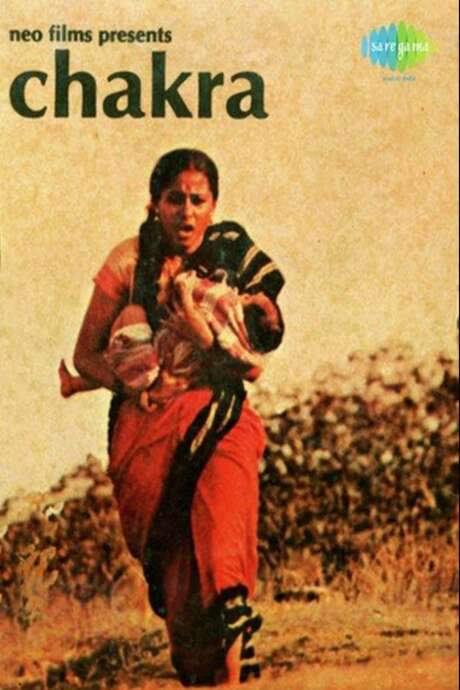
Amma, after being raped, flees her village with her husband and child when he kills her attacker. In the chaotic city her husband is later murdered by smugglers, leaving her alone to raise her son. She strives to teach him moral values amid pervasive immorality, receiving reluctant help from a dubious figure, but hope remains fragile.
Find where to stream, rent, or buy Chakra (1981) in the US with current JustWatch availability, up-to-date pricing, and platform listings for subscription, rental, and digital purchase options.
Warning: spoilers below!
Haven’t seen Chakra yet? This summary contains major spoilers. Bookmark the page, watch the movie, and come back for the full breakdown. If you're ready, scroll on and relive the story!
Read the complete plot breakdown of Chakra (1981), including all key story events, major twists, and the ending explained in detail. Discover what really happened, and what it all means.
Amma Smita Patil and her son Ranjit Chowdhry Benwa become Bombay’s slum-dwellers after fleeing their village when Amma’s husband kills a moneylender who tried to rape her, and the husband is shot later while attempting to steal tin to build a hut. In the vast, crowded metropolis, life is precarious and options are few, and Amma sustains herself with the company of lovers who help support them.
In this rough urban world, Amma has a steady lover who provides for them, but he is a truck driver who travels away for long stretches. To fill the gaps, Amma takes on another partner—a vain pimp and petty crook named Lukka, a man who quickly becomes Benwa’s idol. Lukka is on parole and must present himself to the police every day, adding a constant tension to their fragile arrangement.
Benwa grows up under this shadowy influence and eventually marries a young woman named Amli. Meanwhile Amma’s life thickens with further complications: she becomes pregnant, though the paternity remains unclear in the eyes of the family. To settle the question, Amma makes it clear to Kulbhushan Kharbanda as Anna that the child is his, believing that he is the one capable and responsible enough to care for her and the coming baby.
Lukka reappears later, scarred by syphilis and drugs, a changed man who still lives on the edge of crime. He tries to steer Benwa away from a life of wrongdoing, but his advice largely falls on deaf ears. The tension crescendos when Lukka is assaulted by police at his illicit liquor den, signaling a turning point in the story.
The climax accelerates as Lukka assaults a chemist who refuses to dispense medicines without payment. He grabs some essential drugs and flees, with the police in pursuit. The chase leads him to Amma’s hut, where the authorities close in and arrest both Lukka and Benwa, brutalizing them in the process. Amma suffers a miscarriage amid the commotion, a bitter personal blow in the middle of upheaval.
In the aftermath, a bulldozer rolls through the slum, flattening the makeshift homes and forcing a new kind of exodus. The final moments show Benwa and Amli moving on to a new slum, with a fresh shanty hut to continue the Chakra—a life cycle of struggle, resilience, and the search for a foothold in a city that never stops moving.
Last updated: February 18, 2026 at 23:45
Explore frequently asked questions about Chakra (1981) with spoiler-rich answers covering the full plot summary, major story beats, character motivations, hidden details, and ending meaning. This movie summary FAQ helps explain confusing scenes, plot twists, and narrative decisions in clear, searchable detail.
Amma's husband kills the moneylender because the man tried to rape Amma. After the assault attempt, the husband takes violent action against the attacker, which forces the family to flee their village. The husband is later shot dead while attempting to steal tin to build a shelter in Bombay, leaving Amma alone with their son Benwa.
Amma takes on multiple lovers because as a single mother in the harsh Bombay slums, she has few options for survival. Her primary lover is a truck driver who travels frequently, so she relies on Lukka, a pimp and petty crook, to fill the gaps and provide additional support. This reflects the desperate economic reality of slum life where women must compromise their dignity for survival.
Lukka becomes Benwa's idol because he represents a certain glamorous street power that Benwa admires. As a pimp with connections, stylish appearance, and freedom in the slum world, Lukka contrasts sharply with the absent or weak male figures in Benwa's life. This idolization sets the stage for Benwa's own descent into petty crime.
Early scenes show Benwa watching Lukka with admiration as he moves confidently through the slum.
Amma tells Benwa he is the father of her unborn child because she needs someone to take responsibility for her and the baby. With her primary lover absent and the paternity unclear, she identifies Benwa as the most capable of caring for them. This reflects her pragmatic survival instinct, securing support through moral claim rather than romantic connection.
Lukka returns scarred by syphilis and drug addiction, a physical manifestation of his continued descent into vice. Years of living on the margins have ravaged his body and mind. Despite his deteriorated state, he attempts to counsel Benwa against a life of crime, showing brief flickers of conscience even as he remains trapped in his destructive lifestyle.
Lukka robs the chemist because the man refuses to dispense medicines without payment. Driven by either desperation to sell the drugs at his illicit liquor den or personal need, Lukka grabs the medicines and flees. This act triggers the police chase that leads to the tragic climax where Amma loses her baby and both Lukka and Benwa are arrested.
The earlier police raid on Lukka's liquor den establishes his escalating conflict with law enforcement.
Amma suffers a miscarriage during the police raid because the chaos and brutality of the arrest trigger physical trauma. As police brutalize both Lukka and Benwa in the cramped hut, the stress and violence cause Amma to lose her unborn child. This represents the final personal devastation in a story of relentless hardship.
The bulldozers destroy the slum as part of urban development and city clearing operations. This forced eviction disperses the community and forces residents to relocate to another slum area. The destruction symbolizes how the poor are constantly displaced, never allowed to establish permanence, a key theme of the film's cyclical suffering.
The title Chakra refers to the endless cycle of poverty, displacement, and struggle that traps the characters. Just as Benwa and Amli move to a new slum at the end to rebuild their lives, the pattern repeats indefinitely. The film shows that escape is impossible, characters merely move from one slum to another, continuing the same desperate existence.
Lukka's warning reflects his regret and self-awareness about the destructive path he has taken. Though trapped in crime, he recognizes its devastating toll, his own diseased body and ruined life serve as cautionary evidence. His attempt to steer Benwa away shows a rare moment of moral clarity, though ultimately ineffective.
Chakra ends bleakly because the film deliberately rejects false optimism. The final move to a new slum shows the characters surviving but not escaping their circumstances. The film argues that the cycle of poverty is inescapable, displacement, crime, and suffering merely repeat in a new location, making any notion of progress an illusion.
Discover curated groups of movies connected by mood, themes, and story style. Browse collections built around emotion, atmosphere, and narrative focus to easily find films that match what you feel like watching right now.
Stories of lives consumed by the harsh realities of the city.If the stark portrayal of survival in Chakra resonated with you, explore this collection of movies like Chakra. These films share a gritty, hopeless atmosphere and focus on characters trapped in cycles of urban poverty.
These narratives typically follow a linear descent, where characters move from one misfortune to the next with little to no respite. The plot is driven by external societal pressures rather than individual agency, leading to an ending that reinforces the futility of the struggle.
Movies are grouped here by their shared oppressive atmosphere, bleak worldview, and focus on the destructive impact of an urban environment on the human spirit. They offer an unflinching, emotionally heavy viewing experience.
The heartbreaking effort to uphold virtue in a world that rewards vice.For viewers moved by the maternal struggle to teach morality in Chakra, this list features similar stories about moral decay and survival. Discover movies like Chakra where characters fight a losing battle against a corrupt world.
The story revolves around a fundamentally good character, often a parent, trying to protect a loved one or a principle from being corrupted by their environment. Their efforts are depicted as noble yet ultimately futile, as the oppressive forces of the world prove too powerful to overcome.
These films are united by their thematic focus on the conflict between moral conviction and harsh reality. They explore the concept of goodness as a vulnerability and present a pessimistic view of whether virtue can survive in a corrupt system.
Don't stop at just watching - explore Chakra in full detail. From the complete plot summary and scene-by-scene timeline to character breakdowns, thematic analysis, and a deep dive into the ending - every page helps you truly understand what Chakra is all about. Plus, discover what's next after the movie.
Track the full timeline of Chakra with every major event arranged chronologically. Perfect for decoding non-linear storytelling, flashbacks, or parallel narratives with a clear scene-by-scene breakdown.
Discover the characters, locations, and core themes that shape Chakra. Get insights into symbolic elements, setting significance, and deeper narrative meaning - ideal for thematic analysis and movie breakdowns.