Plot Explained Spoilers guaranteed!
Plot Explained

Browse by genre

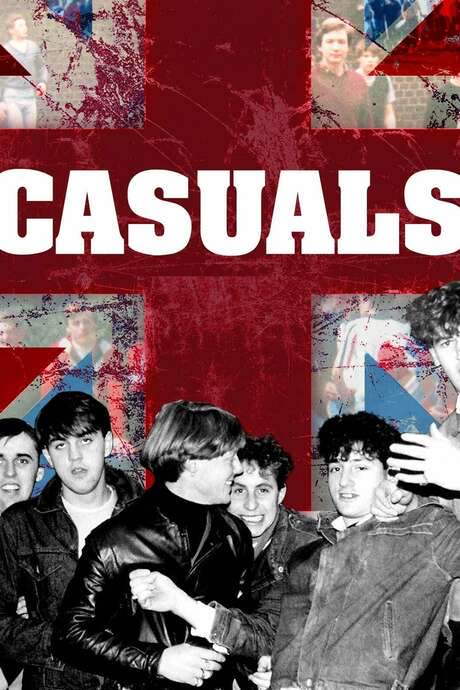
Casuals (2011) movie poster

Characters & Themes

Casuals (2011) Characters, Setting & Themes Explained

Release, runtime and language
2011 · 75 mins · English
Directed by
Mick Kelly
Starring
Gary Aspden, Cass Pennant, Peter Hooton, Jonny Owen, Garry Bushell, Paolo Hewitt

Thirty years ago a terrace subculture emerged in UK cities, stemming from the late‑1970s mod revival and football firms in Liverpool, Manchester and London who stole designer sportswear abroad. Their style set trends high‑street retailers later copied, and by the early 1980s the “casual” look spread across Europe, shaping modern fashion. The documentary examines the movement’s origins, meanings and enduring influence.

On this page (7)
  1. 1 Characters explained (25)
  2. 2 Where & when it takes place
  3. 3 Themes & meaning (4)
  4. 4 Character & meaning questions
  5. 5 Movie threads
  6. 6 Categories
  7. 7 Every angle

25 main characters · contains spoilers

Casuals Characters Explained: Who Is Who

The main characters of Casuals (2011), heroes and villains: what drives them, how they change over the course of the story and what each of them reveals about the film's bigger ideas.

  • Gary Aspden

    Himself in the documentary, Gary Aspden shares memories from the Casuals scene and discusses how street fashion and football culture intersected. He reflects on the movement’s energy, swagger, and its ongoing influence on both high fashion and streetwear. His perspective anchors the film’s exploration of late 1970s youth culture.

    • 🎤 Interviewee
    • 🧩 Subculture Figure
  • Cass Pennant

    Himself in the documentary, Cass Pennant recounts personal experiences within the Casuals scene and the social dynamics of clubs, terraces, and fashion. He discusses how identities were formed through style, music, and allegiance, offering insight into the movement’s community. His memories highlight the interpersonal networks that sustained the subculture.

    • 🎤 Interviewee
    • 🧩 Subculture Figure
  • Peter Hooton

    Himself/Narrator, Peter Hooton provides guiding commentary and contextual framing for the film. He shares anecdotes that connect interviews, scenes, and historical backdrop, helping viewers understand the Casuals’ place in late 70s Britain. As narrator, he helps knit together diverse voices into a cohesive narrative.

    • 🎤 Interviewee
    • 🧩 Subculture Figure
  • Jonny Owen

    Himself in the documentary, Jonny Owen speaks from within the scene, recounting experiences and memories tied to the Casuals. He discusses how youth culture, fashion, and attitude formed a shared identity among peers. His contributions add texture to the film’s portrait of community and tension.

    • 🎤 Interviewee
    • 🧩 Subculture Figure
  • Garry Bushell

    Himself in the documentary, Garry Bushell offers perspective on how the Casuals movement interacted with music and media. He reflects on the public perception of the scene and its underground influence. His part contributes an insider view of the era’s cultural currents.

    • 🎤 Interviewee
    • 🧩 Subculture Figure
  • Paolo Hewitt

    Himself in the documentary, Paolo Hewitt shares memories related to the Casuals, touching on music, fashion, and youth culture. He discusses the cross-pollination of subcultures and how the movement influenced broader cultural scenes. His insights help situate Casuals within a wider historical context.

    • 🎤 Interviewee
    • 🧩 Subculture Figure
  • Pat Nevin

    Himself in the documentary, Pat Nevin contributes reflections on the social and cultural dimensions of the Casuals scene. He discusses how fashion and football intersected to shape identity and community. His memories illuminate the lived experience of youth during that era.

    • 🎤 Interviewee
    • 🧩 Subculture Figure
  • Ian Hough

    Himself in the documentary, Ian Hough speaks about his experiences within the Casuals and the role of fashion in creating group identity. He highlights personal stories from terraces and events that defined the movement. His perspective adds to the film’s mosaic of voices.

    • 🎤 Interviewee
    • 🧩 Subculture Figure
  • Tony Graham

    Himself in the documentary, Tony Graham discusses the social environment that produced the Casuals and how the scene navigated class, politics, and style. He shares anecdotes that emphasize camaraderie and collective energy. His contribution helps illustrate the human side of the subculture.

    • 🎤 Interviewee
    • 🧩 Subculture Figure
  • Riaz Khan

    Himself in the documentary, Riaz Khan offers his recollections of being part of the Casuals and the way fashion, music, and peer groups intertwined. He highlights how the movement bridged different social circles. His stories add depth to the film’s portrayal of youth culture.

    • 🎤 Interviewee
    • 🧩 Subculture Figure
  • Nic Dunnaway

    Himself in the documentary, Nic Dunnaway shares memories of the Casuals and their evolving style. He discusses the interplay between streetwear and designer influences that defined the era. His account contributes a personal slice of the subculture’s history.

    • 🎤 Interviewee
    • 🧩 Subculture Figure
  • Robert Wade Smith

    Himself in the documentary, Robert Wade Smith reflects on the Casuals’ social dynamics and the role of fashion in forming group identity. He recalls experiences on the terraces and at gatherings that illustrate the movement’s energy. His memories enrich the film’s oral history.

    • 🎤 Interviewee
    • 🧩 Subculture Figure
  • Ricky Magowan

    Himself in the documentary, Ricky Magowan recounts personal stories from the Casuals era, including fashion choices and peer networks. He discusses the scene’s sense of belonging and its clash with authorities. His testimony adds to the collective memory of the movement.

    • 🎤 Interviewee
    • 🧩 Subculture Figure
  • Chris Donnelly

    Himself in the documentary, Chris Donnelly shares experiences within the Casuals, focusing on how fashion and music shaped social life. He reflects on community bonds and the tensions that accompanied the movement. His contribution helps map the subculture’s human landscape.

    • 🎤 Interviewee
    • 🧩 Subculture Figure
  • Mick Robinson

    Himself in the documentary, Mick Robinson speaks about the Casuals from a firsthand perspective, detailing the interactions between fans, clubs, and fashion. He emphasizes the movement’s vitality and its enduring influence on street style. His memories round out the portrait of the era.

    • 🎤 Interviewee
    • 🧩 Subculture Figure
  • Bev Thompson

    Herself in the documentary, Bev Thompson offers female perspectives within the Casuals milieu, highlighting participation, fashion, and social life. She discusses how gender interacted with the subculture’s norms and expectations. Her insights provide a broader view of the community dynamic.

    • 🎤 Interviewee
    • 🧩 Subculture Figure
  • Martin Pel

    Himself in the documentary, Martin Pel recounts involvement in the Casuals and how the movement intersected with music scenes and fashion trends. He shares memories of gatherings, style choices, and the sense of belonging among peers. His stories contribute to the documentary’s tapestry of voices.

    • 🎤 Interviewee
    • 🧩 Subculture Figure
  • Bob Morris

    Himself in the documentary, Bob Morris reflects on the Casuals era, describing the social atmosphere, fashion evolution, and the group’s attitudes. He talks about the thrill of belonging to a youth-driven movement and the challenges faced from authority. His reflections help illuminate the scene’s lasting impact.

    • 🎤 Interviewee
    • 🧩 Subculture Figure
  • Phil Thornton

    Himself in the documentary, Phil Thornton shares personal anecdotes from the Casuals scene, focusing on how fashion, music, and social networks intersected. He discusses the sense of identity and the collective energy of the movement. His account adds depth to the movie’s historical record.

    • 🎤 Interviewee
    • 🧩 Subculture Figure
  • Neil Primett

    Himself in the documentary, Neil Primett offers recollections from the Casuals era, including style choices and community gatherings. He describes the atmosphere of youth culture and the persistence of subcultural pride. His perspective enriches the portrait of the time.

    • 🎤 Interviewee
    • 🧩 Subculture Figure
  • Phil Tucker

    Himself in the documentary, Phil Tucker discusses his involvement in the Casuals and the role of fashion in shaping group identity. He recalls the interplay between street life and designer influences. His memories help map the era’s distinctive style landscape.

    • 🎤 Interviewee
    • 🧩 Subculture Figure
  • Ravi Grewal

    Himself in the documentary, Ravi Grewal shares experiences from within the Casuals scene, highlighting how fashion and social networks formed a sense of belonging. He discusses the movement’s energy and its impact on peers. His testimony adds another layer to the movement’s collective memory.

    • 🎤 Interviewee
    • 🧩 Subculture Figure
  • Jason Reeves

    Himself in the documentary, Jason Reeves reflects on his time in the Casuals, focusing on personal memories of fashion choices and social circles. He describes the camaraderie and the tensions that came with belonging to a youth movement. His account contributes to the film’s multi-voiced history.

    • 🎤 Interviewee
    • 🧩 Subculture Figure
  • Nick Serjeant

    Himself in the documentary, Nick Serjeant recounts involvement in the Casuals and the ways fashion and music shaped group identity. He shares anecdotes about the scene’s dynamics and its legacy. His perspective helps illustrate the era’s community spirit.

    • 🎤 Interviewee
    • 🧩 Subculture Figure
  • Mab Jiwa

    Himself in the documentary, Mab Jiwa offers a first-hand account from within the Casuals, describing experiences on the streets and in social spaces that defined the movement. He discusses the importance of belonging, style, and shared attitudes. His memories contribute to the documentary’s broader historical mosaic.

    • 🎤 Interviewee
    • 🧩 Subculture Figure

Last updated: January 08, 2026 at 08:29

Was this helpful?

Setting

Where and When Does Casuals Take Place?

The setting of Casuals (2011): the year and time period, the places and locations, and how they shape the characters, the mood and the tension of the story.

Time period

Late 1970s

Set in late 1970s Britain, a period of economic and social change that shaped youth culture. The film places the Casuals within a landscape of club nights, football terraces, and fashion trends that defined an era. The tensions with authority and a rising sense of youth identity provide the backdrop for the movement’s energy.

Location

Scotland, Wales, London, Liverpool, Manchester

The documentary travels across Scotland, Wales, London, Liverpool and Manchester, capturing local scenes from terraces to fashion venues. It shows how different cities contributed to the Casuals movement through on-the-ground interviews and street footage. The varied locales paint a nationwide snapshot of a youth culture in flux.

  • 🌍 UK-wide
  • 🏙️ Urban culture

Last updated: January 08, 2026 at 08:29

Was this helpful?

4 major themes

Casuals Meaning: Themes & Message Explained

What is Casuals (2011) really about? The emotional, social and philosophical themes the film keeps returning to, its symbolism and the message beneath the surface.

  • Identity

    The Casuals use fashion and swagger to build a sense of belonging and distinction. The film examines how clothing, stance, and attitude served as personal and group identifiers within a wider subculture. It highlights the importance of self-presentation in navigating peers, rivals, and authority.

  • Fashion

    Fashion is shown as a language that communicates status, allegiance, and aspiration. The documentary tracks the shift from practical sportswear to high-end designer influences, illustrating how attire became a symbol of group identity. Clothing is presented as both armor and expression within the subculture.

  • Youth & Rebellion

    The movement embodies youthful energy, confidence, and a defiance of mainstream norms. The film portrays rebellion not merely as aggression, but as a zest for life, camaraderie, and resistance to ‘the machine’ and policing. It emphasizes a desire for autonomy in a changing society.

  • Oral History

    Interviews with DJs, fanzine runners, teens, and other movers preserve first-hand memories. The documentary relies on spoken testimonies to present a living history of the Casuals. It foregrounds diverse perspectives on fashion, violence, and community.

Last updated: January 08, 2026 at 08:29

Was this helpful?

Character & theme questions

Casuals Characters & Meaning: Your Questions Answered

The questions people ask about Casuals (2011): who the characters really are, their relationships, what the symbols mean, where it takes place and what the movie is really about. Each answer contains spoilers.

Q1

Where is the Casuals documentary set?

The documentary travels across Scotland, Wales, London, Liverpool, and Manchester, capturing the urban landscapes where the Casuals movement thrived. These cities represent the heart of late 1970s British youth culture, from football terraces to fashion venues and club nights.

  • locations
  • uk cities
  • setting
  • venues
  • terraces
Q2

What time period does the Casuals documentary cover?

The documentary is set in late 1970s Britain, a period of significant economic and social change that shaped youth culture. It examines how the Casuals emerged from this era of club nights, football terraces, and fashion trends that defined a generation.

  • 1970s
  • era
  • time period
  • late 1970s
  • britain
Q3

What was the Casuals movement?

The Casuals was a terrace subculture that emerged in UK cities from the late 1970s mod revival and football firms. Members stole designer sportswear abroad and developed a distinctive style that combined sportswear with high-end fashion, creating a look that later influenced high-street retailers across Europe.

  • subculture
  • casuals movement
  • fashion
  • football
  • terrace culture
Q4

What role does identity play in the Casuals documentary?

The documentary examines how fashion and swagger served as tools for building belonging and distinction within the subculture. Clothing, stance, and attitude functioned as personal and group identifiers, highlighting the importance of self-presentation in navigating peers, rivals, and authority.

  • identity
  • fashion
  • belonging
  • subculture
  • self-presentation
Q5

How does the Casuals documentary portray fashion as a language?

The film shows fashion as a communication tool that conveys status, allegiance, and aspiration. It traces the evolution from practical sportswear to designer influences, illustrating how attire became symbolic armor and expression within the youth movement.

  • fashion
  • designer sportswear
  • clothing
  • style
  • status
Q6

How does the Casuals documentary portray youth rebellion?

The documentary portrays rebellion not as mere aggression but as zest for life, camaraderie, and resistance to mainstream society and authority. It emphasizes youthful energy, confidence, and a desire for autonomy in a changing British society during the late 1970s.

  • rebellion
  • youth culture
  • authority
  • defiance
  • autonomy
Q7

Who is Gary Aspden and what is his role in the documentary?

Gary Aspden is a central figure in the documentary who shares his firsthand memories of the Casuals scene. He discusses how street fashion and football culture intersected, reflecting on the movement's energy, swagger, and its ongoing influence on both high fashion and streetwear.

  • gary aspden
  • interviewee
  • fashion
  • football culture
  • streetwear
Q8

Who is Cass Pennant and what does he contribute to the documentary?

Cass Pennant recounts personal experiences within the Casuals scene, discussing how identities were formed through style, music, and allegiance. His memories highlight the interpersonal networks and community dynamics that sustained the subculture during the late 1970s.

  • cass pennant
  • interviewee
  • community
  • identity
  • style
Q9

Who narrates the Casuals documentary?

Peter Hooton serves as the narrator, providing guiding commentary and contextual framing throughout the film. He connects interviews, scenes, and historical backdrop, helping viewers understand the Casuals' place in late 1970s Britain and knitting together diverse voices into a cohesive narrative.

  • peter hooton
  • narrator
  • commentary
  • context
  • framing
Q10

How does the Casuals documentary use oral history?

The documentary relies heavily on spoken testimonies from DJs, fanzine runners, participants, and cultural observers to present a living history of the Casuals. This approach foregrounds diverse perspectives on fashion, violence, and community, preserving first-hand memories of the era.

  • oral history
  • testimonies
  • interviews
  • witnesses
  • memories
Q11

What influence did the Casuals have on modern fashion?

The Casuals movement pioneered a style that high-street retailers later copied, spreading across Europe by the early 1980s. Their appropriation of designer sportswear and creation of a distinctive look helped shape modern casual fashion that continues to influence streetwear today.

  • fashion influence
  • modern fashion
  • streetwear
  • european fashion
  • trends
Q12

What female perspectives are featured in the Casuals documentary?

Bev Thompson offers female perspectives within the Casuals milieu, highlighting women's participation, fashion choices, and social life. Her insights show how gender interacted with the subculture's norms and expectations, providing a broader view of the community dynamic.

  • bev thompson
  • female perspective
  • gender
  • women
  • participation

Movie threads

More Movies Like Casuals, by Mood & Story

Curated lists built around what makes Casuals tick: the same mood, the same kind of story or the same emotional payoff. Each list explains why these movies belong together.

Documentaries about subcultures and social movements like Casuals

Films that explore the roots and impact of underground scenes and youth movements. Explore movies like Casuals that examine the birth and influence of subcultures. If you enjoyed the analytical look at youth culture and social history, you'll find similar documentaries here.

  • informative
  • analytical
  • nostalgic
  • reflective
  • historical
  • observational
  • Tone: neutral, analytical, reflective
  • Pacing: steady, informative
Why these movies?

The story pattern: These documentaries typically follow a chronological or thematic structure, tracing the origins, peak, and legacy of a cultural movement. They rely on interviews, archival footage, and expert analysis to build a comprehensive picture of why a subculture formed and how it resonated.

Why they belong together: Movies in this thread share a focus on understanding the 'why' behind cultural phenomena. They are united by an investigative, informative tone and a reflective mood that connects past trends to their lasting influence.

Movies about the history of fashion and street style like Casuals

Stories exploring how popular trends and personal style emerge from the streets. Discover films like Casuals that uncover the hidden stories behind fashion trends. If you liked seeing how a subculture's style became influential, you'll appreciate these documentaries and dramas.

  • nostalgic
  • informative
  • reflective
  • observational
  • stylish
  • historical
  • Tone: reflective, observational, nostalgic
  • Pacing: steady
Why these movies?

The story pattern: Narratives in this thread often connect specific styles to moments in time, showing how social, economic, and musical forces influence what people wear. The journey is one of discovery, linking personal expression to broader cultural shifts.

Why they belong together: These movies are grouped by their shared fascination with the intersection of identity, class, and aesthetics. They show fashion as a language of rebellion, belonging, and social history, often with a nostalgic or reflective tone.

Every angle

Casuals (2011) Explained: Plot, Timeline & Characters

Everything about Casuals in one place: what happens in the plot summary, the timeline in chronological order, the characters and meaning and a spoiler-free summary. What's After the Movie adds the cast, box office and post-credit scenes.

Coming soon on iOS and Android

The Plot Explained Movie Summary App

Plot summaries, endings explained and timelines on your phone. Catch up on any movie in minutes, save your favorites and never miss a twist again.

Be the first to know when we launch. Your email stays private, always.

Learn more about the app