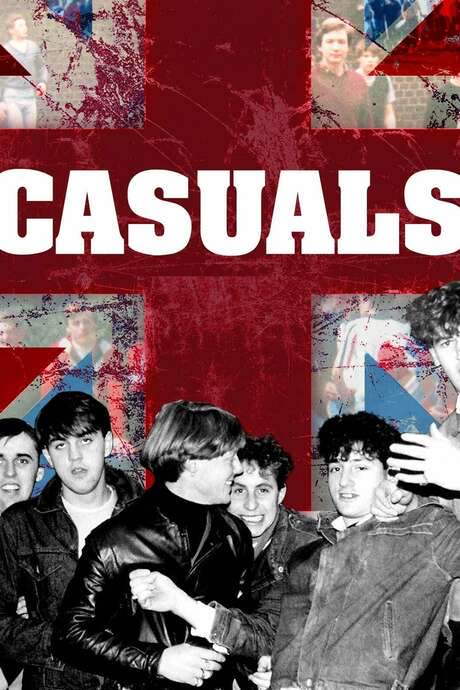
Late 1ate 70s Britain was awash with a torrent of youth culture—punks, mods, skins, rockers, soulboys, greebos, rockabillys, new romantics, blitz kids, and more—yet one subculture rose to the top by linking football terraces with the world of fashion: the Casuals. This documentary dives deep into that seldom-charted movement, presenting it as more than a clash of styles. It traces how the Casuals grew from a terrace-born phenomenon into a powerful cultural force that influenced both streetwear and high fashion, shaping looks that would echo for years to come.
From humble beginnings rooted in subcultures like the soul boy scene, the Casuals drew inspiration from Jamaican dress and the laid‑back swagger of the era. The film charts a remarkable evolution: the early sportswear aesthetic that defined their daily wear gradually gave way to an upmarket designer sensibility, moving from practical gear to pieces associated with Armani and Stone Island. This shift is presented not as a marketing trend but as a living thread of identity—a continuous thread that connects past and present fashion consciousness.
Although violence associated with the movement is acknowledged, the documentary treats it as an undercurrent rather than the defining feature that the press often fixates on. The film emphasizes that the Casuals’ world was about more than confrontation: it was a complete lifestyle—music, fashion, swagger, attitude, and a fierce zest for life. There was a shared sense of anger toward “the machine,” authority, and the policing of youth culture, but also a strong sense of community and mutual respect among friends and rivals alike.
What makes this documentary particularly engaging is its method. The director takes us on a coast‑to‑coast journey across Scotland, Wales, London, Liverpool, and Manchester, gathering voices from the scene itself. Rather than relying on a single presenter, the film lets the people who lived the movement tell their stories—movers and shakers, as well as teenagers who were part of the culture. This approach gives the narrative a vivid immediacy, drawing a broader, more nuanced picture of daily life, personal ambitions, and communal rituals.
The result is a rich, multi‑voiced portrait of the UK during a turbulent era—economically challenging, politically charged, and socially vibrant. It captures how fashion and football intersected with music, youth politics, and urban life, offering insights that resonate beyond fashion history. The documentary stands as a fascinating snapshot of a moment when youth culture asserted itself with confidence and style, leaving an imprint on both subcultural and mainstream culture.
Fans of football culture, sneaker enthusiasts, fashionistas, and social‑studies students will find this film especially enlightening. It not only documents a movement but also invites reflection on how subcultures shape identity, belonging, and the way a society understands youth. In a concluding voice that lingers after the screen fades, the documentary reminds viewers that the Casuals were more than a dress code or a trend—they were a decisive statement of youth potential and a lasting influence on fashion and culture.
Bob Morris, April 2021