Plot Explained Spoilers guaranteed!
Plot Explained

Browse by genre

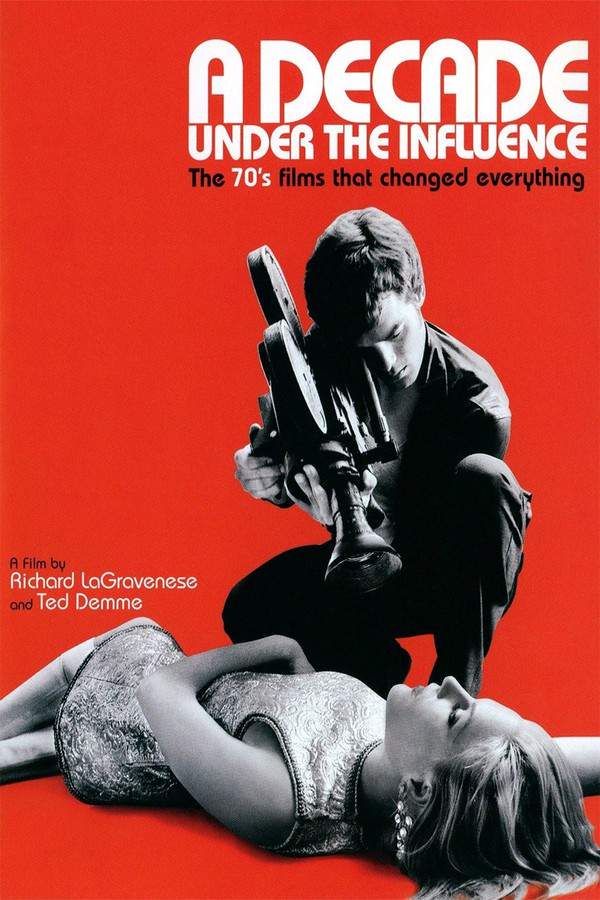
A Decade Under the Influence (2003) movie poster

Plot Summary

A Decade Under the Influence (2003) Plot Summary Explained

Release, runtime and language
2003 · 138 min · English
Directed by
Ted Demme, Richard LaGravenese

During the late 1960s and early 1970s, American filmmaking experienced a dramatic shift as the established norms were challenged by a burgeoning counterculture. A new generation of filmmakers blended artistic, experimental techniques with the energy of low-budget productions, redefining Hollywood’s conventions. This cinematic movement produced a unique and influential era that continues to shape film today.

On this page (6)
  1. 1 What happens: full plot
  2. 2 Plot questions answered
  3. 3 Movie threads
  4. 4 Movies like A Decade Under the Influence
  5. 5 Categories
  6. 6 Every angle

Full plot summary · contains spoilers

What Happens in A Decade Under the Influence: Full Plot Summary

The whole story of A Decade Under the Influence (2003) explained, from the opening scene to the final frame: every key event, every twist and what it all adds up to. Read it as a quick recap before the sequel, to check a scene you missed, or to finally understand what really happened.

A fascinating compilation of interviews and selected clips from films that emerged as a counter-movement to the dominant studio productions of the late sixties and early seventies, this documentary, directed by Ted Demme, serves as a heartfelt homage to that unique cinematic period. Although it offers a glimpse into the impactful creations of the era, it occasionally overlooks some of the true masterpieces that defined it.

The documentary showcases how directors of the time were deeply influenced by greats like Truffaut, Antonioni, Fellini, Bergman, and notably, John Cassavetes. Despite its significant content, the film, with its 138-minute runtime, feels almost fleeting, leaving viewers wanting more.

In rich interviews, renowned filmmakers share their insights, featuring voices like Martin Scorsese, Francis Coppola, Robert Altman, and others such as Ellen Burstyn, Roger Corman, Bruce Dern, Sydney Pollack, Dennis Hopper, and Jon Voight. Notably, Bruce Dern makes a striking observation about himself and Jack Nicholson, reflecting that while they might not have matched the conventional looks of past stars, they certainly were "interesting," which embodies the spirit of the filmmaking movement during this pivotal time.

Filmmakers faced significant challenges, notably from studios that were hesitant to fund projects that presented nontraditional views on politics, sex, drugs, and social issues, as well as the complex reality of America's role in the Vietnam War. In an illuminating segment, Francis Coppola reflects on how his training under Roger Corman allowed him to create The Conversation, which ultimately garnered the necessary backing from producers aware of his ability to craft compelling films without excessive budgets.

The documentary also features insights from Jon Voight, who reminisces about working under Hal Ashby in Coming Home, a poignant anti-war narrative chronicling a wounded soldier's reintegration into society. Voight discusses an incident during a rehearsal that unexpectedly led to a powerful scene in the film, illustrating how authenticity often arises from spontaneity rather than strict preparation.

Alongside these illuminating interviews, there are compelling excerpts from Al Pacino's breakout role in The Panic in Needle Park, as well as discussions from Dennis Hopper on the making of Easy Rider and reflections from Sydney Pollack on his approach to storytelling in film.

This documentary stands as a valuable resource for any film enthusiast eager to understand the essence of the new voices in cinema during the seventies, shedding light on how contemporary independent filmmakers owe much to the trailblazing works of figures like John Cassavetes, Milos Forman, William Friedkin, and Roger Corman.
Last updated: November 03, 2024 at 21:35

Was this helpful?

Plot questions answered

A Decade Under the Influence Plot Explained: Your Questions Answered

The questions people ask most about A Decade Under the Influence (2003): what happens in the confusing scenes, why the characters do what they do, the twists, hidden details and what the ending means. Each answer contains spoilers.

Q1

Why was the late 1960s and early 1970s filmmaking era significant?

This period marked a dramatic shift in American cinema when a new generation of filmmakers challenged established studio norms. These directors blended artistic, experimental techniques with low-budget productions to redefine Hollywood conventions. Their work addressed controversial topics like politics, sex, drugs, and the Vietnam War, subjects studios typically avoided. The movement produced influential films that continue to shape contemporary independent filmmaking.

  • new hollywood
  • independent cinema
  • 1970s filmmaking
  • counter-movement
  • studio system
Q2

How did European directors like Truffaut and Antonioni influence American filmmakers?

Directors of this era were deeply inspired by European greats such as Truffaut, Antonioni, Fellini, and Bergman. These filmmakers introduced innovative narrative techniques, character-driven storytelling, and stylistic approaches that diverged from traditional Hollywood formulas. American directors adopted these methods to create more personal, experimental works that prioritized artistic vision over commercial conventions.

  • french new wave
  • italian neorealism
  • auteurs
  • cinematic influence
  • european cinema
Q3

What challenges did filmmakers face when trying to get studio backing?

Studios were hesitant to fund projects exploring nontraditional views on politics, sex, drugs, and social issues, especially topics related to the Vietnam War. Executives feared these films would alienate audiences and harm box office returns. This resistance forced many filmmakers to seek alternative funding or work with smaller production companies willing to take creative risks.

  • studio resistance
  • vietnam war film
  • budget constraints
  • independent financing
  • controversial subjects
Q4

How did Roger Corman help train Francis Coppola?

Francis Coppola worked under Roger Corman early in his career, where he learned to craft compelling films without massive budgets. This training proved crucial when Coppola sought backing for The Conversation, producers knew he could deliver a quality film economically. Corman's mentorship demonstrated how constraints could foster creativity rather than limit it.

  • roger corman
  • francis coppola
  • film school
  • apprenticeship
  • the conversation
Q5

Why does Bruce Dern describe himself and Jack Nicholson as "interesting" rather than conventional stars?

Bruce Dern observed that unlike the traditionally handsome stars of previous Hollywood eras, he and Jack Nicholson possessed a different quality, they were "interesting." This rawness and unpredictability embodied the spirit of 1970s filmmaking. Directors valued authentic, unconventional actors who could bring psychological depth and complexity to roles, distinguishing this era from polished studio productions.

  • bruce Dern
  • jack nicholson
  • actor type
  • 1970s actors
  • new hollywood stars
Q6

What is John Cassavetes' legacy in independent cinema?

John Cassavetes is considered a pioneer of American independent cinema. His experimental approach and commitment to character-driven storytelling greatly influenced subsequent generations of filmmakers. He demonstrated that films could be made outside the studio system while maintaining artistic integrity, laying foundations for modern independent filmmaking that the documentary highlights as essential to understanding the era.

  • john cassavetes
  • independent film pioneer
  • shadows
  • character-driven film
  • direct cinema
Q7

Why does the documentary feel incomplete despite its 138-minute runtime?

With such a rich and transformative period in cinema history, the documentary's 138-minute runtime covers many filmmakers and films but cannot fully explore every significant work. The summary notes it occasionally overlooks some true masterpieces of the era, leaving film enthusiasts craving deeper discussion of certain influential films and figures that shaped the movement.

  • documentary length
  • missing films
  • 1970s masterpieces
  • cinematic era coverage
Q8

How did an improvisation during rehearsal lead to a powerful scene in Coming Home?

Jon Voight recounted an incident during rehearsal for Hal Ashby's Coming Home that unexpectedly became a powerful on-screen moment. This illustrates how authenticity often arose from spontaneity rather than strict preparation. The anti-war film's emotional impact stemmed partly from allowing actors the freedom to react naturally, capturing genuine emotional responses that scripted scenes might have missed.

  • coming home
  • hal ashby
  • jon voight
  • improvisation
  • anti-war film
Q9

Why is Easy Rider considered the epitome of the era's rebellious spirit?

Dennis Hopper discussed how Easy Rider captured the countercultural mood of the late 1960s and early 1970s. The film's road trip narrative, exploration of American idealism, and critique of societal norms resonated with audiences seeking alternatives to conventional cinema. Its commercial success proved that films challenging mainstream values could achieve both artistic and financial success.

  • easy rider
  • dennis hopper
  • counterculture
  • road movie
  • 1960s america
Q11

Why does the documentary focus on filmmakers like Scorsese, Coppola, and Altman?

These filmmakers represented the core of the New Hollywood movement that challenged traditional studio conventions. Martin Scorsese, Francis Coppola, and Robert Altman became defining voices of the era, each bringing distinct stylistic approaches while sharing common goals of artistic authenticity. Their interviews provide firsthand accounts of how they navigated creative ambitions against commercial pressures, making their perspectives essential to understanding this cinematic revolution.

  • martin scorsese
  • francis coppola
  • robert altman
  • new hollywood directors
  • 1970s cinema

Movie threads

More Movies Like A Decade Under the Influence, by Mood & Story

Curated lists built around what makes A Decade Under the Influence tick: the same mood, the same kind of story or the same emotional payoff. Each list explains why these movies belong together.

Documentaries about Artistic Revolutions like A Decade Under the Influence

Explore documentaries that chronicle the birth of influential artistic movements. If you enjoyed A Decade Under the Influence, you'll find similar films here. We feature documentaries that explore revolutionary periods in art, music, and filmmaking, offering thoughtful analysis and interviews with the key figures who reshaped their creative landscapes.

  • informative
  • analytical
  • reflective
  • illuminating
  • historical
  • thoughtful
  • Tone: neutral, analytical, reflective
  • Pacing: steady, methodical
Why these movies?

The story pattern: Stories in this thread typically unfold as historical analyses, tracing the rise of a new artistic wave against established conventions. They follow the journeys of pioneering creators, the cultural conflicts they navigated, and the lasting impact of their work, often structured around interviews, archival footage, and critical commentary.

Why they belong together: These movies are grouped together for their shared focus on illuminating the process and impact of artistic innovation. They connect through a reflective, informative mood, a steady analytical pace, and a deep dive into the creative struggle that defines influential eras.

Movies with Nostalgic Cultural Analysis like A Decade Under the Influence

Journey back to influential decades through a thoughtful, critical lens. Find movies like A Decade Under the Influence that blend nostalgia with sharp analysis. This section includes films, both documentary and narrative, that thoughtfully explore a specific time period, examining its culture, style, and impact on the present day.

  • nostalgic
  • reflective
  • thoughtful
  • analytical
  • retro
  • historical
  • Tone: neutral, reflective, nostalgic
  • Pacing: steady, contemplative
Why these movies?

The story pattern: The narrative pattern involves using a specific historical period as a character in itself. The journey is one of re-examination, peeling back layers of memory and myth to understand the era's complexities, contradictions, and true influence on contemporary life.

Why they belong together: These films share a unique blend of reflective nostalgia and intellectual rigor. They are connected by a thoughtful mood, a steady pace suited for analysis, and a central focus on re-evaluating the past to better understand its significance and emotional weight.

If you liked this

Movies Like A Decade Under the Influence

Similar movies to A Decade Under the Influence: the same genre, themes or kind of story. Each one comes with its own plot summary, timeline and ending explained.

Browse all movie summaries

Categories

Movie Lists Featuring A Decade Under the Influence

A Decade Under the Influence appears in these hand-built movie categories. Each one groups movies by a specific mood, theme or story type, with their plot summaries and endings explained.

View all movie categories

Every angle

A Decade Under the Influence (2003) Explained: Plot, Timeline & Characters

Everything about A Decade Under the Influence in one place: what happens in the plot summary, the timeline in chronological order, the characters and meaning and a spoiler-free summary. What's After the Movie adds the cast, box office and post-credit scenes.

Coming soon on iOS and Android

The Plot Explained Movie Summary App

Plot summaries, endings explained and timelines on your phone. Catch up on any movie in minutes, save your favorites and never miss a twist again.

Be the first to know when we launch. Your email stays private, always.

Learn more about the app