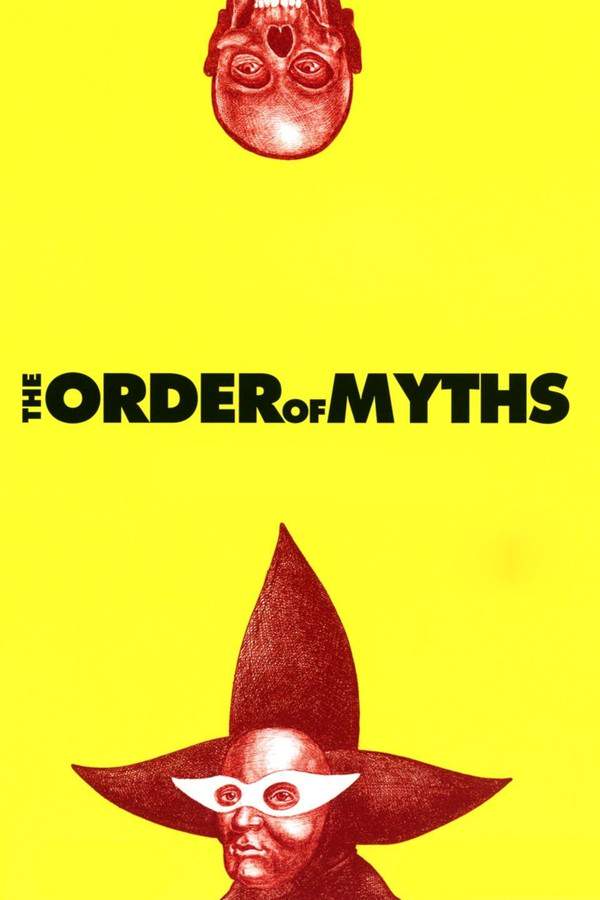
The Order of Myths

The Order of Myths

Year: 2008

Runtime: 97 min

Language: English

Director: Margaret Brown

Documentary

This documentary explores the rich and enduring history of Mardi Gras in Mobile, Alabama, a celebration that has thrived for over 300 years. Filmmaker Margaret Brown investigates the city’s unique traditions, uncovering a striking history of racial segregation that continues to shape the festivities. The film reveals how two distinct groups maintain separate celebrations, each with its own kings and queens representing black and white communities, offering a compelling look at a complex cultural phenomenon.

Where to Watch The Order of Myths?

Find where to stream, rent, or buy The Order of Myths (2008) in the US with current JustWatch availability, up-to-date pricing, and platform listings for subscription, rental, and digital purchase options.

Streaming availability powered by JustWatch

Warning: spoilers below!

Haven’t seen The Order of Myths yet? This summary contains major spoilers. Bookmark the page, watch the movie, and come back for the full breakdown. If you're ready, scroll on and relive the story!

Timeline – The Order of Myths (2008)

Trace every key event in The Order of Myths (2008) with our detailed, chronological timeline. Perfect for unpacking nonlinear stories, spotting hidden connections, and understanding how each scene builds toward the film’s climax. Whether you're revisiting or decoding for the first time, this timeline gives you the full picture.

1

Birth of Mardi Gras

Mardi Gras in Mobile, Alabama dates back to 1703, making it the birthplace of the first U.S. celebrations. This historical beginning laid the foundation for a longstanding tradition that would evolve over centuries.

1703 Mobile, Alabama
2

Segregated Societies

The film highlights the existence of segregated societies within Mardi Gras, where both black and white communities maintain their separation. This division is not enforced but rather a choice made by the societies themselves.

Mobile, Alabama
3

Community Rituals

The movie explores the community rituals, pomp, and camaraderie of Mardi Gras celebrations. It suggests that, despite the divisions, both communities share similar festive practices through their own respective parades and events.

Mobile, Alabama
4

Misconceptions Among Viewers

As the film portrays life's segregation, it inadvertently fosters misconceptions among viewers regarding the realities of Mobile's diverse populace. The reality is more complex than the film presents.

5

Freedom of Assembly

A core principle underscored in the film is the Freedom of Assembly. It emphasizes that the decision to segregate is a right entrenched in the Constitution, allowing different racial groups to choose their membership voluntarily.

6

Political Representation

Mobile's diverse city and county government reflects the changing social dynamics, currently led by Sam Jones, a well-received black mayor. His election highlights a significant shift toward representation and inclusivity in local governance.

Mobile, Alabama
7

Current Political Context

Sam Jones's overwhelming election victory signals a positive trend in Mobile's political landscape. The film hints that his administration is anticipated to continue thriving in future contests, showcasing the community's progressive change.

Mobile, Alabama
8

Festive Parades and Balls

The various parades and balls are captured vividly in the film, epitomizing the harmless revelry characteristic of Mardi Gras. They serve as a vibrant expression of the cultures involved, despite the underlying tensions of segregation.

Mobile, Alabama
9

Racial Segregation References

Although the portrayal of Mardi Gras focuses on celebration, it inadvertently conjures images of forced segregation reminiscent of the Old South. Such references evoke historical memories of societal divisions and discrimination.

10

Public Perception

The film’s exploration of Mardi Gras leads to a deeper reflection on public perception regarding racial dynamics. It draws attention to the community's need to confront misconceptions while celebrating their cultural heritage.

11

Great-Grandchildren's Legacy

The documentary reveals the stark reality that the great-grandchildren of slaves and slave owners still live highly segregated lives, reinforcing the historical legacy of division. This connection prompts viewers to consider the ongoing implications of their past.

12

Diverse Celebrations

Despite the segregated nature of the societies, Mobile continues to host diverse celebrations during Mardi Gras. The film emphasizes the richness of these festivities, showcasing how the cultural tapestry of the city is shaped by various influences.

Mobile, Alabama

Last updated: November 07, 2024 at 22:55

Was this helpful?

The Order of Myths (2008) Timeline Questions Answered – Chronology FAQ

Find frequently asked questions about the The Order of Myths (2008) timeline, including chronological order, nonlinear jumps, cause-and-effect links, and scene sequence clarifications. This timeline FAQ helps explain when key events happen, how moments connect, and why the story unfolds in that specific order.

Q1

Why are Mardi Gras societies in Mobile segregated by race?

A.

The Mardi Gras societies in Mobile operate as private organizations that voluntarily maintain racial separation. Both the black and white communities choose to keep their societies distinct, exercising what the film presents as their constitutional Freedom of Assembly. This differs from historical forced segregation, as each group independently decides its membership and leadership structure.

segregationMardi Gras societiesMobile Alabamablack and white communitiesprivate organizations
Q2

When did Mardi Gras begin in Mobile, Alabama?

A.

Mardi Gras in Mobile dates back to 1703, making it the oldest continuous Mardi Gras celebration in the United States. The film highlights this historical foundation as significant, showing how traditions established over 300 years ago continue to shape modern celebrations in the city.

Mardi Gras historyMobile Alabama1703oldest celebrationUnited States
Q3

What is the Freedom of Assembly argument presented in the film?

A.

The film emphasizes Freedom of Assembly as a constitutional principle that grants both black and white communities the right to determine their own membership. This argument frames the segregated societies not as imposed segregation but as voluntary associations, suggesting the separation is a choice protected by law rather than mandated by it.

Freedom of AssemblyConstitutionvoluntary segregationlegal rightsprivate organizations
Q4

Who is Sam Jones and what role does he play in the film?

A.

Sam Jones is the Black mayor of Mobile, Alabama, elected with overwhelming support. The film presents his election as a significant political shift, highlighting Mobile's progressive trajectory and suggesting that the city's governance has moved beyond the racial divisions visible in its Mardi Gras celebrations.

Sam JonesmayorMobile AlabamaBlack leadershippolitical representationelection
Q5

How do the black and white Mardi Gras societies differ in the film?

A.

While both communities maintain separate societies with their own kings and queens, the film shows they share remarkably similar traditions. Both groups organize parades, hold balls, and celebrate with comparable pomp and camaraderie. The primary distinction lies in their racial composition rather than the substance of their celebrations.

Mardi Gras traditionsblack societywhite societyparadesballskings and queens
Q6

What connection does the film make between enslaved people and modern Mobile?

A.

The film highlights a stark historical continuity: the great-grandchildren of enslaved people and the great-grandchildren of slave owners in Mobile still live highly segregated lives. This connection serves as a central revelation, suggesting that despite progress in other areas, racial division persists in the city's social fabric.

slaverygreat-grandchildrenhistorical legacysegregationMobile historyslave owners
Q7

Does Mobile have laws requiring racial separation during Mardi Gras?

A.

No, the film clarifies that Mobile does not have laws mandating racial separation for Mardi Gras. The segregation exists because each society voluntarily chooses to maintain racial exclusivity in its membership. This distinction is central to the film's argument about Freedom of Assembly versus forced segregation.

forced segregationvoluntary segregationlawsMobile Alabamacivil rights
Q8

How does the film show the similarities between the two communities' celebrations?

A.

The film deliberately parallels the black and white Mardi Gras celebrations, showing both groups with kings, queens, parades, and balls that mirror each other in structure and spirit. This visual comparison suggests that despite racial separation, the communities share a common cultural foundation and celebratory spirit.

cultural similaritiesparadescelebrationsblack communitywhite communitytraditions
Q9

What did the Globe and Mail review highlight about the film?

A.

The Globe and Mail review described the film as 'A study of community ritual, pomp and camaraderie' that 'gradually unveils the startling connections between the two communities, where the great-grandchildren of slaves and the great-grandchildren of slave owners still live highly segregated lives.' This captures the film's dual focus on celebration and social revelation.

Globe and Mail reviewcritical receptioncommunity ritualsegregation
Q10

Why might viewers think Mobile's Mardi Gras involves forced segregation?

A.

The film's focus on racial segregation, combined with imagery of separate water fountains and bus seating reminiscent of the Old South, creates associations with forced segregation. However, the film acknowledges this is a choice by each society rather than mandated segregation, leading to potential viewer misconceptions about the nature of Mobile's separation.

viewer misconceptionsforced segregationOld South imagerymedia portrayal
Q11

How does the film portray Mobile's political representation?

A.

The film portrays Mobile's government as increasingly diverse and representative. With Sam Jones as the current Black mayor, elected overwhelmingly, the film suggests Mobile has made significant political progress. This progressive political landscape contrasts with the continued social segregation visible in Mardi Gras celebrations.

political representationdiverse governmentSam Jonesmayorprogress
Q12

Does the film offer any resolution to Mobile's segregation issue?

A.

The film ends ambiguously, presenting Mobile's complex situation without a clear resolution. It highlights both the festive richness of Mardi Gras and the ongoing racial division, leaving viewers to contemplate whether the tradition will evolve or remain segregated. The documentary suggests this is an ongoing conversation rather than a solved problem.

ambiguous endingunresolved issuesfuture of Mardi Grassocial progress
Mobile App Preview

Coming soon on iOS and Android

The Plot Explained Mobile App

From blockbusters to hidden gems - dive into movie stories anytime, anywhere. Save your favorites, discover plots faster, and never miss a twist again.

Sign up to be the first to know when we launch. Your email stays private, always.

Explore Movie Threads

Discover curated groups of movies connected by mood, themes, and story style. Browse collections built around emotion, atmosphere, and narrative focus to easily find films that match what you feel like watching right now.

Movies like The Order of Myths that explore cultural rituals

Documentaries that explore deep-seated societal dynamics through the lens of community traditions.If you liked The Order of Myths, this section features similar documentary films that delve into the complex social histories embedded within community celebrations and traditions. Find more movies that use cultural observation to uncover deeper truths about race, class, and heritage.

observationalsociologicalculturalreflectivethought-provokingrevealingnostalgic

Narrative Summary

Stories in this thread typically unfold by immersing the viewer in a specific cultural event or tradition. The narrative structure is often built around the preparation and execution of the ritual itself, using it as a framework to interview participants, explore historical context, and reveal underlying tensions or unifying forces within the community.

Why These Movies?

These movies are grouped together because they share a foundational approach: they are observational, neutral in tone, and use a steady pace to build a complex sociological portrait. They prioritize revealing connections and contradictions within a culture over passing simple judgment, creating a reflective and intellectually engaging experience.

Movies like The Order of Myths about the American South's complex history

Stories that peel back the genteel surface to reveal the difficult truths of the South.For viewers who appreciated The Order of Myths, this section highlights films with a similar feel that investigate the nuanced social landscape of the American South. Discover more movies that tackle themes of racial legacy, community, and tradition with a steady, reflective pace.

reflectivehistoricalcomplexnuancedrevealingmelancholicsociological

Narrative Summary

The narrative pattern involves a journey of uncovering, where the present-day setting is deeply informed by a past that is not always openly discussed. Characters or the film itself act as investigators, piecing together a story that challenges official narratives or polite facades, often leading to an ambiguous or nuanced conclusion rather than a simple resolution.

Why These Movies?

These films share a specific geographical and thematic focus that creates a coherent vibe. They possess a medium emotional weight and a steady, sometimes melancholic pace, reflecting the slow-burning nature of historical reckoning. The tone is often reflective and neutral, allowing the weight of the subject matter to speak for itself.

Unlock the Full Story of The Order of Myths

Don't stop at just watching - explore The Order of Myths in full detail. From the complete plot summary and scene-by-scene timeline to character breakdowns, thematic analysis, and a deep dive into the ending - every page helps you truly understand what The Order of Myths is all about. Plus, discover what's next after the movie.

The Order of Myths Summary

Read a complete plot summary of The Order of Myths, including all key story points, character arcs, and turning points. This in-depth recap is ideal for understanding the narrative structure or reviewing what happened in the movie.

The Order of Myths Summary

Characters, Settings & Themes in The Order of Myths

Discover the characters, locations, and core themes that shape The Order of Myths. Get insights into symbolic elements, setting significance, and deeper narrative meaning - ideal for thematic analysis and movie breakdowns.

Characters, Settings & Themes in The Order of Myths

The Order of Myths Spoiler-Free Summary

Get a quick, spoiler-free overview of The Order of Myths that covers the main plot points and key details without revealing any major twists or spoilers. Perfect for those who want to know what to expect before diving in.

The Order of Myths Spoiler-Free Summary

More About The Order of Myths

Visit What's After the Movie to explore more about The Order of Myths: box office results, cast and crew info, production details, post-credit scenes, and external links - all in one place for movie fans and researchers.

More About The Order of Myths