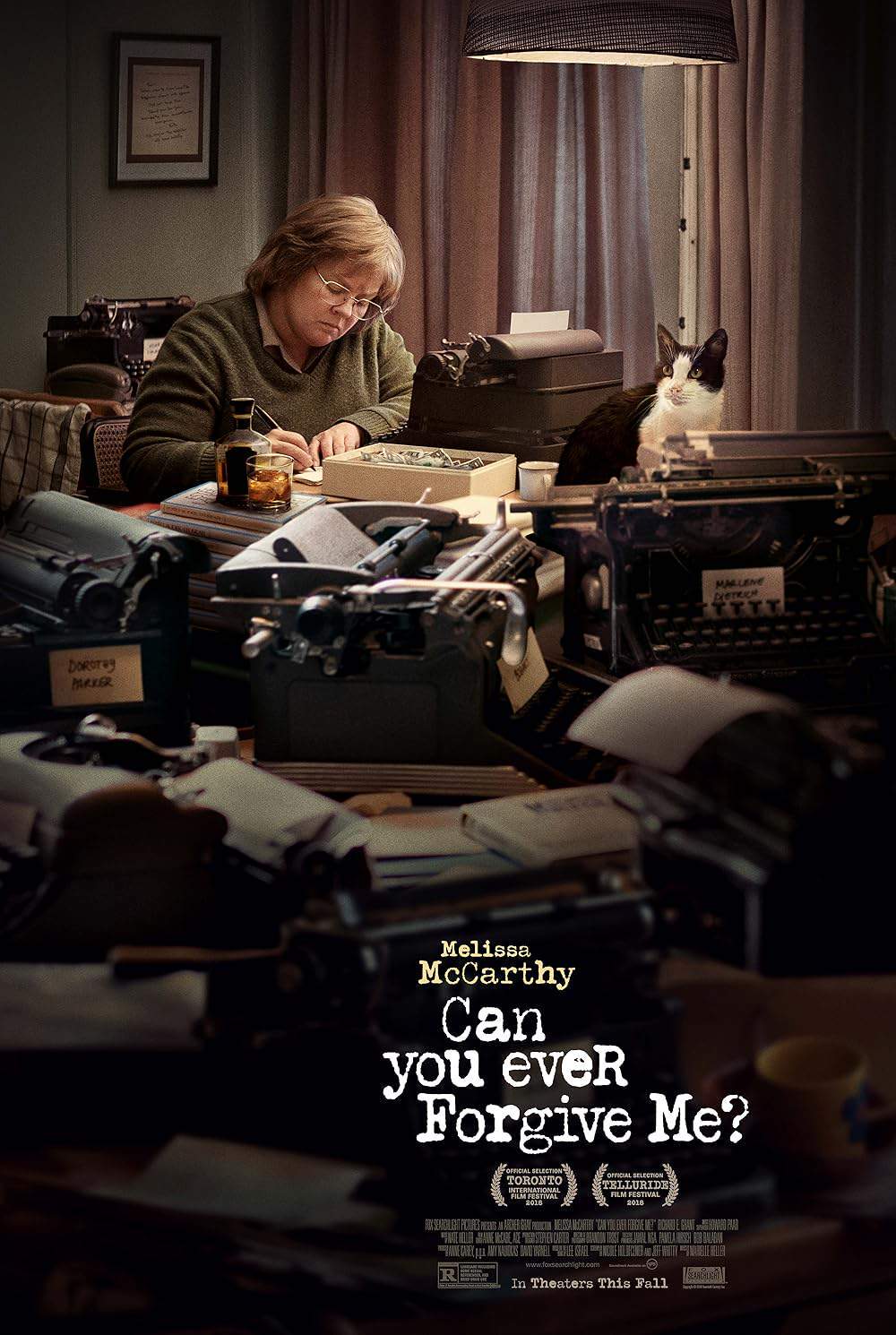
In Can You Ever Forgive Me?, set in New York City during the frigid early hours of 1991, we follow the story of Lee Israel, portrayed by Melissa McCarthy, a once-acclaimed biographer who finds herself struggling both financially and emotionally. At 51 years old, Lee faces a tragic wake-up call when a young colleague implies that she might as well end her life if she continues to work in publishing at her age. In a fit of frustration and anger, she lashes out at her coworkers, ultimately resulting in her termination.
As she navigates her way through a dinner party hosted by her literary agent, Marjorie (Jane Curtin), Lee's desperation becomes apparent. Ignored and dismissed, she notices how the publishing industry has left her behind. Lee's unconventional behavior at the party, including swiping a coat she can't afford and sneaking away with toilet paper rolls, highlights her dire financial circumstances and her emotional detachment.
At home, Lee's loneliness is palpable as she watches old films and interacts with her beloved cat, Jersey. When Jersey's health deteriorates, her inability to pay for veterinary care further demonstrates her crumbling state. A visit to a local bookstore becomes another blow, as she confronts the rudeness of an employee who fails to recognize her former status as a renowned author.
Isolated and disheartened, Lee seeks solace in a gay bar, where she runs into Jack Hock (Richard E. Grant), an old acquaintance with a questionable reputation. Their relationship deepens as they bond over their shared struggles and love for the literary world. Lee's downward spiral leads her to a life of forging literary letters, cleverly posing as famous authors in a desperate attempt to regain financial stability and notoriety.
As Lee delves deeper into the world of literary forgery, her actions become increasingly reckless. Each letter she successfully sells brings thrills and further reinforces her connection with Jack, though it puts them both at risk. The tension builds as the authorities close in on her deceptions, igniting a whirlwind of emotional turmoil that culminates in the heartbreaking loss of her cat and her last thread of companionship.
Staring at the consequence of her actions, Lee confronts the fallout. As she faces legal repercussions, we witness her transformation from a lonely forger into a woman willing to tell her story authentically. Amid the chaos, Lee discovers a renewed purpose in writing, culminating in her memoir, Can You Ever Forgive Me?: Memoirs of a Literary Forger, which reflects her journey through deceit and desperation.
Throughout this poignant tale, we not only witness the struggle of a woman coming to terms with her loneliness in a fast-paced world but also experience the laughter and sorrow that define her complex friendships and relationships. Ultimately, Can You Ever Forgive Me? is a rich exploration of identity, survival, and the lengths to which one may go in search of belonging.