Plot Explained Spoilers guaranteed!
Plot Explained

Browse by genre

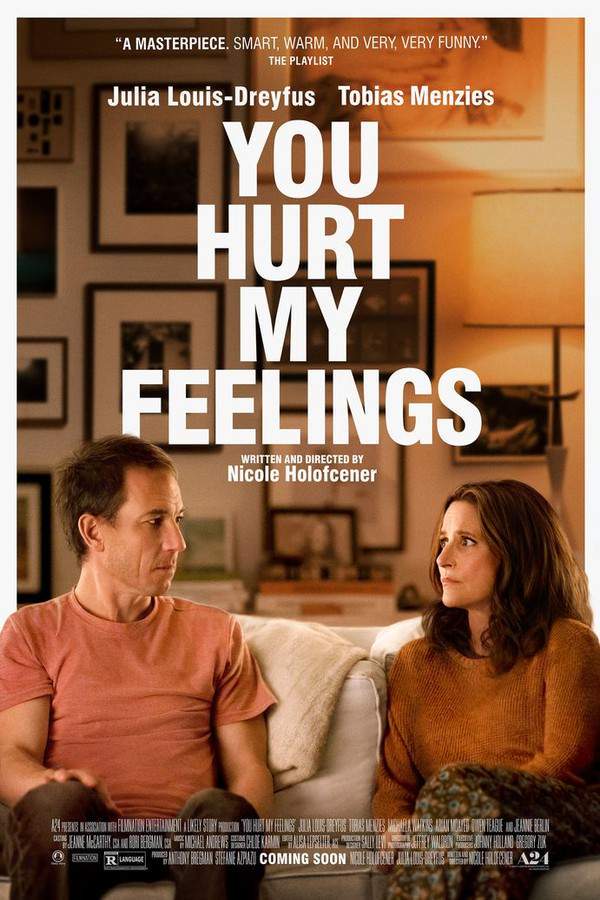
You Hurt My Feelings (2023) movie poster

Plot Summary

You Hurt My Feelings (2023) Plot Summary & Ending Explained

Release, runtime and language
2023 · 93 min · English
Echo score 74
Loading streaming availability…
Directed by
Nicole Holofcener
Starring
Bryan Reynoso, Claudia Robinson, Doug Moe, Erica Matlin, Julia Louis-Dreyfus, Karolena Theresa

A novelist's life takes an unexpected turn when she overhears her husband's brutally honest, and hurtful, critique of her latest book. This seemingly minor event cracks the foundation of their marriage, forcing them to confront unspoken truths and hidden insecurities. As their carefully constructed world unravels, they must navigate the complexities of honesty, vulnerability, and the potential cost of unfiltered words. The film explores the fragility of relationships and the delicate balance between expressing truth and preserving feelings.

On this page (7)
  1. 1 Where to watch
  2. 2 What happens: full plot
  3. 3 Plot questions answered
  4. 4 How it ends
  5. 5 Movie threads
  6. 6 Movies like You Hurt My Feelings
  7. 7 Every angle
Loading streaming availability…

Full plot summary · contains spoilers

What Happens in You Hurt My Feelings: Full Plot Summary

The whole story of You Hurt My Feelings (2023) explained, from the opening scene to the final frame: every key event, every twist and what it all adds up to. Read it as a quick recap before the sequel, to check a scene you missed, or to finally understand what really happened.

Beth is a successful memoirist and creative writing teacher who has just finished her first novel. She is in a loving marriage with Don, a therapist, and they have a son, Elliot, who works at a cannabis store. Don is self-conscious about aging and often struggles to stay fully engaged with his patients, which quietly weighs on him as he navigates his career and his family life.

Beth’s agent delivers tough news: the novel needs multiple revisions, which unsettles her confidence and stirs self-doubt. Don offers quiet support, reading a draft and suggesting she seek a more enthusiastic agent who might spark fresh momentum. This moment of reassurance is tested when Don, while shopping for socks, confesses to his brother-in-law—the actor Mark—that he doesn’t like Beth’s book, a truth he feels unable to voice aloud to her. Beth overhears this exchange, catching the unfiltered tone of their conversation as she enters the shop with her sister Sarah, and the seeds of unease begin to grow.

Beth’s faith in the relationship falters as she processes what she’s heard. In a bid to comfort her, Sarah shares a blunt observation: she herself sometimes lies to her husband about his acting performances. The honesty, or lack thereof, does not fully ease Beth’s worries. The tension surrounding Mark’s career intensifies when he is publicly fired from a play, throwing him into a moment of doubt about quitting acting. Sarah pressures him to persevere, arguing that the setback is merely a temporary stumble.

Back home, Beth’s frustration with Don deepens. At Mark’s birthday dinner, she finally confronts him about the overheard remark. Don attempts to deflect by arguing there’s missing context, but he eventually admits that he dislikes Beth’s book—not to discourage her, but because he never found the book truly compelling. This admission catalyzes a broader discussion between Don and Beth about the white lies they have told one another and what they reveal about their relationship.

Beth comes to a pivotal realization: her reactions are shaped, in part, by the verbal abuse she endured from her controlling father in childhood. This insight does not erase the hurt, but it reframes the dynamics of their communication and helps her find a path forward. She also decides to seek a new, more enthusiastic agent, opening a door to renewed momentum for the project.

A year passes, and Beth’s novel is published to mark a turning point in her life. The couple is reconciled and celebrates their anniversary together, buoyed by a renewed sense of partnership. Mark finds success in another play, while Elliot completes the first draft of his own play and shares copies with his parents, signaling a family in creative flow. Don opts for eye surgery, and Beth reassures him with warmth and optimism, telling him he will look great. The two of them settle into the evening, reading Elliot’s draft before turning in, a quiet reminder of their interconnected journeys as a family.
Last updated: October 09, 2025 at 16:25

Was this helpful?

Plot questions answered

You Hurt My Feelings Plot Explained: Your Questions Answered

The questions people ask most about You Hurt My Feelings (2023): what happens in the confusing scenes, why the characters do what they do, the twists, hidden details and what the ending means. Each answer contains spoilers.

Q1

Why is Beth so devastated by Don saying he doesn't like her book?

Beth's reaction stems from more than just the book criticism. Don is the one person she expected to be unconditionally supportive, and hearing him admit to her brother-in-law that he found her work uncompelling shatters that safety net. The hurt is intensified because she's already insecure about the novel needing revisions, and Don's private dismissal makes her question whether any of the praise she's received is genuine.

Foreshadowing: Earlier, Beth's agent tells her the novel needs multiple revisions, already shaking her confidence before she overhears Don.

  • beth
  • don
  • book criticism
  • marriage trust
  • novel revisions
Q2

What childhood experience shapes Beth's reaction to Don's honesty?

Beth realizes midway through the film that her intense reaction to Don's comment is rooted in verbal abuse she suffered from her controlling father during childhood. This context reframes her sensitivity to criticism, she doesn't just hear Don's opinion, she involuntarily relives patterns of being diminished and controlled by someone supposed to love her.

  • beth
  • childhood trauma
  • father
  • verbal abuse
  • marriage therapy
Q3

Why does Don have trouble connecting with his patients as a therapist?

Don is self-conscious about aging and feels his best years may be behind him. This insecurity makes it difficult for him to stay fully engaged with his patients, creating a quiet crisis of confidence in his professional life that mirrors the tension in his marriage.

Foreshadowing: The summary establishes early on that Don struggles to stay engaged with patients due to aging concerns.

  • don
  • therapist
  • aging
  • patients
  • career
Q4

What finally prompts Beth to confront Don about the book comment?

Beth's confrontation at Mark's birthday dinner happens after weeks of simmering resentment. She has been processing the overheard comment and feeling his distance and hedging about her work. The birthday gathering creates a charged moment where the tension becomes impossible to suppress, leading her to publicly call out his dishonesty.

Foreshadowing: The timeline notes Beth's mounting annoyance with Don's hedging about her work in the days leading up to the dinner.

  • beth
  • don
  • confrontation
  • mark birthday
  • dinner
Q5

Why does Sarah tell Beth about lying to her husband about his acting?

Sarah shares this to comfort Beth by showing that everyone in relationships tells protective lies, even she pretends to love Mark's performances to preserve his ego. However, the admission actually unsettles Beth further, making her wonder if honesty is possible at all in long-term partnerships.

  • sarah
  • mark
  • white lies
  • acting
  • marriage honesty
Q6

How does finding a new agent change Beth's situation?

After Don's criticism shakes her confidence, Beth decides to seek a more enthusiastic agent who genuinely champions her work. This new agent believes in her novel and provides the support and momentum Beth needed, ultimately leading to the book's publication a year later.

Foreshadowing: Don originally suggested she find an agent who would be more enthusiastic about the work.

  • beth
  • agent
  • novel
  • publication
  • career
Q7

How do Don and Beth repair their marriage after the conflict?

Their reconciliation comes through open conversation about the white lies they've told each other and confronting the deeper patterns in their communication. Beth's realization about her father's influence helps her separate present-day Don from past trauma, while Don's honesty about his feelings, though painful, allows them to rebuild trust on a more authentic foundation.

Foreshadowing: Beth's realization about her childhood with her controlling father reframes the dynamics.

  • don
  • beth
  • reconciliation
  • marriage
  • honesty
Q8

Why does Don decide to get eye surgery at the end of the film?

Don opts for eye surgery as a practical step toward addressing his self-consciousness about aging. Beth's warm reassurance that he will look great afterward signals their renewed closeness, she supports his choice and expresses confidence in him, a stark contrast to the earlier tension in their marriage.

  • don
  • eye surgery
  • aging
  • self-confidence
  • marriage
Q9

What does Elliot's play represent at the end of the movie?

Elliot completing his first play draft and sharing it with his parents represents creative energy flowing through the family. It symbolizes growth and new beginnings, all three family members are now pursuing creative endeavors, and the closing scene of them reading his work together underscores their renewed unity and shared future.

Foreshadowing: Earlier, Elliot is accused by Beth of pressuring him to be extraordinary, creating tension about his creative path.

  • elliot
  • play
  • draft
  • family
  • creativity
Q10

How does the film explore white lies in relationships?

The film examines how white lies, whether Don's refusal to criticize Beth's book or Sarah's praise of Mark's performances, create distance rather than protect. The characters eventually confront that dishonesty, even when well-intentioned, erodes trust. The resolution comes not from perfect honesty but from acknowledging why lies were told and choosing transparency moving forward.

Foreshadowing: The sock shop scene establishes the pattern of private dishonesty that cascades through the story.

  • white lies
  • honesty
  • marriage
  • communication
  • trust

Ending explained

What Happens at the End of You Hurt My Feelings?

How You Hurt My Feelings (2023) ends, in short: the final scene, the last twist and what it means for the characters. The full ending explained, with every spoiler, lives on its own page.

Read the full ending explained

*The ending of "You Hurt My Feelings" leaves us with an ambiguous but thought-provoking moment. Throughout the film, characters grapple with the complex nature of honesty and the white lies they tell each other to avoid hurting feelings. Beth and Don, like many adults, frequently choose between truthful expression and kindness. When Beth discovers Don's honest opinion about her novel, she feels betrayed, thinking he has been lying to her all along. This revelation causes her to question their entire relationship and the sincerity of his feelings. However, as they confront their feelings and admit their own lies — Beth about Eliot’s potential talent and Don about his opinions — they begin to understand that some level of dishonesty might be a way of protecting loved ones, even if it can also hinder genuine growth and communication.

By the time they reach the end, they decide to share Eliot’s play with honesty, but the way they approach this is left unresolved. The scene suggests they have two choices: either they tell Eliot the truth about their honest opinions, risking disappointment and loss of confidence, or they withhold their true reactions to protect his feelings. This choice reflects the central theme of the film — that honesty isn’t always straightforward and that sometimes, kindness involves withholding the truth. Ultimately, the ending prompts viewers to reflect on how honesty, kindness, and protecting loved ones are interconnected, and whether a little white lie might sometimes be necessary to preserve relationships or foster honest growth.*

You Hurt My Feelings ending explained in full

Movie threads

More Movies Like You Hurt My Feelings, by Mood & Story

Curated lists built around what makes You Hurt My Feelings tick: the same mood, the same kind of story or the same emotional payoff. Each list explains why these movies belong together.

Movies about honesty in marriage like You Hurt My Feelings

Stories exploring the emotional fallout when difficult truths come to light. If you liked the nuanced exploration of truth and feelings in You Hurt My Feelings, you'll find similar stories here. These movies delve into the complexities of modern relationships, where a single overheard comment or revealed secret forces couples to confront their vulnerabilities and redefine their connection.

  • honest
  • vulnerable
  • domestic
  • introspective
  • anxious
  • reassuring
  • Tone: bittersweet, observational
  • Pacing: steady, conversational
Why these movies?

The story pattern: The narrative pattern typically begins with a catalyst—an overheard conversation, a discovered secret, or a poorly timed critique—that shatters the peaceful facade of a relationship. The story then unfolds through dialogue and introspection as the characters navigate hurt, insecurity, and the challenging path toward understanding and reconciliation.

Why they belong together: Movies are grouped here for their shared focus on communication within relationships, a bittersweet tone that blends hurt with hope, and a medium emotional weight that feels impactful yet not overwhelming. They share a steady, observational pace that allows character depth to develop naturally.

Movies about creative struggle like You Hurt My Feelings

Character studies of artists and writers grappling with self-doubt and the need for approval. Fans of the creative struggle depicted in You Hurt My Feelings will appreciate these movies. They explore the anxieties of artists and the fragile egos tied to their work, often within a supportive but complicated family framework, blending professional crisis with personal growth.

  • anxious
  • introspective
  • observational
  • vulnerable
  • reassuring
  • creative
  • Tone: introspective, anxious, hopeful
  • Pacing: steady, character-driven
Why these movies?

The story pattern: The emotional journey follows a creative protagonist who faces a crisis of confidence, often triggered by criticism, rejection, or imposter syndrome. The plot explores how they process this blow, their interactions with a supportive (or sometimes critical) inner circle, and their eventual path toward finding internal validation rather than relying solely on external praise.

Why they belong together: These films are united by their focus on the psychology of the artist, a thematic emphasis on creative struggle and validation, and a mix of anxiety and reassurance. They typically have a moderate complexity, weaving the protagonist's artistic journey with their personal relationships.

If you liked this

Movies Like You Hurt My Feelings

Similar movies to You Hurt My Feelings: the same genre, themes or kind of story. Each one comes with its own plot summary, timeline and ending explained.

Browse all movie summaries

Every angle

You Hurt My Feelings (2023) Explained: Plot, Ending, Timeline & Characters

Everything about You Hurt My Feelings in one place: what happens in the plot summary, the timeline in chronological order, the characters and meaning, the ending explained and a spoiler-free summary. What's After the Movie adds the cast, box office and post-credit scenes.

Coming soon on iOS and Android

The Plot Explained Movie Summary App

Plot summaries, endings explained and timelines on your phone. Catch up on any movie in minutes, save your favorites and never miss a twist again.

Be the first to know when we launch. Your email stays private, always.

Learn more about the app