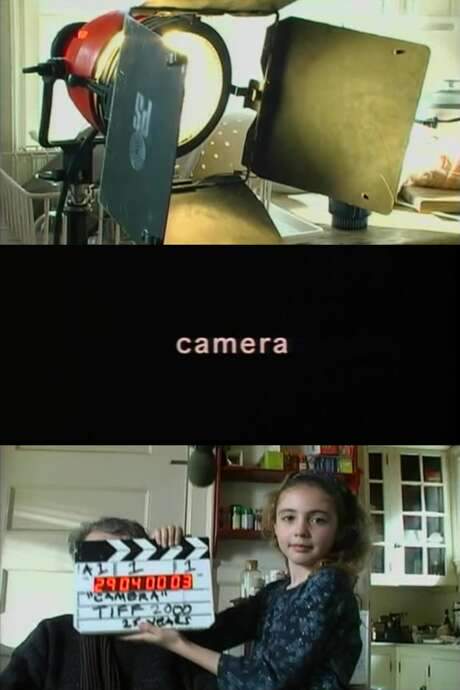
In the late 1970s, in Wielice, People's Republic of Poland, factory worker Filip Mosz, Jerzy Stuhr, is a nervous new father and a devoted husband who begins filming his daughter’s first days with an 8mm camera. He believes, as he tells his wife, that he now has everything he ever wanted since his youth as an orphan, but a commission to document a jubilee celebration at the plant sparks a transformation that will slowly redraw the contours of his life.
When his film is shown, his superiors find the shot of a pigeon useless and the footage of several negotiators at a business meeting too probing. His boss instructs him to cut out the clips of entertainers being paid, the scenes of men going to the bathroom, and the business meeting itself. He is allowed to keep the pigeons only if the entertainers’ payment segment is removed. Filip submits the finished work to a festival and earns third prize, effectively second prize because the festival chose not to award a first prize that year, a distinction that only deepens his sense that art, in this climate, can grant him recognition while eroding other duties.
The achievement fuels a growing fixation on the world of cinephiles and on Anna Włodarczyk, an alluring, self-described amatorka Anna Włodarczyk, portrayed by [Ewa Pokas], who encourages his filmmaking and the possibilities it reveals. The Kraków TV station airs two of his films—one about a dwarf working at the factory and another about misallocated town renovation funds—sparking repercussions back at work. Filip’s boss confronts him: the project to build a new nursery school may be halted because of his exposé, and Stanisław Osuch, the head of the works council and Filip’s mentor Jerzy Nowak, faces the loss of his job as a consequence of the growing upheaval.
Driven by mounting pressure, Filip retrieves the undeveloped canister for his film about the brickyard, only to discover it is not operating due to material shortages; workers are secretly employed on other town projects. He opens the can and lets the film be exposed to the light, a symbolic release of what he has captured and hidden. Alone at home, with his wife having left the relationship and their daughter, Filip finally turns the camera on himself, confronting the personal toll of his obsessive pursuit of image and meaning.
The film crafts a quiet, observational portrait of how a single creative impulse can tilt a life toward distraction, ambition, and the gradual erosion of family ties, all set against a backdrop where the promise of artistic discovery collides with the pressures and surveillance of ordinary life.