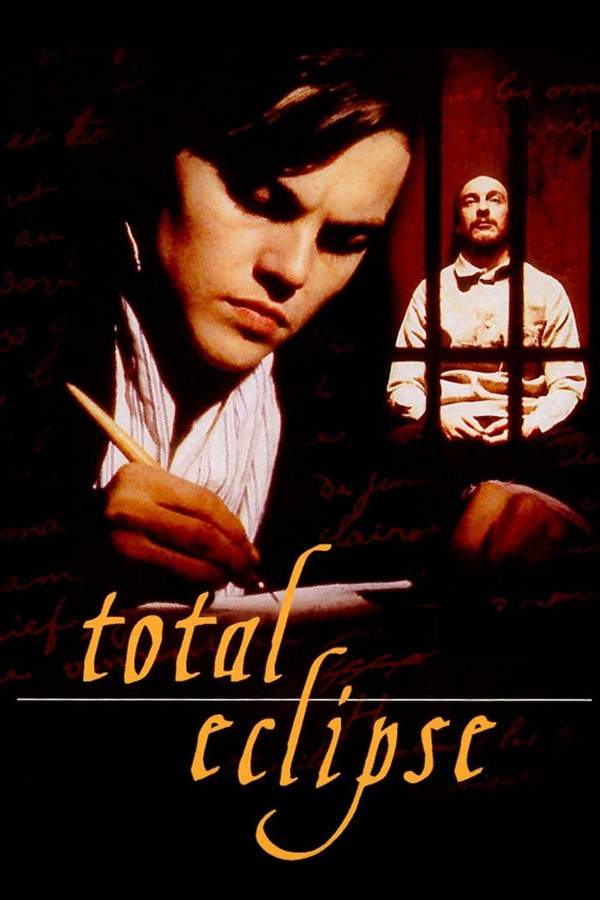
The older Paul Verlaine meets Arthur Rimbaud's sister, Isabelle, in a quaint café located in Paris. Isabelle, along with her mother, requests Verlaine to surrender any remaining copies of Rimbaud's poetry so they can be burned. This encounter prompts Verlaine to reminisce about his tumultuous relationship with Rimbaud, which began in 1871 when the young poet sent his works from his provincial home. Impulsively, Verlaine invited the teenage genius to his affluent father-in-law's residence in Paris, where he lives with his young, pregnant wife. Rimbaud’s brazen disregard for decorum leaves Verlaine's bourgeois family scandalized.
At 27, Verlaine finds himself captivated not only by the 16-year-old Rimbaud's youthful physique but also by his unparalleled intellect. The confines of marriage and the oppressive nature of his middle-class life have stifled Verlaine's inherently sybaritic literary creativity. Throughout their often tumultuous relationship, both poets inflict emotional pain upon each other, akin to how Verlaine ultimately neglects his young wife, whom he ultimately abandons. Their passionate liaison culminates in a shocking incident in Brussels, where a drunken Verlaine, consumed by rage, shoots Rimbaud, subsequently paying a heavy price with a fine and a two-year prison sentence for sodomy and grievous bodily harm.
In prison, a transformation occurs, as Verlaine embraces Christianity, much to Rimbaud's dismay. Upon his release, Verlaine seeks out Rimbaud in Germany, foolishly hoping to rekindle their romance. Unfortunately, the two men part ways, never to reunite. Rimbaud, harboring bitterness towards literature, embarks on a solitary journey around the globe, eventually settling in Abyssinia (present-day Ethiopia) to manage a trading post, where he takes a mistress. However, a tumor on his right knee forces him back to France for amputation. Despite this, the cancer continues to spread, leading to his untimely demise at the age of 37. In his final moments, the imagery of one of his renowned poems, Le Dormeur du val, materializes.
During her dialogue with Verlaine, Isabelle Rimbaud asserts that her brother made his peace with a priest prior to his death, exhibiting Christian contrition, which is why only edited versions of his work should persist. Although Verlaine feigns agreement, he rips apart her card once she departs. Later, as he indulges in absinthe—his newfound addiction—Verlaine envisions the youthful Rimbaud. The film concludes with the young Rimbaud traversing a mountain range, as Verlaine reflects on their shared happiness, while Rimbaud asserts he has discovered eternity at last.