Plot Explained Spoilers guaranteed!
Plot Explained

Browse by genre

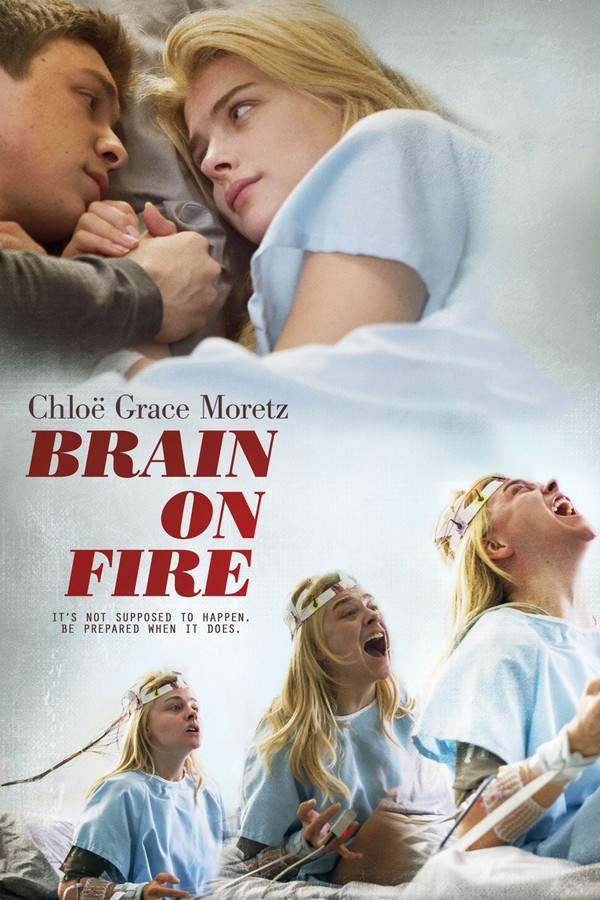
Brain on Fire (2018) movie poster

Plot Summary

Brain on Fire (2018) Plot Summary Explained

Release, runtime and language
2018 · 88 min · English
Echo score 50
Loading streaming availability…
Starring
Carrie-Anne Moss, Navid Negahban, Chloë Grace Moretz, Jenny Slate, Richard Armitage, Thomas Mann

A promising journalist's life unravels as she experiences increasingly disturbing symptoms, including voices and seizures. Her condition rapidly worsens, leading to erratic behavior and periods of near-silence. Desperate for answers, she seeks medical help, and a doctor's insight ultimately reveals the underlying cause of her terrifying ordeal, offering a chance to rebuild her life.

On this page (5)
  1. 1 Where to watch
  2. 2 What happens: full plot
  3. 3 Plot questions answered
  4. 4 Movie threads
  5. 5 Every angle
Loading streaming availability…

Full plot summary · contains spoilers

What Happens in Brain on Fire: Full Plot Summary

The whole story of Brain on Fire (2018) explained, from the opening scene to the final frame: every key event, every twist and what it all adds up to. Read it as a quick recap before the sequel, to check a scene you missed, or to finally understand what really happened.

Twenty-one-year-old Susannah Cahalan is an acclaimed writer for The New York Post, sharing her life with her new boyfriend, Stephen Grywalski. Suddenly, Susannah falls ill, beginning with symptoms akin to an ordinary flu, such as a persistent cough and overwhelming fatigue. However, her condition takes a bizarre turn as she exhibits peculiar behaviors during trance-like states, including hearing voices that aren't spoken and an aversion to loud sounds.

As her erratic conduct intensifies, a seizure prompts her to seek medical assistance. The attending doctor dismisses her symptoms as mere exhaustion from partying too much and overworking. To find respite, Susannah moves in with her mother, Rhona Nack. Following an emotional breakdown, she suffers another seizure, leading to her admission into a medical facility for an MRI. In her mind, she grapples with the possibility of having bipolar disorder due to her drastic mood swings.

Caring for Susannah proves challenging for Rhona, eventually leading her to reside with her father, Tom Cahalan, and his fiancée. One fateful dinner escalates into violence during one of Susannah’s outbursts, which prompts her parents to insist on hospitalization despite normal results from various tests including MRI and EEG. Within the hospital, one doctor proposes the unsettling possibility of schizophrenia, warning that if Susannah's condition does not improve, she may need to be moved to a psychiatric unit.

As time passes, Susannah’s condition deteriorates to a catatonic state, prompting her parents to enlist the help of Dr. Najjar, who undertakes an investigation into Susannah's case. In a pivotal moment, he asks her to draw a clock; the result is alarming as all numbers are situated on one side, suggesting swelling in the right hemisphere of her brain. A brain biopsy is undertaken, and the results reveal a rare condition known as anti-NMDA receptor encephalitis—an inflammation of the brain that Dr. Najjar poignantly describes as “a brain on fire.” With this diagnosis, he commences treatment that facilitates her gradual but full recovery.

Fast forward seven months, Susannah triumphantly returns to her job and presents her first article since regaining her health to her boss, Richard. The article garners praise, leading him to encourage her to pen a memoir about her harrowing experiences, which she aptly names Brain on Fire. The film concludes with the impactful text that Susannah Cahalan was the 217th individual to receive a diagnosis of anti-NMDA receptor encephalitis; her memoir has since illuminated the paths for many others, resulting in thousands being diagnosed and treated subsequently. Today, she maintains a close friendship with Dr. Najjar, a testament to their journey together.

Last updated: November 16, 2024 at 12:03

Was this helpful?

Plot questions answered

Brain on Fire Plot Explained: Your Questions Answered

The questions people ask most about Brain on Fire (2018): what happens in the confusing scenes, why the characters do what they do, the twists, hidden details and what the ending means. Each answer contains spoilers.

Q1

Why did doctors initially dismiss Susannah's symptoms?

Doctors dismissed Susannah's symptoms as exhaustion from overworking and partying too much because initial tests showed no abnormalities. Her MRI and EEG results came back normal, leading physicians to attribute her strange behaviors to stress, drug use, or mental illness rather than a neurological condition.

Foreshadowing: Early in the film, Susannah's boss comments on her intense work schedule, establishing that those around her believed she was simply overworking herself.

  • misdiagnosis
  • doctors
  • exhaustion
  • tests
  • medical
Q2

What is anti-NMDA receptor encephalitis?

Anti-NMDA receptor encephalitis is a rare autoimmune condition where the body's immune system attacks NMDA receptors in the brain, causing inflammation. Dr. Najjar describes it as 'a brain on fire' because the inflammation leads to the psychiatric and physical symptoms Susannah experienced, including seizures, psychosis, and catatonia.

  • anti-nmda
  • encephalitis
  • autoimmune
  • brain
  • inflammation
Q3

How did the clock-drawing test reveal Susannah's condition?

Dr. Najjar asked Susannah to draw a clock, and she placed all the numbers on one side of the circle. This abnormal result indicated swelling in the right hemisphere of her brain, suggesting a neurological cause rather than a psychiatric one.

Foreshadowing: Earlier, Susannah's strange behaviors and sensory sensitivities had been dismissed as psychological issues, making this test a crucial turning point in her diagnosis.

  • clock test
  • brain swelling
  • dr najjar
  • diagnosis
Q4

Why was Susannah misdiagnosed with schizophrenia?

Susannah was suspected to have schizophrenia because her symptoms included hearing voices, mood swings, erratic behavior, and psychosis, classic psychiatric manifestations of anti-NMDA receptor encephalitis. Since her MRI and EEG tests appeared normal, doctors assumed her condition was psychiatric rather than neurological.

Foreshadowing: Susannah herself wonders if she has bipolar disorder due to her extreme mood swings, showing how the symptoms mimicked mental illness.

  • schizophrenia
  • misdiagnosis
  • psychosis
  • mental health
Q5

What caused Susannah's strange behaviors and voices?

Susannah's strange behaviors, including trance-like states, hearing voices that weren't spoken, aversion to loud sounds, and violent outbursts, were caused by anti-NMDA receptor encephalitis. The inflammation in her brain affected her neurological function, producing symptoms that appeared psychiatric but had a physical root.

Foreshadowing: Her initial symptoms began with a persistent cough and fatigue, resembling the flu before escalating to unexplained neurological disturbances.

  • voices
  • behaviors
  • seizures
  • inflammation
  • symptoms
Q6

Why did Susannah have violent outbursts?

Susannah's violent outbursts, including the one during dinner that escalated to violence, were symptoms of her anti-NMDA receptor encephalitis. The inflammation in her brain affected her impulse control and emotional regulation, causing sudden aggressive behavior that was out of character.

Foreshadowing: Her parents had already noticed her erratic conduct intensifying, and her mother struggled to care for her as her condition deteriorated.

  • violence
  • outbursts
  • aggression
  • impulse control
Q7

Why was it so difficult to diagnose Susannah's condition?

Diagnosis was difficult because standard tests like MRI and EEG appeared normal, and the symptoms closely mimicked psychiatric disorders. Anti-NMDA receptor encephalitis was not widely known at the time, and only a brain biopsy could confirm the diagnosis by revealing the inflammation and anti-NMDA antibodies.

Foreshadowing: The film shows repeated tests coming back normal, creating frustration for her family and leading doctors down the wrong diagnostic path.

  • diagnosis
  • tests
  • biopsy
  • medical mystery
  • doctors
Q8

How did Susannah recover from her condition?

After Dr. Najjar correctly diagnosed anti-NMDA receptor encephalitis through a brain biopsy, he began immune therapy treatment. This targeted the underlying autoimmune condition, reducing the brain inflammation and allowing Susannah to gradually recover her physical and mental faculties.

  • recovery
  • treatment
  • immune therapy
  • dr najjar
Q9

Why did Susannah go into a catatonic state?

Susannah's condition deteriorated to a catatonic state as the inflammation from anti-NMDA receptor encephalitis spread across her brain. This severe neurological decline left her nearly unresponsive, marking the lowest point of her illness before Dr. Najjar's intervention.

Foreshadowing: Her condition had been progressively worsening despite various treatments, with each seizure and outbreak taking a greater toll on her neurological function.

  • catatonia
  • unresponsive
  • worsening
  • brain function
Q10

What was the impact of Susannah's memoir?

Susannah's memoir 'Brain on Fire' became instrumental in raising awareness of anti-NMDA receptor encephalitis. After being the 217th person diagnosed, her story helped thousands of others receive proper diagnosis and treatment, transforming a personal medical mystery into a resource for future patients.

  • memoir
  • awareness
  • diagnosis
  • impact
  • book
Q11

How long did Susannah's recovery take?

Susannah's recovery took seven months after starting treatment for anti-NMDA receptor encephalitis. During this time, she underwent immune therapy to combat the inflammation, gradually regaining her cognitive and physical abilities until she could return to work.

  • recovery
  • seven months
  • treatment
  • time
Q12

Why was Stephen not more involved in Susannah's care?

Stephen, Susannah's boyfriend, is largely absent from the narrative during her illness. While the film establishes him early on, her parents take over her care as her condition deteriorates, and the focus remains on her medical journey rather than the romantic relationship.

  • stephen
  • boyfriend
  • family
  • care

Movie threads

More Movies Like Brain on Fire, by Mood & Story

Curated lists built around what makes Brain on Fire tick: the same mood, the same kind of story or the same emotional payoff. Each list explains why these movies belong together.

Medical mystery thrillers like Brain on Fire

True stories of baffling illnesses and the desperate fight for a correct diagnosis. If you liked the tense and frightening journey of Brain on Fire, explore these movies about real-life diagnostic odysseys. These films feature baffling medical conditions, desperate searches for answers, and stories of resilience and survival against all odds.

  • anxious
  • frightening
  • desperate
  • triumphant
  • hopeful
  • suspenseful
  • Tone: tense, desperate, triumphant
  • Pacing: fast, urgent
Why these movies?

The story pattern: These narratives typically follow a linear, urgent descent into a health crisis, characterized by escalating symptoms and repeated misdiagnoses. The core conflict is against a misunderstood illness and a sometimes-failing medical system, building towards a pivotal breakthrough that offers a path to recovery.

Why they belong together: These movies are grouped by their shared focus on the terrifying experience of a mysterious illness, the emotional weight of the diagnostic process, and the ultimately hopeful resolution that comes from scientific or human perseverance.

Movies about psychological descent and recovery like Brain on Fire

Intense journeys into mental collapse followed by a hard-won path to recovery. For viewers who appreciated the intense psychological journey in Brain on Fire, this collection features stories of mental collapse and recovery. These films explore the frightening loss of sanity and the resilient fight to reclaim one's mind and life.

  • claustrophobic
  • frightening
  • desperate
  • triumphant
  • hopeful
  • unsettling
  • Tone: frightening, claustrophobic, hopeful
  • Pacing: fast-paced decline, steady recovery
Why these movies?

The story pattern: The narrative arc follows a character's rapid decline into a fractured mental state, often manifesting through disturbing perceptions and behavior. The journey is internal and isolating, creating a sense of claustrophobia, before a turning point—often an external intervention—leads to a gradual and hopeful process of rebuilding.

Why they belong together: They are united by a specific emotional mix: high-intensity fear and anxiety during the descent, paired with a profound sense of relief and hope during the recovery. The pacing is often urgent, mirroring the rapid onset of the crisis.

Every angle

Brain on Fire (2018) Explained: Plot, Timeline & Characters

Everything about Brain on Fire in one place: what happens in the plot summary, the timeline in chronological order, the characters and meaning and a spoiler-free summary. What's After the Movie adds the cast, box office and post-credit scenes.

Coming soon on iOS and Android

The Plot Explained Movie Summary App

Plot summaries, endings explained and timelines on your phone. Catch up on any movie in minutes, save your favorites and never miss a twist again.

Be the first to know when we launch. Your email stays private, always.

Learn more about the app