Plot Explained Spoilers guaranteed!
Plot Explained

Browse by genre

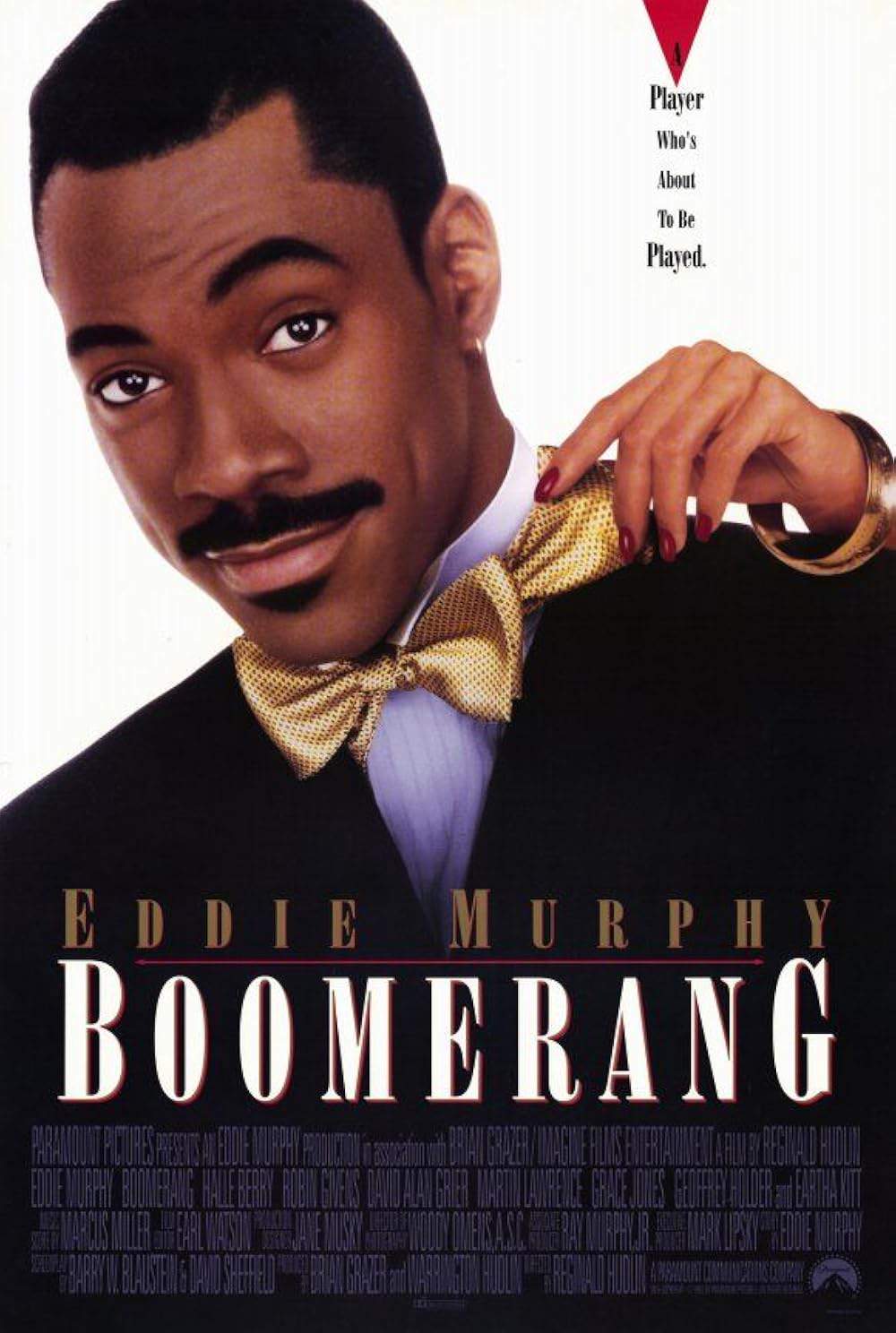
Boomerang (1992) movie poster

Plot Summary

Boomerang (1992) Plot Summary Explained

Release, runtime and language
1992 · 117 min · Malayalam
JustWatch #16,908 11
Directed by
Reginald Hudlin
Starring
Eddie Murphy
Budget
$42M

This romantic comedy follows a group of friends as they deal with the ups and downs of relationships and the challenges of everyday life. Expect plenty of laughs as they navigate the complexities of love and friendship, all brought to life by a talented ensemble cast.

On this page (6)
  1. 1 Where to watch
  2. 2 What happens: full plot
  3. 3 Plot questions answered
  4. 4 Movie threads
  5. 5 Movies like Boomerang
  6. 6 Every angle

Where to watch

Where to Watch Boomerang (1992)

Where can you watch Boomerang? Stream, rent or buy it in the US, including on fuboTV, MGM Plus and Paramount Plus Essential: current JustWatch availability with up-to-date prices.

Streaming availability powered by JustWatch

Full plot summary · contains spoilers

What Happens in Boomerang: Full Plot Summary

The whole story of Boomerang (1992) explained, from the opening scene to the final frame: every key event, every twist and what it all adds up to. Read it as a quick recap before the sequel, to check a scene you missed, or to finally understand what really happened.

Marcus Graham is an advertising executive who lives by a sharp wit and a sharper charm, perfectly happy to chase flirtations without committing to anything lasting. A notorious serial womanizer, he prides himself on his ability to read people and his knack for using flirtation as a game, often judging would‑be partners by trivial traits—like the shoes they wear. His friends, Tyler and Gerard, gently rib him that his standards are impossible and his tactics are getting tired, but Marcus isn’t looking for “perfect” so much as entertaining conquest.

Everything changes when his company is bought by the cosmetics mogul Lady Eloise, a powerful and alluring figure who invites him into her world with a tempting mix of flirtation and power. He spends a night with Eloise, hoping for a promotion in the wake of the deal, only to wake to new professional realities and a different kind of challenge. The very next day, he meets Jacqueline Broyer, a poised and capable woman who has been installed as the head of his department, shifting the dynamic at work in unexpected ways. At a merger party, the company’s new public image is showcased by the unpredictable fashion icon Helen Strangé, while Marcus is introduced to Jacqueline’s colleague Angela Lewis, a bright, easygoing presence who quickly becomes a friend—one Marcus even tries to pair off with Gerard, only to watch them realize they click better as companions.

Despite his best efforts to stay in control, Marcus finds himself unable to charm Jacqueline in the way he usually does. Over a dinner at his apartment, her attention keeps drifting to a basketball game on TV, leaving him frustrated and unused to being ignored. A business trip to New Orleans changes the dynamic again: Jacqueline unexpectedly invites him into her room, and they share a night of passion. Afterward, Marcus discovers that her standards—in his eyes—are finally met, and a different kind of hope begins to bloom.

As Marcus begins to fall for her, he discovers a difficult pattern: Jacqueline uses the very power of sex to keep him at arm’s length, and he finds his feelings tangled in a game where she ignores his emotions and sets terms that leave him on the outside. When he learns she has boasted about their encounters to Strangé, who had shown him interest, Marcus confronts Jacqueline, triggering a chain reaction that ends their affair and shatters his work momentum. The fallout includes office gossip and a near‑disastrous business proposal, forcing Jacqueline to mete out a consequence—several paid weeks off instead of firing him.

During this downturn, Marcus spends time with Angela Lewis, who offers warmth and insight that help pull him out of his funk. They bond over small, shared moments—late‑night reruns of Star Trek becoming a shared sanctuary for two people trying to understand what they want from life and love. Thanksgiving becomes a turning point: Marcus hosts a dinner with Tyler and Gerard, whose tactless parents complicate the gathering, and that evening marks a turning point as Marcus and Angela sleep together. They even consider a future together, moving in as a couple, and Marcus notices how his confidence is returning. Yet when he speaks with Jacqueline on the phone and downplays his growing connection to Angela, Angela feels the sting of his vagueness and the relationship strains begin to reemerge.

As Marcus rebuilds his self‑assurance, Jacqueline again becomes a tempting option for him, and soon they are together once more. But the true test comes when Angela learns that Marcus is torn between two relationships and he can’t fully commit to either. He and Angela are pulled apart by his confusion, and she ultimately leaves him after accepting a promotion elsewhere. In a hopeful twist, Marcus rekindles with Jacqueline briefly, only to realize that his heart truly lies with Angela. He returns to Gerard, reconciles with him, and seeks out Angela at her new job, where he delivers a heartfelt declaration of commitment. The reunion is earned, not given, and the two decide to rebuild their relationship on a foundation of honesty and mutual respect.

In the end, the story circles back to a simpler truth: love isn’t about flawless perfection or clever games, but about choosing someone who makes you want to be a better version of yourself. Marcus’s journey from self‑satisfied playboy to a partner who values trust and dedication is braided with humor, missteps, and moments of genuine connection. The film closes on a note of reconciliation and renewed possibility, with Marcus and Angela stepping toward a future that looks more grounded—and more hopeful—than any of his prior flirtations.
Last updated: October 09, 2025 at 15:38

Was this helpful?

Plot questions answered

Boomerang Plot Explained: Your Questions Answered

The questions people ask most about Boomerang (1992): what happens in the confusing scenes, why the characters do what they do, the twists, hidden details and what the ending means. Each answer contains spoilers.

Q1

Why is Marcus so obsessed with women's feet and shoes?

Marcus uses superficial standards like shoes as a way to objectify women and maintain emotional distance. His obsession with whether a woman's feet meet his criteria is a mechanism to justify his shallow approach to dating, it allows him to reduce women to physical traits and avoid genuine emotional connection. This behavior establishes his initial character as a serial womanizer who judges potential partners by trivial details rather than their personality or character.

Foreshadowing: His standards become ironic later when he falls for Jacqueline after believing her feet meet his criteria, only to discover she uses his superficial standards against him.

  • marcus graham
  • shoes
  • feet
  • superficial standards
  • womanizer
  • judgment criteria
Q2

What happens between Marcus and Lady Eloise?

After Eloise's company acquires Marcus's agency, she invites him to her home with clear romantic intentions. Marcus interprets the encounter as a potential promotion opportunity, but discovers the next day that his professional circumstances have changed in unexpected ways. The night with Eloise serves as foreshadowing of the power dynamics he will face, where women use their positions of authority in his romantic life.

Foreshadowing: This encounter establishes the pattern where Marcus misreads women's intentions and assumes sex equals professional favor.

  • lady eloise
  • acquisition
  • promotion
  • power dynamics
  • seduction
Q3

Why does Jacqueline ignore Marcus at his apartment?

Jacqueline deliberately focuses on the basketball game to demonstrate that she will not play by Marcus's usual rules. Unlike the women he typically pursues, she refuses to be charmed or manipulated by his flirtation. Her disinterest is a power move, she recognizes his game and chooses not to engage with it, which is precisely what makes her intriguing to Marcus and different from his usual conquests.

Foreshadowing: This rejection sets up their later dynamics where Jacqueline maintains control by giving and withdrawing attention as she chooses.

  • jacqueline broyer
  • rejection
  • basketball game
  • power dynamics
  • control
Q4

What happens in New Orleans between Marcus and Jacqueline?

During a business trip, Jacqueline unexpectedly invites Marcus into her room, and they have sex. Afterward, Marcus feels validated because he believes her feet finally meet his superficial standards. This encounter deepens his infatuation and convinces him he has 'won' her over, but it also marks the beginning of her manipulation, she uses intimacy to keep him emotionally invested while maintaining control over the relationship's terms.

Foreshadowing: Marcus's belief that he has met her standards becomes ironic when he discovers she has been using their intimacy as gossip with Helen Strangé.

  • new orleans
  • business trip
  • intimacy
  • manipulation
  • standards
Q5

How does Jacqueline manipulate Marcus throughout their relationship?

Jacqueline uses sex as a tool to keep Marcus at arm's length while simultaneously demanding emotional investment from him. She ignores his feelings, sets terms that leave him on the outside, and boasts about their encounters to Helen Strangé, who had shown interest in Marcus, to maintain power over both men. When Marcus confronts her about the manipulation, it triggers the end of their affair and professional complications.

Foreshadowing: This manipulation pattern directly leads to Marcus's forced leave and forces him to confront whether his shallow approach to relationships has been mirrored back at him.

  • jacqueline broyer
  • manipulation
  • power
  • sex as tool
  • control
  • helen strangé
Q6

Why does Marcus get forced leave instead of being fired?

After his confrontation with Jacqueline about her manipulation, Marcus's personal drama nearly ruins a major business proposal. Rather than firing him, the company gives him several paid weeks off as a consequence. This decision reflects that his workplace value still exists but his personal upheaval has become too disruptive. The forced leave serves as a wake-up call about how his romantic life is affecting his professional reputation.

Foreshadowing: This downtime gives Marcus the opportunity to bond with Angela and begin his transformation.

  • forced leave
  • business proposal
  • consequences
  • professional fallout
Q7

How do Marcus and Angela bond over Star Trek?

During Marcus's downtime after his forced leave, Angela spends time with him to help pull him out of his emotional funk. They develop a routine of watching late-night Star Trek reruns together, which becomes a shared sanctuary. These quiet moments of connection, unlike Marcus's typical transactional encounters, allow genuine emotional intimacy to develop, marking the beginning of his authentic feelings for someone.

Foreshadowing: This bonding represents the opposite of Marcus's usual superficial connections and sets the foundation for his eventual choice between shallow conquest and genuine love.

  • angela lewis
  • star trek
  • bonding
  • emotional connection
  • late night
Q8

Why does Angela leave Marcus at the end?

Angela leaves after learning Marcus is torn between two relationships and cannot commit fully to either. When Marcus admits his confusion about his feelings for both Jacqueline and Angela, she recognizes he has not genuinely changed from his womanizing ways. She accepts a promotion at another company and moves away, ending their relationship. This departure forces Marcus to confront what he truly wants and whether he can move beyond his patterns.

Foreshadowing: Her departure becomes the catalyst for Marcus's final realization that he loves Angela, not Jacqueline.

  • angela lewis
  • breakup
  • promotion
  • commitment
  • confusion
  • final choice
Q9

Why does Marcus choose Angela over Jacqueline in the end?

After rebounding with Jacqueline following Angela's departure, Marcus realizes his true feelings lie with Angela. Unlike Jacqueline, who used intimacy as power and manipulation, Angela offered genuine emotional connection through acceptance and patience. The contrast between Jacqueline's control and Angela's warmth helps Marcus recognize that love is about choosing someone who makes him want to be better, not someone who feeds his superficial games.

Foreshadowing: This realization completes Marcus's character arc from self-satisfied playboy to someone who values honest commitment.

  • marcus graham
  • angela lewis
  • jacqueline broyer
  • choice
  • love
  • commitment
  • character arc
Q10

How does Marcus change throughout the movie?

Marcus transforms from a serial womanizer who judges women by trivial traits like shoes into a man who values genuine emotional connection. His journey involves learning that his shallow standards and conquest-based approach to relationships left him emotionally empty. Through his relationships with both Jacqueline and Angela, he discovers that real love requires honesty, vulnerability, and choosing someone who makes him want to be a better person, not someone who meets arbitrary physical criteria.

Foreshadowing: The film circles back to show that his initial obsession with perfection was never about love but about avoiding genuine connection.

  • transformation
  • character arc
  • womanizer
  • growth
  • self-improvement
  • commitment

Movie threads

More Movies Like Boomerang, by Mood & Story

Curated lists built around what makes Boomerang tick: the same mood, the same kind of story or the same emotional payoff. Each list explains why these movies belong together.

Playful romantic reckonings like in Boomerang

Charming comedies where commitment-phobes get a taste of their own medicine. If you enjoyed Boomerang, you'll love these movies where charming characters learn tough love lessons. This collection features witty romantic comedies with a similar feel—movies like Boomerang that explore personal growth, the battle of the sexes, and finding true connection through humor and playful romantic challenges.

  • funny
  • charming
  • playful
  • hopeful
  • lighthearted
  • romantic
  • Tone: light, humorous, charming
  • Pacing: steady, conversational
Why these movies?

The story pattern: The narrative follows a confident, often smug protagonist who excels at superficial romance but is ultimately challenged by someone who turns their own game against them. The story unfolds through a series of humorous misunderstandings and romantic foibles, leading to a crisis that forces genuine introspection and a change of heart, culminating in a happy, earned reconciliation.

Why they belong together: These films are grouped by their shared light tone, medium intensity from interpersonal conflict, and a steady pacing that balances humor with character development. They all center on the satisfying arc of a character being humorously forced to mature, making the romantic payoff feel both joyful and deserved.

Ensemble dating chronicles like in Boomerang

Witty stories following a group of friends navigating the modern dating world. Fans of Boomerang will appreciate these similar ensemble-driven romantic comedies. Discover movies like Boomerang that capture the vibe of friends navigating workplace romance, dating highs and lows, and the challenges of commitment, all with a lighthearted and humorous touch.

  • funny
  • reflective
  • lighthearted
  • playful
  • hopeful
  • ensemble
  • Tone: lighthearted, reflective, playful
  • Pacing: steady, episodic
Why these movies?

The story pattern: The plot interweaves the romantic pursuits of multiple characters within a central friend group. The narrative structure uses the friends as a sounding board, providing comic relief and contrasting perspectives on love and relationships. The story moves through various dating scenarios and misunderstandings, reinforcing the importance of friendship as a foundation for navigating life's romantic entanglements.

Why they belong together: These movies share a specific vibe defined by an ensemble cast, a steady pacing that explores different relationship dynamics, and a light emotional weight. The grouping emphasizes the blend of romantic plot with the supportive (and often hilariously opinionated) context of friendship, creating a uniquely social and entertaining experience.

If you liked this

Movies Like Boomerang

Similar movies to Boomerang: the same genre, themes or kind of story. Each one comes with its own plot summary, timeline and ending explained.

Browse all movie summaries

Every angle

Boomerang (1992) Explained: Plot, Timeline & Characters

Everything about Boomerang in one place: what happens in the plot summary, the timeline in chronological order, the characters and meaning and a spoiler-free summary. What's After the Movie adds the cast, box office and post-credit scenes.

Coming soon on iOS and Android

The Plot Explained Movie Summary App

Plot summaries, endings explained and timelines on your phone. Catch up on any movie in minutes, save your favorites and never miss a twist again.

Be the first to know when we launch. Your email stays private, always.

Learn more about the app