














Plot Explained Spoilers guaranteed!
Plot Explained

Browse by genre

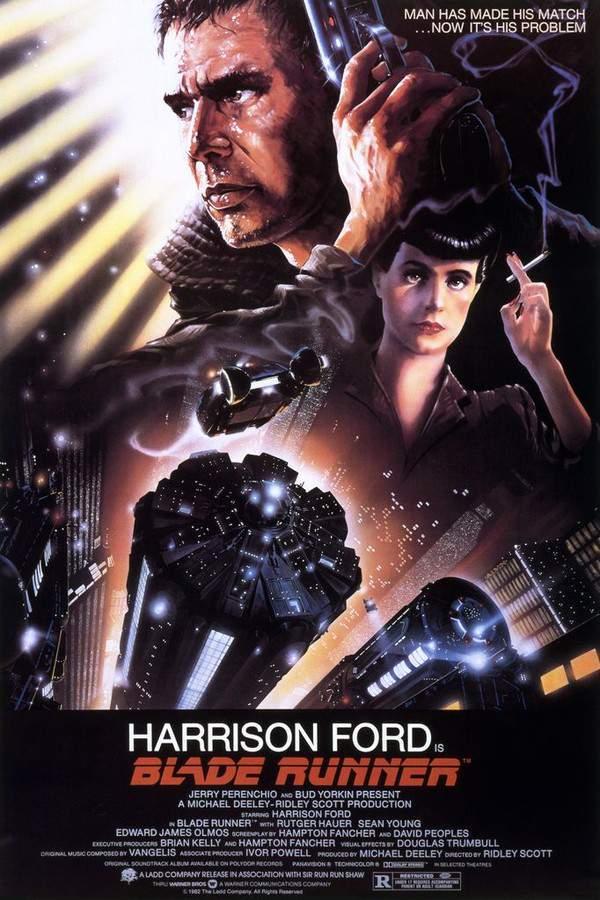
Blade Runner 2049 (2017) movie poster

Timeline

Blade Runner 2049 (2017) Timeline Explained – Every Event in Order

Release, runtime and language
2017 · 164 min · English
Echo score 83
JustWatch #85 1
Directed by
Denis Villeneuve
Starring
David Dastmalchian, Dave Bautista, Jared Leto, Robin Wright, Edward James Olmos, Harrison Ford
Budget
$150M

In a decaying Los Angeles of the future, Officer K, a blade runner himself, unearths a secret that could shatter the delicate balance of their world. His investigation leads him on a dangerous journey to find Rick Deckard, a legendary former blade runner who disappeared thirty years prior. As K delves deeper, he uncovers disturbing truths about the origins of replicants and the nature of his own existence, forcing him to confront difficult questions about identity and reality.

On this page (6)
  1. 1 Where to watch
  2. 2 Events in order (14)
  3. 3 Timeline questions answered
  4. 4 Movie threads
  5. 5 Movies like Blade Runner 2049
  6. 6 Every angle

Where to watch

Where to Watch Blade Runner 2049 (2017)

Where can you watch Blade Runner 2049? Stream, rent or buy it in the US, including on Amazon Prime Video, fuboTV and Paramount Plus Essential: current JustWatch availability with up-to-date prices.

Streaming availability powered by JustWatch

14 events in order · contains spoilers

Blade Runner 2049 Timeline: Events in Chronological Order

Every key event of Blade Runner 2049 (2017) in order, scene by scene, with when and where it takes place. Use it to untangle flashbacks, time jumps and parallel storylines, to refresh your memory before the sequel or to find the exact scene you are thinking of.

  1. Introduction to Replicants

    In the year 2049, Replicants, bioengineered humans created by the Tyrell Corporation, are integrated into society as servants and slaves. This integration follows violent rebellions that led to a ban on their production and the eventual downfall of Tyrell.

    When
    2049
  2. The Rise of Niander Wallace

    In the mid-2020s, Niander Wallace acquires the remnants of the Tyrell Corporation and transforms synthetic farming to address a global food crisis. His introduction of a new line of obedient Replicants reflects a new era of controlled bioengineered beings after the chaos caused by older models.

    When
    mid-2020s
  3. Introduction of K and Joi

    In California, a Blade Runner named K works for the LAPD, dedicated to retiring rogue Replicants. K shares his life with Joi, a holographic AI companion, enabling them to connect in ways that challenge the boundaries of artificial consciousness.

    Where
    California
  4. K's Rogue Replicant Assignment

    K is assigned to retire a rogue Replicant named Sapper Morton. After fulfilling his duty, K discovers a hidden box containing remains that lead to an extraordinary revelation about Replicant reproduction, fundamentally challenging known beliefs.

    Where
    Morton's farm
  5. Revelation of Rachael

    At Wallace Corporation, K learns that the remains belong to Rachael, an advanced model created by Dr. Tyrell. This connection serves as a catalyst for K’s investigation into his own existence and the implications of the Replicant child.

    Where
    Wallace Corporation Headquarters
  6. Wallace's Ambition

    Niander Wallace becomes fixated on replicant reproduction, desiring the power it could grant for colonization. He sends his enforcer Luv to capture Rachael's remains and track down the child, escalating the stakes in K's investigation.

  7. K's Reflection on His Past

    K revisits Morton's farm and is reminded of a date carved into a tree, which links back to memories of a wooden toy horse. This moment deepens K's existential crisis about his own identity and the nature of his existence.

    Where
    Morton's farm
  8. Mystery of the Twins

    Following the clues related to Rachael's progeny, K uncovers records that suggest a deeper mystery surrounding his own identity. He grapples with the possibility that he might be the child in question, further complicating his quest for self-understanding.

  9. K's Commitment to Joi

    To elude the LAPD's scrutiny, K transfers Joi to a mobile emitter to accompany him freely. Their bond is tested as Joi’s desire to enhance K's experience ironically places them in jeopardy within Wallace's plans.

  10. Encounter with Deckard

    K travels to the ruins of Las Vegas, where he finally encounters Rick Deckard. Their initial confrontation transitions into collaboration as Deckard reveals crucial information about Rachael's child, solidifying their bond against a common enemy.

    Where
    Las Vegas
  11. Luv's Assault

    As Luv relentlessly pursues Deckard, K finds himself enveloped in a series of destructive encounters. The situation escalates to a tragic culmination when Joi is killed during Luv's stabbing attack, marking a pivotal moment in K's journey.

  12. Replicant Freedom Movement

    In the midst of chaos, the Replicant freedom movement intervenes, providing K with an opportunity to embrace his identity. This newfound sense of purpose is integral as K prepares to protect Deckard and his family.

  13. Final Conflict

    In a climactic battle against overwhelming odds, K fights to ensure Deckard's safety. His determination exemplifies his growth and the culmination of self-discovery as he acts against the violence threatening their survival.

  14. K's Last Moments

    In the poignant final act, K confronts his existence and the significance of identity in a world that often views him as mere machinery. He finds peace in his last moments under the vast sky, satisfied with the connection he has facilitated between Deckard and his daughter.

Last updated: November 15, 2024 at 17:56

Was this helpful?

Timeline questions answered

Blade Runner 2049 Timeline Explained: Your Questions Answered

When does it happen, and why in that order? The questions people ask about the chronology of Blade Runner 2049 (2017): time jumps, flashbacks, cause and effect between scenes and the correct order of events, each answered with spoilers.

Q1

Why does K lie to Lieutenant Joshi about destroying the replicant child's remains?

K lies because discovering the truth about Replicant reproduction has fundamentally changed him. When forensic tests confirm the female Replicant died during a cesarean section, K realizes this proves Replicants can reproduce, a revelation that could shatter the social order. Rather than destroy this evidence, he feels compelled to investigate further, driven by a growing sense that his own existence might be connected to this miracle.

Foreshadowing: Earlier scenes establish that K is different from other Replicants, he experiences dreams and owns a wooden horse from his supposed childhood, hinting at something unusual about his origin.

  • K lies
  • Lieutenant Joshi
  • replicant child
  • evidence
  • cover up
Q2

What is the significance of K's wooden horse memory?

The wooden horse is K's only memory of childhood, marked with the date 6-10-21. When K discovers this same date carved into a tree at Sapper Morton's farm, he realizes this memory might not be his own but could belong to the Replicant child born on that date. This triggers his existential crisis, he begins to wonder if he might actually be the child he was ordered to find and eliminate.

Foreshadowing: K's obedience tests at LAPD HQ include questions about his childhood memories, establishing early that these memories define his sense of self.

  • wooden horse
  • 6-10-21
  • K memory
  • childhood
  • date
  • tree carving
Q3

Is K the child of Rachael and Rick Deckard?

K ultimately discovers he is NOT the Replicant child. The child is revealed to be Dr. Ana Stelline, the memory architect living in isolation. However, K's journey to uncover this truth forces him to confront whether he could be the child, and in doing so, he ultimately chooses to define his own identity through his actions rather than his origin. His sacrifice proves he possesses something more than programming.

Foreshadowing: The timeline reveals records of twins born on 6-10-21, with one dying early, hinting that the surviving child was hidden away.

  • K is child
  • Rachael
  • Deckard
  • Ana Stelline
  • identity
  • truth
Q4

Why does Joi die in Blade Runner 2049?

Joi is killed by Luv during the Las Vegas confrontation. After K and Deckard escape together, Luv tracks them down and stabs Joi through the chest with a kitchen knife while K watches helplessly. Joi's death is purposeful, it represents Wallace's cruel demonstration that Replicants and their creations can be destroyed at will, and it devastates K emotionally, deepening his resolve to protect Deckard.

Foreshadowing: Wallace Corporation's dismissive treatment of Joi throughout the film, treating her as merely a consumer product, foreshadows how easily she can be destroyed.

  • Joi dies
  • Luv kills Joi
  • death
  • Wallace
  • K emotional
  • Las Vegas
Q5

What does Wallace want with replicant reproduction?

Niander Wallace wants to control Replicant reproduction because it represents unlimited slave labor for his colonization ambitions. After acquiring Tyrell Corporation, Wallace created obedient Replicants but cannot reproduce them. The ability to mass-produce Replicants without limits would give him unprecedented power to populate and exploit off-world colonies, solving his labor shortage and expanding his empire.

Foreshadowing: Wallace's introduction shows him using Replicants as servants and his corporation's focus on synthetic farming, establishing his utilitarian view of Replicants as labor.

  • Wallace wants
  • replicant reproduction
  • colonization
  • labor
  • Tyrell Corporation
  • power
Q6

Why does K help Deckard after finding him in Las Vegas?

K helps Deckard because his mission has evolved from following orders to protecting something meaningful. After learning Deckard is the father of the Replicant child, K recognizes that reuniting Deckard with his daughter represents hope for Replicantkind, proof they can love, reproduce, and have genuine identities. K chooses to sacrifice himself to ensure Deckard reaches Ana, acting from empathy and purpose rather than programming.

Foreshadowing: K's growing rebellion against authority, from lying to Joshi to breaking Joi out of the LAPD, shows his transformation from compliant Blade Runner to someone making moral choices.

  • K helps Deckard
  • Las Vegas
  • sacrifice
  • reunite
  • daughter
  • Ana Stelline
  • choice
Q7

Who is Ana Stelline in Blade Runner 2049?

Ana Stelline is the daughter of Rick Deckard and Rachael, born through the miraculous Replicant reproduction that Tyrell engineered. She was born on 6-10-21 and was hidden away from Wallace, who sought to use her for her replicant reproduction capabilities. She became a memory architect for Wallace Corporation, creating implanted memories that give Replicants fake pasts, though she secretly implants true memories that allow Replicants to feel authentically human.

Foreshadowing: Early scenes mention a missing Replicant child that both Wallace and the Replicant freedom movement seek, establishing the importance of this character's existence.

  • Ana Stelline
  • Deckard daughter
  • Rachael child
  • memory architect
  • 6-10-21
  • identity
Q8

What happened to Rachael in Blade Runner 2049?

Rachael died during an emergency cesarean section while pregnant with Deckard's child. Her remains are discovered by Sapper Morton, who hid them on his farm. Wallace Corp retrieves her body to study how she was able to reproduce, since Replicant reproduction was thought to be impossible. Rachael's death represents both the sacrifice required for Replicantkind's potential liberation and the mystery that drives the entire film's plot.

Foreshadowing: The original Blade Runner established Rachael as an experimental Replicant who didn't know she was synthetic, making her unique ability to reproduce a groundbreaking development.

  • Rachael dies
  • cesarean
  • remains
  • Sapper Morton
  • reproduction
  • Wallace Corp
Q9

Why does Luv kill Joi in Blade Runner 2049?

Luv kills Joi to inflict maximum psychological damage on K and demonstrate Wallace's dominance. As Wallace's most loyal and deadly Replicant, Luv views Joi as an abomination, a holographic product of Wallace Corp that K has 'stolen.' The murder is personal and deliberate, occurring after Luv has already wounded Deckard and gained the upper hand. It represents Wallace's message that anything created can also be destroyed.

Foreshadowing: Luv's jealousy and competition throughout the film, especially when she sees Joi with K, foreshadows her brutal act.

  • Luv kills Joi
  • why
  • jealousy
  • Wallace message
  • destroy
  • psychological
Q10

Why does K sacrifice himself at the end of Blade Runner 2049?

K sacrifices himself because protecting Deckard and ensuring Deckard reaches his daughter has become his purpose. After fighting through Luv's forces and leading Deckard to Ana's door, K is mortally wounded. Rather than seek help, he chooses to lie in the snow, at peace with his choice. His sacrifice is meaningful because he dies having proven something essential: that his identity was defined not by his origin as a Replicant, but by his actions and his capacity for love.

Foreshadowing: K's repeated reflections on what makes someone 'more human', his discussions with Joi about authenticity and memory, prepare him make this ultimate to choice.

  • K dies
  • sacrifice
  • end
  • Deckard
  • Ana Stelline
  • peace
  • identity
  • purpose

Movie threads

More Movies Like Blade Runner 2049, by Mood & Story

Curated lists built around what makes Blade Runner 2049 tick: the same mood, the same kind of story or the same emotional payoff. Each list explains why these movies belong together.

Existential Sci-Fi Noir movies like Blade Runner 2049

Future detectives uncover truths that question the nature of reality and self. If you enjoyed the philosophical depth and detective elements of Blade Runner 2049, this collection features similar movies. Discover other complex sci-fi mysteries where investigations into a dark future lead to existential questions about identity, memory, and humanity.

  • atmospheric
  • contemplative
  • existential
  • lonely
  • melancholic
  • noir
  • Tone: dark, contemplative, melancholic
  • Pacing: slow, methodical
Why these movies?

The story pattern: The narrative follows a solitary investigator, often an outsider, who is tasked with solving a specific case. As they dig deeper, the clues they uncover begin to challenge their own understanding of the world and their place in it, turning the external investigation inward. The plot typically builds towards a revelation that recontextualizes everything the protagonist believed to be true.

Why they belong together: Movies in this thread are grouped by their shared foundation in noir storytelling within a sci-fi setting, combined with a heavy focus on existential themes. They create a cohesive experience of intellectual mystery and atmospheric dread, appealing to viewers who enjoy thought-provoking, visually striking stories.
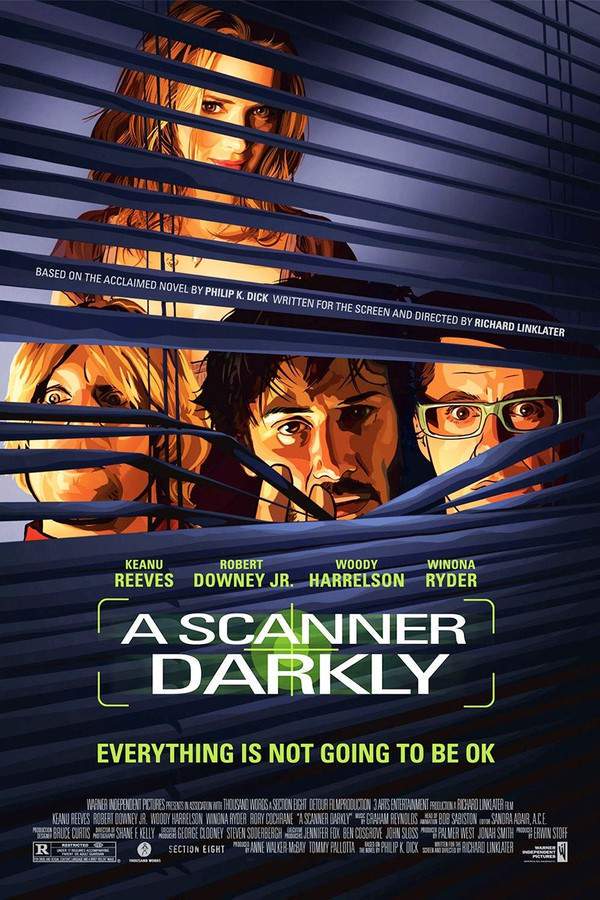
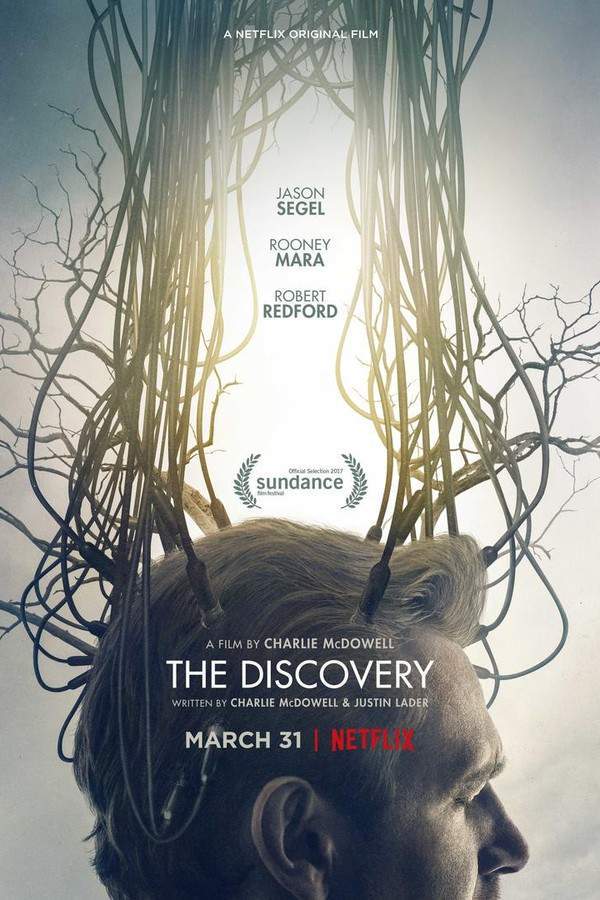
Atmospheric Slow Burn movies like Blade Runner 2049

Stories where a heavy, oppressive atmosphere slowly builds profound unease. For viewers who appreciated the immersive, melancholic pace of Blade Runner 2049, this list highlights similar slow burn films. Explore movies with a heavy, atmospheric dread, where the storytelling prioritizes mood and philosophical tension over fast-paced action, creating a deeply contemplative viewing experience.

  • atmospheric
  • bleak
  • contemplative
  • dread
  • melancholic
  • oppressive
  • Tone: bleak, melancholic, oppressive
  • Pacing: very slow, atmospheric
Why these movies?

The story pattern: The narrative unfolds patiently, often focused on a character's internal journey as much as the external plot. The story prioritizes atmosphere and thematic depth, allowing tension and sadness to accumulate organically. The climax is often quiet but emotionally devastating, stemming from a character's realization or a tragic resolution rather than a conventional action sequence.

Why they belong together: These films are united by their commitment to a slow, immersive pace and a dominant mood of contemplative dread. They share a similar emotional rhythm and visual storytelling approach, making them ideal for viewers seeking a meditative, albeit heavy, cinematic experience that lingers long after the credits roll.

If you liked this

Movies Like Blade Runner 2049

Similar movies to Blade Runner 2049: the same genre, themes or kind of story. Each one comes with its own plot summary, timeline and ending explained.

Browse all movie summaries

Every angle

Blade Runner 2049 (2017) Explained: Plot, Ending, Timeline & Characters

Everything about Blade Runner 2049 in one place: what happens in the plot summary, the timeline in chronological order, the characters and meaning, the ending explained and a spoiler-free summary. What's After the Movie adds the cast, box office and post-credit scenes.

Coming soon on iOS and Android

The Plot Explained Movie Summary App

Plot summaries, endings explained and timelines on your phone. Catch up on any movie in minutes, save your favorites and never miss a twist again.

Be the first to know when we launch. Your email stays private, always.

Learn more about the app