












Plot Explained Spoilers guaranteed!
Plot Explained

Browse by genre

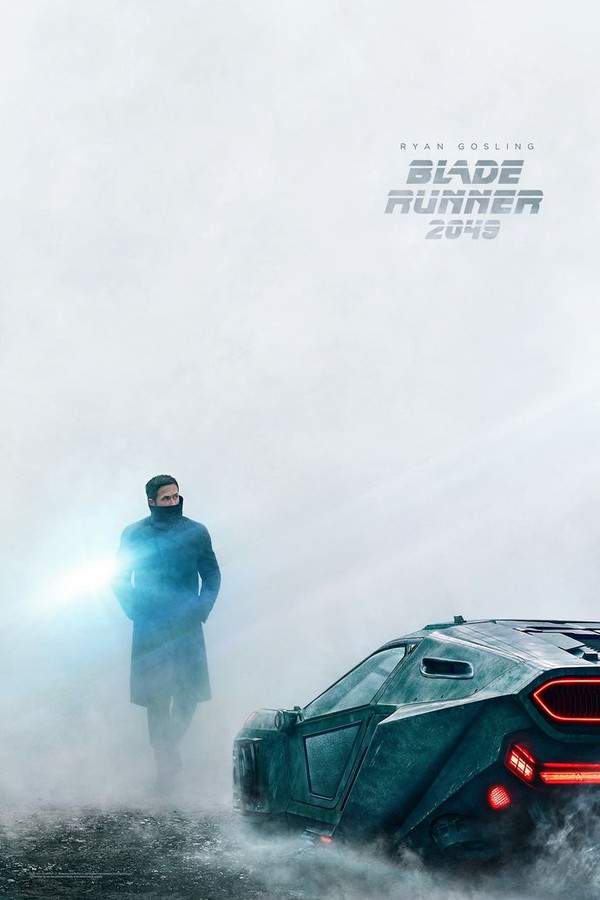
Blade Runner 2049 (2017) movie poster

Ending Explained

Blade Runner 2049 (2017) Ending Explained – Final Scene & Meaning

Release, runtime and language
2017 · 164 min · English
Echo score 83
JustWatch #66 8
Directed by
Denis Villeneuve
Starring
David Dastmalchian, Dave Bautista, Jared Leto, Robin Wright, Edward James Olmos, Harrison Ford
Budget
$150M

In a decaying Los Angeles of the future, Officer K, a blade runner himself, unearths a secret that could shatter the delicate balance of their world. His investigation leads him on a dangerous journey to find Rick Deckard, a legendary former blade runner who disappeared thirty years prior. As K delves deeper, he uncovers disturbing truths about the origins of replicants and the nature of his own existence, forcing him to confront difficult questions about identity and reality.

On this page (7)
  1. 1 Where to watch
  2. 2 What happens at the end
  3. 3 Final events in order
  4. 4 Ending questions answered
  5. 5 Movie threads
  6. 6 Movies like Blade Runner 2049
  7. 7 Every angle

Where to watch

Where to Watch Blade Runner 2049 (2017)

Where can you watch Blade Runner 2049? Stream, rent or buy it in the US, including on fuboTV, Paramount Plus Essential and Paramount Plus Premium: current JustWatch availability with up-to-date prices.

Streaming availability powered by JustWatch

Ending explained · contains spoilers

What Happens at the End of Blade Runner 2049?

How Blade Runner 2049 (2017) ends, what the final scene means, which earlier moments set it up and how to read the ending if the film leaves it open. The full ending explained, with every spoiler.

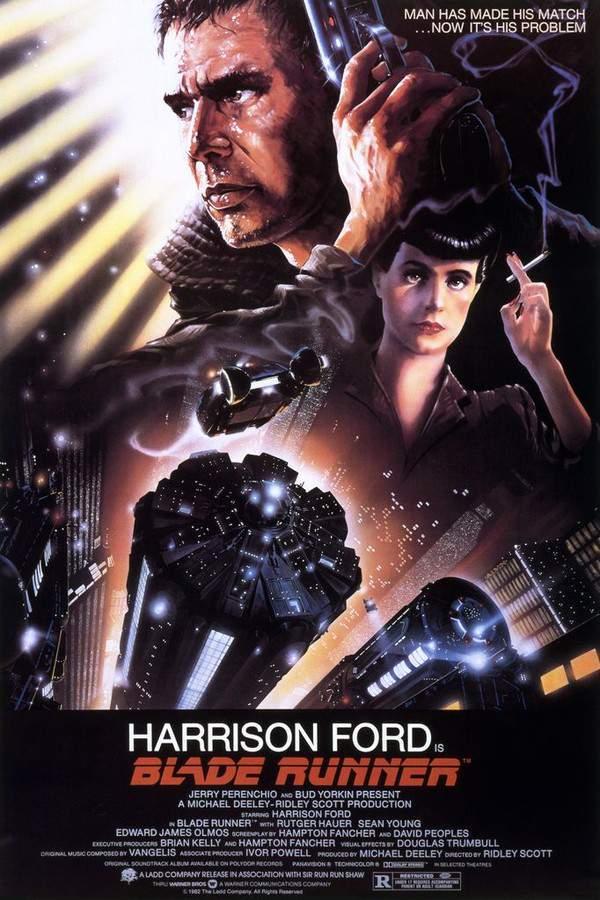
The conclusion of Blade Runner 2049 offers a poignant resolution to K's journey, one that deliberately mirrors the tragic beauty of Roy Batty’s death in the original film. After rescuing Deckard from the clutches of Niander Wallace, a mortally wounded K transports his predecessor to the one place that matters: the memory-design lab of Dr. Ana Stelline. As K lies dying on the steps outside in the falling snow, his sacrifice is underscored by the iconic Tears in Rain score, cementing his evolution from a disposable machine to a being with a soul. He dies not as a programmed hunter, but as a savior who chose his own path, finally finding peace in an act of selfless love.

K’s narrative arc is built on a crushing revelation: he is not the miracle child of Deckard and Rachael, as he had desperately hoped. He is simply a replicant who happened to carry the child’s implanted memories. While this truth initially shatters his sense of identity, his final act proves that being "special" is not about origin, but about action. By saving Deckard and reuniting him with his daughter, K validates the film's central thesis—that humanity is defined by empathy and sacrifice rather than biology. His relationship with his AI girlfriend Joi, regardless of whether it was "real" or programmed, gave him the emotional depth to make this choice, proving that he was more human than his makers.

Inside the facility, the film resolves the long-standing mystery of Deckard’s own nature. While Wallace taunts Deckard with the theory that he might be a replicant designed to fall for Rachael, the movie ultimately refuses to give a definitive answer, positing that the distinction doesn't matter. Deckard’s humanity is proven through his decades of suffering and protection for his child. The ending frees him from the shadows; presumed dead by Wallace, he is finally able to meet his daughter, Ana. This reunion signifies a victory for the replicant resistance, not through violent uprising, but through the quiet triumph of family and connection. Ultimately, Blade Runner 2049 argues that life is not born from biology or corporate design, but from the personal belief in something bigger than oneself and the capacity to love.

Last updated: March 30, 2026 at 16:17

Was this helpful?

The last 4 events

How Blade Runner 2049 Ends: The Final Events in Order

The last events of Blade Runner 2049 (2017) in chronological order, the run-up to the ending explained above. The complete timeline has all 14 events, scene by scene.

Open the full timeline
  1. Luv's Assault

    As Luv relentlessly pursues Deckard, K finds himself enveloped in a series of destructive encounters. The situation escalates to a tragic culmination when Joi is killed during Luv's stabbing attack, marking a pivotal moment in K's journey.

  2. Replicant Freedom Movement

    In the midst of chaos, the Replicant freedom movement intervenes, providing K with an opportunity to embrace his identity. This newfound sense of purpose is integral as K prepares to protect Deckard and his family.

  3. Final Conflict

    In a climactic battle against overwhelming odds, K fights to ensure Deckard's safety. His determination exemplifies his growth and the culmination of self-discovery as he acts against the violence threatening their survival.

  4. K's Last Moments

    In the poignant final act, K confronts his existence and the significance of identity in a world that often views him as mere machinery. He finds peace in his last moments under the vast sky, satisfied with the connection he has facilitated between Deckard and his daughter.

Ending questions answered

Blade Runner 2049 Ending: Your Questions Answered

The questions people ask most about the ending of Blade Runner 2049 (2017): what the final scene means, how the twist works, what happens to each character and how to read the ending. Each answer contains spoilers.

Q1

Why does Officer K die at the end of the movie

K dies from the wounds sustained during his confrontation with Luv. After rescuing Deckard from Wallace's compound, K is mortally injured but manages to transport Deckard to Dr. Ana Stelline's memory lab. Bleeding out on the steps outside in the falling snow, K's death mirrors Roy Batty's iconic death in the original film, completing his transformation from a disposable replicant hunter to a being who chose sacrifice over survival.

Foreshadowing: Earlier scenes establish that replicants can die from severe injuries, and K is severely wounded before reaching Deckard.

  • k death
  • officer k dies
  • blade runner 2049 ending
  • k sacrifice
Q2

Is Officer K the replicant child from the original film

No. K discovers he is not the miracle child. He is simply a replicant who was implanted with the child's memories as part of a cover-up. The revelation crushes his sense of identity, as he had believed he was the special child born to Deckard and Rachael.

Foreshadowing: The wooden horse K finds early in the film is revealed to be a memory from the actual child, not his own.

  • k child
  • replicant child
  • memory implant twist
  • k identity
Q3

What happens to Deckard at the end of Blade Runner 2049

Deckard is rescued by K from Niander Wallace and taken to meet his daughter, Ana Stelline, who works in the memory-design lab. Wallace presumptively believes Deckard is dead, allowing Deckard to finally live openly with his daughter. This reunion represents the quiet triumph of family over the film's otherwise bleak world.

Foreshadowing: The film plants Deckard's decades-long protection of his child as his primary motivation throughout.

  • deckard ending
  • deckard daughter
  • ana stelline
  • deckard reunion
Q4

Why does K sacrifice himself to save Deckard

K chooses to save Deckard because his relationship with Joi gave him the emotional capacity for empathy and selflessness. Despite learning he is not special, K proves that humanity is defined by actions, not origin. By rescuing Deckard and reuniting him with his daughter, K chooses love and purpose over his programmed function as a blade runner.

Foreshadowing: K's evolving relationship with Joi throughout the film shows him developing genuine emotions.

  • k sacrifice
  • why k saves deckard
  • k redemption
  • love and sacrifice
Q5

Is Deckard a replicant in the ending

The film intentionally leaves this ambiguous. Wallace argues that Deckard was designed as a replicant to love Rachael, but the movie refuses to confirm this. The ending suggests the answer doesn't matter: Deckard's humanity is proven through his decades of suffering and his willingness to protect his child, regardless of his origin.

Foreshadowing: Wallace's interrogation of Deckard raises the theory explicitly, but provides no confirmation.

  • deckard replicant
  • deckard nature
  • is deckard human
Q6

Was Joi's love for K real

Joi was an AI program, but the film suggests her love was real in the way it mattered. Joi gave K the emotional depth and sense of being special that enabled him to make his selfless choice. Whether programmed or not, the love K experienced through Joi was sufficient to transform him into a being capable of sacrifice, proving he was more human than his makers intended.

Foreshadowing: Joi's repeated phrases like 'you are special' gain deeper meaning after the revelation about K's memories.

  • joi real
  • ai girlfriend
  • joi and k
  • emotional relationship
Q7

What does the snow represent at the end of Blade Runner 2049

The snow falling on K as he dies serves as a symbol of purification and redemption. It echoes Roy Batty's final moments in the original film, suggesting K has achieved the transcendence Roy found. The white snow contrasts with the polluted, dark world, representing hope and the possibility of something pure emerging from destruction.

Foreshadowing: The original film's 'Tears in Rain' scene is directly referenced through score and imagery.

  • snow ending
  • symbolism of snow
  • redemption snow
  • k death imagery
Q8

What happens to Ana Stelline at the end

Ana Stelline is revealed to be Deckard and Rachael's daughter and the source of the implanted memories. She works in the memory-design lab where she creates real memories for replicants, something she cannot do herself due to her immune condition. At the end, she finally meets her father Deckard, and her gift becomes a symbol of hope for replicant liberation.

Foreshadowing: Ana tells K that she created a memory for someone 'special', her own father's story.

  • ana stelline ending
  • deckard daughter
  • memory creator
  • replicant hope
Q9

Does K find peace at the end

Yes. K dies at peace, having found meaning through his sacrifice. Unlike his previous existence as a blade runner hunting his own kind, his final act was one of selfless love. The iconic 'Tears in Rain' score underscores his evolution from a programmed replicant to a being with a soul, suggesting he achieved what all replicants seek: transcendence through choice.

Foreshadowing: K's earlier anxiety about whether his memories are real shows his existential struggle.

  • k peace
  • soul achievement
  • transcendence k
  • peaceful death
Q10

Why does K's death mirror Roy Batty's from the original film

K's death deliberately echoes Roy's to complete the thematic cycle. Both replicants die in the rain (or snow), both speak poetic final words, and both achieve transcendence through their final acts. Where Roy found meaning in saving Deckard, K finds meaning in reuniting Deckard with his family. The parallel argues that replicants can achieve humanity through sacrifice, vindicating their struggle for existence.

Foreshadowing: The 'Tears in Rain' score plays over K's death, directly invoking Roy's final scene.

  • roy batty parallel
  • k death roy
  • k tears in rain
  • replicant transcendence
Q11

What is the film's message about humanity at the end

The ending argues that humanity is defined by empathy and sacrifice, not biology. K, a replicant, proves more human than his makers through his selfless choice. Deckard's humanity is validated through his suffering and love for his child. Wallace's attempt to control replicant reproduction fails because life cannot be manufactured, only believed in and fought for.

Foreshadowing: Wallace's obsession with creating replicants who can reproduce contrasts with K's earned humanity.

  • humanity theme
  • what is human
  • biology vs soul
  • empathy humanity

Movie threads

More Movies Like Blade Runner 2049, by Mood & Story

Curated lists built around what makes Blade Runner 2049 tick: the same mood, the same kind of story or the same emotional payoff. Each list explains why these movies belong together.

Existential Sci-Fi Noir movies like Blade Runner 2049

Future detectives uncover truths that question the nature of reality and self. If you enjoyed the philosophical depth and detective elements of Blade Runner 2049, this collection features similar movies. Discover other complex sci-fi mysteries where investigations into a dark future lead to existential questions about identity, memory, and humanity.

  • atmospheric
  • contemplative
  • existential
  • lonely
  • melancholic
  • noir
  • Tone: dark, contemplative, melancholic
  • Pacing: slow, methodical
Why these movies?

The story pattern: The narrative follows a solitary investigator, often an outsider, who is tasked with solving a specific case. As they dig deeper, the clues they uncover begin to challenge their own understanding of the world and their place in it, turning the external investigation inward. The plot typically builds towards a revelation that recontextualizes everything the protagonist believed to be true.

Why they belong together: Movies in this thread are grouped by their shared foundation in noir storytelling within a sci-fi setting, combined with a heavy focus on existential themes. They create a cohesive experience of intellectual mystery and atmospheric dread, appealing to viewers who enjoy thought-provoking, visually striking stories.
Atmospheric Slow Burn movies like Blade Runner 2049

Stories where a heavy, oppressive atmosphere slowly builds profound unease. For viewers who appreciated the immersive, melancholic pace of Blade Runner 2049, this list highlights similar slow burn films. Explore movies with a heavy, atmospheric dread, where the storytelling prioritizes mood and philosophical tension over fast-paced action, creating a deeply contemplative viewing experience.

  • atmospheric
  • bleak
  • contemplative
  • dread
  • melancholic
  • oppressive
  • Tone: bleak, melancholic, oppressive
  • Pacing: very slow, atmospheric
Why these movies?

The story pattern: The narrative unfolds patiently, often focused on a character's internal journey as much as the external plot. The story prioritizes atmosphere and thematic depth, allowing tension and sadness to accumulate organically. The climax is often quiet but emotionally devastating, stemming from a character's realization or a tragic resolution rather than a conventional action sequence.

Why they belong together: These films are united by their commitment to a slow, immersive pace and a dominant mood of contemplative dread. They share a similar emotional rhythm and visual storytelling approach, making them ideal for viewers seeking a meditative, albeit heavy, cinematic experience that lingers long after the credits roll.

If you liked this

Movies Like Blade Runner 2049

Similar movies to Blade Runner 2049: the same genre, themes or kind of story. Each one comes with its own plot summary, timeline and ending explained.

Browse all movie summaries

Every angle

Blade Runner 2049 (2017) Explained: Plot, Ending, Timeline & Characters

Everything about Blade Runner 2049 in one place: what happens in the plot summary, the timeline in chronological order, the characters and meaning, the ending explained and a spoiler-free summary. What's After the Movie adds the cast, box office and post-credit scenes.

Coming soon on iOS and Android

The Plot Explained Movie Summary App

Plot summaries, endings explained and timelines on your phone. Catch up on any movie in minutes, save your favorites and never miss a twist again.

Be the first to know when we launch. Your email stays private, always.

Learn more about the app