Plot Explained Spoilers guaranteed!
Plot Explained

Browse by genre

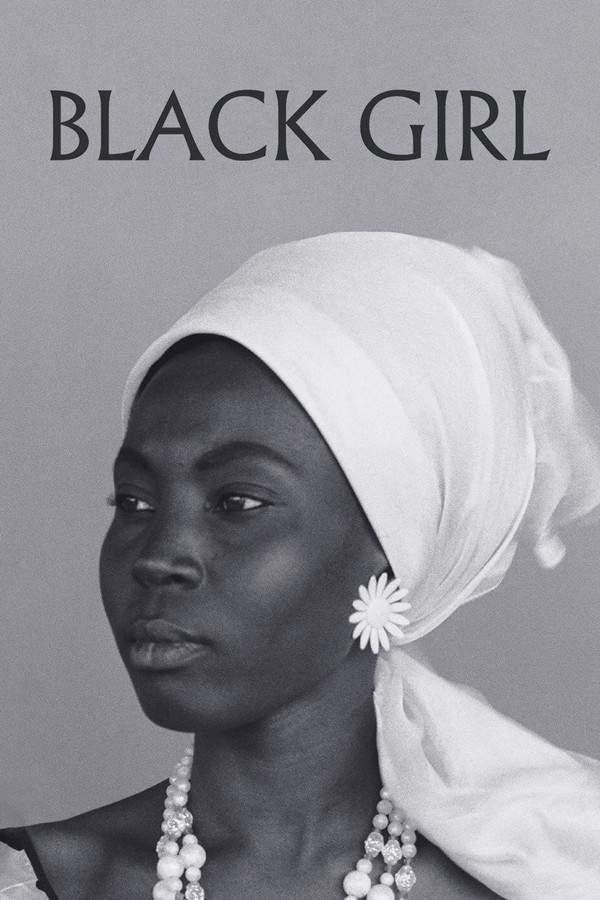
Black Girl (1966) movie poster

Characters & Themes

Black Girl (1966) Characters, Setting & Themes Explained

Release, runtime and language
1966 · 65 mins · French
Starring
Mbissine Thérèse Diop, Robert Fontaine, Sophie, Nar Sene, Ousmane Sembène, Toto Bissainthe

Eager to find a better life abroad, a Senegalese woman becomes a mere governess to a family in southern France, suffering from discrimination and marginalization.

On this page (7)
  1. 1 Characters explained (7)
  2. 2 Where & when it takes place
  3. 3 Themes & meaning (3)
  4. 4 Character & meaning questions
  5. 5 Movie threads
  6. 6 Movies like Black Girl
  7. 7 Every angle

7 main characters · contains spoilers

Black Girl Characters Explained: Who Is Who

The main characters of Black Girl (1966), heroes and villains: what drives them, how they change over the course of the story and what each of them reveals about the film's bigger ideas.

  • Diouana (Mbissine Thérèse Diop)

    From a poor Senegalese village, Diouana travels to Dakar and then to France to work as a maid. The role constrains her, subjecting her to strict schedules, humiliation, and racialized treatment by her employers. Her story culminates in a tragic act that underscores the exploitation she endures.

    • 🧭 Alienation
    • 🗝️ Oppression
    • 🏛️ Colonialism
  • Monsieur (Robert Fontaine)

    The wealthy head of the household who hires Diouana and exercises controlling power within the Parisian home. He reads aloud a letter from Diouana's mother and withholds fair compensation, illustrating the patronizing authority that governs the domestic space.

    • 💼 Wealth
    • 🔒 Control
    • 🗺️ Patronage
  • Madame (Anne-Marie Jelinek)

    The mistress who imposes strict demands and belittles Diouana, embodying the hierarchy and cruelty of the privileged class. Her treatment constrains Diouana and reinforces the power imbalance at the core of the narrative.

    • 🎭 Manipulation
    • 🔒 Control
    • 💬 Language
  • Diouana's Boyfriend (Nar Sene)

    Diouana's partner from Senegal, sharing in her hopes for a better life. Their relationship reflects the strain of separation and the tension between homeland and new environments, highlighting themes of loyalty and distance.

    • 💞 Relationships
    • 🧭 Home
    • 🌍 Migration
  • The Teacher (Ousmane Sembène)

    An on-screen figure in flashbacks that represents education and potential opportunity in Diouana's homeland. The character underscores the contrast between her past and the restricted existence she faces abroad.

    • 🏫 Education
    • 🧭 Cultural Contrast
  • Couple's Oldest Son (Philippe)

    A child of the couple whose presence underscores the household dynamic and the distance Diouana experiences from the family’s intimate world.

    • 👶 Family
    • 🧩 Privilege
  • Couple's Youngest Son (Damien)

    Another child in the Paris household; their relative innocence contrasts with the harsher realities faced by Diouana within the house.

    • 👶 Family
    • 🧩 Privilege

Last updated: October 04, 2025 at 14:11

Was this helpful?

Setting

Where and When Does Black Girl Take Place?

The setting of Black Girl (1966): the year and time period, the places and locations, and how they shape the characters, the mood and the tension of the story.

Time period

Location

Senegal (village outside Dakar), France

Diouana comes from a poor village outside Dakar and travels to Senegal's city life before moving to France to work as a maid for a wealthy couple. The French setting is a confined, upscale home where she is expected to perform rigid chores and adhere to strict rules. The contrast between outdoor life in Senegal and the enclosed, hierarchical household in France highlights the cultural and social distances she faces.

  • 🗺️ Senegal
  • 🗺️ France

Last updated: October 04, 2025 at 14:11

Was this helpful?

3 major themes

Black Girl Meaning: Themes & Message Explained

What is Black Girl (1966) really about? The emotional, social and philosophical themes the film keeps returning to, its symbolism and the message beneath the surface.

  • Power

    The film centers on a central power imbalance: a migrant worker controlled by affluent employers who dictate her daily life and wages. Diouana's autonomy is continually eroded as she is denigrated and surveilled within the domestic sphere. This theme showcases how wealth and class can weaponize authority against vulnerability.

  • Identity

    Diouana's sense of self is tested as she navigates two cultures and is reduced to a servant's role. The narrative tracks her gradual alienation from her own identity as she faces racialized judgments and a lack of freedom. The theme explores the fragility of personal identity under oppressive social structures.

  • Colonial Legacy

    The story situates personal exploitation within a broader history of colonial power dynamics that shape perceptions of Black workers. The act of gifting and displaying a mask becomes a symbol of ownership and cultural commodification. The ending hints at the return to origins as a critique of lingering colonial influence.

Last updated: October 04, 2025 at 14:11

Was this helpful?

Character & theme questions

Black Girl Characters & Meaning: Your Questions Answered

The questions people ask about Black Girl (1966): who the characters really are, their relationships, what the symbols mean, where it takes place and what the movie is really about. Each answer contains spoilers.

Q1

Where is the movie set?

The film takes place in two main locations: Diouana's home in a poor village outside Dakar, Senegal, and a wealthy household in France (Paris). The stark contrast between the open, communal life in her homeland and the confined, hierarchical domestic space of the French employer highlights the cultural and social distances she must navigate.

  • setting
  • senegal
  • france
  • dakar
  • locations
  • contrast
Q2

What time period does the film depict?

The film is set in the early 1960s, reflecting the era shortly after many African nations gained independence from colonial rule. This timing is significant as Diouana's journey from Senegal to France represents the continued economic and social dependencies that persisted even as formal colonialism ended.

  • time period
  • 1960s
  • era
  • 1960s senegal
  • post-independence
Q3

What are the main themes of the film?

The film explores three interconnected themes: Power (the imbalance between the migrant worker and her wealthy employers who control her daily life and wages), Identity (Diouana's gradual alienation from herself as she faces racialized judgments and loses autonomy), and Colonial Legacy (how personal exploitation reflects broader historical colonial power dynamics that shape perceptions of Black workers).

  • themes
  • power
  • identity
  • colonial legacy
  • alienation
  • exploitation
Q4

How does the film address colonial legacy?

The film situates Diouana's personal exploitation within the broader history of colonial power dynamics. Her journey mirrors the historical relationship between Africa and France, where Black workers are brought to serve European families. The act of gifting and displaying an African mask becomes a symbol of ownership and cultural commodification, with the ending suggesting a critique of lingering colonial influence.

  • colonialism
  • colonial legacy
  • africa france relationship
  • cultural commodification
  • post-colonial
Q5

Who is Diouana and what is her background?

Diouana is a young Senegalese woman from a poor village outside Dakar who travels to the city and then to France to work as a maid for a wealthy French couple. Born Mbissine Thérèse Diop, she represents the many African women who sought better opportunities abroad only to face exploitation and dehumanization in domestic work.

  • diouana
  • protagonist
  • senegalese woman
  • maid
  • migrant worker
Q6

Who are Diouana's employers in France?

Diouana works for a wealthy Parisian couple: Monsieur (Robert Fontaine) and Madame (Anne-Marie Jelinek). Monsieur exercises controlling power within the home, even reading aloud letters from Diouana's mother and withholding fair compensation. Madame imposes strict demands and belittles Diouana, embodying the hierarchy and cruelty of the privileged class.

  • monsieur
  • madame
  • employers
  • paris couple
  • household
Q7

What power imbalance drives the story?

The film centers on a central power imbalance: a migrant worker controlled by affluent employers who dictate her daily life, schedules, and wages. Diouana's autonomy is continually eroded as she is denigrated and surveilled within the domestic sphere. This theme showcases how wealth and class can weaponize authority against vulnerability, reducing her to a subordinate position despite her humanity.

  • power imbalance
  • class
  • authority
  • exploitation
  • subjugation
  • domestic worker
Q8

How does the film explore identity?

Diouana's sense of self is tested as she navigates between two cultures and is reduced to a servant's role. The narrative tracks her gradual alienation from her own identity as she faces racialized judgments and a lack of freedom. The theme explores the fragility of personal identity under oppressive social structures, showing how systemic discrimination can erode one's sense of self.

  • identity
  • alienation
  • culture
  • racialized treatment
  • selfhood
  • loss of self
Q9

What does the mask represent in the story?

The African mask that Diouana's employers receive as a gift becomes a powerful symbol of ownership and cultural commodification. It represents how African culture is aestheticized and displayed by colonial powers while the actual people who create such art are dehumanized. The final image of the boy with the mask reinforces themes of cyclical memory and loss.

  • mask
  • symbolism
  • cultural commodification
  • african art
  • colonial imagery
Q10

Who is Diouana's boyfriend and what role does he play?

Diouana's boyfriend, Nar Sene, represents her connection to her homeland and the life she left behind. Their relationship highlights the strain of separation and the tension between loyalty to one's origins and the pressures of the new environment. His presence in flashbacks emphasizes the distance between her past hopes and present reality.

  • boyfriend
  • nar sene
  • senegal
  • homeland
  • relationship
  • separation
Q11

What is the teacher's role in the film?

The Teacher, played by director Ousmane Sembène himself, appears in flashbacks and represents education and potential opportunity in Diouana's homeland. This character underscores the contrast between the possibilities she once imagined for herself and the restricted, dehumanizing existence she faces abroad, highlighting the broken promise of the 'better life' she sought.

  • teacher
  • ousmane sembène
  • education
  • flashbacks
  • opportunity
  • contrast
Q12

What is the film's tone and emotional impact?

The film has an overwhelmingly bleak tone, driven by its focus on exploitation, dehumanization, and a gradual loss of hope. The pacing is slow, emphasizing the lingering, mundane nature of oppression and allowing emotional weight to accumulate steadily. The story moves strictly from hopeful anticipation to powerlessness and despair, creating a devastating emotional arc.

  • tone
  • bleak
  • emotional
  • pacing
  • despair
  • oppression
  • atmospher

Movie threads

More Movies Like Black Girl, by Mood & Story

Curated lists built around what makes Black Girl tick: the same mood, the same kind of story or the same emotional payoff. Each list explains why these movies belong together.

Movies about psychological unraveling like Black Girl

Stories where physical or social confinement leads to a character's internal collapse. If you appreciated the suffocating atmosphere and psychological disintegration in 'Black Girl', this list features movies with similar themes of confinement and despair. These stories focus on characters trapped by their circumstances, leading to a slow, heavy, and emotionally devastating viewing experience.

  • claustrophobic
  • oppressive
  • despair
  • lonely
  • unsettling
  • psychological
  • Tone: bleak, oppressive
  • Pacing: slow, deliberate
Why these movies?

The story pattern: The narrative follows a protagonist who enters a new situation with optimism, only to find themselves physically or socially trapped. The story unfolds as a slow, linear descent, charting their increasing alienation and the erosion of their spirit under relentless, mundane pressure. The climax often involves a tragic realization or act born from utter despair.

Why they belong together: These films are grouped together because they share a deeply oppressive and claustrophobic mood. They use a slow, deliberate pace to build a palpable sense of entrapment and psychological unease, focusing on character-driven stories where the primary conflict is internal, against an immovable external force.

Bleak post-colonial dramas similar to Black Girl

Raw and poetic dramas exposing the lingering wounds of colonialism. For viewers seeking films with the powerful social critique and tragic realism of 'Black Girl'. This collection features movies that explore the immigrant experience, systemic racism, and the deep psychological scars left by colonialism, all delivered with a straightforward, heavy, and impactful narrative style.

  • harsh
  • melancholic
  • despair
  • unsettling
  • political
  • tragic
  • Tone: bleak, harsh
  • Pacing: slow, steady
Why these movies?

The story pattern: The narrative pattern centers on a protagonist from a formerly colonized nation confronting the harsh realities of the 'metropole' or a dominant culture. Their hopeful journey turns into a confrontation with dehumanizing prejudice and exploitation. The structure is often straightforward, emphasizing the inevitability of the tragic outcome as a direct result of systemic injustice.

Why they belong together: These films are united by their commitment to portraying the grim realities of post-colonial existence. They share a bleak tone, high emotional weight, and a focus on thematic depth over complex plotting. The viewing experience is characterized by a sense of righteous anger and profound sadness.

If you liked this

Movies Like Black Girl

Similar movies to Black Girl: the same genre, themes or kind of story. Each one comes with its own plot summary, timeline and ending explained.

Browse all movie summaries

Every angle

Black Girl (1966) Explained: Plot, Timeline & Characters

Everything about Black Girl in one place: what happens in the plot summary, the timeline in chronological order, the characters and meaning and a spoiler-free summary. What's After the Movie adds the cast, box office and post-credit scenes.

Coming soon on iOS and Android

The Plot Explained Movie Summary App

Plot summaries, endings explained and timelines on your phone. Catch up on any movie in minutes, save your favorites and never miss a twist again.

Be the first to know when we launch. Your email stays private, always.

Learn more about the app