Plot Explained Spoilers guaranteed!
Plot Explained

Browse by genre

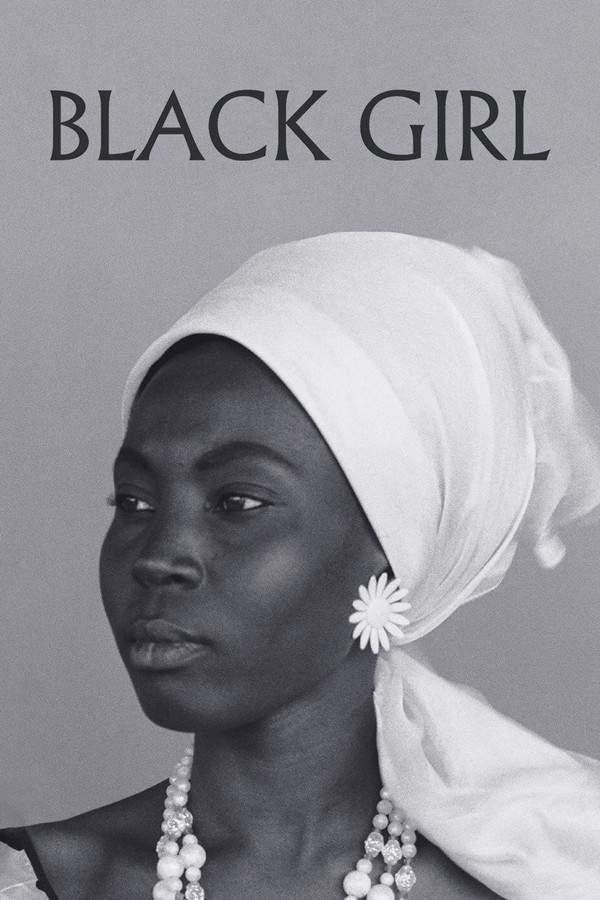
Black Girl (1966) movie poster

Timeline

Black Girl (1966) Timeline Explained – Every Event in Order

Release, runtime and language
1966 · 65 mins · French
Starring
Mbissine Thérèse Diop, Robert Fontaine, Sophie, Nar Sene, Ousmane Sembène, Toto Bissainthe

Eager to find a better life abroad, a Senegalese woman becomes a mere governess to a family in southern France, suffering from discrimination and marginalization.

On this page (5)
  1. 1 Events in order (13)
  2. 2 Timeline questions answered
  3. 3 Movie threads
  4. 4 Movies like Black Girl
  5. 5 Every angle

13 events in order · contains spoilers

Black Girl Timeline: Events in Chronological Order

Every key event of Black Girl (1966) in order, scene by scene, with when and where it takes place. Use it to untangle flashbacks, time jumps and parallel storylines, to refresh your memory before the sequel or to find the exact scene you are thinking of.

  1. Diouana's life in France begins

    Diouana arrives in France to work as a domestic servant for a wealthy couple. She is overwhelmed by endless chores and rigid routines, and she struggles to understand her role in the household. She longs for freedom and the outdoors, a world very different from her life back home.

    When
    present life in France
    Where
    France
  2. Diouana's origins in a Senegalese village

    She comes from a poor village outside Dakar where most people are illiterate. She spends her days roaming the city in search of work and a chance to improve her situation. The flashbacks show a hopeful yet stark life far from the comforts she is promised abroad.

    When
    flashback to before moving to France
    Where
    Senegal (village near Dakar)
  3. Madame selects Diouana in Dakar

    In the square of Dakar, Madame hires Diouana, choosing her because she does not crowd forward demanding a job. Diouana gifts Madame a traditional mask, which they display in the home. This moment marks the start of a relationship that will tie her to the family.

    When
    before moving to France (selection day)
    Where
    Dakar, Senegal
  4. Work as a nanny in Dakar and moments with her boyfriend

    Back in Senegal, Diouana works for the family as a caregiver for their children and spends time walking with her boyfriend when she has free moments. The city life hints at broader possibilities, yet her daily routine remains limited. The job offers seem to promise a brighter future, but uncertainty lingers.

    When
    early employment in Senegal
    Where
    Dakar, Senegal
  5. Offer to move to France

    Monsieur and Madame offer Diouana a job in France, and she is thrilled by the prospect of a new life abroad. She imagines greater freedom and opportunities, eagerly accepting the chance to relocate. The dream of France becomes a driving force behind her decision.

    When
    decision to move to France
    Where
    Senegal (planning to move to France)
  6. Arrival in France and harsh realities

    Diouana arrives to find a demanding regime of cooking and cleaning with little chance to go out. Madame treats her coldly, and Diouana struggles to understand why she cannot explore the city as she hoped. The apartment becomes a prison where her days are spent performing domestic labor.

    When
    arrival in France
    Where
    France, the couple's apartment
  7. Fashion and status clash

    While she works, Diouana wears a fancy dress and heels, only to be told to remove them and remember her status as a maid. The demand underscores the power imbalance and the demeaning expectations placed on her. This moment crystallizes the rupture between her dreams and the reality of servitude.

    When
    early days after arrival
    Where
    France, inside the house
  8. Dinner party and a moment of discomfort

    At a dinner party, a friend kisses Diouana on the cheek, justifying it as European custom. He adds that he's never kissed a black girl before, highlighting the racial distance she feels. The moment deepens her sense of isolation within the social circle of the house.

    When
    during the dinner party
    Where
    France, dining room
  9. A letter from home and a troubling reaction

    Diouana receives a letter from her mother, read aloud by Monsieur, asking why she has heard nothing and requesting money. Diouana tears up the letter, rejecting contact with her past and the human ties left behind. The act intensifies the emotional gulf between her two lives.

    When
    present life (in France)
    Where
    France, in the house
  10. Tension over sleep, work, and the mask

    Madame bans Diouana from sleeping in past breakfast and demands immediate work. Diouana tries to reclaim the mask she gave to Madame, leading to a struggle that reveals the fragility of her situation. Madame insists that if she does not work, she cannot eat.

    When
    emerging tension in the home
    Where
    France, inside the house
  11. Suicide in the bathtub

    Overwhelmed by oppression, Diouana refuses to accept the money offered for her work. She slips into the bathroom where she slits her throat, ending her life in a moment of tragic despair. The act marks the film’s devastating culmination of isolation and control.

    When
    climax
    Where
    France, family home bathroom
  12. Monsieur returns Diouana's belongings to Senegal

    Monsieur travels to Senegal to return Diouana's suitcase, mask, and money to her family. He offers money to Diouana's mother, but she refuses, choosing dignity over wealth. The gesture closes the domestic tragedy by returning remnants of Diouana to her homeland.

    When
    aftermath
    Where
    Senegal, village
  13. Final image: the mask and memory linger

    As Monsieur leaves the village, the little boy who once wore the mask runs after him, his presence a haunting echo of Diouana's story. The ending lingers on the cultural artifacts and memories that persist beyond the immediate events. The film closes with a quiet reflection on identity, power, and loss.

    When
    end of the film
    Where
    Senegal

Last updated: October 09, 2025 at 14:14

Was this helpful?

Timeline questions answered

Black Girl Timeline Explained: Your Questions Answered

When does it happen, and why in that order? The questions people ask about the chronology of Black Girl (1966): time jumps, flashbacks, cause and effect between scenes and the correct order of events, each answered with spoilers.

Q1

Why was Diouana chosen to work for the French couple?

Diouana was chosen because she did not push forward or demand attention like the other women in the square. Madame observed her quiet demeanor and selected her specifically for not being loud or pushy. This moment establishes the employer's power dynamics, Diouana's passive nature made her appear docile and suitable for domestic work.

  • Diouana
  • job selection
  • Dakar
  • French couple
  • hiring
Q2

What does the mask symbolize in the film?

The mask Diouana bought for 50 guineas and gifted to the Fontaines represents her cultural identity and hope for a better life. When displayed in their home, it becomes a constant reminder of her origin. Later, when she tries to reclaim it, Madame's refusal reveals how Diouana's identity has been commodified and controlled. The mask's return at the end, carried by the young boy, symbolizes memory, loss, and the cyclical nature of the story.

  • mask
  • symbol
  • cultural identity
  • Senegal
  • gift
Q3

Why does Diouana tear up her mother's letter?

When Monsieur reads her mother's letter aloud, asking why Diouana hasn't sent money, Diouana tears it up in rejection. This act symbolizes her attempt to sever ties with her past and the life she left behind. She is determined to prove she can succeed on her own terms in France, refusing to admit the reality that her situation has become a prison.

  • letter
  • mother
  • money
  • rejection
  • identity
Q4

Why does Diouana commit suicide in Black Girl?

Diouana takes her own life after being overwhelmed by relentless domestic labor, isolation, cold treatment from Madame, and the crushing realization that her dream of freedom in France has become a life of servitude. When she refuses the salary Monsieur offers, rejecting the unequal bargain that bound her, she chooses death over continued humiliation. Her suicide is a final, tragic assertion of autonomy.

  • suicide
  • death
  • despair
  • oppression
  • freedom
Q5

What does the dinner party scene reveal about race?

At a dinner party, a guest kisses Diouana on the cheek and explains it's a European custom, then adds "I've never kissed a black girl before." This moment exposes how Diouana is simultaneously desired and exoticized by the French social circle. She is a curiosity, not an equal, highlighting the racial distance and objectification she experiences daily in the household.

  • dinner party
  • kiss
  • race
  • exoticization
  • guest
Q6

Why does Madame force Diouana to remove her fancy dress?

Although Diouana wears a fancy dress and heels while working inside the house, Madame demands she remove them and remember her status as a maid. This moment crystallizes the contradiction between the image of respectability the couple projects and the reality of Diouana's servitude. The glamour is for show; beneath it, she remains a domestic worker with no dignity afforded.

  • dress
  • madame
  • status
  • humiliation
  • domestic work
Q7

What happens to Diouana's belongings after her death?

After Diouana's suicide, Monsieur travels to Senegal to return her suitcase, the mask, and the money from their failed arrangement. He offers the money to Diouana's mother, but she refuses it, choosing dignity over compensation for her daughter's exploitation. The belongings are returned, but the damage cannot be undone.

  • suitcase
  • mask
  • money
  • return
  • Senegal
Q8

Why does Diouana's mother refuse the money?

Diouana's mother refuses the money Monsieur offers because accepting it would mean accepting the bargain that ultimately led to her daughter's death. By refusing, she asserts her daughter's dignity and rejects the moral compromise of the Fontaines' offer. The gesture honors Diouana's final act of resistance.

  • mother
  • money
  • dignity
  • refusal
  • honor
Q9

What is the significance of the final scene with the boy and mask?

As Monsieur leaves the village, a young boy who once wore the mask runs after him, carrying the same mask Diouana gave as a gift. This haunting image suggests the cyclical nature of the story, another child will grow up with the same dreams, perhaps facing the same fate. The mask persists as a symbol of memory, loss, and the ongoing legacy of exploitation.

  • boy
  • mask
  • ending
  • cycle
  • memory
Q10

Why does Diouana refuse the salary Monsieur offers?

When Monsieur offers Diouana her salary, she refuses it. This is her final act of resistance, rejecting the unequal bargain that enslaved her to endless labor in exchange for barely livable wages. By refusing the money, she denies the Fontaines the moral absolution of payment, insisting that no salary could compensate for what she endured.

  • salary
  • refusal
  • money
  • resistance
  • exploitation

Movie threads

More Movies Like Black Girl, by Mood & Story

Curated lists built around what makes Black Girl tick: the same mood, the same kind of story or the same emotional payoff. Each list explains why these movies belong together.

Movies about psychological unraveling like Black Girl

Stories where physical or social confinement leads to a character's internal collapse. If you appreciated the suffocating atmosphere and psychological disintegration in 'Black Girl', this list features movies with similar themes of confinement and despair. These stories focus on characters trapped by their circumstances, leading to a slow, heavy, and emotionally devastating viewing experience.

  • claustrophobic
  • oppressive
  • despair
  • lonely
  • unsettling
  • psychological
  • Tone: bleak, oppressive
  • Pacing: slow, deliberate
Why these movies?

The story pattern: The narrative follows a protagonist who enters a new situation with optimism, only to find themselves physically or socially trapped. The story unfolds as a slow, linear descent, charting their increasing alienation and the erosion of their spirit under relentless, mundane pressure. The climax often involves a tragic realization or act born from utter despair.

Why they belong together: These films are grouped together because they share a deeply oppressive and claustrophobic mood. They use a slow, deliberate pace to build a palpable sense of entrapment and psychological unease, focusing on character-driven stories where the primary conflict is internal, against an immovable external force.

Bleak post-colonial dramas similar to Black Girl

Raw and poetic dramas exposing the lingering wounds of colonialism. For viewers seeking films with the powerful social critique and tragic realism of 'Black Girl'. This collection features movies that explore the immigrant experience, systemic racism, and the deep psychological scars left by colonialism, all delivered with a straightforward, heavy, and impactful narrative style.

  • harsh
  • melancholic
  • despair
  • unsettling
  • political
  • tragic
  • Tone: bleak, harsh
  • Pacing: slow, steady
Why these movies?

The story pattern: The narrative pattern centers on a protagonist from a formerly colonized nation confronting the harsh realities of the 'metropole' or a dominant culture. Their hopeful journey turns into a confrontation with dehumanizing prejudice and exploitation. The structure is often straightforward, emphasizing the inevitability of the tragic outcome as a direct result of systemic injustice.

Why they belong together: These films are united by their commitment to portraying the grim realities of post-colonial existence. They share a bleak tone, high emotional weight, and a focus on thematic depth over complex plotting. The viewing experience is characterized by a sense of righteous anger and profound sadness.

If you liked this

Movies Like Black Girl

Similar movies to Black Girl: the same genre, themes or kind of story. Each one comes with its own plot summary, timeline and ending explained.

Browse all movie summaries

Every angle

Black Girl (1966) Explained: Plot, Timeline & Characters

Everything about Black Girl in one place: what happens in the plot summary, the timeline in chronological order, the characters and meaning and a spoiler-free summary. What's After the Movie adds the cast, box office and post-credit scenes.

Coming soon on iOS and Android

The Plot Explained Movie Summary App

Plot summaries, endings explained and timelines on your phone. Catch up on any movie in minutes, save your favorites and never miss a twist again.

Be the first to know when we launch. Your email stays private, always.

Learn more about the app