Plot Explained Spoilers guaranteed!
Plot Explained

Browse by genre

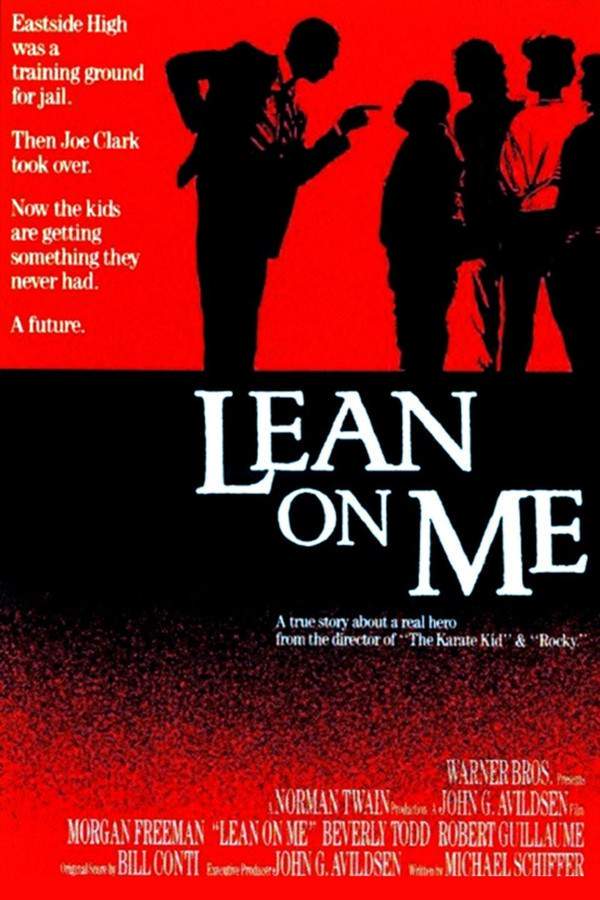
Lean on Me (1989) movie poster

Plot Summary

Lean on Me (1989) Plot Summary Explained

Release, runtime and language
1989 · 108 min · English
Directed by
John G. Avildsen
Starring
Morgan Freeman, Michael Beach, Lynne Thigpen, Robert Guillaume, Robin Bartlett, Ethan Phillips

Facing closure, East Side High receives an unexpected lifeline when Superintendent Napier brings in unconventional principal Joe Clark. Clark’s mission is to revive the school and combat the pervasive issues of violence and academic decline. He must challenge the existing problems and inspire change among students, faculty, and the community to save the institution's future.

On this page (6)
  1. 1 Where to watch
  2. 2 What happens: full plot
  3. 3 Plot questions answered
  4. 4 Movie threads
  5. 5 Movies like Lean on Me
  6. 6 Every angle

Where to watch

Where to Watch Lean on Me (1989)

Where can you watch Lean on Me? Stream, rent or buy it in the US, including on Amazon Video, Apple TV Store and Fandango At Home: current JustWatch availability with up-to-date prices.

Streaming availability powered by JustWatch

Full plot summary · contains spoilers

What Happens in Lean on Me: Full Plot Summary

The whole story of Lean on Me (1989) explained, from the opening scene to the final frame: every key event, every twist and what it all adds up to. Read it as a quick recap before the sequel, to check a scene you missed, or to finally understand what really happened.

African-American history teacher Joe Clark, portrayed by the esteemed Morgan Freeman, finds himself at the forefront of a significant educational reform in the tumultuous year of 1967 at Eastside High School located in Paterson, New Jersey. The school, once a beacon of hope for its vibrant community, has seen a stark decline in both discipline and educational standards. One fateful day, a fellow educator and friend, Frank Napier, now played by Robert Guillaume, interrupts Joe’s class to inform him of an urgent union meeting. Upon arriving at the meeting, Joe uncovers disheartening news: the union has decided to transfer him to another school while agreeing to a raise. Discontent builds in Joe as he realizes the implications for the students he deeply cares about.

Flash forward to 1987, where the situation at Eastside High has drastically deteriorated; crime and chaos dominate the halls. Dr. Frank Napier, having risen to the position of Superintendent, faces the daunting challenge of improving student performance amidst legislative pressures that threaten state takeover due to dismal test scores. With only 38% of students passing a crucial skills assessment, Frank boldly proposes to Mayor Don Bottman, an apprehensive Alan North, that Joe Clark step in as the new principal. After some hesitance, the Mayor capitulates, and Frank makes a passionate appeal to Joe to accept the role, highlighting the critical opportunity to inspire change.

On his inaugural day, Joe reveals a fierce tenacity to reclaim the school’s lost integrity. He initiates his tenure with an unyielding display of authority, demanding an immediate inventory of the school's troubled students and confronting the entire assembly with his intention to expel any miscreants. At an all-school gathering, Joe’s powerful words resonate: > "I am not afraid to make the hard choices. Your future is at stake!" He instills an atmosphere of discipline by severely expelling 300 students, a shocking action that reverberates through the community and stirs protest from Leona Barrett, a local activist and parent whose son was among the expelled.

As tensions rise, the community is divided. While some parents commend Joe for his dedication and staunch actions, others claim he is robbing children of their opportunities. Joe's journey intensifies when he confronts Thomas Sams, an expelled student, on the roof of the school, delivering a tough-love lecture about the perils of drugs. Joe’s relentless drive to rehabilitate the school leads him to reimagine its environment—he restores the cafeteria and encourages students to embrace school pride through music. He summons Mrs. Elliott, the chorus teacher, only to fire her for refusing to comply with his demands.

Through a series of upheavals—ranging from unorthodox tactics to emotional interventions with troubled students like Kaneesha Carter—Joe gradually uncovers the true potential of the school's student body. Each confrontation and decision builds not only a narrative of resilience but also highlights the profound relationships formed within the walls of Eastside High.

However, the educational journey is far from straightforward. As Joe pushes the faculty towards a new peer-tutoring initiative to combat the abysmal test scores, he also faces significant opposition from parents and educators who see him as disruptive. The situation escalates on the day of the critical skills test, when he is infamously dubbed "Crazy Joe Clark" by the local newspaper amidst accusations of overly aggressive practices. Moreover, rivalries brew within the educational ecosystem, leading to tension with Ms. Levias, who curtails her support for Joe due to growing frustrations over his perceived ego.

Ultimately, the climax unfolds dramatically as Joe is arrested for his drastic measures regarding safety regulations within the school. This act of defiance invigorates the students, who rally in support of him, showcasing an incredible sense of unity and purpose. With chants echoing in the streets and claiming victory, the students triumphantly announce that they have passed the skills test, symbolizing their growth and resilience under Joe’s guidance.

In a heartwarming denouement, we see Joe connecting with his students on graduation day, sharing in their joy as they accept their diplomas—an outcome that speaks volumes about the power of educational reform, community strength, and unwavering determination. The saga of Eastside High serves as an inspiring tale that underscores the profound impacts an educator can have when they refuse to give in to adversity.

Last updated: January 18, 2025 at 14:36

Was this helpful?

Plot questions answered

Lean on Me Plot Explained: Your Questions Answered

The questions people ask most about Lean on Me (1989): what happens in the confusing scenes, why the characters do what they do, the twists, hidden details and what the ending means. Each answer contains spoilers.

Q1

Why did Joe Clark expel 300 students on his first day?

Joe Clark expelled 300 students on his first day as principal to immediately establish discipline and remove troublemakers who were disrupting the learning environment. He believed the school couldn't improve academically until the chaotic environment was controlled. This drastic action was meant to send a clear message that misbehavior would not be tolerated.

Foreshadowing: Earlier scenes show the school in complete chaos with crime dominating the hallways, setting up the need for such extreme measures.

  • joe clark
  • expulsion
  • discipline
  • first day
  • eastside high
Q2

Why was Joe Clark arrested?

Joe Clark was arrested for chaining off fire exits in an effort to improve school safety. While his intentions were to prevent unauthorized entry and maintain order, this action violated fire safety regulations. The arrest occurred after the basic skills test was administered.

Foreshadowing: Joe's unorthodox methods and willingness to break rules to achieve his goals were established early in his tenure.

  • joe clark
  • arrest
  • fire exits
  • safety
  • violation
Q3

Why did Leona Barrett oppose Joe Clark?

Leona Barrett, a community activist and later Board of Education member, opposed Joe Clark because she believed his harsh methods were robbing children of their educational opportunities. Her son was among the 300 expelled students, which made the conflict personal. She saw his tough love approach as harmful rather than beneficial.

Foreshadowing: At the emergency parents meeting, Barrett immediately challenges Joe's expulsion of students, establishing her as his primary opposition.

  • leona barrett
  • opposition
  • community activist
  • board of education
  • expelled students
Q4

How did Eastside High pass the basic skills test?

Eastside High passed the basic skills test due to Joe Clark's rigorous peer-tutoring initiative and his demanding approach to academics. After discovering only 33% passed a practice exam, he forced teachers to implement peer tutoring and held everyone accountable for student failure. The students also rallied together in support of Joe during the test, demonstrating the unity he inspired.

Foreshadowing: The practice exam showing only 33% passing set up the urgency for the peer-tutoring program that drove the eventual success.

  • basic skills test
  • passing
  • peer tutoring
  • students
  • academic success
Q5

Why did the students protest after Joe Clark's arrest?

The students protested because they believed in the positive changes Joe Clark had inspired at Eastside High. Despite his controversial methods, they saw real improvement in their education and school environment. Their protest at City Hall demonstrated the strong bond and loyalty he had built, with students refusing to leave until his victory was secured.

Foreshadowing: Throughout the film, Joe's interactions with troubled students like Thomas Sams and Kaneesha Carter showed him earning their respect and trust.

  • students protest
  • joe clark arrest
  • city hall
  • loyalty
  • support
Q6

What happened to Thomas Sams after Joe Clark confronted him on the roof?

After Joe Clark confronted Thomas Sams on the school rooftop and scared him about the dangers of drugs, Joe gave him a second chance rather than leaving him expelled. He promised to monitor Thomas's behavior closely. This moment represented Joe's tough-love approach to helping troubled students rather than simply discarding them.

Foreshadowing: The rooftop confrontation follows Joe's mass expulsion, showing he wasn't simply punishing students but trying to salvage those he believed could be redeemed.

  • thomas sams
  • roof
  • drugs
  • tough love
  • redemption
Q7

Why did Frank Napier choose Joe Clark to be principal?

Frank Napier, now the Superintendent, chose Joe Clark because he believed Joe was the only person who could turn Eastside High around. With only 38% of students passing the skills test and the school facing state takeover, Frank needed someone willing to take drastic action. He knew Joe had a history of dedication to students and believed in his ability to inspire change.

Foreshadowing: The 1967 flashback shows Joe as a dedicated teacher who cared deeply about his students, explaining why Frank had faith in him.

  • frank napier
  • joe clark
  • principal appointment
  • superintendent
  • faith
Q8

Why did Joe Clark chain the fire exits at Eastside High?

Joe Clark chained the fire exits to improve school safety and control who could enter the building. He wanted to prevent unauthorized people from coming onto campus and to maintain the disciplined environment he was trying to create. While the intent was protection, the action violated fire codes and led to his arrest.

Foreshadowing: Joe's pattern of using unorthodox and sometimes rule-breaking methods to achieve his goals was established throughout his tenure.

  • fire exits
  • safety
  • chaining
  • 规则
  • violation
Q9

What was the peer-tutoring program Joe Clark implemented?

The peer-tutoring program Joe Clark implemented was designed to improve academic performance by having students help each other learn. After the practice exam revealed only 33% passing, Joe declared the failure a collective responsibility and required teachers to implement peer tutoring. This initiative was crucial in raising test scores for the basic skills test.

Foreshadowing: The poor practice exam results directly prompted Joe to implement this academic intervention.

  • peer tutoring
  • academic program
  • test scores
  • education reform
Q10

Why did Joe Clark order the school to be repainted?

Joe Clark ordered the school to be repainted to restore pride in the school environment and signal that Eastside High was worth caring about. He believed the physical appearance of the school reflected its educational standards. By improving the building's look and requiring students to learn the school song, Joe aimed to create a sense of ownership and discipline.

Foreshadowing: Joe's focus on the physical environment came after establishing his authority through the mass expulsion, shifting to building school culture.

  • repainting
  • school environment
  • pride
  • discipline
  • culture
Q11

How did Joe Clark's methods impact the students at Eastside High?

Joe Clark's methods had a transformative impact on the students, inspiring unity, discipline, and academic improvement. Despite his harsh exterior, students recognized he cared about their future. This was evidenced by their protest after his arrest and their ultimate success on the basic skills test. The graduation scene shows students accepting diplomas as a direct result of his leadership.

Foreshadowing: Joe's interactions with individual students throughout the film, including Thomas Sams and Kaneesha Carter, showed gradual trust-building.

  • students
  • impact
  • transformation
  • success
  • graduation

Movie threads

More Movies Like Lean on Me, by Mood & Story

Curated lists built around what makes Lean on Me tick: the same mood, the same kind of story or the same emotional payoff. Each list explains why these movies belong together.

Movies about Unconventional Leaders Like in Lean on Me

Powerful stories of flawed heroes using controversial methods to fight institutional decay. Discover movies similar to Lean on Me, featuring strong-willed protagonists who challenge a failing system with controversial tactics. If you liked Joe Clark's battle to save East Side High, you'll appreciate these stories of rebel leaders fighting for change against overwhelming odds.

  • inspiring
  • tense
  • determined
  • confrontational
  • urgent
  • triumphant
  • Tone: hopeful, tense
  • Pacing: steady, build-up
Why these movies?

The story pattern: These narratives follow a protagonist, often an outsider or a reappointed insider, who is given a mandate to fix a deeply troubled institution. The plot revolves around their implementation of drastic, rule-breaking measures, leading to intense conflict with authorities, internal dissent, and a moral examination of whether the ends justify the means, culminating in a decisive test of their methods.

Why they belong together: They share a high-intensity, confrontational mood built around a central, powerful performance. The tension comes from the protagonist's abrasive style clashing with the establishment, creating a gripping and urgent atmosphere where success is hard-won and morally complex.

Movies about Saving a Failing Institution Like Lean on Me

Gripping missions to rescue a failing organization from collapse against all odds. Find more movies like Lean on Me where the central plot is a race against time to save a crucial community institution from collapse. These similar drama stories capture the same high-stakes urgency, gritty realism, and triumphant spirit of an underdog fight for survival.

  • urgent
  • inspiring
  • gritty
  • triumphant
  • underdog
  • tense
  • Tone: hopeful, urgent
  • Pacing: steady, procedural
Why these movies?

The story pattern: The story is set within a specific institution on the brink of disaster due to systemic issues like violence, financial ruin, or academic failure. A new leader or group is tasked with a near-impossible turnaround, facing internal resistance and external pressures. The narrative is a steady, procedural climb from rock bottom to a cathartic, hard-earned victory that validates the struggle.

Why they belong together: They are grouped by their shared setting and core mission: an underdog story set within a crumbling system. The vibe is a mix of oppressive realism and inspiring determination, with a steady pacing that methodically builds towards a triumphant, emotionally satisfying conclusion against a backdrop of social injustice.

If you liked this

Movies Like Lean on Me

Similar movies to Lean on Me: the same genre, themes or kind of story. Each one comes with its own plot summary, timeline and ending explained.

Browse all movie summaries

Every angle

Lean on Me (1989) Explained: Plot, Timeline & Characters

Everything about Lean on Me in one place: what happens in the plot summary, the timeline in chronological order, the characters and meaning and a spoiler-free summary. What's After the Movie adds the cast, box office and post-credit scenes.

Coming soon on iOS and Android

The Plot Explained Movie Summary App

Plot summaries, endings explained and timelines on your phone. Catch up on any movie in minutes, save your favorites and never miss a twist again.

Be the first to know when we launch. Your email stays private, always.

Learn more about the app