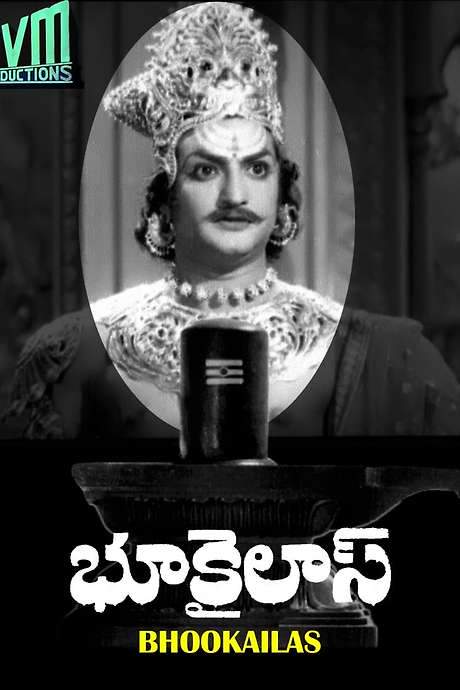
Bhookailas
Year: 1958
Runtime: 174 mins
Language: Telugu
Director: K. Shankar
The story is based on the Sthala Purana of Gokarna Kshetram in Karnataka
Where to Watch Bhookailas?
Find where to stream, rent, or buy Bhookailas (1958) in the US with current JustWatch availability, up-to-date pricing, and platform listings for subscription, rental, and digital purchase options.

Streaming availability powered by 
Warning: spoilers below!
Haven’t seen Bhookailas yet? This summary contains major spoilers. Bookmark the page, watch the movie, and come back for the full breakdown. If you're ready, scroll on and relive the story!
Timeline & Setting – Bhookailas (1958)
Explore the full timeline and setting of Bhookailas (1958). Follow every major event in chronological order and see how the environment shapes the story, characters, and dramatic tension.
Last updated: October 05, 2025 at 08:45
Main Characters – Bhookailas (1958)
Meet the key characters of Bhookailas (1958), with detailed profiles, motivations, and roles in the plot. Understand their emotional journeys and what they reveal about the film’s deeper themes.
Last updated: October 05, 2025 at 08:45
Major Themes – Bhookailas (1958)
Explore the central themes of Bhookailas (1958), from psychological, social, and emotional dimensions to philosophical messages. Understand what the film is really saying beneath the surface.
Last updated: October 05, 2025 at 08:45
Bhookailas (1958) Character & Theme Questions Answered – Info FAQ
Browse frequently asked questions about Bhookailas (1958) focused on characters, relationships, themes, symbols, setting, and story context. This movie info FAQ gives spoiler-aware explanations for character arcs, world details, and thematic interpretation so readers can better understand what the film is really about.
Where is the movie set?
The story unfolds across multiple divine and earthly locations: Lanka (Ravana's kingdom), Amaravati (the celestial city), Patala (the underworld ruled by Mayasura), and the Mahabaleshwar Temple in Gokarna, Karnataka, a sacred pilgrimage site that anchors the tale in spiritual tradition.
The contrast between Lanka's earthly power and Gokarna's sacred geography establishes the cosmic scope of the narrative.
What is the significance of Gokarna in the story?
Gokarna and its Mahabaleshwar Temple serve as the story's spiritual anchor, representing the sacred site where the legendary Atmalingam is sought. The temple grounds the mythic narrative in a real pilgrimage location in Karnataka, connecting divine events to enduring religious tradition.
The film's title Bhookailas refers to the legendary ATMalingam at this very site.
When does the story take place?
The film is set in a timeless mythological era where gods and demons actively contest dharma. There are no specific historical dates, instead, the narrative operates in a realm where penance, illusion, and divine intervention drive events across celestial and mortal realms.
The mythic setting allows for the coexistence of divine beings like Shiva, Parvati, and celestial sages.
Who is Ravana in this film?
Ravana (also called Ravanudu) is the powerful king of Lanka whose ambition and pride drive him to undergo intense penance to win Shiva's grace. His arc moves from fervent devotion and defiance to repentance, ultimately confronting cosmic order. He represents both extreme dedication and the hubris that invites consequences.
His unwavering devotion to his mother Kaikashi establishes his character from the start.
What role does Narada play?
Narada Maharshi is a cunning sage who orchestrates divine schemes from the shadows, peddling news to Indra and using illusion to influence both mortals and gods. He relishes the role of a provocateur, and his scheming sets the plot in motion, demonstrating how mischief can alter the course of fate.
Narada's impersonation of Parvati to arrange Ravana's marriage reveals his manipulative nature.
Who is Mandodari?
Mandodari is the daughter of Mayasura (king of Patala) who becomes drawn to Ravana. She becomes a focal point of Narada's manipulations, with her attraction and loyalties tested as deception and desire weave through the royal match.
Her attraction to Ravana is triggered by Narada's illusion, setting the marriage in motion.
What is the Devotion vs Deception theme about?
This theme explores how Ravana's unwavering devotion to his mother Kaikashi and his extreme penance set him on a path toward divine favor. However, Narada's tricks reveal how devotion can be weaponized to serve ambition. Parvati's responses show that even gods engage with human motives and test loyalties, creating moral tension between genuine piety and manipulation.
The contrast between Ravana's sincere penance and Narada's trickery sets this theme in motion early.
What does Penance and Fate explore?
Ravana's rigorous penance to win Shiva's grace becomes a catalyst for both his rise and fall. The Atmalingam rite tests restraint and obedience, with gods shaping events to probe his character. Divine tests, through Narada and Ganesha's interference, reveal the fragility of desire against cosmic order, though his later repentance shifts the narrative toward mercy.
The conditions Shiva places on the Atmalingam foreshadow the ultimate test of Ravana's obedience.
What is the message about Dharma?
The story pits personal ambition against cosmic order. Vishnu's playful deceit and Parvati's mourning explore the complexities of dharma and mercy. Ravana's ultimate fate demonstrates how hubris invites consequences, but the film's framing leaves room for redemption, the moral choices reverberate across realms, not just in battles.
Parvati's curse on Vishnu shows how divine actions carry moral weight across the story.
How does the Masks and Identity theme work?
Narada's impersonation of Parvati to win Mandodari for Ravana shows how appearances can deceive and destabilize loyalties. Mandodari's attraction and the ensuing wedding test discernment. Parvati's transformation into Bhadrakali and the eventual revelation remind viewers that divine identities can be hidden and revealed, underscoring the fragility of surface identities.
Parvati's transformation into Bhadrakali ultimately reveals the truth behind the deception.
What is Patala in the story?
Patala is the shadowy underworld realm ruled by Mayasura, father of Mandodari. It serves as a realm that intersects mortal and divine affairs, adding political intrigue to the tale. Mayasura, as a cautious and pragmatic ruler, navigates alliances and divine scrutiny, connecting the underworld to Ravana's story through his daughter's marriage.
Mayasura's role as a political figure establishes the worldly stakes alongside divine ones.
Who is Parvati in the film?
Parvati is the goddess and wife of Shiva who navigates the divine schemes surrounding Ravana's penance. She reveals both compassion and resolve, cursing Vishnu to feel sorrow when misused by beauty and illusion. Eventually embodying Bhadrakali, she asserts cosmic balance and guides events toward dharma.
Her transformation into Bhadrakali becomes the decisive divine intervention.

Explore Movie Threads
Discover curated groups of movies connected by mood, themes, and story style. Browse collections built around emotion, atmosphere, and narrative focus to easily find films that match what you feel like watching right now.
Mythological tales with bittersweet endings like Bhookailas
Sacred quests where divine plans lead to profound, imperfect human outcomes.For viewers seeking movies like Bhookailas, this section features similar mythological stories where grand quests and divine interventions lead to poignant, bittersweet conclusions. These films explore themes of devotion, cosmic justice, and the solemn beauty found in imperfect outcomes, offering a resonant emotional experience.

CBGB
2013

The Other Man: F.W. de Klerk and the End of Apartheid
2015

Reagan
2024

Cholo Paltai
2011

The Pregnancy Project
2012

Becoming Bond
2006

Four Faces West
1948

The Sunday Woman
1975

Doc West
2009

The Blonde Captive
1931

The Golden Twenties
1950

Wells Fargo
1937
Bhookailas
1958

Nouvelle Vague
2025
Narrative Summary
Stories in this thread typically follow a linear, steady-paced arc: a character undertakes a sacred quest or intense penance, often encounters divine deception or a test of will, and culminates in an ending that blends personal failure with enduring spiritual significance. The narrative is more about the moral and devotional lesson than a traditional victory.
Why These Movies?
Movies are grouped here for their shared focus on mythological epics, a neutral-to-reverent tone, medium emotional weight from themes of devotion and failure, and a consistently bittersweet ending feel that leaves a lasting, contemplative impression.
Movies about divine deception and redemption like Bhookailas
Narratives where higher powers use trickery to guide flawed characters toward wisdom.If you liked the theme of cosmic trickery in Bhookailas, this section highlights other films where gods or fate use deception to test characters. These movies often involve a fall from grace, a quest for power, and a final reckoning that brings spiritual insight, sharing a similar narrative structure and mood.

Legend
1986

Clash of the Titans
2010
Gods of Egypt
2016
The Legend of Hercules
2014

God's Not Dead
2014
God's Not Dead: A Light in Darkness
2018

Leap of Faith
2024

Journey to Promethea
2010

Rajakali Amman
2000

Resurrection
1980

The Curse of King Tut’s Tomb
1000

The Man Who Played God
1932

Leap of Faith
1992

The Miracle Woman
1931
Bhookailas
1958
Narrative Summary
The narrative pattern involves a proud or ambitious character seeking ultimate power or knowledge. Their path is interrupted by a deceptive act from a divine source, which serves as a crucial test of character. This leads to a crisis, a moment of realization, and ultimately a form of penitence or a redefined, more humble understanding of their place in the cosmos.
Why These Movies?
These films are united by the central theme of 'cosmic deception' as a plot device, a medium-intensity dramatic conflict, a straightforward mythological narrative structure, and a focus on the moral and spiritual consequences of ambition challenged by higher powers.
Unlock the Full Story of Bhookailas
Don't stop at just watching - explore Bhookailas in full detail. From the complete plot summary and scene-by-scene timeline to character breakdowns, thematic analysis, and a deep dive into the ending - every page helps you truly understand what Bhookailas is all about. Plus, discover what's next after the movie.
Bhookailas Summary
Read a complete plot summary of Bhookailas, including all key story points, character arcs, and turning points. This in-depth recap is ideal for understanding the narrative structure or reviewing what happened in the movie.

Bhookailas Timeline
Track the full timeline of Bhookailas with every major event arranged chronologically. Perfect for decoding non-linear storytelling, flashbacks, or parallel narratives with a clear scene-by-scene breakdown.


