Plot Explained Spoilers guaranteed!
Plot Explained

Browse by genre

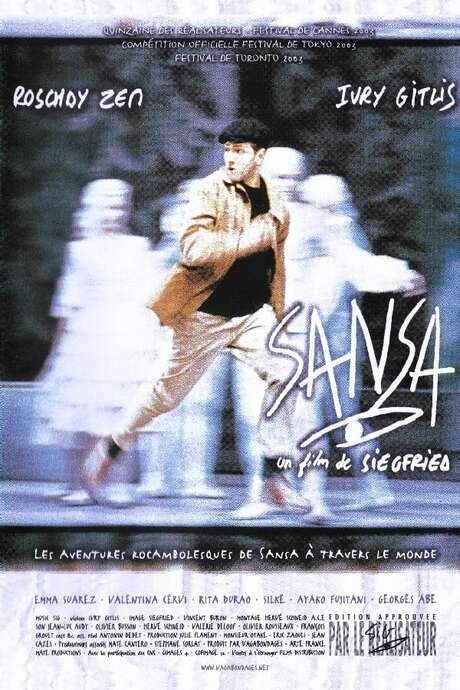
Sansa (2003) movie poster

Plot Summary

Sansa (2003) Plot Summary Explained

Release, runtime and language
2003 · 116 mins · French
Loading streaming availability…
Directed by
Siegfried
Starring
Roschdy Zem, Valentina Cervi, Emma Suárez, Ayako Fujitani, Silke, Bassem Samra

Director Siegfried follows the bohemian hustler‑artist Sansa as he moves from Paris to Russia, relying on street smarts. Charismatic yet reckless, Sansa prowls a series of encounters, mostly with women, living a carefree, flirtatious life. He bonds with an elderly orchestra conductor who becomes a father figure, offering unexpected stability.

On this page (6)
  1. 1 Where to watch
  2. 2 What happens: full plot
  3. 3 Plot questions answered
  4. 4 Movie threads
  5. 5 Categories
  6. 6 Every angle
Loading streaming availability…

Full plot summary · contains spoilers

What Happens in Sansa: Full Plot Summary

The whole story of Sansa (2003) explained, from the opening scene to the final frame: every key event, every twist and what it all adds up to. Read it as a quick recap before the sequel, to check a scene you missed, or to finally understand what really happened.

From the bohemian streets of Paris to the vast, icy frontiers of Russia, Sansa moves through the world with a mix of charm and street smarts. A street hustler and artist, he drifts along a free-spirited path, living in the moment and letting chance steer his course. His journeys are marked by a steady stream of encounters, especially with women, as he navigates cities and borders with an easy, carefree confidence. The tone remains observational and human, painting a portrait of a man who squeezes humor and resourcefulness from every situation.

A turning point arrives when he meets a figure who will become a fatherly presence on his travels: Monsieur Click, an old and eccentric orchestra conductor whose worldliness and warmth offer Sansa a new kind of companionship. This relationship softens the wanderer’s edges just enough to deepen the sense of connection even as the road stretches ever further. Together, they sketch a relationship built on mentorship, trust, and a shared curiosity about the places they visit.

The film follows Sansa’s path from Montmartre to a gallery of international clichés that feel both affectionate and satirical. In Italy, the narrative playfully leans into familiar stereotypes: women with dark hair and a certain beauty, men who swagger with bravado, and a light, breezy Vespa chase that riffs on rural chic and urban romance alike. The mood stays breezy, amused, and observational, never losing sight of Sansa’s effortless magnetism and how it pulls situations toward the edge of trouble and back again.

Russia unfolds as a landscape of chaos and organized crime, where alcohol and risk mingle in the air and the pace slows to the hypnotic cadence of vodka and ice. The depiction hints at danger and lawlessness while maintaining a sense of the traveler’s relentless forward motion. The journey then sweeps beyond Europe into Africa, where corruption hues the terrain, and India, where readers are invited to imagine people bathing by the river, framed by broad cultural contrasts. Egypt presents its iconic pyramids, a reminder of both history and spectacle that Sterling wanderers often chase in their quest for meaning on the move.

Through it all, Sansa endures police abuse wherever he goes, a counterpoint to his relentless charm and resilience. Yet he remains unstoppable, a globe-trotting figure who seduces and befriends his way across continents, a backpacker’s version of a cinematic spy, hopping from one train to another and threading a tapestry of acquaintances across the map. His swagger and improvisational wit help him navigate a world that treats him as both protagonist and perpetual outsider, always with hands in his pockets as he steps between landscapes, cultures, and moments of danger.

The road itself becomes the horizon, and the film paints a portrait of pursuit without a fixed destination. Sansa continues to move, to charm, to escape, and to connect with people who cross his path, all while the world unfolds in a mosaic of colors, accents, and stories. And in the end, after thousands of kilometres tracked and countless skies crossed, the narrative lingers on a quiet, unsettling truth: the journey has not quite led him anywhere. The pursuit is real, but the endpoint remains elusive, leaving Sansa—and the audience—with a sense of open possibilities rather than a final answer.
Last updated: February 22, 2026 at 12:21

Was this helpful?

Plot questions answered

Sansa Plot Explained: Your Questions Answered

The questions people ask most about Sansa (2003): what happens in the confusing scenes, why the characters do what they do, the twists, hidden details and what the ending means. Each answer contains spoilers.

Q1

Why does Sansa form a bond with Monsieur Click?

Sansa connects with Monsieur Click because the elderly orchestra conductor provides something he's never had: a stable father figure. While Sansa has spent his life drifting and relying on charm to survive, Click offers mentorship, warmth, and genuine companionship that softens Sansa's rough edges without actually taming his restless spirit.

Foreshadowing: Early scenes establish Sansa as a loner who uses humor and wit to avoid real connection, making his openness to Click's friendship more meaningful.

  • monsieur click
  • father figure
  • mentor
  • orchestra conductor
  • friendship
Q2

What is the significance of the police encounters throughout Sansa's journey?

The recurring police abuse serves as a constant reminder that Sansa remains an outsider everywhere he goes, no matter how charming or adaptable he becomes. These encounters highlight his resilience and improvisational wit while reinforcing the theme that his nomadic lifestyle comes with real consequences and friction.

Foreshadowing: The opening in Montmartre shows Sansa using his quick thinking to stay ahead of trouble, establishing this pattern early.

  • police
  • abuse
  • outsider
  • lawlessness
  • conflict
Q3

Why does the film end without a clear destination?

The open-ended finale reflects the film's central theme: the journey itself is the point, not the destination. Sansa realizes that his relentless pursuit hasn't led him anywhere specific, yet the road remains enticing. This leaves both Sansa and the audience with a sense of open possibilities rather than closure, capturing the bittersweet nature of a life lived in constant motion.

Foreshadowing: From the beginning, Sansa is described as letting chance steer his course, establishing that movement itself is his goal.

  • ending
  • open ending
  • journey
  • destination
  • pursuit
Q4

What does Sansa's constant movement across countries represent?

Sansa's perpetual motion represents a refusal to settle and a search for meaning that may not actually exist. He moves from Paris to Italy, Russia, Africa, India, and Egypt, not to find something specific, but because staying still feels impossible for him. The road becomes both his identity and his horizon, with movement serving as a way to avoid confronting what a fixed destination might mean.

Foreshadowing: The opening establishes Sansa as someone who lives in the moment and lets chance guide him, suggesting motion is his default state.

  • wandering
  • nomad
  • travel
  • movement
  • freedom
Q5

How does the relationship between Sansa and Monsieur Click develop?

Their relationship evolves from chance encounter to genuine mentorship as they travel together across Europe. Click's worldliness and warmth gradually soften Sansa's defensive charm, creating a bond built on trust and shared curiosity about the places they visit. Yet the relationship doesn't tame Sansa entirely, it simply adds depth to his journey by providing companionship without requiring him to stop moving.

Foreshadowing: The timeline shows Click's presence growing as an anchor while Sansa retains his impulse to keep traveling.

  • mentor
  • travel companions
  • journey
  • together
  • growth
Q6

Why is Russia depicted as chaotic and dangerous compared to other places?

Russia represents a turning point in Sansa's journey where the stakes rise significantly. The depiction of organized crime, alcohol-fueled risk, and tighter borders signals that his wanderlust is now testing him in ways his earlier European stops did not. This shift transforms the journey from breezy adventure into something closer to survival, marking Russia's role as the point where the travel narrative takes on darker undertones.

Foreshadowing: Italy's playful tone contrasts sharply with Russia's danger, showing the journey's escalation.

  • russia
  • organized crime
  • danger
  • border
  • crossing
Q7

Why does Sansa choose the life of a wanderer over pursuing stability?

Sansa seems constitutionally incapable of staying in one place, preferring the improvisational thrill of each new encounter to the predictability of settled life. His street-smart charm and wit are tools designed for constant movement, he thrives on charm, seduction, and quick thinking that only work when there's always a new city, a new face, a new train to catch. Stability would require abandoning the very skills that define him.

Foreshadowing: The opening establishes his nomadic charm as the film's heartbeat, hinting this is identity rather than choice.

  • wanderer
  • stability
  • roots
  • freedom
  • identity
Q8

What does Monsieur Click offer Sansa that he lacks?

Monsieur Click offers Sansa genuine emotional connection and a sense of belonging that his transient lifestyle otherwise denies him. As an eccentric orchestra conductor with worldliness and warmth, Click provides mentorship, stability, and unconditional acceptance, all things Sansa has avoided by keeping moving. This unexpected father figure gives Sansa a taste of what stillness might offer without demanding he actually stay.

Foreshadowing: Early scenes show Sansa attracting attention but avoiding true intimacy, making Click's breakthrough meaningful.

  • emotional connection
  • belonging
  • acceptance
  • mentorship
  • father figure
Q9

Why does Sansa endure police abuse rather than fight back?

Sansa endures the abuse because fighting back would require staying in one place to pursue justice, an impossibility for someone whose entire existence depends on constant motion. Additionally, his outsider status means he has no real recourse or protection in any country. His resilience becomes a form of passive resistance; he simply keeps moving, letting his unstoppable forward motion itself be his answer to those who try to hold him down.

Foreshadowing: The Montmartre opening establishes his strategy of outsmarting trouble rather than confronting it directly.

  • resilience
  • abuse
  • police
  • outsider
  • survival
Q10

What is the tonal purpose of the Italy chase scene?

The playful Vespa chase in Italy serves as a tonal release before the journey takes darker turns. It represents Sansa at his most effortless, charming, quick-witted, and in control amid romantic stereotypes. This moment of lighthearted adventure balances the narrative and reminds viewers that despite underlying dangers, Sansa's path is also marked by humor and resourcefulness. It acts as a brief pause before Russia introduces genuine threat.

Foreshadowing: The breezy Italian segment follows the mentor's introduction, suggesting a period of relative safety.

  • italy
  • chase
  • humor
  • adventure
  • romance

Movie threads

More Movies Like Sansa, by Mood & Story

Curated lists built around what makes Sansa tick: the same mood, the same kind of story or the same emotional payoff. Each list explains why these movies belong together.

Wandering journey movies like Sansa

Character-driven travelogues following charismatic drifters through transient encounters. If you enjoyed the carefree travelogue and cultural encounters in Sansa, explore these other movies featuring charismatic wanderers. Discover similar stories about drifters navigating life through a series of transient, character-driven experiences.

  • wandering
  • observational
  • travel
  • carefree
  • breezy
  • cultural encounters
  • Tone: observational, neutral, bittersweet
  • Pacing: steady, journey-driven
Why these movies?

The story pattern: Narratives in this thread typically follow a linear journey structure, tracing a protagonist's movement through various settings. The plot is driven by charming encounters and brief connections rather than a central, high-stakes conflict, focusing on personal adaptation and the bittersweet nature of a life in motion.

Why they belong together: These films are grouped together for their shared focus on a wandering protagonist, an observational tone, and a steady, travelogue-like pacing that prioritizes episodic encounters over a singular dramatic plot.

Bohemian artist character movies similar to Sansa

Observational stories of free-spirited artists and hustlers navigating urban life. For viewers who liked the charming street artist protagonist in Sansa, this collection highlights movies about similar bohemian characters. Find films with charismatic hustlers, artistic souls, and carefree spirits living life on their own terms.

  • bohemian
  • artist
  • hustler
  • charismatic
  • urban
  • street smarts
  • Tone: breezy, amused, bittersweet
  • Pacing: steady, observational
Why these movies?

The story pattern: These stories follow a charismatic but often reckless protagonist as they navigate an unstructured life, frequently centered in urban environments. A key narrative element is the search for connection or mentorship, providing moments of stability amidst a generally carefree existence.

Why they belong together: These movies share a specific character archetype—the charming bohemian—and a particular mood that balances a carefree, amused observation of life with an underlying sense of fleeting purpose.

Categories

Movie Lists Featuring Sansa

Sansa appears in these hand-built movie categories. Each one groups movies by a specific mood, theme or story type, with their plot summaries and endings explained.

View all movie categories

Every angle

Sansa (2003) Explained: Plot, Timeline & Characters

Everything about Sansa in one place: what happens in the plot summary, the timeline in chronological order, the characters and meaning and a spoiler-free summary. What's After the Movie adds the cast, box office and post-credit scenes.

Coming soon on iOS and Android

The Plot Explained Movie Summary App

Plot summaries, endings explained and timelines on your phone. Catch up on any movie in minutes, save your favorites and never miss a twist again.

Be the first to know when we launch. Your email stays private, always.

Learn more about the app