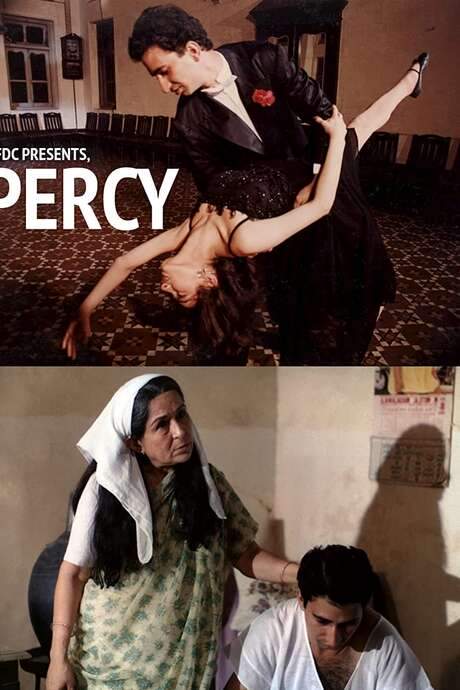
Cyrus Mistry, a wandering soul from Jamshedpur, arrives at a quiet hill town house in Panchgani and enters the life of a retired sculptor, Dinshaw Sethna, and his wife, Katy Sethna. The couple are as peculiar as the place they live: Dinshaw is affable and perpetually disoriented, while Katy bristles with restlessness and boredom, always itching to escape the slow rhythm of their mountain retreat. The house is threaded with small tensions—Dinshaw’s easygoing detachment, Katy’s flirtations, and the sense that something unstable hums just beneath the surface.
Cyrus quickly becomes part of their orbit, moving into the role of an apprentice who earns Dinshaw’s quiet approval and a steadier place in Katy’s shifting plans. Early on, Katy makes bold, sensuous moves toward Cyrus, who quietly acknowledges that he’s “playing Katy,” a line that hints at the manipulative game he’s being drawn into. The dynamic between the three—Cyrus, Katy, and Dinshaw—unfolds with a measured, uneasy humor, even as a darker motive threads through it all.
The plot thickens when Katy co-opts Cyrus to venture to Mumbai and confront her father-in-law, Fardoonjee Sethna, a man living in an extended flat where Farrokh Sethna, Katy’s husband and Dinshaw’s brother, holds influence. Tina Sethna, Farrokh’s young wife, is a quiet presence in the background—pampered, defiant in private, and increasingly alienated from Farrokh’s controlling nature. Tina’s vulnerability becomes a window for Katy to stitch together a dangerous ruse: Cyrus is urged to help procure a stash of money Fardoonjee is rumored to keep, and Katy’s plan is clear—kill both Fardoonjee and Tina and make a clean break with the life she resents.
The execution comes with chilling simplicity. Cyrus sits with Fardoonjee in a moment of calm, sharing his favorite food before striking, an act Cyrus frames as mercy—“he is released from his wretched life,” he implies to the audience as the truth remains murky. Farrokh arrives in the house, and Cyrus kills him as well, a double murder that Katy interprets as a success for her own ambitions. When Katy checks in, Cyrus bluntly tells her that the plan has failed, and then vanishes, leaving the others to contend with the fallout.
The aftermath brings a police interrogation into the foreground. Katy and Dinshaw are taken in for questioning, trying to explain away what happened as the aftermath of a twisted ménage, but the investigators find no evidence of a Cyrus existing in Panchgani, leaving the case intriguingly open. Tina, spared from immediate blame, returns to her own life, a quiet survivor in the story’s shifting moral weather. The couple’s arrest seems to crystallize the sense that the household has been undone by secrets and deceit, even as the truth remains elusive.
Months pass, and Tina’s apartment becomes the stage for a new development. Cyrus reappears, not to finish another murder, but to confront the dangerous truth that binds him to Tina: they are siblings. What follows is a revelation of a far more elaborate plot, crafted by Tina to inherit the Sethna property. With Fardoonjee and Farrokh dead, Katy and Dinshaw incarcerated, Tina’s plan appears to near completion. A newspaper, marked by Tina, reveals she has her sights on another wealthy target, and Cyrus, unwilling to participate in further killings, chooses to flee with the stolen money, leaving Tina to face the consequences alone.
Throughout the film, the plot is told in part from Cyrus’s perspective, weaving a thread of unreliable perception through the actions of Katy, Dinshaw, Tina, and the other figures who populate this web of desire and murder. The heart of the drama lies in how hunger for wealth, love, and freedom collides with loyalty and guilt, creating a tapestry where each character operates as both participant and pawn in a larger, darker scheme. The narrative builds on mood rather than spectacle, letting quiet moments—an exchanged glance, a whispered suggestion, a casual gesture—carry the weight of looming violence.
- The cast adds texture to the tension: Katy Sethna is the restless force at the center of the household, driving decisions with a mix of charm and calculation; Dinshaw Sethna embodies a generous, zoned-out kindness that belies a sharper intelligence; Farokh Sethna sits as a counterpoint to Dinshaw and Katy, a figure of authority whose presence unsettles the balance; Tina Sethna becomes a pivotal catalyst in the murder plot through her own quiet complicity; Fardoonjee Sethna is the ill-treated target whose fate sets the chain of events in motion. The investigation and its offbeat twists are propelled by the shadow of the law, with Inspector Maninder Lovely representing the reach of the authorities as the truth tries to surface from beneath the family’s tangled ties.
> "playing Katy"
The story’s closing pages pull back to reveal a carefully constructed deception that extends beyond a single night of violence, showing how kinship, desire, and the lure of wealth can converge to produce a meticulously planned, ultimately hollow inheritance. The film ends with Cyrus choosing life over crime, breaking away from Tina’s lethal blueprint and leaving behind the broken echo of a family that never quite found its footing.