



Plot Explained Spoilers guaranteed!
Plot Explained

Browse by genre

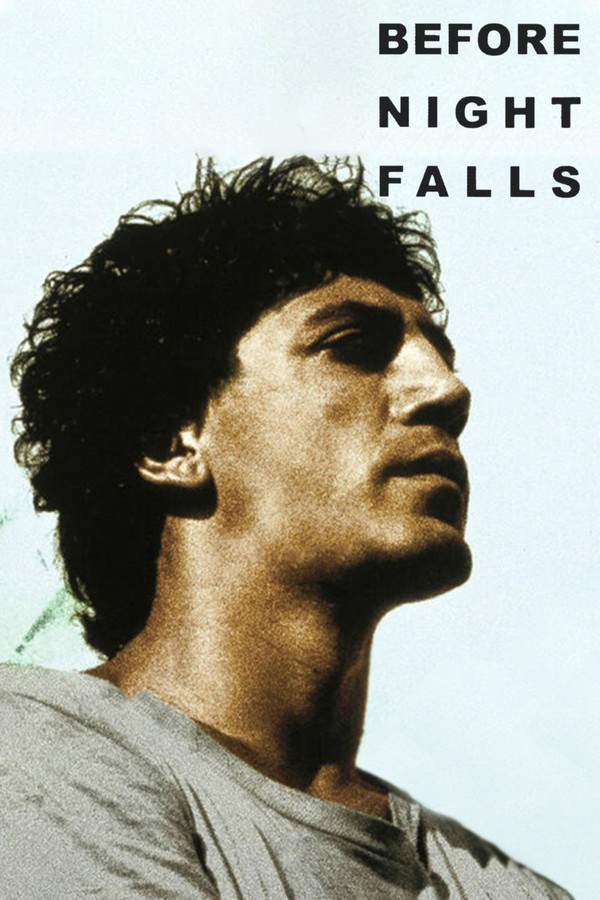
Before Night Falls (2000) movie poster

Timeline

Before Night Falls (2000) Timeline Explained – Every Event in Order

Release, runtime and language
2000 · 133 min · English
Directed by
Julian Schnabel

This powerful biopic portrays the extraordinary life and literary talent of Reinaldo Arenas. The film follows his journey from a carefree childhood through challenging experiences as a writer and marginalized figure in Castro's Cuba. Facing persecution and exile, Arenas ultimately finds a path to freedom in America, revealing a profound story of artistic expression, resilience, and the complexities of the human spirit.

On this page (6)
  1. 1 Where to watch
  2. 2 Events in order (13)
  3. 3 Timeline questions answered
  4. 4 Movie threads
  5. 5 Movies like Before Night Falls
  6. 6 Every angle

Where to watch

Where to Watch Before Night Falls (2000)

Where can you watch Before Night Falls? Stream, rent or buy it in the US, including on Fandango At Home, Google Play Movies and YouTube: current JustWatch availability with up-to-date prices.

Streaming availability powered by JustWatch

13 events in order · contains spoilers

Before Night Falls Timeline: Events in Chronological Order

Every key event of Before Night Falls (2000) in order, scene by scene, with when and where it takes place. Use it to untangle flashbacks, time jumps and parallel storylines, to refresh your memory before the sequel or to find the exact scene you are thinking of.

  1. Reinaldo Arenas' Early Life

    Reinaldo Arenas was born in Eastern Cuba to humble beginnings. His early experiences shaped his worldview and nurturing his love for literature, which would later influence his writing career.

    Where
    Eastern Cuba
  2. Support for the Cuban Revolution

    In 1959, Arenas actively supported Fidel Castro's rise to power, believing in the promises of the Cuban Revolution. His enthusiasm was shared by many who dreamed of a better future for the country.

    When
    1959
  3. Move to La Habana

    In 1963, Reinaldo Arenas relocated to La Habana, seeking greater opportunities for his writing. This move marked a pivotal point in his life as he immersed himself in the vibrant literary culture of the capital.

    When
    1963
    Where
    La Habana
  4. Literary Debut

    Arenas published his first significant work, *El mundo alucinante* (Hallucinations), in 1966. This debut was well-received and earned him an honorable mention from the Union of Cuban Writers and Artists, solidifying his place in Cuban literature.

    When
    1966
  5. Charged with Ideological Deviation

    In 1973, Arenas' life took a dark turn when he was charged with ideological deviation due to his sexual orientation. This charge not only led to his arrest but also highlighted the struggles faced by LGBTQ+ individuals in Cuba.

    When
    1973
    Where
    El Morro prison
  6. Imprisonment and Escape

    Arenas endured imprisonment in the notorious El Morro. Despite the harsh conditions, he bravely planned and executed his escape, only to be captured again shortly thereafter, showcasing his resilience and determination.

    Where
    El Morro
  7. Regaining Freedom

    In 1976, Reinaldo Arenas finally regained his freedom after enduring years of oppression. His release was a significant relief but did not quell the challenges he faced as a gay man during a repressive regime.

    When
    1976
  8. The Mariel Boatlift

    In 1980, Reinaldo was part of the Mariel Boatlift, a mass emigration of Cuban exiles seeking freedom in the United States. This event marked a critical transition in his life as he left behind the struggles in Cuba for new opportunities.

    When
    1980
    Where
    Mariel, Cuba
  9. Settling in New York City

    After arriving in the United States, Arenas settled in New York City, where he continued to write fervently. His works reflected his personal struggles and the political climate he escaped from, resonating with many readers.

    Where
    New York City
  10. Publishing Success

    Throughout the 1980s, Arenas published several notable works, including *Cantando en el pozo* and *El portero*. These publications not only solidified his reputation but also addressed themes of identity and exile.

    When
    1982-1987
  11. Tragic End

    On December 7, 1990, Reinaldo Arenas tragically took his own life by overdose at the age of 47. His death was a profound loss to the literary world and highlighted the immense toll of his struggles.

    When
    December 7, 1990
  12. Posthumous Memoir

    Three years after his death, Arenas' memoir, *Antes que anochezca* (Before Night Falls), was published. This work poignantly captured his life experiences and struggles, serving as a testament to his enduring legacy.

    When
    1993
  13. Film Adaptation

    The memoir inspired the 2000 film *Before Night Falls*, bringing Arenas' story to a wider audience. The film, featuring Javier Bardem, received acclaim for its emotional depth and powerful portrayals of personal struggle.

    When
    2000

Last updated: November 16, 2024 at 12:04

Was this helpful?

Timeline questions answered

Before Night Falls Timeline Explained: Your Questions Answered

When does it happen, and why in that order? The questions people ask about the chronology of Before Night Falls (2000): time jumps, flashbacks, cause and effect between scenes and the correct order of events, each answered with spoilers.

Q1

Why was Reinaldo Arenas arrested in Cuba?

Reinaldo Arenas was arrested in 1973 on charges of 'ideological deviation' because he was an openly gay man. At the time, Cuba's government actively persecuted LGBTQ+ individuals, considering homosexuality counter-revolutionary. This charge led to his imprisonment in El Morro prison, where he endured harsh conditions despite his status as a recognized literary figure.

Foreshadowing: Earlier in the film, Arenas' open homosexuality was shown as increasingly risky in post-revolutionary Cuba, where the regime's attitudes toward gay individuals grew more repressive.

  • reinaldo arenas arrest
  • ideological deviation
  • el morro prison
  • cuba homosexuality persecution
Q2

What was the Mariel Boatlift and why was Reinaldo Arenas part of it?

The Mariel Boatlift was a mass emigration event in 1980 where thousands of Cubans fled to the United States by boat from the port of Mariel. Reinaldo Arenas was part of this exodus because he saw it as his only opportunity to escape the persistent persecution, censorship, and oppression he faced as a gay writer in Cuba. After years of imprisonment and ongoing surveillance, the boatlift offered a chance at freedom.

Foreshadowing: Arenas' repeated imprisonment and the constant threat of rearrest made his departure feel inevitable, as staying in Cuba meant continued suffering.

  • marien boatlift
  • cuban exile
  • reinaldo arenas 1980
  • cuba emigration
Q3

Why did Reinaldo Arenas support the Cuban Revolution initially?

Reinaldo Arenas initially supported the Cuban Revolution in 1959 because he believed in Fidel Castro's promises of social justice, equality, and a better future for Cuba. Like many young intellectuals of the time, he was optimistic that the revolution would bring positive changes, including greater artistic freedom and an end to the previous regime's corruption.

Foreshadowing: The film establishes Arenas' early idealism and literary ambitions before showing how the revolution's trajectory would eventually betray those same ideals.

  • fidel castro
  • cuban revolution 1959
  • reinaldo arenas idealism
  • cuban writers
Q4

What led to Reinaldo Arenas' suicide?

Reinaldo Arenas took his own life on December 7, 1990, at age 47, dying from a drug overdose. His suicide was the tragic result of years of suffering: persecution in Cuba for being gay and for his writings, imprisonment, exile, and the ongoing physical pain from a car accident he survived. His memoir 'Antes que anochezca' (Before Night Falls) reveals the profound psychological toll of these lifelong struggles.

Foreshadowing: The film depicts Arenas battling both external oppression and internal despair throughout his life, with his literary output serving as both defiance and catharsis.

  • reinaldo arenas death
  • antes que anochezca
  • cuban writer suicide
  • overdose 1990
Q5

How did Reinaldo Arenas' sexual orientation affect his life in Cuba?

Reinaldo Arenas' openly gay identity made him a target for severe persecution under Cuba's communist government. After initial support for the revolution, his sexuality was used against him, leading to charges of 'ideological deviation.' He was imprisoned, denied publication opportunities, and constantly monitored. This persecution ultimately forced him to flee Cuba, as his identity as a gay man was incompatible with the regime's policies.

Foreshadowing: Early scenes show Arenas expressing his sexuality freely, which becomes increasingly dangerous as the revolution consolidates power and enforces stricter ideological conformity.

  • reinaldo arenas gay
  • cuba lgbt persecution
  • homosexuality cuba castro
Q6

What was Reinaldo Arenas charged with and why?

Reinaldo Arenas was charged with 'ideological deviation' in 1973, a vague political crime used to target individuals considered counter-revolutionary or socially undesirable. In his case, the charge was directly connected to his homosexuality, which the Cuban government viewed as incompatible with revolutionary socialist values. This charge served as the legal basis for his arrest and imprisonment.

Foreshadowing: The film shows growing surveillance of Arenas leading up to his arrest, as authorities sought to silence both his writing and his visible gay identity.

  • ideological deviation cuba
  • political arrest cuba
  • reinaldo arenas imprisonment
  • el morro
Q7

What happened to Reinaldo Arenas after he moved to New York?

After arriving in New York City via the Mariel Boatlift in 1980, Reinaldo Arenas continued his writing career with renewed freedom. He published several notable works including 'Cantando en el pozo' (1982), 'El palacio de la blanquísimas mofetas' (1982), and 'El portero' (1987). However, despite physical freedom, he struggled with the pain from a past car accident, depression, and the trauma of his experiences in Cuba, ultimately leading to his tragic death in 1990.

Foreshadowing: Even in exile, Arenas remains haunted by his past, with his writing serving as both a continuation of his artistic mission and a coping mechanism for his psychological wounds.

  • reinaldo arenas new york
  • cuban exile writer
  • cantando en el pozo
  • el portero
Q8

What were Reinaldo Arenas' most notable works?

Reinaldo Arenas' most notable works include 'El mundo alucinante' (Hallucinations, 1966), his acclaimed debut that earned an honorable mention from the Union of Cuban Writers and Artists, 'Cantando en el pozo' (Singing From the Well, 1982), 'El Palacio de la blanquísimas mofetas' (Palace of White Skunks, 1982), and 'El portero' (The Doorman, 1987). His posthumous memoir 'Antes que anochezca' (Before Night Falls, 1993) became his most famous work, inspiring the film adaptation.

Foreshadowing: The film highlights how Arenas' literary talent was recognized even during his persecution, with early success setting the stage for his enduring legacy despite governmental suppression.

  • el mundo alucinante
  • antes que anochezca
  • reinaldo arenas books
  • cuban literature
Q9

How did Reinaldo Arenas escape from El Morro prison?

Reinaldo Arenas managed to escape from El Morro prison, though the specific details of his escape are depicted dramatically in the film. Despite successfully escaping the notorious fortress prison, he was soon rearrested and incarcerated again. This escape attempt demonstrated his resilience and desperate desire for freedom, though it ultimately proved unsuccessful in the long term.

Foreshadowing: The film builds tension around Arenas' deteriorating conditions in prison, making his escape attempt feel like both a literal and metaphorical struggle for survival.

  • el morro prison escape
  • reinaldo arenas imprisonment
  • cuban prison break
Q10

Why was Reinaldo Arenas' writing considered subversive?

Reinaldo Arenas' writing was considered subversive because it openly addressed themes of sexuality, particularly homosexuality, which the Cuban government deemed counter-revolutionary. Additionally, his works often contained implicit and sometimes explicit criticism of the Cuban regime. After his imprisonment, his works were banned in Cuba, forcing him to publish abroad. His literary voice represented an artistic defiance that the government could not control.

Foreshadowing: Early in the film, Arenas' writing is shown to be bold and unapologetic about sexual themes, which becomes increasingly problematic as political controls tighten.

  • reinaldo arenas banned books
  • cuban censorship
  • cuban writers persecution
  • antes que anochezca memoir

Movie threads

More Movies Like Before Night Falls, by Mood & Story

Curated lists built around what makes Before Night Falls tick: the same mood, the same kind of story or the same emotional payoff. Each list explains why these movies belong together.

Movies about Artistic Resilience like Before Night Falls

Stories of creators fighting to express themselves under repressive regimes. Discover films like Before Night Falls that explore the lives of artists and writers under oppressive governments. This thread gathers powerful stories of creative defiance, political persecution, and the unbreakable bond between artistic expression and personal freedom.

  • defiant
  • oppressive
  • resilient
  • somber
  • tragic
  • reflective
  • Tone: melancholic, defiant
  • Pacing: steady, character-driven
Why these movies?

The story pattern: The narrative follows a creative individual whose life and work are directly challenged by an authoritarian state. The journey typically involves persecution, imprisonment, or exile, with the central conflict being the character's unwavering commitment to their art as a form of personal and political resistance, often at great personal cost.

Why they belong together: These movies are grouped by their shared focus on the artist as a political figure, the heavy emotional weight of fighting for creative freedom, and a melancholic tone that acknowledges the profound sacrifices made in the pursuit of expression.


Somber Biopics like Before Night Falls

Intimate and heavy biopics that follow a life marked by struggle and sorrow. If you liked the tragic journey in Before Night Falls, explore these somber biographical dramas. This collection features emotionally heavy films about real-life figures whose stories are marked by struggle, marginalization, and often, a deeply sad ending.

  • tragic
  • somber
  • reflective
  • lonely
  • heavy
  • oppressive
  • Tone: melancholic, tragic
  • Pacing: steady, chronological
Why these movies?

The story pattern: These films typically follow a linear or chronological structure, tracing key events in a person's life that lead to an inevitable tragic outcome. The pacing is steady, allowing the audience to fully absorb the cumulative weight of the protagonist's experiences, which often include themes of persecution, inner conflict, and a bittersweet legacy.

Why they belong together: They share a melancholic tone, high emotional weight, a steady pacing that builds towards a sad ending, and a focus on the psychological and emotional toll of a life lived against overwhelming odds.

If you liked this

Movies Like Before Night Falls

Similar movies to Before Night Falls: the same genre, themes or kind of story. Each one comes with its own plot summary, timeline and ending explained.

Browse all movie summaries

Every angle

Before Night Falls (2000) Explained: Plot, Timeline & Characters

Everything about Before Night Falls in one place: what happens in the plot summary, the timeline in chronological order, the characters and meaning and a spoiler-free summary. What's After the Movie adds the cast, box office and post-credit scenes.

Coming soon on iOS and Android

The Plot Explained Movie Summary App

Plot summaries, endings explained and timelines on your phone. Catch up on any movie in minutes, save your favorites and never miss a twist again.

Be the first to know when we launch. Your email stays private, always.

Learn more about the app