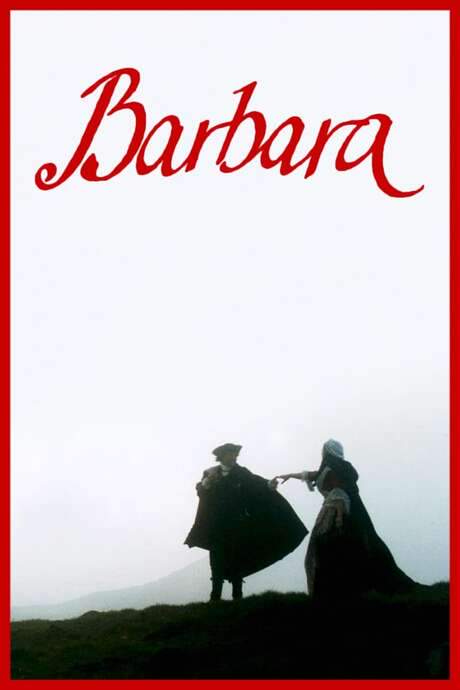
The Fortuna, aptly named, sails into the harbor of Tórshavn, delivering Poul, Lars Simonsen, the new pastor for the Vágar parish, to a crowd that gathers to welcome him. Among the onlookers is Barbara, Anneke von der Lippe, the widow of two former pastors whose deaths have long shadowed the community. Despite warnings about her reputation, Poul is drawn to her presence as the ship’s bells echo over the quay, hinting at a complex, fragile bond that may shape the town’s days to come.
As the dust settles on the quay, Barbara carries the weight of local gossip with a quiet endurance, and Poul finds himself pulled toward a life that promises companionship yet carries the sting of judgment. The two navigate the early days of their connection with care, and soon they move toward a life together on Vágar, where Barbara maintains a house of her own and the pair begin to forge a shared path that feels both hopeful and perilously exposed to the town’s ever-watchful eyes. The union, though charged with affection, is also a testament to the fragile line between forgiveness and reputation.
Their quiet happiness is tested when Barbara encounters Andreas Heyde, Peter Reichhardt, a dapper researcher from Copenhagen who arrives in Tórshavn on a scholarly visit. Andreas’ presence awakens something unsettled in Barbara, a flirtation that glances toward a different possibility than the one Poul has offered. Barbara’s fascination with Andreas invites a subtle tension into the narrative, even as Poul remains determined to protect the life they are trying to build together. Yet the winds of fate keep pulling them in separate directions, complicating the bonds of loyalty and desire that hold the household together.
Meanwhile, Poul, guided by a sense of duty, urges Barbara to accompany him as he continues to perform his pastoral duties. But as Christmas approaches, his obligation calls him away to the outlying island of Mykines. He intends to return quickly, hoping to resume the life he and Barbara imagined, yet a combination of rugged weather and the island’s remoteness conspires against him, delaying his return for eleven long days. When he finally comes back to Tórshavn, a painful discovery awaits: Barbara has left for the capital with Andreas, seeking a future that may no longer include Poul.
The tensions explode in a tense confrontation between Poul and Andreas, spurred by Gabriel, Trond Høvik, a figure who adds pressure and intrigue to the fragile triangle. Facing the distress of the moment, Andreas is eventually persuaded to depart for Copenhagen, leaving Barbara to face the consequences of the choices made in secret. The moment is fraught with pain and public scrutiny, yet the story does not end there. Barbara makes a desperate, determined bid to reach Andreas’ ship, hoping to salvage what she has jeopardized, only to watch the Fortuna pull away once more, carrying away the possibilities of reconciliation and the town’s lingering judgments.
Through the weather, the distance, and the stubborn pull of duty and desire, the tale remains quiet and intimate, tracing how a community negotiates blame, love, and longing in a place where isolation sharpens every choice. The characters—Poul’s steadfast sense of responsibility, Barbara’s resilience and vulnerability, Andreas’ charm and allure, and Gabriel’s provocative meddling—unfold against a backdrop of seaborne winds, stormy seas, and the slow, unyielding march of time.