








Plot Explained Spoilers guaranteed!
Plot Explained

Browse by genre

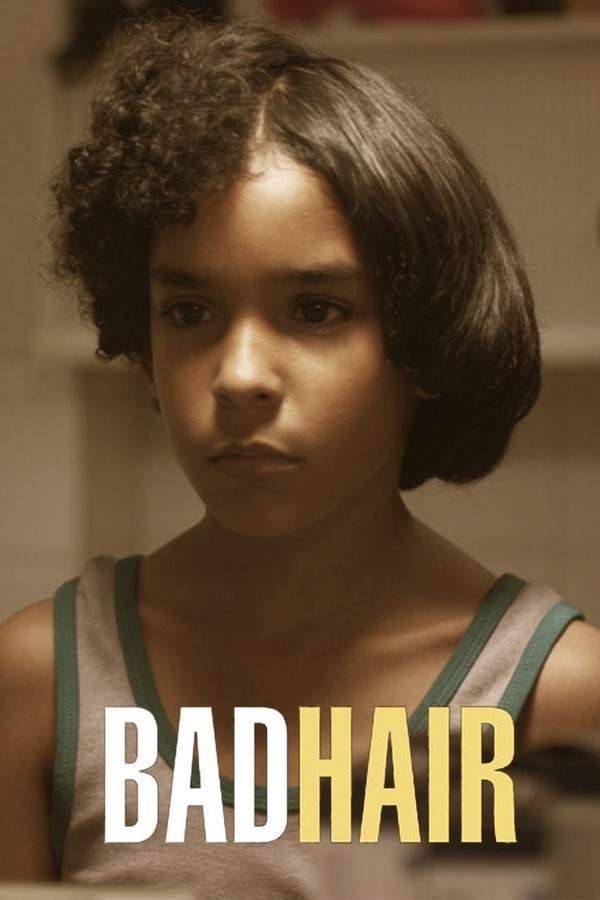
Bad Hair (2014) movie poster

Characters & Themes

Bad Hair (2014) Characters, Setting & Themes Explained

Release, runtime and language
2014 · 93 min · Spanish
JustWatch #33,388 2
Directed by
Mariana Rondón

A young Venezuelan boy, struggling to fit in, becomes preoccupied with straightening his naturally curly hair. His desire for conformity creates conflict with his mother, who is already facing her own challenges. The boy’s longing for a different appearance puts a strain on their relationship and forces them to confront questions of identity and acceptance. Their fragile bond is tested as they navigate cultural pressures and personal insecurities.

On this page (8)
  1. 1 Where to watch
  2. 2 Characters explained (3)
  3. 3 Where & when it takes place
  4. 4 Themes & meaning (3)
  5. 5 Character & meaning questions
  6. 6 Movie threads
  7. 7 Movies like Bad Hair
  8. 8 Every angle

Where to watch

Where to Watch Bad Hair (2014)

Where can you watch Bad Hair? Stream, rent or buy it in the US, including on OVID, Kanopy and myfilmfriend: current JustWatch availability with up-to-date prices.

Streaming availability powered by JustWatch

3 main characters · contains spoilers

Bad Hair Characters Explained: Who Is Who

The main characters of Bad Hair (2014), heroes and villains: what drives them, how they change over the course of the story and what each of them reveals about the film's bigger ideas.

  • Junior

    A nine-year-old pardo boy in Caracas who fixates on his hair and grooming, seeing it as a route to belonging and self-expression. He grapples with school portrait expectations and his own sense of masculinity, balancing a desire to sing with the pressures of his mother's rules. His sensitivity to appearance and peers marks him as seeking identity amidst a challenging home life.

    • 👦 Curious
    • 💇 Hair-obsessed
    • 🧭 Identity-seeker
  • La Niña

    Junior's neighborhood friend, a classic 'girly girl' who embraces beauty pageants and princess-like play. She shares the pageant obsession and lifestyle with Junior, shaping how he views gender performance and self-presentation. Her friendship offers moments of warmth amid the tense household dynamics.

    • 👧 Girly
    • 🎀 Pageant culture
    • 🤝 Friendship
  • Mother

    A widowed mother whose strict stance on appearance and behavior reflects a protective but misinformed attempt to control her son's life. She views grooming as a sign of potential sexuality and seeks to enforce conventional masculinity, contrasting with other family influences. Her actions catalyze Junior's choice between conformity and independence.

    • 👩 Maternal role
    • 🗝️ Authority

Last updated: February 17, 2026 at 17:05

Was this helpful?

Setting

Where and When Does Bad Hair Take Place?

The setting of Bad Hair (2014): the year and time period, the places and locations, and how they shape the characters, the mood and the tension of the story.

Time period

early 2010s

The story unfolds in contemporary urban Venezuela, anchored to present-day realities rather than a distant past. Life moves around school portraits, household chores, and neighborhood routines, all framed by current cultural references like beauty pageants on television. Economic precarity and social expectations influence how characters present themselves and how they are perceived by others. The period feels immediate and specific to the setting.

Location

Caracas, Venezuela

The film is set in a cramped, decaying apartment in Caracas, reflecting a dense urban environment. It foregrounds a working-class neighborhood where daily life unfolds amid noise, heat, and limited resources. The city’s social dynamics—pageants, media, and neighborhood interactions—shape the characters’ routines and pressures. This urban backdrop acts as a microcosm for broader issues of family, identity, and belonging.

  • 🏙️ Urban life
  • 💔 Poverty and resilience
  • 🎭 Culture and media

Last updated: February 17, 2026 at 17:05

Was this helpful?

3 major themes

Bad Hair Meaning: Themes & Message Explained

What is Bad Hair (2014) really about? The emotional, social and philosophical themes the film keeps returning to, its symbolism and the message beneath the surface.

  • Identity

    Junior's fixation on his hair and appearance serves as a lens for his quest to understand who he is. The film explores how a child negotiates personal identity under the weight of family expectations and cultural standards. Hair becomes a tangible symbol of his struggle between conformity and self-expression. Through Junior, the story examines how identity can be shaped, challenged, or constrained by those around him.

  • Gender norms

    The mother links grooming with masculine adequacy and suspects nonconformity, highlighting pressures to perform a strict gender script. Junior must navigate expectations of how a boy should look and behave, often at odds with his own desires. The narrative critiques rigid societal norms imposed by adults and peers. It shows how these norms can harm a child when applied as definitive rules.

  • Family

    The apartment becomes a pressure cooker where care, control, and conflict collide. The widowed mother enforces strict rules, while the grandmother offers an alternative, more permissive influence, illustrating different paths of nurturing a child. Poverty and domestic dynamics shape choices, revealing how love and constraint coexist in the home. The film uses the family as a lens to examine resilience amid hardship.

Last updated: February 17, 2026 at 17:05

Was this helpful?

Character & theme questions

Bad Hair Characters & Meaning: Your Questions Answered

The questions people ask about Bad Hair (2014): who the characters really are, their relationships, what the symbols mean, where it takes place and what the movie is really about. Each answer contains spoilers.

Q1

Where is the movie set?

The film takes place in a cramped, decaying apartment in Caracas, Venezuela, within a dense working-class neighborhood. The urban environment is characterized by noise, heat, and limited resources, with the city’s social dynamics, beauty pageants, media, and neighborhood interactions, shaping the characters' daily lives and pressures.

  • caracas
  • venezuela
  • setting
  • urban
  • apartment
  • neighborhood
Q2

When does the story take place?

The movie is set in the early 2010s in contemporary urban Venezuela. The period feels immediate and specific, anchored to present-day realities with school portraits, household chores, and cultural references like beauty pageants on television shaping the narrative.

  • time period
  • 2010s
  • venezuela
  • contemporary
  • setting
Q3

What does Junior's hair represent in the film?

Junior's fixation on his hair serves as a tangible symbol of his broader quest for identity. The film explores how a child negotiates personal identity under the weight of family expectations and cultural standards. His hair becomes the battleground where his struggle between conformity and self-expression plays out.

  • identity
  • hair
  • symbol
  • appearance
  • junior
  • conformity
Q4

How does the movie address gender norms?

The film critiques rigid gender scripts imposed on Junior by his mother and society. She links grooming with masculine adequacy and suspects nonconformity, enforcing strict expectations of how a boy should look and behave. The narrative shows how these prescriptive norms can harm a child when applied as definitive rules.

  • gender norms
  • masculinity
  • conformity
  • society
  • pressure
Q5

Why is Junior's mother so strict about his appearance?

The widowed mother enforces strict rules about appearance as a protective but misinformed attempt to control her son's life. She views grooming as a sign of potential sexuality and seeks to enforce conventional masculinity, believing she is shielding him from societal judgment and preserving his masculinity.

  • mother
  • parenting
  • appearance
  • motivation
  • protection
Q6

How does the family dynamic reflect the film's themes?

The apartment functions as a pressure cooker where care, control, and conflict collide. The widowed mother enforces strict rules while the grandmother offers a more permissive alternative. Poverty and domestic dynamics shape choices, revealing how love and constraint coexist, with the family serving as a lens to examine resilience amid hardship.

  • family
  • mother
  • grandmother
  • poverty
  • conflict
  • dynamics
Q7

Who is Junior and what is his internal conflict?

Junior is a nine-year-old pardo boy who fixates on his hair and grooming, viewing it as a route to belonging and self-expression. He grapples with school portrait expectations and his own sense of masculinity, balancing a desire for self-expression with the pressures of his mother's strict rules. His sensitivity to appearance marks him as a child seeking identity amid challenging home life.

  • junior
  • character
  • identity
  • hair
  • struggle
  • belonging
Q8

What role does La Niña play in the story?

La Niña is Junior's neighborhood friend, a 'girly girl' who embraces beauty pageants and princess-like play. She shares the pageant obsession and lifestyle with Junior, shaping how he views gender performance and self-presentation. Her friendship offers moments of warmth amid the tense household dynamics.

  • la nina
  • friendship
  • beauty pageant
  • gender
  • play
Q9

What is the meaning of the film's ending?

The ending is bittersweet, Junior achieves superficial conformity by shaving his head, but this is a painful compromise that sacrifices his identity under duress. It leaves no true resolution for his internal conflict or the damaged relationship with his mother, representing a tragic capitulation to external pressures.

  • ending
  • bittersweet
  • conformity
  • compromise
  • identity
Q10

How do cultural pressures influence the characters?

The film uses beauty pageants on television and neighborhood interactions to show how cultural pressures shape self-presentation and identity. Economic precarity and social expectations influence how characters present themselves and how they are perceived by others, particularly affecting Junior's desire to conform.

  • beauty pageant
  • culture
  • pressure
  • society
  • media
Q11

How does the urban setting influence the story?

The working-class neighborhood in Caracas acts as a microcosm for broader issues of family, identity, and belonging. The cramped, decaying apartment and resource-limited environment create a backdrop where daily struggles are amplified, and the characters' pressures feel immediate and specific to their social context.

  • urban
  • poverty
  • caracas
  • setting
  • environment

Movie threads

More Movies Like Bad Hair, by Mood & Story

Curated lists built around what makes Bad Hair tick: the same mood, the same kind of story or the same emotional payoff. Each list explains why these movies belong together.

Quiet family conflict dramas like Bad Hair

Stories where intimate family tensions simmer under oppressive circumstances. Explore movies like Bad Hair that explore strained family bonds under pressure. These slow-burn dramas focus on intense, emotionally heavy relationships between parents and children, often set against a backdrop of poverty or societal judgment.

  • melancholic
  • oppressive
  • somber
  • introspective
  • claustrophobic
  • anxious
  • Tone: melancholic, oppressive, somber
  • Pacing: slow, deliberate, character-driven
Why these movies?

The story pattern: The narrative pattern follows a central character, often a child or adolescent, whose personal struggle for identity or acceptance creates a rift with a parent or guardian. The conflict escalates through quiet, emotionally charged moments rather than overt drama, building to a resolution that is often bittersweet or unresolved.

Why they belong together: Movies are grouped here because they share a focus on the psychological weight of family dynamics, a slow pacing that lets emotional tension build, and a melancholic tone. They often feature themes of poverty, conformity, and the painful process of growing up.
Bleak coming-of-age stories similar to Bad Hair

Stories of young protagonists whose innocence is lost to harsh social realities. If you liked the painful childhood journey in Bad Hair, discover similar movies about young protagonists facing homophobia, poverty, and family trauma. These films depict a difficult, often bleak, path to self-acceptance.

  • somber
  • bleak
  • oppressive
  • childhood trauma
  • introspective
  • anxious
  • Tone: melancholic, somber, bittersweet
  • Pacing: slow, observational
Why these movies?

The story pattern: The narrative follows a child or adolescent protagonist who is confronted with adult-sized problems—such as prejudice, poverty, or parental failure. Their journey is less about discovery and more about survival and painful compromise, often culminating in a loss of innocence without a clear sense of triumph.

Why they belong together: These films are grouped by their shared focus on a child's painful confrontation with harsh realities, a heavy emotional weight, and themes of identity crisis and trauma. The tone is consistently melancholic or somber, offering a raw look at a difficult upbringing.

If you liked this

Movies Like Bad Hair

Similar movies to Bad Hair: the same genre, themes or kind of story. Each one comes with its own plot summary, timeline and ending explained.

Browse all movie summaries

Every angle

Bad Hair (2014) Explained: Plot, Timeline & Characters

Everything about Bad Hair in one place: what happens in the plot summary, the timeline in chronological order, the characters and meaning and a spoiler-free summary. What's After the Movie adds the cast, box office and post-credit scenes.

Coming soon on iOS and Android

The Plot Explained Movie Summary App

Plot summaries, endings explained and timelines on your phone. Catch up on any movie in minutes, save your favorites and never miss a twist again.

Be the first to know when we launch. Your email stays private, always.

Learn more about the app