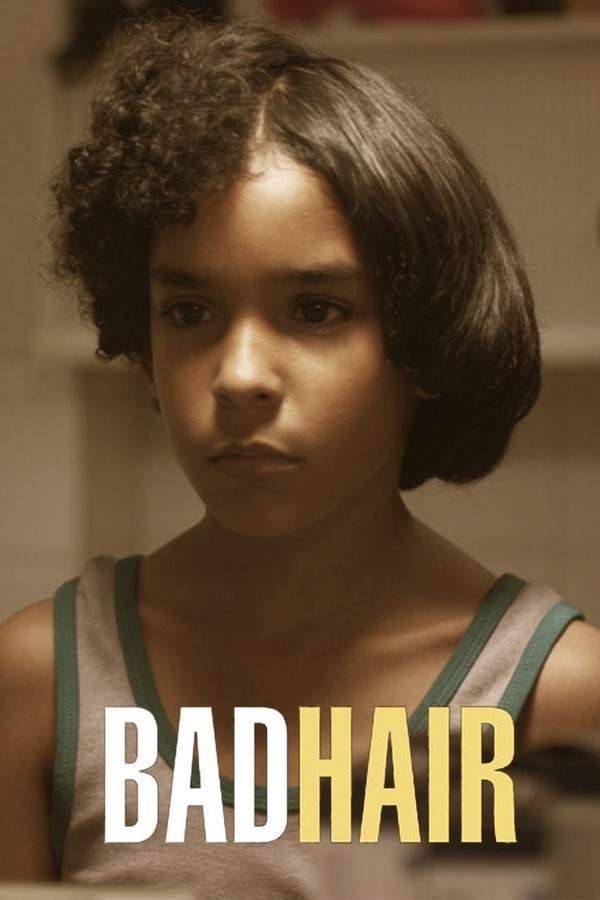
In Caracas, a nine-year-old boy named Junior lives in a cramped, rundown apartment with his widowed mother and baby brother. He carries a quiet burden in his hair, often described by others as pelo malo — a Spanish term that refers to his kinky, stubborn curls. He spends long hours trying to straighten it using improvised methods, from mayonnaise to various homemade remedies, a ritual that leaves him both hopeful and frustrated. His mother, worn down by daily struggles, views this obsession with his appearance as troubling and out of place for a boy his age, which gnaws at their relationship and adds tension to their already fragile home life.
Junior finds a kind of companionship and escape in his neighborhood friend, La Niña. Their afternoons are spent inside La Niña’s apartment, where the television becomes a doorway to endless Venezuelan beauty pageants. La Niña embodies a quintessential “girly girl” fantasy—she dresses like a princess, brushes on makeup, and surrounds herself with dolls and glitter. Junior, meanwhile, is drawn to the world of pageants in his own way: on school picture day, La Niña chooses to appear as a princess, while Junior longs to present himself as a singer with straight hair, a look that feels more true to his evolving sense of self.
The tension between appearance and acceptance deepens as his mother reacts with growing concern and suspicion. She interprets Junior’s grooming habits as a sign of something she does not approve of, even asking the doctors if he is growing normally or if there might be an issue with his sexual identity. Twice she takes him to see a physician, seeking reassurance that her son will “develop correctly.” The doctor suggests that Junior might benefit from a stronger male influence at home, a remark that only intensifies her sense of responsibility and urgency to control the situation.
In a moment that changes the texture of their home forever, the mother brings home her boss and exposes Junior to a troubling scene meant to shock him out of his preoccupations. The details are left unspoken here, but the impact is clear: Junior is forced to confront a reality that unsettles him deeply, and he tries to avert his gaze, turning away in his own bed as the door stands ajar.
Faced with an impossible choice, the mother delivers an ultimatum: either shave his hair to conform, or move in with his grandmother, an older Black woman who has her own expectations for femininity and behavior. The grandmother envisions a different, softer path for Junior, one that embraces a more feminine demeanor than his mother permits. The conflict between generations, class, and cultural pressures comes to a head as Junior weighs belonging against his own sense of self.
Ultimately, Junior agrees to shave his hair, hoping to secure stability and a sense of belonging within his family. The film closes on this decision, leaving the impression of a boy who has chosen conformity in a world where appearances and norms weigh heavily on every step he takes. The story lingers with the questions it raises about identity, parental influence, and the price of fitting into expectations that can feel both personal and imposed.