








Plot Explained Spoilers guaranteed!
Plot Explained

Browse by genre

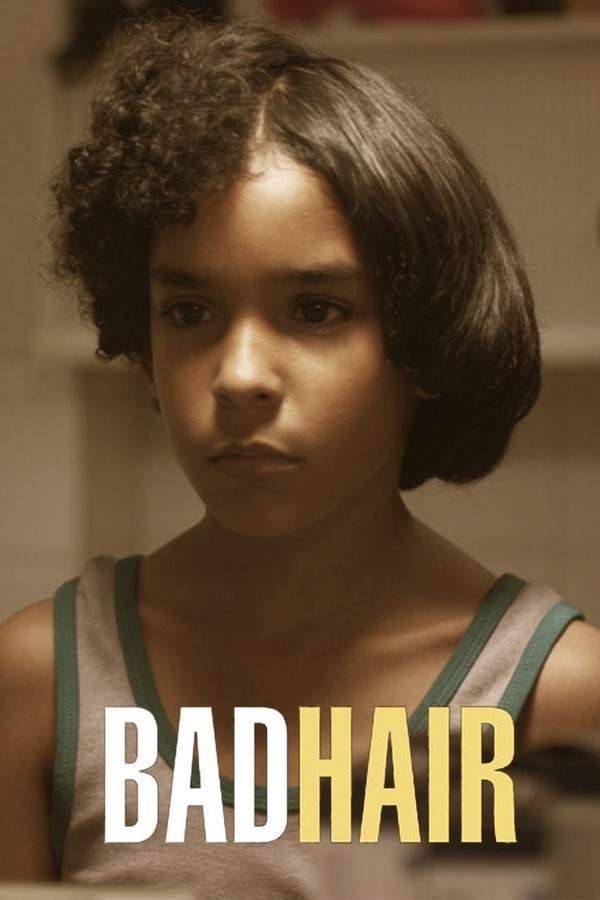
Bad Hair (2014) movie poster

Timeline

Bad Hair (2014) Timeline Explained – Every Event in Order

Release, runtime and language
2014 · 93 min · Spanish
JustWatch #33,224
Directed by
Mariana Rondón

A young Venezuelan boy, struggling to fit in, becomes preoccupied with straightening his naturally curly hair. His desire for conformity creates conflict with his mother, who is already facing her own challenges. The boy’s longing for a different appearance puts a strain on their relationship and forces them to confront questions of identity and acceptance. Their fragile bond is tested as they navigate cultural pressures and personal insecurities.

On this page (6)
  1. 1 Where to watch
  2. 2 Events in order (12)
  3. 3 Timeline questions answered
  4. 4 Movie threads
  5. 5 Movies like Bad Hair
  6. 6 Every angle

Where to watch

Where to Watch Bad Hair (2014)

Where can you watch Bad Hair? Stream, rent or buy it in the US, including on OVID, Kanopy and myfilmfriend: current JustWatch availability with up-to-date prices.

Streaming availability powered by JustWatch

12 events in order · contains spoilers

Bad Hair Timeline: Events in Chronological Order

Every key event of Bad Hair (2014) in order, scene by scene, with when and where it takes place. Use it to untangle flashbacks, time jumps and parallel storylines, to refresh your memory before the sequel or to find the exact scene you are thinking of.

  1. Life in Caracas: a cramped home

    Junior, a nine-year-old pardo boy, lives with his widowed mother and baby brother in a shabby Caracas apartment. His obsession with straightening his hair, 'pelo malo', dominates his daily routine and becomes a source of tension with his mother. She views his grooming as inappropriate for a boy his age.

    Where
    Caracas, Venezuela
  2. Hair care as rebellion

    Junior clings to grooming rituals, trying different methods to tame his curls. The attempt to control his appearance strains the mother-son relationship as she scolds his fixation and questions its normalcy.

    Where
    Home, Caracas
  3. Watching beauty pageants at La Niña's apartment

    Junior and his neighborhood friend La Niña spend long hours in her apartment watching Venezuelan beauty pageants on TV. La Niña lives a princess fantasy, while Junior fantasies about being a singer with straight hair.

    When
    Evenings
    Where
    La Niña's apartment, Caracas
  4. School pictures and gendered expectations

    As school pictures approach, La Niña dresses as a princess and Junior imagines himself as a singer with straight hair. The moment underscores the clash between his self-image and how others expect him to look.

    When
    School pictures day
    Where
    School/Photo location
  5. Mother's fear of homosexuality

    The mother interprets Junior's grooming as a sign of homosexuality and grows anxious about his development. She worries about what others will think and tries to steer him away from such behavior.

    Where
    Home, Caracas
  6. First doctor's visit

    The mother takes Junior to a doctor to determine if he is developing normally. The doctor asks questions and observes his behavior, offering a clinical perspective on his demeanor.

    Where
    Doctor's clinic
  7. Second doctor's visit and a blunt question

    After a second visit, the mother directly asks the doctor whether her son is gay, pressing for a verdict about his sexuality. The doctor notes concerns about his emotional development and family influence.

    Where
    Doctor's clinic
  8. Doctor's suggestion about male influence

    The doctor hints that Junior might benefit from a stronger male presence at home, implying that family dynamics may be shaping his behavior and feelings. He explains that a supportive male role model could help guide his development.

    Where
    Doctor's clinic
  9. A traumatic home scene

    To assert control or discipline, the mother brings her boss into the home and engages in an intimate encounter, forcing Junior to witness it. He hides or looks away, overwhelmed by what he sees and overhears.

    Where
    Mother's home
  10. Ultimatum: shave or move to grandmother

    Following the unsettling incident, the mother gives Junior an ultimatum: shave his hair or move in with his grandmother. The demand makes gender presentation the decisive measure of his safety and belonging.

    Where
    Home
  11. Grandmother's household and new expectations

    Junior goes to live with his grandmother, an older woman who wants him to adopt more feminine behavior. He confronts a different set of expectations about how a boy should look and act.

    Where
    Grandmother's house
  12. Concession: shaving his hair

    Under pressure, Junior agrees to shave his hair to satisfy his mother's demand. The act marks a turning point, with the future uncertain but the immediate conflict resolved on her terms.

    Where
    Home

Last updated: February 24, 2026 at 14:13

Was this helpful?

Timeline questions answered

Bad Hair Timeline Explained: Your Questions Answered

When does it happen, and why in that order? The questions people ask about the chronology of Bad Hair (2014): time jumps, flashbacks, cause and effect between scenes and the correct order of events, each answered with spoilers.

Q1

Why does Junior spend so much time trying to straighten his hair?

Junior is driven by a desire to fit in and be accepted. In Venezuelan culture, his kinky curly hair is labeled 'pelo malo' (bad hair), and he believes straightening it will make him look like the singers he admires on television. This obsession stems from his longing to belong and to present himself in a way that feels true to his emerging self-image, even if that image doesn't align with traditional expectations of masculinity.

Foreshadowing: From the opening scenes, Junior is shown spending hours with homemade remedies, establishing early that his hair is central to his sense of identity.

  • junior hair straightening
  • pelo malo
  • identity
  • belonging
  • self-image
Q2

What does 'pelo malo' mean in the film?

'Pelo malo' is a Spanish term that literally means 'bad hair' but carries cultural weight, it refers to kinky, stubborn curls that are stigmatized in Venezuelan society. For Junior, being told his hair is 'bad' means his natural appearance is unacceptable, driving his desperate attempts to change it.

  • pelo malo meaning
  • curly hair stigma
  • Venezuelan beauty standards
Q3

Why does Junior's mother take him to see multiple doctors?

Junior's mother interprets his grooming habits and interest in appearance as signs that he might be gay, which she views as unacceptable. She takes him to doctors hoping they will confirm there is nothing 'wrong' with his development or sexuality. The doctors' questions and suggestions only deepen her anxiety about controlling his behavior.

Foreshadowing: The mother's fear is introduced early when she scolds Junior for his grooming habits, showing her concern goes beyond typical parenting.

  • mother doctor visits
  • homosexuality fear
  • parental anxiety
  • development concerns
Q4

What is the purpose of the scene where Junior's mother brings her boss home?

The mother deliberately exposes Junior to a sexual encounter between herself and her boss as a form of shock therapy intended to redirect his interests toward 'normal' male behavior. The traumatic experience forces Junior to witness something inappropriate for a child, leaving him deeply disturbed and contributing to his eventual compliance with her demands.

Foreshadowing: This scene follows the mother's growing desperation after the doctors' visits fail to provide the reassurance she sought.

  • traumatic scene
  • mother boss
  • shock therapy
  • child trauma
Q5

Why does Junior's grandmother want him to act more feminine?

When Junior is sent to live with his grandmother, she encourages him to adopt softer, more feminine behaviors and presentation, likely reflecting her own understanding of gender or a belief that this will help him fit into a household without a male figure. This creates another layer of pressure on Junior, as he must navigate conflicting expectations from his mother (masculinity) and grandmother (femininity).

  • grandmother expectations
  • gender expectations
  • generational conflict
Q6

What does Junior's decision to shave his hair represent?

Junior's decision to shave his hair represents a painful compromise where he sacrifices a part of his identity to maintain belonging and stability within his family. By conforming to his mother's demands, he chooses safety and acceptance over his true self, though the act leaves his internal conflict unresolved.

  • hair shaving
  • conformity
  • identity sacrifice
  • family belonging
Q7

Why is the film's ending considered bittersweet?

The ending is bittersweet because Junior achieves external conformity, his immediate conflict with his mother is resolved, but this resolution comes at the cost of his authentic self-expression. He has not found true acceptance; he has simply surrendered to压迫ive expectations, leaving his deeper identity issues unresolved.

  • bittersweet ending
  • conformity cost
  • unresolved identity
Q8

What does the film say about cultural expectations of masculinity?

The film explores how rigid cultural expectations of masculinity can harm children. Junior's mother conflates hair grooming with deviant behavior, believing she must 'correct' him to prevent shame. The doctors suggest he needs a male role model, reinforcing narrow definitions of how boys should look and act. Junior is caught between various adults imposing conflicting ideas of what a boy should be.

  • masculinity expectations
  • cultural pressure
  • gender norms
  • parental influence

Movie threads

More Movies Like Bad Hair, by Mood & Story

Curated lists built around what makes Bad Hair tick: the same mood, the same kind of story or the same emotional payoff. Each list explains why these movies belong together.

Quiet family conflict dramas like Bad Hair

Stories where intimate family tensions simmer under oppressive circumstances. Explore movies like Bad Hair that explore strained family bonds under pressure. These slow-burn dramas focus on intense, emotionally heavy relationships between parents and children, often set against a backdrop of poverty or societal judgment.

  • melancholic
  • oppressive
  • somber
  • introspective
  • claustrophobic
  • anxious
  • Tone: melancholic, oppressive, somber
  • Pacing: slow, deliberate, character-driven
Why these movies?

The story pattern: The narrative pattern follows a central character, often a child or adolescent, whose personal struggle for identity or acceptance creates a rift with a parent or guardian. The conflict escalates through quiet, emotionally charged moments rather than overt drama, building to a resolution that is often bittersweet or unresolved.

Why they belong together: Movies are grouped here because they share a focus on the psychological weight of family dynamics, a slow pacing that lets emotional tension build, and a melancholic tone. They often feature themes of poverty, conformity, and the painful process of growing up.
Bleak coming-of-age stories similar to Bad Hair

Stories of young protagonists whose innocence is lost to harsh social realities. If you liked the painful childhood journey in Bad Hair, discover similar movies about young protagonists facing homophobia, poverty, and family trauma. These films depict a difficult, often bleak, path to self-acceptance.

  • somber
  • bleak
  • oppressive
  • childhood trauma
  • introspective
  • anxious
  • Tone: melancholic, somber, bittersweet
  • Pacing: slow, observational
Why these movies?

The story pattern: The narrative follows a child or adolescent protagonist who is confronted with adult-sized problems—such as prejudice, poverty, or parental failure. Their journey is less about discovery and more about survival and painful compromise, often culminating in a loss of innocence without a clear sense of triumph.

Why they belong together: These films are grouped by their shared focus on a child's painful confrontation with harsh realities, a heavy emotional weight, and themes of identity crisis and trauma. The tone is consistently melancholic or somber, offering a raw look at a difficult upbringing.

If you liked this

Movies Like Bad Hair

Similar movies to Bad Hair: the same genre, themes or kind of story. Each one comes with its own plot summary, timeline and ending explained.

Browse all movie summaries

Every angle

Bad Hair (2014) Explained: Plot, Timeline & Characters

Everything about Bad Hair in one place: what happens in the plot summary, the timeline in chronological order, the characters and meaning and a spoiler-free summary. What's After the Movie adds the cast, box office and post-credit scenes.

Coming soon on iOS and Android

The Plot Explained Movie Summary App

Plot summaries, endings explained and timelines on your phone. Catch up on any movie in minutes, save your favorites and never miss a twist again.

Be the first to know when we launch. Your email stays private, always.

Learn more about the app